Marantz Model 112 (1975-1978)
It hums when you plug it in—not from the speakers, but from the sheer density of engineering packed into its brushed faceplate.
Overview
The Marantz Model 112 isn’t the flashiest of the brand’s 1970s separates, but open the hood and you’re staring at a precision instrument built for fidelity, not fashion. This is a stereo pre-main amplifier that doesn’t just play records—it parses them, with a phono stage so quiet and gain-rich it can handle even the most anemic moving coil cartridge. Built between 1975 and 1978, the Model 112 sits in that sweet spot where Marantz had fully embraced solid-state design but hadn’t yet streamlined its circuits to the point of sterility. It’s complex, yes—six printed circuit boards, gold-plated inputs, a FET cascode bootstrap stage—but every part serves a purpose. Owners report a sound that’s warm without being soft, detailed without being clinical. The bass is tight, the mids musical, and the highs smooth, with none of the glare that plagued lesser receivers of the era.
And yes, it has a digital tuning display—on the front panel, no less—making it one of the earlier Marantz units to feature that modern touch. But don’t mistake it for a convenience model. This thing was serious hardware, originally priced at ¥79,800 around 1977, and often paired with the 140 Power Amplifier for a full separates setup. It wasn’t just an amp with a tuner tacked on; it was a complete pre-main solution designed for audiophiles who wanted both performance and integration. The tritone control—featuring adjustable midrange at 700 Hz—was a rare luxury, letting listeners tailor the tonal balance in ways most competitors didn’t offer.
Specifications
| Manufacturer | Marantz |
| Product type | Stereo pre-main amplifier |
| Year of Production | 1975-1978 |
| Rated output (20 Hz to 20 kHz, both channel drive) | 60W + 60W (8 Ω) |
| Rated output (20 Hz to 20 kHz, both channel drive) | 80W + 80W (4 Ω) |
| Frequency Response (20 Hz to 20 kHz) | + 0, -0.2 dB |
| Power Band With | 10 Hz to 40 kHz |
| Total harmonic distortion factor | 0.03% |
| Cross modulation distortion factor | 0.03% |
| Damping factor | 60 |
| Input Sensitivity / Impedance Main amplifier input | 1.5V/30k Ω |
| Input Sensitivity / Impedance Phono MM | 1.8mV/47k Ω |
| Input Sensitivity / Impedance Phono MC | 0.09mV/40 Ω |
| Input Sensitivity / Impedance High level | 180mV/25k Ω |
| Gain | Phono - Pre out:60dB; Phono - Rec out:40dB; High level - Pre out:20dB |
| Rated Output / Impedance Pre Out | 1.5V/200 Ω |
| RIAA deviation (20 Hz to 20 kHz) | ± 0.3 dB |
| Input equivalent noise | 0.48 μ V (Phono / IFF-A) |
| Dynamic range (phono) | 112dB |
| Tone control characteristics Bass (100 Hz) | + / - 10 dB |
| Tone control characteristics Mid (700 Hz) | ± 6 dB |
| Tone control characteristics Treble (10 kHz) | ± 10 dB |
| Filter Low | 50 Hz, 6dB/oct. |
| Filter High | 5 kHz, 6dB/oct. |
| Tuning Bands | AM/FM |
| Tuning Scale | Digital |
| FM Tuning Range | 88 to 108 MHz |
| AM/MW Tuning Range | 535 to 1605 kHz |
| Sensitivity | 2.0uV (FM), 20uV (AM/MW) |
| Signal to Noise Ratio | 60dB (FM), 50dB (AM/MW) |
| Distortion | 0.3% (FM), 1% (AM/MW) |
| Selectivity | 60dB (FM), 26dB (AM/MW) |
| Power consumption | 180W (Electrical Appliance and Material Control Law) |
| Power | 100 V, 50Hz/60Hz |
| External dimensions | Width 416x Height 146x Depth 316 mm |
| Weight | 12.5kg |
Key Features
DC-Coupled, Low TIM Design
The Model 112 uses a “low TIM design DC configuration,” meaning the entire signal path from input to output is direct-coupled with no capacitors in the way. This eliminates phase shifts and transient intermodulation distortion—common flaws in early solid-state gear. The power amplifier circuit itself is a “DC-configuration OCL-inverted Darlington circuit,” a mouthful that translates to robust, stable output with excellent control over speakers. The feedback loop is fully direct-coupled with two stages of negative feedback, contributing to that ultra-low 0.03% THD and cross modulation distortion. It’s not just clean—it’s surgically precise.
Phono Stage with MC Support
For vinyl lovers, the phono stage is where the Model 112 flexes. It includes a dedicated MC head amplifier using the 2SK130A, a super low-noise, high-gain FET developed specifically for this application. That’s how it achieves 26 dB of gain and an input sensitivity of just 0.09mV for moving coil cartridges. The RIAA deviation is a tight ±0.3 dB, and the input equivalent noise is an impressively low 0.48 μV. This wasn’t an afterthought—it was engineered to be a reference-grade phono preamp, and it shows.
Triple Tone Control with Midrange Adjustment
Most amps of this era offered bass and treble controls. The Model 112 goes further with a tritone control that includes ±6 dB adjustment at 700 Hz. That midrange knob is a game-changer—too many solid-state amps of the 1970s sounded flat or lifeless in the center, but here you can nudge the vocal presence up or down to match your room or taste. The tone circuit itself is a two-stage, direct-coupled design, avoiding the signal degradation that passive tone stacks often introduce.
Robust Protection and Build Quality
Marantz didn’t skimp on protection. The PEP circuit monitors output for excessive current, voltage, or DC offset and cuts in instantly—designed to survive a 10-minute short circuit. It’s the same type used in the Model 500, a higher-end unit, so it’s no token safeguard. The power transistors are special Marantz-Motorola co-developed units, current-sensor type, ensuring tight control over the complementary output stage. And every input terminal is gold-plated, while the input board’s backside is fully shielded with copper foil to block induction noise. Even the construction method is overbuilt: instead of wire wrapping, leads are clamped, and PCBs are coated to resist corrosion.
Digital Tuner with High Performance
The digital tuning display was a modern touch in 1975, and the FM section delivers with 2.0uV sensitivity, 60dB selectivity, and a 60dB signal-to-noise ratio. The AM band is respectable too, with 20uV sensitivity and 26dB selectivity. The tuner uses P200/300 FM/AM assemblies and a PT01 switching board, and owners note it’s a “very nice little tuner with excellent reception.” It’s not just functional—it’s a full high-fidelity broadcast front end.
Historical Context
The Marantz Model 112 was most commonly paired with the 140 Power Amplifier, forming a high-performance separates system for discerning listeners. It’s listed in Marantz’s own “Classic Models Reference” table, a nod to its lasting reputation. While it didn’t spark a revolution, it arrived during a period when integrated pre-mains were gaining favor over fully modular systems—offering the performance of separates in a single chassis without sacrificing flexibility.
Collectibility & Value
The Model 112 is regarded as a classic, with one seller describing it as “Klassiker in gutem Zustand” (classic in good condition) and another noting it tests well with a sharp faceplate despite typical cabinet wear—rated 8/10. Cabinets were sold separately: the walnut WC-110 for ¥7,000 and the mahogany WC-110N for ¥12,000. Rack adapters RA-1 (¥17,500) and RA-2 (¥6,500) were also available for custom installations.
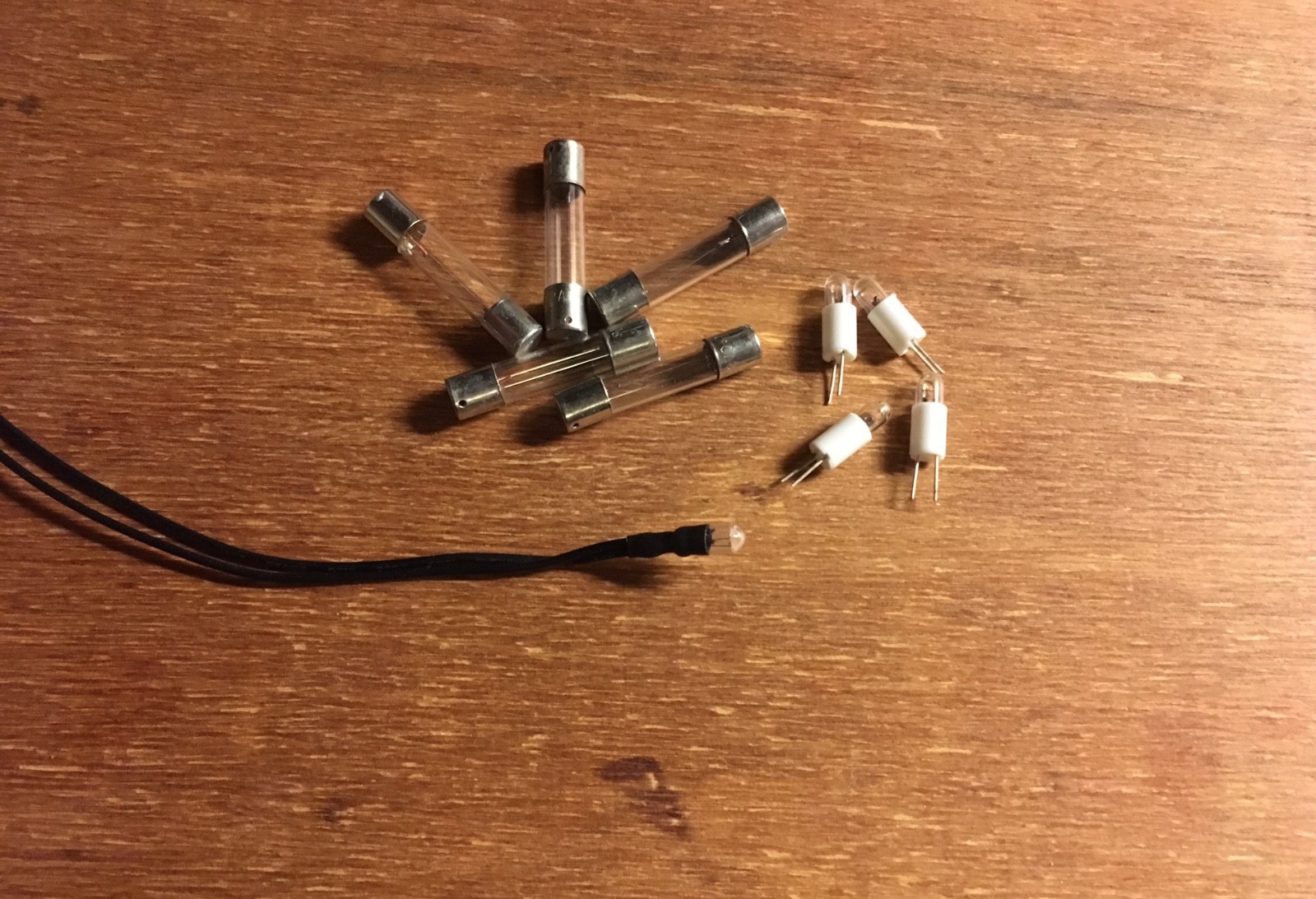
Restoration is common, and detailed notes exist: one technician performed a comprehensive bench test, cleaned all controls and switches, and detailed the exterior. But there are known issues. Excessive glue applied to the 330 microfarad capacitor during original construction often seeped onto nearby carbon composite resistors, which should be replaced during servicing. The bi-pin incandescent function lamps generate enough heat to degrade solder joints over time—resoldering or LED conversion is frequently needed. One restorer replaced all electrolytics on the P400 power supply board with Panasonic FC series capacitors and used Nichicon PW caps in RF stages for reliability. LED conversion is reportedly one of the easiest on any Marantz model.
eBay Listings



As an eBay Partner, we earn from qualifying purchases. This helps support our independent vintage technology research.
Related Models
- Marantz 3600 (1976-1977)
- Marantz MODEL 115 (1975-1977)
- Marantz MODEL 260 (1976-1978)
- Marantz MODEL 28 (1971-1973)
- Marantz MODEL 2A (1964-1966)
- Akai AM-2850 (1975)
- Akai AP-206 (1975)
- Nakamichi BX-1 (1985)
- Acoustic Research research-ar-17 (1978)
- Acoustic Research AR-19 (1994)