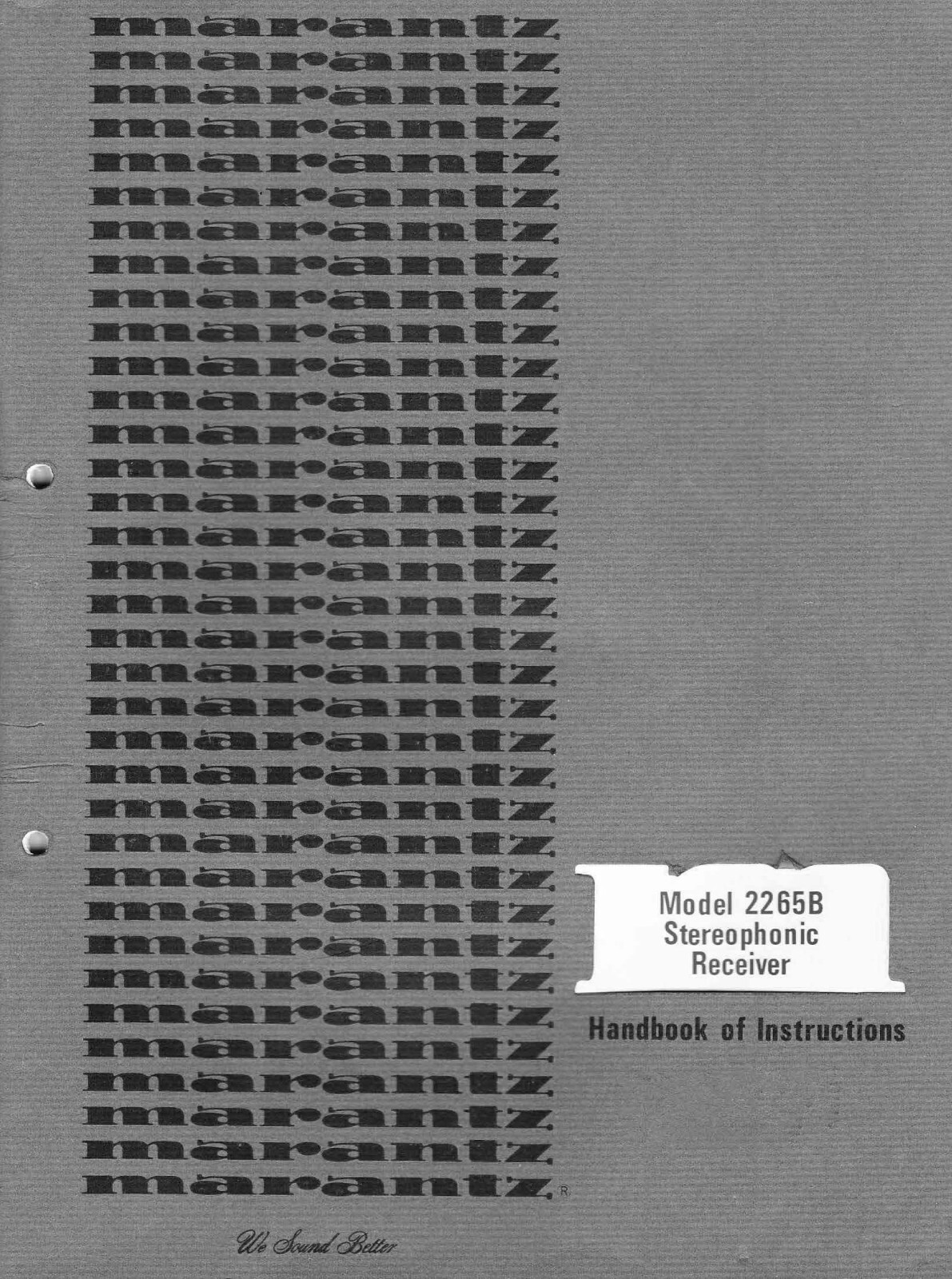
Marantz 2265B (1978-1980)
Marantz 2265B (1977-1979)
Let's get one thing straight: this isn't just another black-faced receiver. The 2265B is, in my opinion, one of the most perfectly proportioned and handsome units Marantz ever put out. It hits that sweet spot—enough power to be genuinely useful, but without the back-breaking heft and wallet-emptying price of its bigger brothers. Made from 1977 to 1979, it's the heart of the "B" line refresh, and it shows. That iconic blue dial, the satisfying click of the switches, the warm glow of the tuner indicators... it's pure 70s audio bliss. Saul Marantz's company was on a roll, and this receiver is a testament to that era where performance and aesthetics shook hands and decided to be best friends.
Specifications
| Years of Production | 1977 – 1979 |
| Power Output | 65 watts per channel (continuous, 8Ω, both channels driven) |
| Total Harmonic Distortion | 0.05% max at rated power |
| Speaker Impedance | 4-16Ω |
| Original Retail Price | $580.00 |
Historical Significance
Part of Marantz's legendary 2200 series, the 2265B is a quintessential mid-range receiver from the absolute peak of the analog era. It wasn't the biggest or the baddest, but it was the one that a lot of serious enthusiasts could actually afford and fit on their shelf. It represents the point where Marantz's "warm" solid-state sound was fully refined, offering a compelling alternative to the more clinical Japanese competitors. Finding one today is like finding a perfectly preserved time capsule of late-70s hi-fi ambition.
Sound Signature
Ah, the famous "Marantz sound." The 2265B has it in spades. It's rich, warm, and surprisingly detailed. The bass has a pleasing weight to it without being bloated, the mids are lush and present (vocals are a dream), and the highs are smooth, never harsh or fatiguing. The tuner section is a standout—incredibly sensitive and with fantastic stereo separation that can pull in stations you didn't know existed. Is it the absolute last word in razor-sharp detail? Maybe not, but what it gives you is a sound you can listen to for hours and hours. It makes music feel like music, not a technical exercise.
Maintenance and Restoration Tips
These are getting old, so expect to do some work. The most common issues are scratchy pots and switches (a good cleaning with DeoxIT is step one), failing bulbs behind the dial and meters (LED upgrade kits are popular, but purists will seek original-style lamps), and aging capacitors. The power supply and amplifier board caps are the usual suspects for a recap. The good news is, these are built like tanks and are a joy to work on compared to later, more cramped designs. If you find one that's been recently serviced, you've struck gold. If not, budget for a tune-up—it's worth it.
Collectibility and Market Value
This is a highly desirable model. It's the "just right" Goldilocks receiver: enough power, iconic looks, and not completely astronomical in price. A clean, fully serviced example can easily command $500 to $800 on today's market. A project unit in rough shape might be half that. Given its reputation and timeless design, it's a solid piece that's likely to hold its value well. Collectibility Rating: 8/10—it's a future classic that's already a modern classic.
eBay Listings


As an eBay Partner, we earn from qualifying purchases. This helps support our independent vintage technology research.
Related Models
- Marantz 3600 (1976-1977)
- Marantz MODEL 112 (1971-1973)
- Marantz MODEL 115 (1975-1977)
- Marantz MODEL 260 (1976-1978)
- Marantz MODEL 28 (1971-1973)
- Akai AM-2850 (1975)
- Akai AP-206 (1975)
- Nakamichi BX-1 (1985)
- Acoustic Research research-ar-17 (1978)
- Acoustic Research AR-19 (1994)