Marantz 2252B (1977-1980)
At 34 pounds, it arrives like a promise kept — heavy, serious, and built to last.
Overview
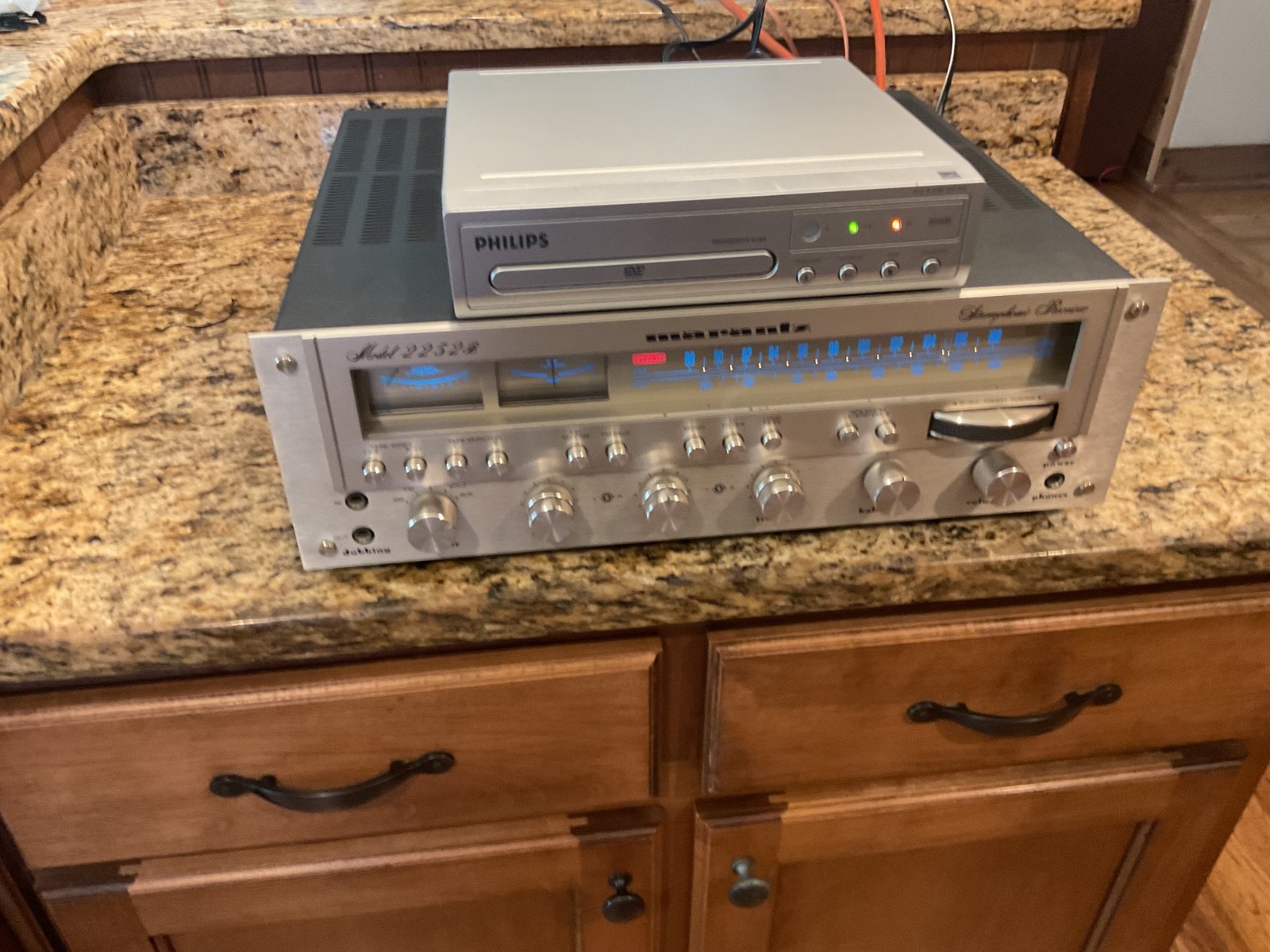
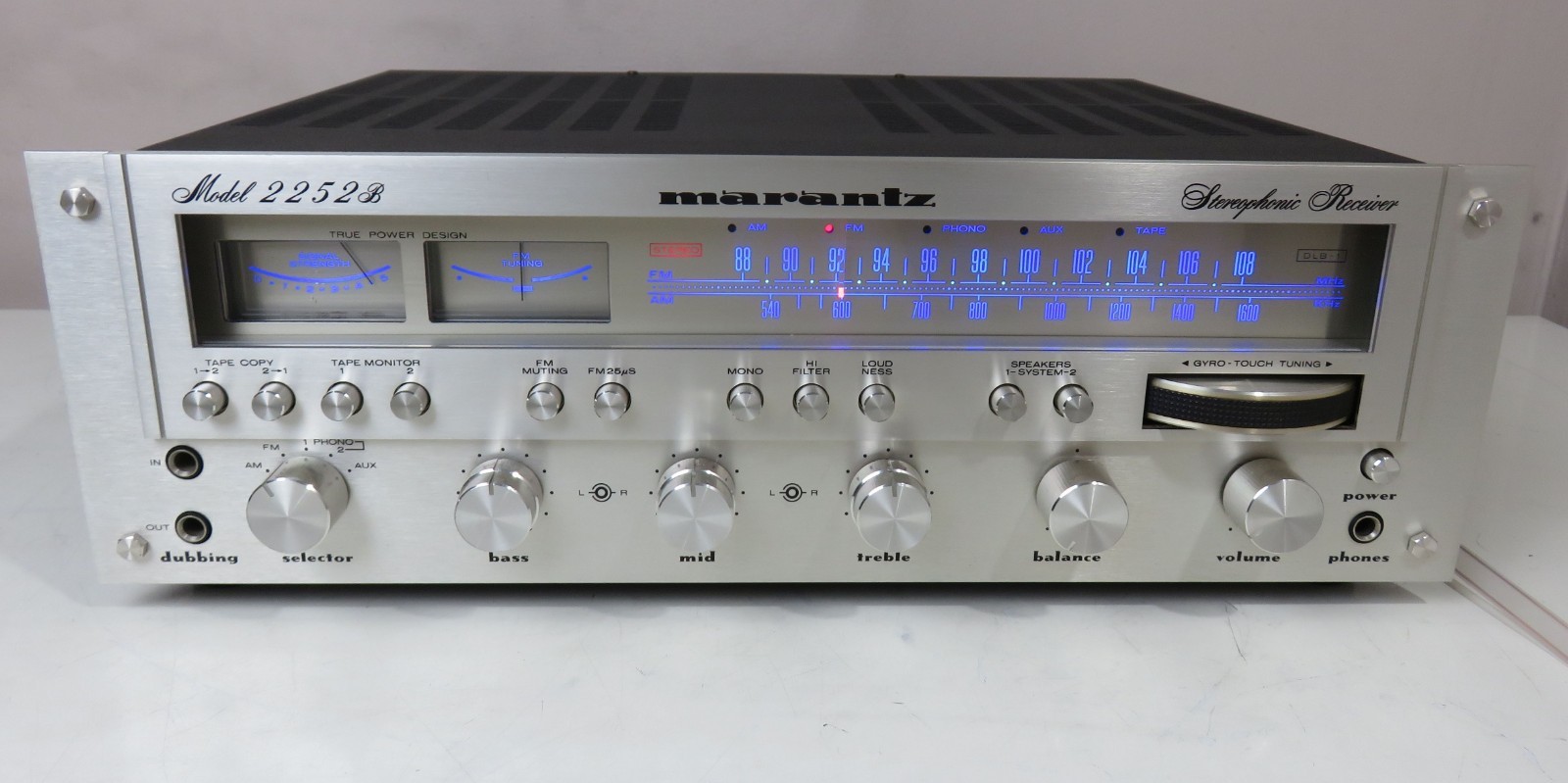
The Marantz 2252B Stereo Receiver, produced from 1977 to 1980 and originally priced at $460, stands as a hallmark of Marantz’s “Golden Era” 22X Series. This is not a receiver built for quiet background listening; it’s a statement piece, engineered for those who demanded both performance and presence in their living rooms. Weighing in at 34 lbs (15.4 kg), its heft reflects the dense internal construction — a chassis packed with discrete circuitry, robust power supplies, and a tuner section designed to extract every whisper from the FM band. The silver-face front panel with blue backlit dial lighting marks a deliberate shift from earlier black-bezel designs, giving it a cleaner, more modern aesthetic that still feels unmistakably Marantz.
Owners report a sound signature that’s warm, detailed, and consistently musical — the kind of “sweet Marantz sound” that fans chase across decades. With 52 watts per channel into 8 ohms, it delivers ample power for most speakers of its era, and its low total harmonic distortion (0.15%) ensures clean signal reproduction even at higher volumes. The FM tuner is particularly well-regarded, boasting a sensitivity of 1.9μV and strong rejection specs across image, IF, and spurious responses — serious engineering for FM stereo enthusiasts. The inclusion of the “Gyro Touch” flywheel tuning mechanism, first introduced on the Model 18 in the late 1960s, adds a tactile precision that separates it from simple knob-driven tuners.
Despite its strengths, the 2252B isn’t without quirks. Service technicians note that access to the power amplifier stage is notoriously difficult, requiring removal of under-chassis filter capacitors and speaker switch arms — a clear compromise between manufacturing efficiency and long-term serviceability. There’s also a known issue with the signal meter “dancing” across all functions, reportedly fixable by modifying the circuit at C422. These aren’t dealbreakers, but they’re the kind of details that matter to restorers and daily drivers alike.
Specifications
| Manufacturer | Marantz |
| Model | 2252B |
| Product type | Stereo Receiver |
| Years of manufacture | 1977-1980 |
| Original price | $460.00 |
| Power output | 52 watts per channel (minimum RMS, both channels driven into 8 ohms, from 20Hz to 20kHz, with no more than 0.15% total harmonic distortion) |
| Total harmonic distortion | 0.15% |
| Frequency response | 20Hz to 20kHz |
| Signal-to-noise ratio | 70dB |
| Damping factor | 50 |
| Input sensitivity (Phono) | 2.5mV |
| Input sensitivity (Aux, Tape) | 150mV |
| Speaker impedance | 4 to 16 ohms |
| Dimensions (W x H x D) | 19-7/16" x 6-1/8" x 15-3/4" |
| Weight | 34 lbs (15.4 kg) |
| Tuner section | FM stereo, FM, AM |
| Tuner feature | "Gyro Touch" flywheel tuner |
| FM sensitivity | 1.9uV |
| FM signal-to-noise ratio | 70dB |
| FM capture ratio | 1.0dB |
| FM image rejection | 80dB |
| FM IF rejection | 100dB |
| FM spurious response rejection | 100dB |
| FM alternate channel selectivity | 70dB |
| FM harmonic distortion | Mono: 0.15%, Stereo: 0.3% |
| AM sensitivity | 30uV |
| AM signal-to-noise ratio | 50dB |
| AM image rejection | 60dB |
| AM IF rejection | 60dB |
Key Features
Silver-Face Design with Blue Backlit Dial
The 2252B’s front panel breaks from Marantz’s earlier black-bezel aesthetic, adopting a silver dial plate that gives it a more refined, modern look for its time. The blue backlighting behind the tuning dial is not just decorative — it provides excellent readability in low-light environments and has become a signature visual cue for this generation of Marantz gear. Collectors often cite the clean, uncluttered layout as a major part of its appeal, with the “Gyro Touch” tuning knob taking center stage.
Single-PCB Power Section
The power supply, power amplifier board, and relay are all mounted on a single PCB section — a design choice that streamlines manufacturing but complicates servicing. While this integration reflects the engineering trends of the late 1970s, it means that accessing the amplifier stage requires removing under-chassis components, a process described by technicians as a “design issue of fabrication VS repair.” Still, the board layout is reportedly “a lot more open than others” in the Marantz lineup, making component-level work more approachable once access is achieved.
Gyro Touch Flywheel Tuner
Carried over from the pioneering Model 18, the “Gyro Touch” tuning system uses a flywheel mechanism to provide smooth, precise station selection. It’s not just a gimmick — the inertia of the knob allows for fine control over tuning, especially useful when chasing weak FM signals. Combined with the receiver’s strong tuner specs, including 100dB IF rejection and a 1.9μV sensitivity, it delivers a listening experience that was competitive with dedicated tuners of the era.
Service-Oriented Internal Layout
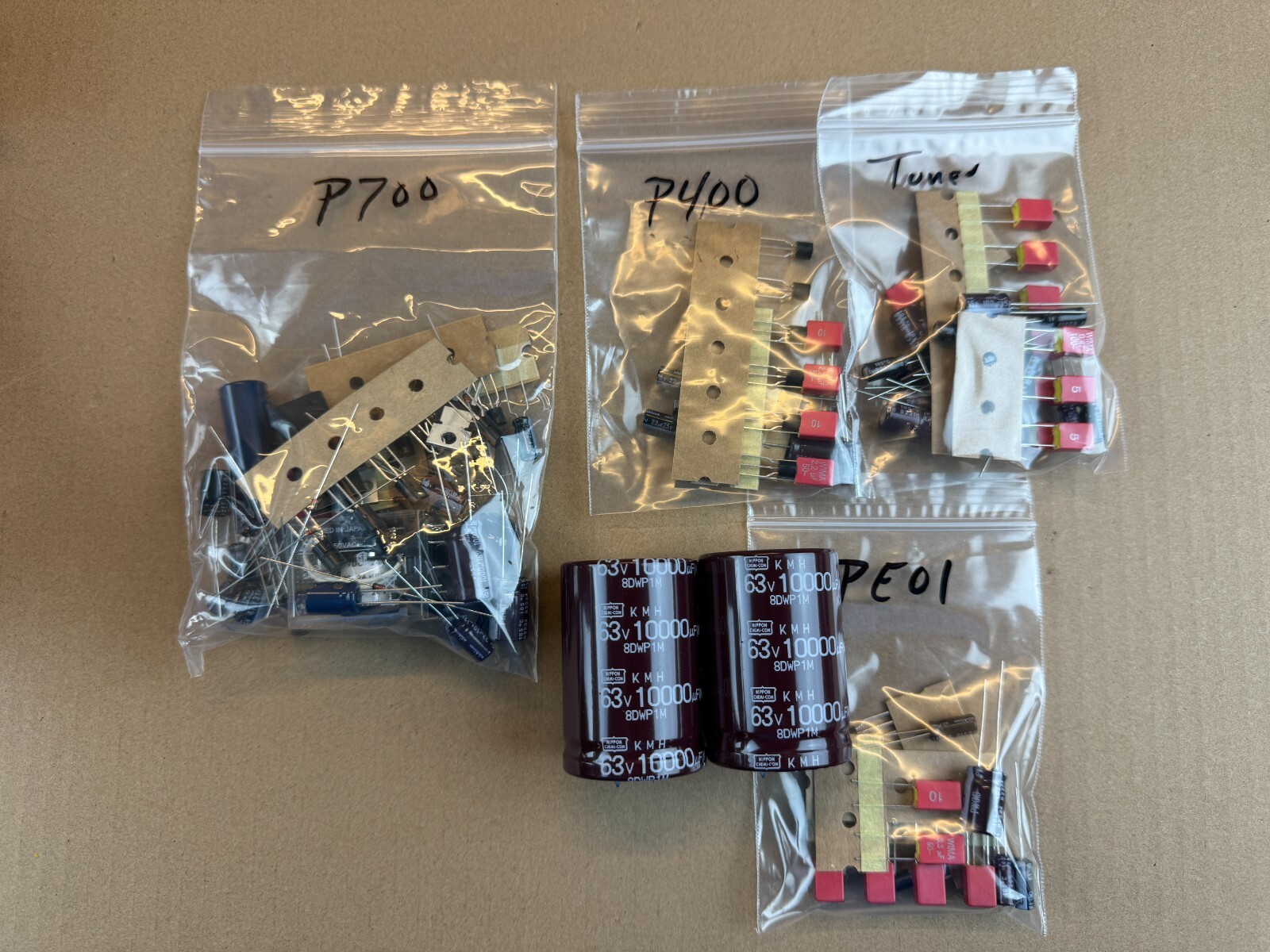
Despite the access challenges, the 2252B was built with long-term ownership in mind. Main filter capacitors are replaceable, and the separation of functional boards — phono amp, tone amp, tuner, and power supply — allows for modular troubleshooting. A full recap, particularly using high-grade replacements like Nichicon PW, Panasonic FC, and WIMA MKS2 capacitors, is widely reported to restore or even enhance the original sound quality. The use of discrete transistors in the preamp sections also means that failed components can be individually replaced rather than requiring board swaps.
Collectibility & Value
Restoration logs indicate that a full service typically includes deoxiting pots and switches, replacing all capacitors (including filter caps), and refreshing the thermal compound on output transistors. Specific capacitor types favored in recaps include Nichicon PW for power stages, Panasonic FC for preamps, and Panasonic ECQ film caps for values under 1μF. A known issue involves the signal meter “dancing” in all functions, with a suggested fix involving a jumper at C422 and removal of the cap across the meter. While no current market prices are documented in the fact sheet, owners consistently report that a well-serviced 2252B delivers a “pleasant & sweet sound” and is considered one of the best performers in the Marantz lineup.
eBay Listings

As an eBay Partner, we earn from qualifying purchases. This helps support our independent vintage technology research.
Related Models
- Marantz 3600 (1976-1977)
- Marantz MODEL 112 (1971-1973)
- Marantz MODEL 115 (1975-1977)
- Marantz MODEL 260 (1976-1978)
- Marantz MODEL 28 (1971-1973)
- Akai AM-2850 (1975)
- Akai AP-206 (1975)
- Nakamichi BX-1 (1985)
- Acoustic Research research-ar-17 (1978)
- Acoustic Research AR-19 (1994)