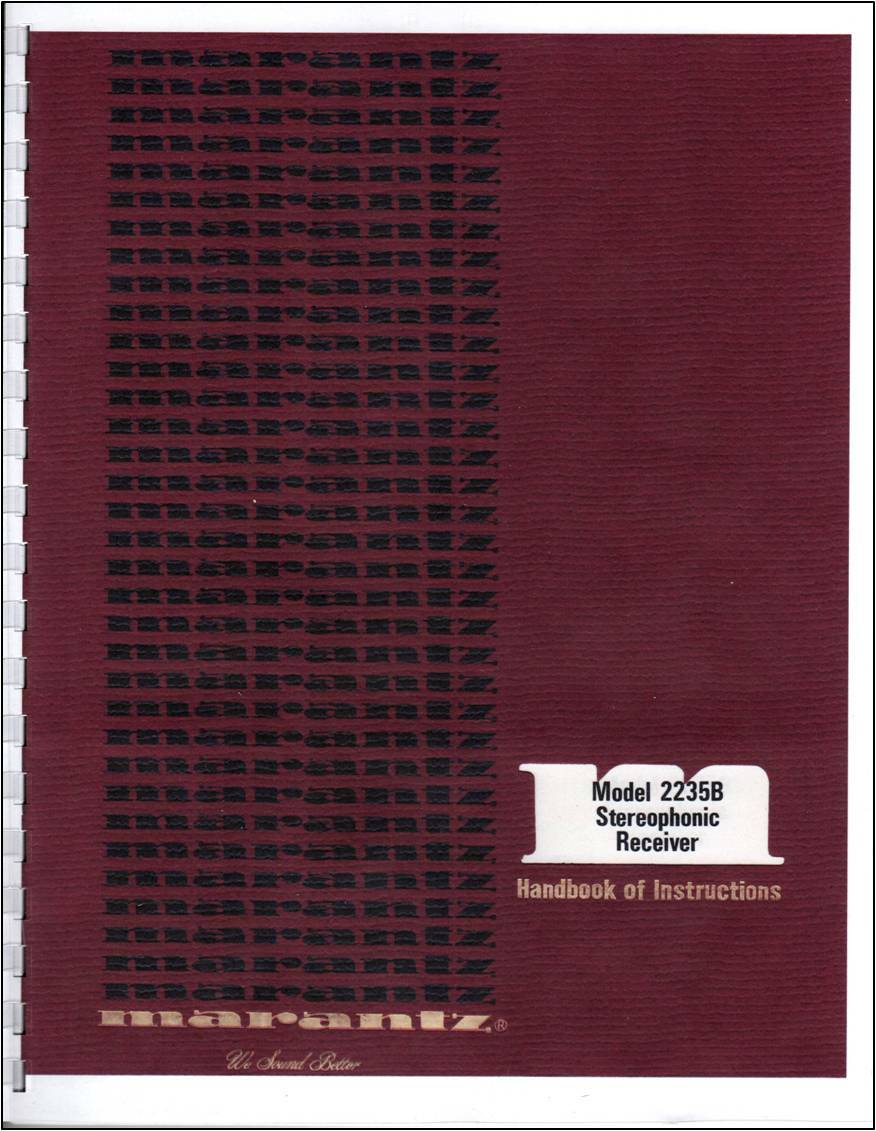
Marantz 2235B (1977–1979)
That deep, velvety midrange isn’t from tubes—it’s the 2235B doing what solid-state Marantz does best: sounding richer than it has any right to.
Overview
Turn the knob and feel the weight—this isn’t some hollow plastic relic from the late ’70s. The Marantz 2235B sits in your hands like a precision instrument, its brushed aluminum faceplate cool to the touch, the blue-lit VU meters glowing like embers. It’s a receiver that announces itself before it even powers on, with that unmistakable Marantz aesthetic: blackout panel, silver knobs, and the iconic gyro-touch tuning dial that clicks with satisfying resistance. But beyond the looks—legendary as they are—it’s the sound that hooks you. Plug in a pair of decent speakers, cue up some vinyl, and within seconds you’re not listening to a 45-year-old receiver; you’re hearing music the way it was meant to be heard: warm, full-bodied, and startlingly alive. The 2235B doesn’t shout. It doesn’t need to. Its 35 watts per channel (into 8Ω) might seem modest by today’s standards, but this thing drives speakers like it’s twice its size. Restored units have been measured pushing closer to 47 watts, and the damping factor of 45 keeps bass tight and controlled even when things get loud.
Positioned at the lower end of Marantz’s 22xx series, the 2235B wasn’t the flagship, but it wasn’t a budget model either. It sat just below the more powerful 2240B and 2252B, offering nearly the same circuitry and build quality at a more accessible price point. The “B” designation here isn’t just a revision—it’s a visual and functional evolution. Compared to the original 2235, the 2235B added a second meter (an FM tuning indicator replacing the stereo light), upgraded the dial lighting, and included Dolby B noise reduction for tape monitoring—a small but meaningful touch for cassette lovers. It’s also one of the last in the line to keep the classic black dial background; later “B” models switched to silver, marking a subtle shift in Marantz’s design language. This one, though, with its deep blue numerals and soft glow, feels like the peak of that mid-’70s Marantz look.
Specifications
| Manufacturer | Marantz |
| Production Years | 1977–1979 |
| Original Price | $449.95 |
| Power Output | 35 watts per channel, continuous average power, both channels driven into 8Ω |
| Total Harmonic Distortion | 0.25% at rated power |
| Intermodulation Distortion | Less than 0.25% |
| Frequency Response | 20Hz – 20kHz |
| Signal to Noise Ratio | 65dB (MM), 80dB (line) |
| Input Sensitivity | 1.8mV (MM), 180mV (line) |
| Output Level | 775mV (line) |
| Damping Factor | 45 |
| Inputs | Phono (MM), Tape 1, Tape 2, Auxiliary |
| Outputs | Tape 1, Tape 2, Speaker A/B, Headphones |
| Tuning Range | FM, AM (MW) |
| FM Tuner Features | FET front end, ceramic IF filters, phase-locked loop multiplex decoder |
| Weight | 26.4 lbs (12 kg) |
| Dimensions | 17.375" W × 5.375" H × 14" D |
| Power Consumption | 180W at full output, 30W idle |
Key Features
The Gyro-Touch Tuning Experience
There’s a reason people still talk about the gyro-touch dial. It’s not just nostalgia—it’s tactile engineering at its finest. The tuning knob on the 2235B doesn’t spin freely; it rotates in precise, weighted increments, each click a mechanical confirmation that you’re moving through the band with control. It’s backed by a sensitive FM tuner that uses a 4-section tuning capacitor and FET front end for low noise and high selectivity. The phase-locked loop (PLL) stereo demodulator is smart enough to switch between stereo and mono based on signal strength, minimizing hiss between stations. And with the optional ferrite AM antenna built in, even the AM band sounds surprisingly clean—no small feat for the era.
Dual VU Meters and Analog Feedback
The 2235B’s dual meters are more than just eye candy. The left meter tracks output level like a traditional VU, giving you real-time feedback on your music’s dynamics. The right one? That’s the FM tuning meter, a rarity on receivers at this price point. It doesn’t just tell you when you’re on frequency—it shows signal strength, helping you fine-tune for the clearest reception. This kind of thoughtful instrumentation was usually reserved for higher-end separates, but Marantz squeezed it into a mid-tier receiver, giving owners a sense of control and precision that most competitors couldn’t match.
Solid-State Circuitry with Tube-Like Character
On paper, the 2235B is all solid-state—no tubes, no hybrid gimmicks. But listen to it, and you’ll swear there’s a pair of 12AX7s hiding somewhere in the chassis. The phono stage is especially revealing: it pulls warmth and body from vinyl without sacrificing detail, making even budget cartridges sound more expensive than they are. The preamp is low-distortion and quiet, and the direct-coupled amplifiers deliver power without harshness. This is the “Marantz sound” in its purest form: a slight midrange bloom, a smooth top end, and bass that’s present but never overbearing. It’s not neutral—it’s musical. And for listeners who find modern gear too clinical, that’s exactly the point.
Historical Context
The 2235B arrived in 1977, right in the middle of what many consider the golden age of stereo receivers. Japanese manufacturers like Pioneer, Sansui, and Yamaha were pushing power ratings into the stratosphere, often at the expense of fidelity. Marantz took a different path. Instead of chasing watts, they focused on refinement—better tuners, better phono stages, better build quality. The 2235B wasn’t trying to beat the Sansui 4000 in a spec sheet war; it was trying to outclass it in listenability. And it succeeded. While competitors used cheaper components and simplified circuits to hit lower price points, Marantz stuck with higher-grade parts, point-to-point wiring in critical sections, and rigorous QC. The result? A receiver that aged far better than most of its peers. Even today, a well-maintained 2235B can outperform many modern AV receivers in pure two-channel music playback.
The “B” series update also reflected a broader shift in consumer expectations. By the late ’70s, buyers wanted more features: Dolby noise reduction, dual speaker outputs, better meters, and improved ergonomics. The 2235B delivered all of that without compromising the core Marantz philosophy. It was also one of the last receivers designed in Sunnyvale, California, before full production moved overseas—a subtle but meaningful detail for purists who believe the American-designed units had a sonic edge.
Collectibility & Value
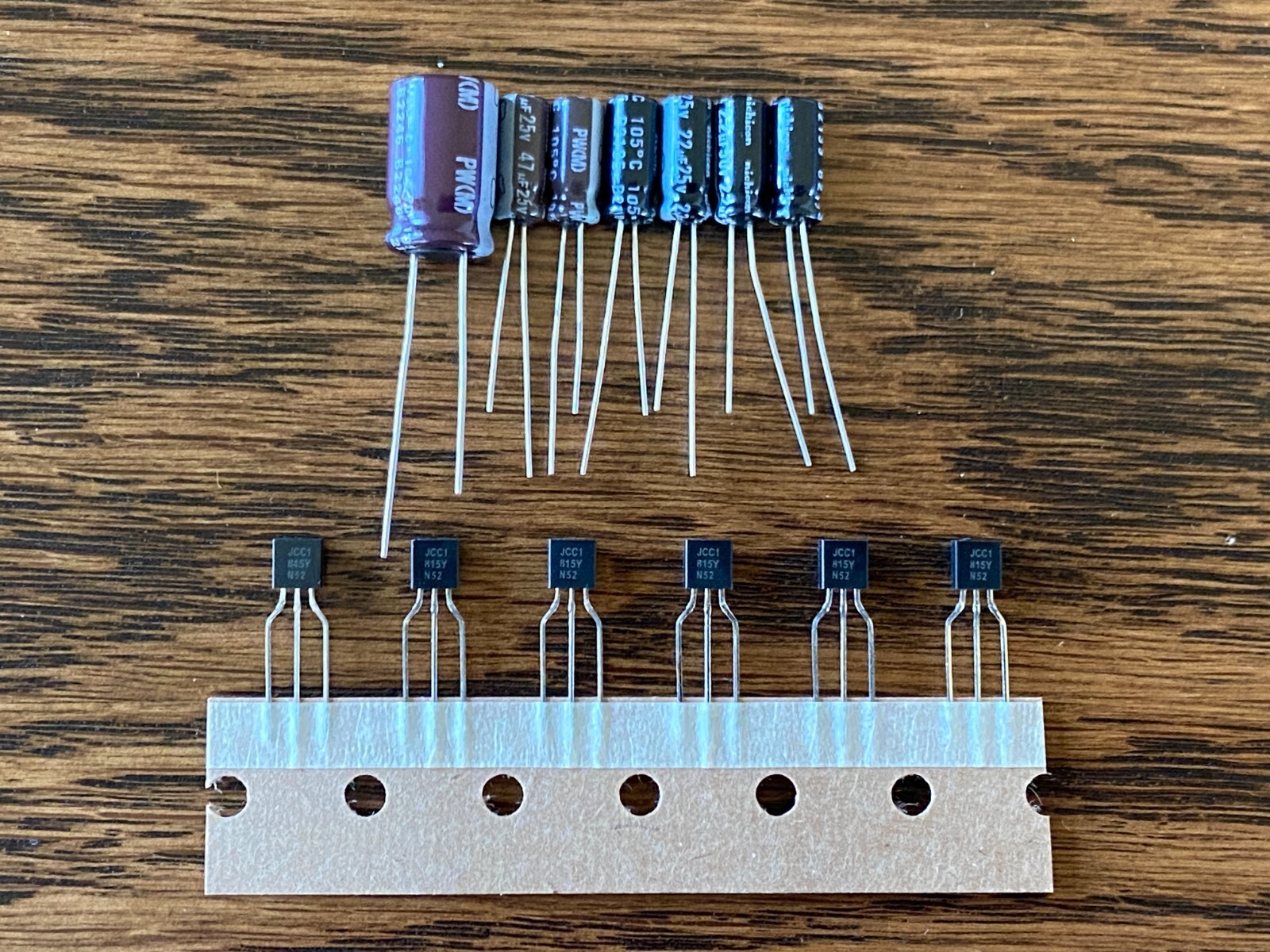
The 2235B trades in a sweet spot between affordability and desirability. Fully restored units in excellent condition sell for $300–$600, depending on provenance, cosmetics, and whether they’ve been recapped. Unrestored but functional units can still be found for $100–$200, making them a realistic entry point for vintage newcomers. But here’s the catch: very few 2235Bs on the market today haven’t aged out of spec. The electrolytic capacitors in the power supply and signal path degrade over time, leading to hum, channel imbalance, or complete failure. The original incandescent lamps burn out, the rubber idler wheel in the tuner dries and cracks, and the potentiometers get scratchy. A “working” 2235B isn’t enough—you need one that’s been professionally serviced.
Common failure points include the speaker relay (which can fail open, cutting off sound), the main power filter caps (which should be replaced as a matter of course), and the gyro-tuning mechanism (which needs lubrication to avoid binding). The blue dial faceplate plastic is also prone to warping if exposed to heat, causing uneven lighting or dim spots. Replacement faceplates and LED conversion kits are available, but originals in good condition are worth preserving.
For buyers, the rule is simple: assume it needs work unless proven otherwise. Ask for service records, test all inputs and outputs, and verify that the tuner locks onto stations cleanly. If it powers on quietly, drives speakers without hum, and the meters respond correctly, you’re ahead of the game. And if it still has its optional WC-22U wood cabinet? That’s a bonus most collectors will pay extra for.
eBay Listings


As an eBay Partner, we earn from qualifying purchases. This helps support our independent vintage technology research.
Related Models
- Marantz 3600 (1976-1977)
- Marantz MODEL 112 (1971-1973)
- Marantz MODEL 115 (1975-1977)
- Marantz MODEL 260 (1976-1978)
- Marantz MODEL 28 (1971-1973)
- Akai AM-2850 (1975)
- Akai AP-206 (1975)
- Nakamichi BX-1 (1985)
- Acoustic Research research-ar-17 (1978)
- Acoustic Research AR-19 (1994)