Luxman D-113D (1988)
A no-frills digital transport from the early CD era that does one job—delivering clean digital output—and does it well.
Overview
When you unbox a Luxman D-113D, you’re not getting a full-featured CD player with warm analog outputs or headphone jacks meant for late-night listening. What you’re getting is something rarer: a dedicated CD transport from June 1988, built with surgical precision for one purpose—feeding a clean digital signal to an external DAC. At its launch, it carried a price of ¥39,800, positioning it as a serious component for audiophiles who wanted to separate digital sourcing from analog playback, a niche but growing philosophy in the late 1980s. Manufactured by Luxman and sometimes branded as ALPINE/LUXMAN D-113D, this unit was never meant to stand alone. It’s a digital workhorse, stripped of unnecessary circuitry, designed to do exactly what its specifications promise and nothing more.
It plays standard 12cm CDs and 8cm singles, using the KSS-152A CD mechanism—a reliable, mid-tier transport module found across several Japanese electronics brands of the era. The front panel is minimal: no line-level analog outputs dominate the back panel, because they’re not the point. Instead, you’ll find coaxial and optical digital outputs, the twin arteries through which the D-113D delivers its signal. One listing on AV-Market.com describes it as “a rare piece,” and that tracks—this isn’t a mass-market player. It’s a specialist tool, the kind of unit that shows up in system diagrams between a disc drawer and a high-end DAC, not on a bedroom shelf next to a boombox.
Owners who’ve used it with the matching DAC-113 report a sound that’s “very analytical and precise, dynamic but a bit cold”—a description that fits the early CD aesthetic perfectly. There’s no attempt here to soften the digital edge or add warmth; the D-113D serves the data straight. If you’re after vintage charm or tube-like bloom, look elsewhere. But if you want transparency, timing, and a no-nonsense interface with the disc, this is the kind of machine that delivers. It came with the RD-113 remote, enabling full control over its built-in functions: program memory for 16 tracks, repeat, timer play, and disc marking—features that were still considered advanced in 1988.
Specifications
| Manufacturer | Luxman |
| Model | D-113D |
| Year Introduced | 1988 |
| Type | CD transport |
| Playable Media Format | CD |
| Compatible with 8 cm CD | Yes |
| Number of quantization bits | 16-bit linear |
| Sampling frequency | 44.1kHz |
| Digital filter | 8x oversampling |
| Frequency response | 20Hz to 20kHz |
| Signal-to-noise ratio | 85dB |
| Dynamic range | 83dB |
| Total harmonic distortion | 0.001% |
| Channel separation | 75dB |
| Digital direct output | 0.5Vp-p/75 Ω |
| Audio Outputs | Digital Optical TOSLINK, Digital Coaxial RCA |
| Power supply voltage | 100 VAC, 50Hz/60Hz |
| Power consumption | 12W |
| CD Mechanism | KSS-152A |
| Pick-up | Semiconductor laser pickup |
| Colour | Black |
| External dimensions | 438 x 85 x 314 mm |
| Weight | 4.4kg |
| Remote control | included (RD-113) |
Key Features
Dedicated Digital Output Design
The Luxman D-113D is explicitly a player “exclusively for digital output,” meaning it skips the internal D/A conversion stage that would allow direct connection to an amplifier. Instead, it sends a raw digital signal via both coaxial RCA and optical TOSLINK outputs. This design choice wasn’t common in 1988—most CD players were all-in-one units—but it appealed to early adopters who believed external DACs could outperform built-in ones. To ensure signal integrity, Luxman used a newly developed high-efficiency pulse transformer for the digital output, a component designed to reduce jitter and stabilize transmission. That focus on clean digital delivery is the core of the D-113D’s identity.
Vibration-Resistant Mechanism
Accurate disc reading was a major concern in early CD players, and the D-113D addresses it with a high-rigid lock mechanism TypeII, engineered to shield the pickup from external vibration. The pickup base and mechanism base are mechanically isolated using a special rubber damper and coil spring—a decoupling strategy that reduces micro-vibrations that could disrupt tracking. The optical pickup itself is mounted on a die-cast base, which adds rigidity and improves thermal stability, helping maintain alignment during extended play sessions. These aren’t just buzzwords; they reflect a real engineering effort to minimize error in a format where even tiny jitters could affect sound quality.
Power and Noise Management
Luxman included a power line filter to block pulse noise from entering through the AC line—a smart move for a digital component that might be used alongside turntables, tape decks, or other noise-sensitive gear. Given its 100 VAC, 50Hz/60Hz power supply, it was clearly designed for the Japanese market, though its low power consumption of 12W suggests it would run quietly and efficiently even in older homes with unstable wiring. There’s no mention of multi-voltage support in the verified specs, so international use would likely require a step-down transformer.
System Integration and Control
Despite its focused function, the D-113D wasn’t a lonely component. It came with the RD-113 remote control, allowing full access to its 16-track program memory, repeat, timer, and disc mark functions. More interestingly, it could be integrated into a broader system: when connected to the separately sold AV surround controller F-105, it became part of a centralized ALPINE/LUXMAN setup, allowing unified control of multiple components. Some listings note it was sold as a set with the LV-113 amplifier, suggesting Luxman envisioned it as a key piece in a matched system for discerning listeners.
Collectibility & Value
The Luxman D-113D isn’t a headline-grabbing collectible like the Nakamichi Dragon, but it has carved out a quiet reputation among digital purists. It’s been described as “a rare piece,” and that scarcity shows in the market. A unit was listed on HifiShark for DKK 1,695 (about $250 USD) in September 2023, while a bundled listing in January 2025 offered the D-113D with the LV-113 amplifier for PLN 1,500 (roughly $360 USD). These aren’t sky-high prices, but they reflect steady demand for functional, complete units.
Condition is critical. One AV-Market.com listing notes a unit “works but has a problem with the recognition of the disks (lens block probably to be replaced),” pointing to laser degradation as a likely failure point after nearly four decades. The KSS-152A mechanism is generally reliable, but like all optical drives of this era, it’s vulnerable to aging lasers and mechanical wear. Fortunately, a service in Paris (hark.paris) offers full repair, revision, and restoration for the D-113D, suggesting that expert support exists for owners willing to invest in upkeep. Given its lack of analog circuitry, there are fewer failure modes than in a full CD player—no output amps to drift, no volume controls to crack. But the laser assembly remains the Achilles’ heel.
One eBay reviewer simply wrote: “The good player product is like discribe ,sounds great .” It’s not a technical review, but in the world of vintage digital, where silence often means “it works,” that might be the highest praise you’ll get.
eBay Listings

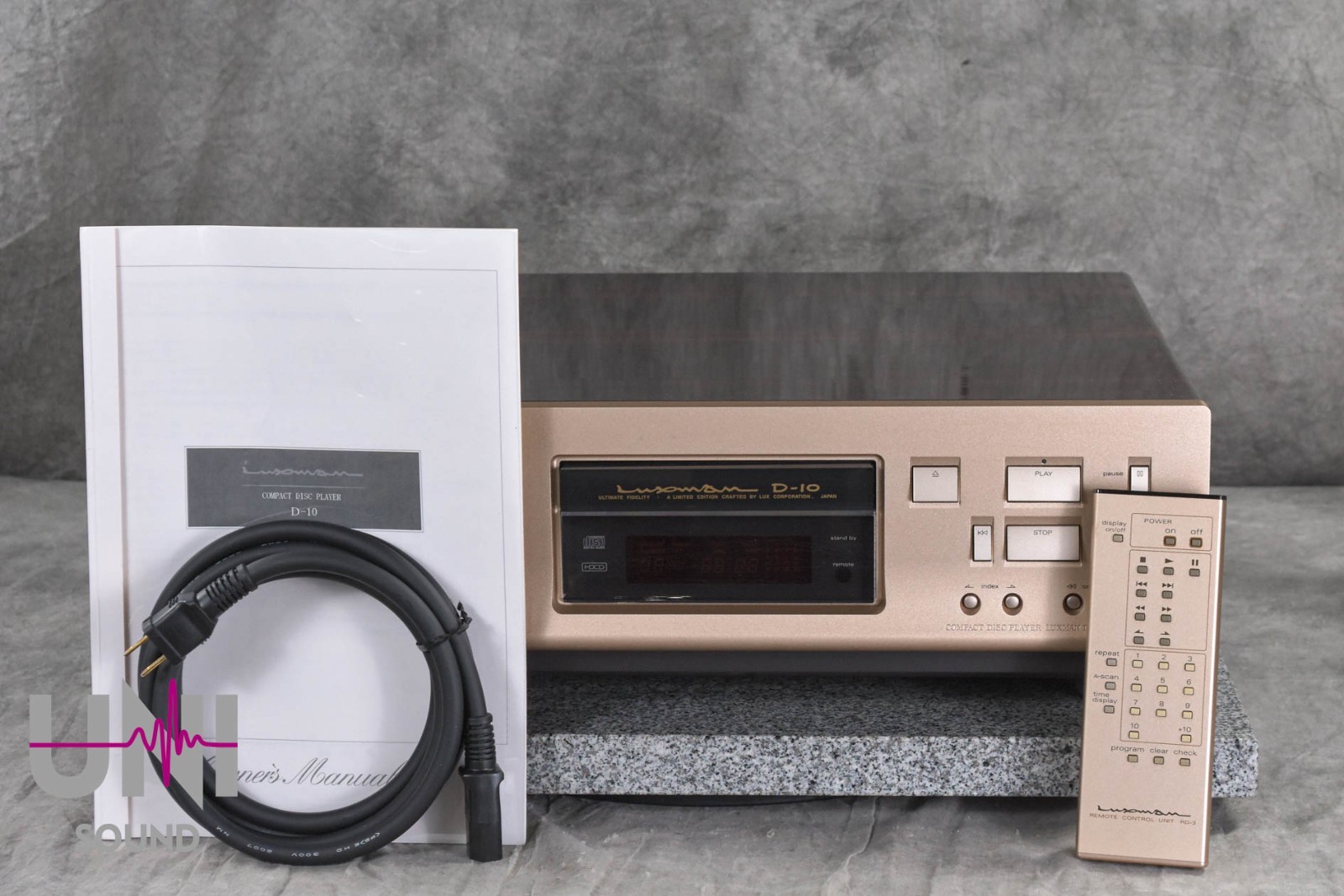

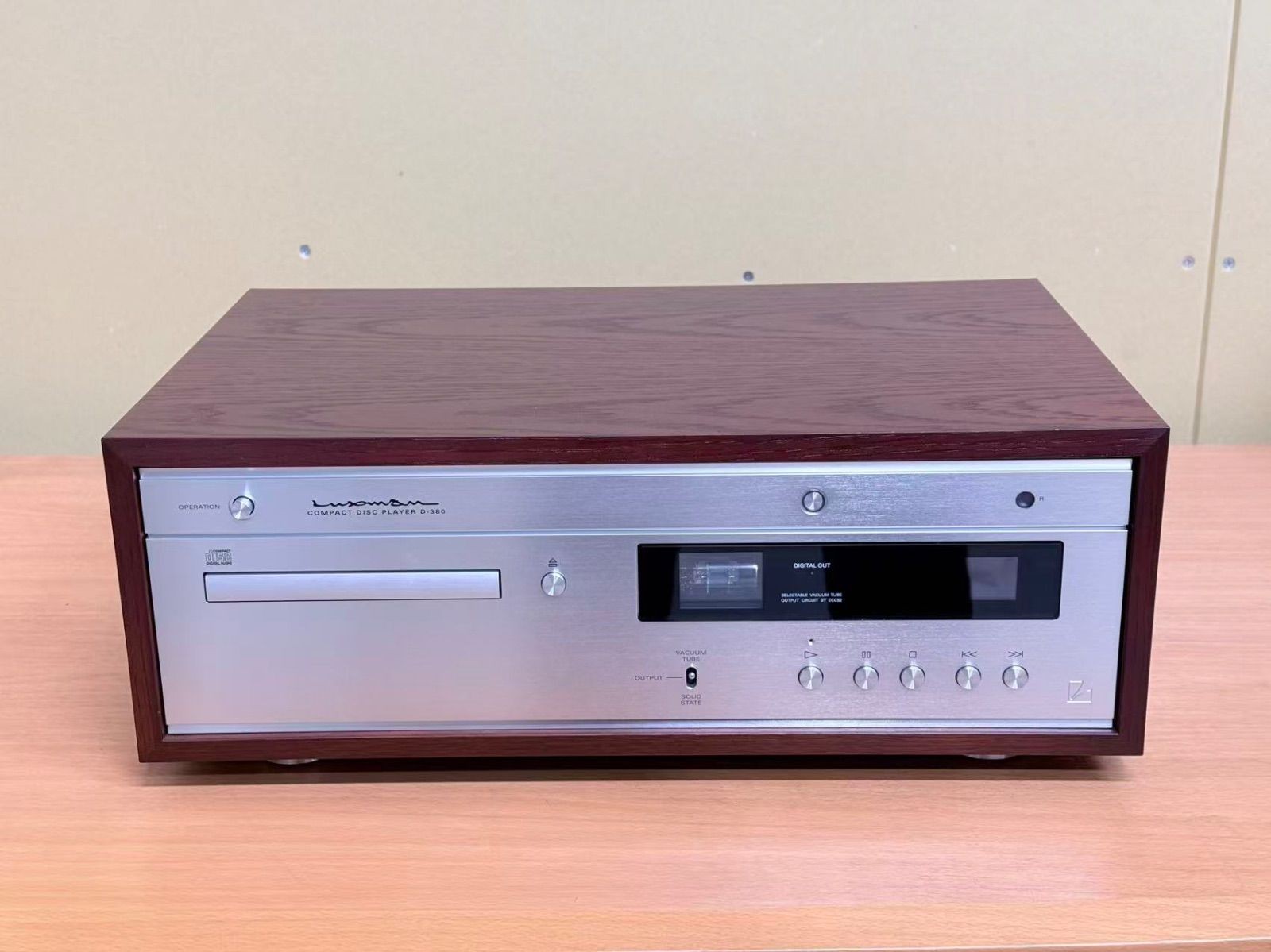
As an eBay Partner, we earn from qualifying purchases. This helps support our independent vintage technology research.
Related Models
- Sony TC-2050SD (1978)
- Aiwa AD-F990 (1993)
- Kenwood KX-3060 (1982)
- Sony TC-2130A (1974)
- Sony TC-2220 (1972)
- Sony TC-FX6 (1982)
- Sony TC-K96R (1986)
- Stromberg-Carlson RS-404 (1975)
- Akai CS-F33R (1985)
- Akai DX-59 (1983)