Kenwood LS-770-MKII (1978–1980)
93 dB efficiency, a coaxial bullet tweeter, and a cult following in Japan—this is the speaker that made Kenwood’s name in high-end audio.
Overview
Pull one out of a forgotten cabinet in an Osaka apartment, and the first thing you notice isn’t the sound—it’s the smell. A faint trace of aged wood glue and oxidized copper, like a book opened after decades. Then you see it: the LS-770-MKII, a speaker that doesn’t shout for attention but commands it through sheer presence. The 10-inch coaxial driver stares back like a cyclopean eye, its horn-loaded bullet tweeter centered perfectly in the paper cone, a design that screams late-’70s Japanese engineering ambition. This wasn’t Kenwood’s first speaker, but it was the one that told the world they weren’t just making radios and tuners anymore—they were building statements.
And what a statement it was. With 93 dB sensitivity, the LS-770-MKII laughs at low-powered amps. Single-ended triodes, humble solid-state receivers, even modest transistor amps from the era—none of them break a sweat driving these. That efficiency comes from a carefully engineered system: a large-diameter paper cone with a long voice coil, paired with a passive radiator of the same size to extend bass response without port noise. The closed-box design keeps transient response tight, and the coaxial layout—where the tweeter fires from the center of the woofer—aims for time-aligned sound that collapses the stereo image into something eerily precise.
But it’s not just theory. In practice, these speakers deliver a midrange that feels uncannily present, especially with vocals and acoustic instruments. There’s a warmth to the delivery, not colored exactly, but generous—like the speaker is leaning forward to make sure you heard that phrase. The treble, thanks to the horn-loaded tweeter, has bite without being harsh, though some owners report it can get a little intense if the room is too reflective. Bass is quick and articulate, but don’t expect earth-shaking depth; the passive radiator helps, but physics is physics. Below 40 Hz, the energy drops off, so if you’re chasing deep organ pedals or synth drones, you’ll want a sub—or a different speaker.
Still, for what it is, the LS-770-MKII punches far above its weight. It was positioned as Kenwood’s flagship during its production run, sitting above the LS-55 and LS-66 models, and it showed in the build. The cabinets are thick MDF (for the time, nearly overkill), finished in a durable black laminate that resists scratches better than veneer. The grilles are metal, not fabric, with a perforated pattern that looks more industrial than decorative. These aren’t pretty speakers in the traditional sense, but they have a rugged honesty to them—like tools built for listening, not show.
Specifications
| Manufacturer | Kenwood Corporation, Japan |
| Production Years | 1978–1980 |
| Original Price | ¥89,800 per pair (Japan, 1978) |
| Frequency Response | 35 Hz – 20,000 Hz |
| Sensitivity | 93 dB (1W/1m) |
| Nominal Impedance | 8 ohms |
| Power Handling | 60 watts (continuous) |
| Driver Configuration | 2-way coaxial |
| Woofer | 250 mm (10") paper cone with fabric surround |
| Tweeter | Horn-loaded bullet tweeter, coaxial mount |
| Passive Radiator | 250 mm (10") paper diaphragm |
| Crossover Frequency | 4,000 Hz |
| Enclosure Type | Acoustic suspension (sealed) |
| Dimensions (H×W×D) | 600 × 330 × 297 mm |
| Weight | 15 kg per speaker |
| Crossover Components | Air-core inductor for tweeter, ferrite-core inductor for woofer, non-polarized electrolytic capacitors |
| Inputs | Single pair of binding posts |
| Recommended Amplifier Power | 20–60 watts |
Key Features
Coaxial Driver with Horn-Loaded Tweeter
The heart of the LS-770-MKII is its coaxial driver, a design philosophy Kenwood inherited from its earlier Trio branding (the company rebranded fully to Kenwood in 1986, but the LS-770-MKII predates that). By mounting the tweeter directly in the center of the woofer, Kenwood achieved a point-source radiation pattern that minimizes phase differences between high and low frequencies. This isn’t just theoretical—it translates to a startlingly cohesive soundstage, especially when seated directly on-axis. The bullet-shaped tweeter is horn-loaded, which boosts efficiency and directivity. That horn isn’t just for show; it’s carefully profiled to control dispersion, reducing early reflections and enhancing clarity in untreated rooms. The trade-off? A slightly forward treble character that can feel aggressive with bright recordings or poor placement.
Passive Radiator for Extended Bass
Instead of a port, Kenwood used a 10-inch passive radiator—essentially a second woofer without a motor—to tune the bass response. This avoids port turbulence and chuffing, common in ported designs at high volumes, and allows for tighter transient response. The radiator moves in opposition to the active driver, reinforcing bass output around 40 Hz. It’s not a subwoofer replacement, but in a nearfield setup or small room, it delivers a surprising sense of weight. The downside? The radiator’s suspension can degrade over time, especially if the speakers were stored in humid conditions. A stiff or seized radiator will kill the low-end response, so it’s one of the first things to check when buying used.
Industrial-Grade Cabinet Construction
These aren’t flimsy boxes. The LS-770-MKII uses thick MDF panels with internal bracing, finished in a black laminate that was both modern and practical for the era. Unlike wood veneer, which can chip and fade, this surface resists scratches and cleaning solvents. The front baffle is especially thick, minimizing resonance, and the entire cabinet feels inert when tapped. That solidity pays off in reduced coloration—there’s no “boxy” sound here, just clean driver output. The metal grilles, while heavy, are easy to remove and don’t affect the frequency response much, though some purists prefer them off for a more open sound.
Historical Context
The LS-770-MKII arrived at a pivotal moment. The late 1970s saw Japanese audio companies—Kenwood, Pioneer, Sony, Yamaha—racing to prove they could rival Western high-end brands like Quad, Tannoy, and AR. Kenwood, still transitioning from its Trio roots, needed a halo product. The LS-770-MKII was that product: ambitious, technically sophisticated, and priced accordingly. It competed directly with the Yamaha NS-1000M and the Pioneer S-7EX, both of which also used exotic materials and complex crossovers. But where those speakers leaned into multi-driver arrays and exotic cones, Kenwood bet on coherence—fewer drivers, better integration.
The coaxial design wasn’t new—Tannoy had been doing it for decades—but Kenwood’s execution, with its horn-loaded tweeter and passive radiator, was fresh. It also reflected a shift in listening habits. As home hi-fi moved from console radios to separates, listeners wanted speakers that could disappear sonically, creating a “you are there” illusion. The LS-770-MKII, with its focused imaging, delivered that—especially in the Japanese market, where small listening rooms favored compact, efficient designs.
It didn’t last long. By 1980, Kenwood had moved on to the LS-900 series, and the LS-770-MKII faded into obscurity outside Japan. But in the decades since, it’s gained a cult following among vintage audio enthusiasts who appreciate its blend of efficiency, build quality, and sonic character.
Collectibility & Value
Today, the LS-770-MKII trades in a narrow but passionate market. Prices vary wildly based on condition, with fully restored pairs commanding $400–$700 in North America and Europe. In Japan, where they’re more common, you might find working pairs for ¥30,000–¥50,000 ($200–$350). But “working” is the key word. These speakers are nearly 45 years old, and several components are prone to failure.
The most common issue is the crossover capacitors. The non-polarized electrolytics used in the filter network dry out over time, leading to treble loss or complete tweeter failure. Replacing them isn’t hard—any competent technician can do it—but it’s essential. Equally critical is the condition of the woofer surrounds. While the paper cones are durable, the foam or rubber surrounds can disintegrate, especially if the speakers were exposed to sunlight or moisture. A visual inspection is a must: look for crumbling material around the edge of the cone.
The passive radiator is another weak point. If it’s not moving freely, the bass will be thin. Sometimes it’s just stiff from age and can be revived with careful coaxing; other times, the surround needs replacement. And while the drivers themselves are robust, the horn tweeter’s diaphragm can tear if overdriven—so avoid cranking them with modern high-power amps.
For buyers, the rule is simple: assume the crossovers need recapping. Budget $100–$150 for the work if you’re not doing it yourself. Check the grilles for dents, the cabinets for warping, and the binding posts for corrosion. Originality matters—reconed drivers or replaced cabinets drop the value significantly.
Still, for the right listener, the LS-770-MKII is a revelation. It’s not a neutral monitor like a modern Harbeth, nor a bass monster like a JBL. It’s something else: a speaker that sounds alive, especially with jazz, rock, and acoustic recordings from its era. If you have a modest tube amp or a vintage Kenwood receiver, it’s a match made in audio heaven.
eBay Listings
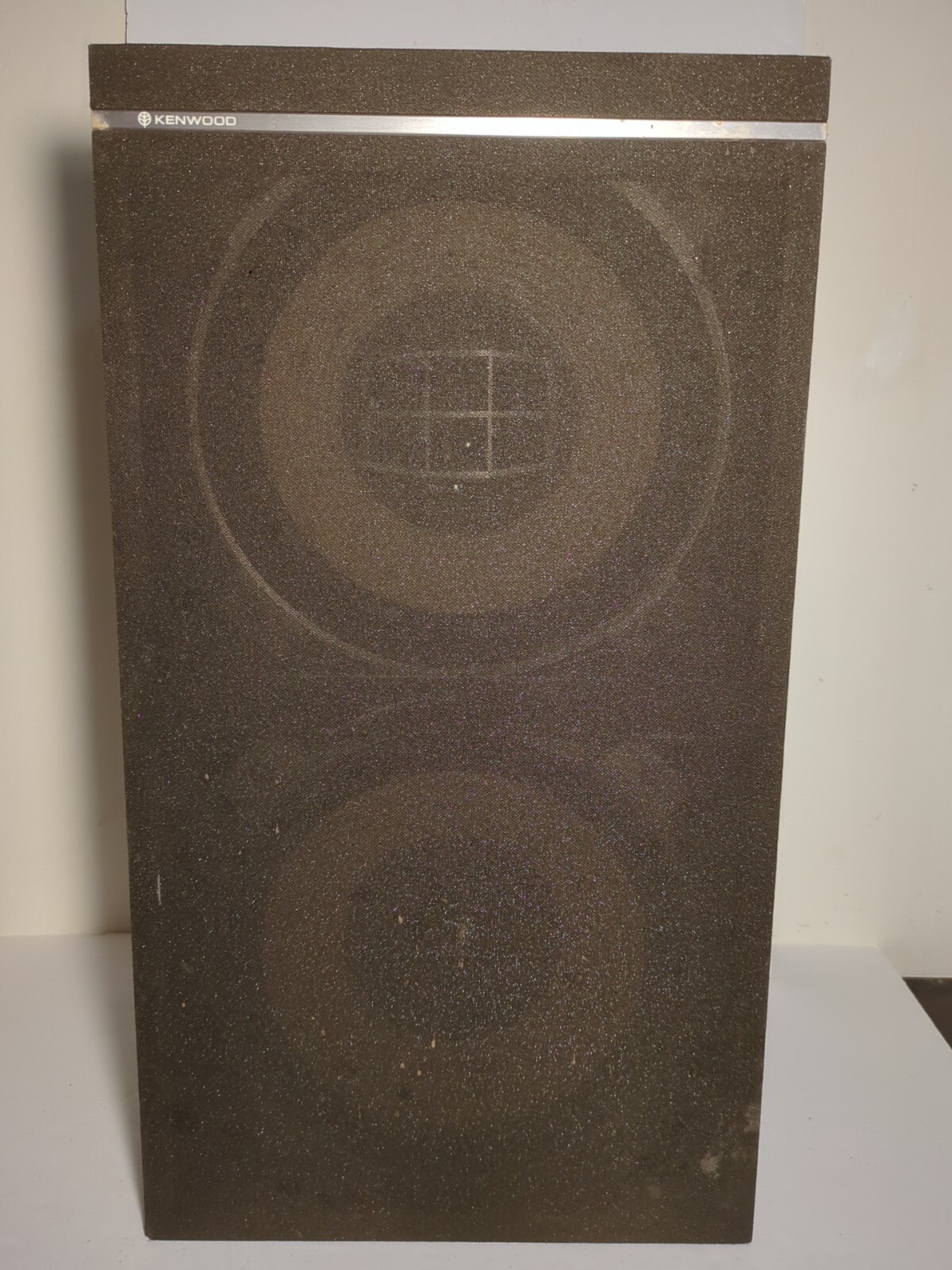
As an eBay Partner, we earn from qualifying purchases. This helps support our independent vintage technology research.
Related Models
- Kenwood kl-888s (Late 1970s (approximately 1978-1980))
- Kenwood kd-1500 (1972-1975)
- Kenwood ls-500 (Late 1970s (approximately 1978-1980))
- Kenwood kd-5070 (1979-1981)
- Kenwood kd-5077 (1978-1980)
- Sony ps-5550 (1978-1980)
- Sony ps-lx5r (1983-1985)
- Sony ss-7220a (1970s)
- Sony ss-97 (Late 1970s (approximately 1977-1979))
- Sony ss-999 (Late 1970s (approximately 1977-1979))