Kenwood KL-7090 (1973–1975)
At 44 pounds and crowned with a 10" woofer, these Japanese floorstanders promise weighty sound — but owners report the bass rarely delivers.
Overview
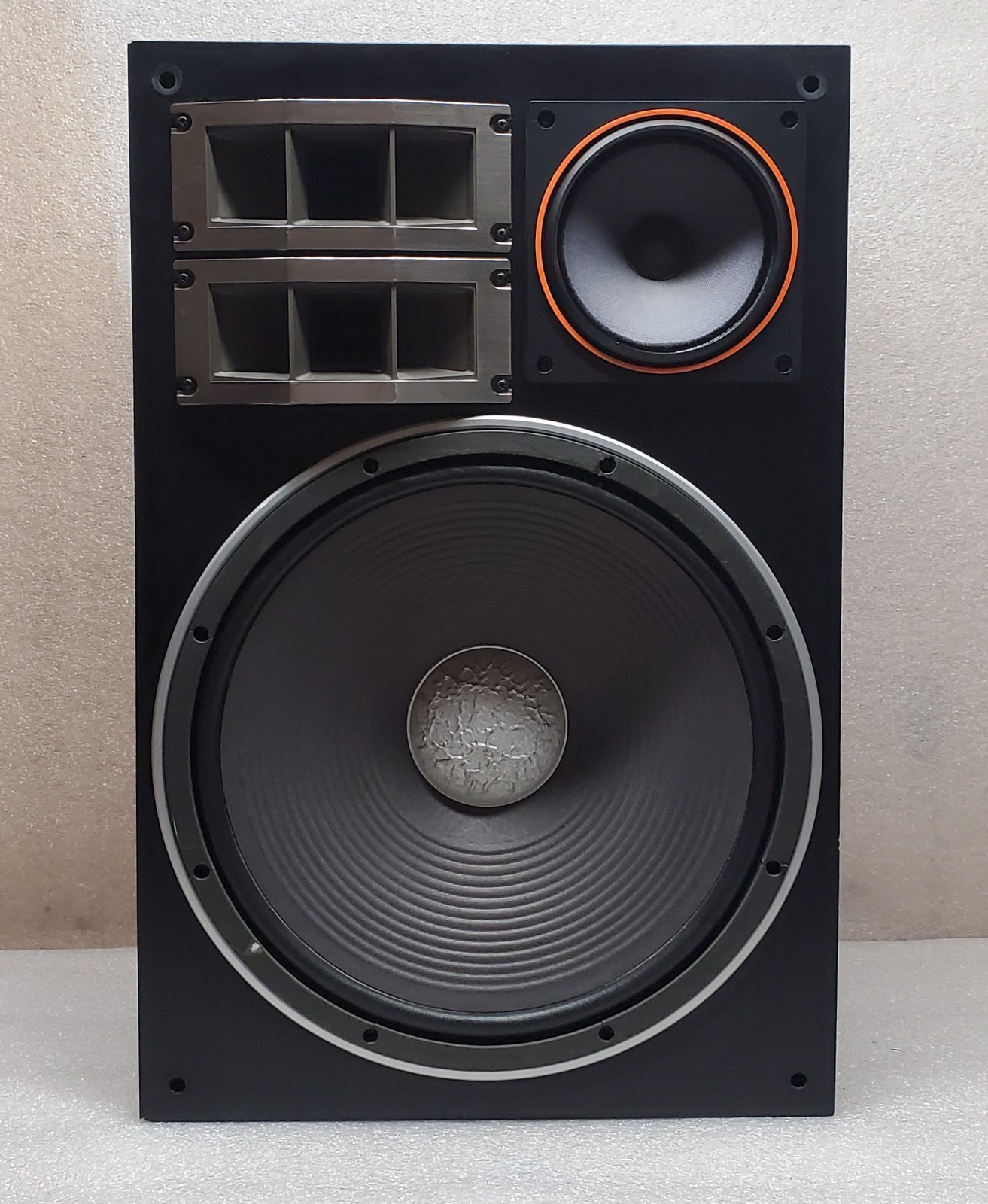
The Kenwood KL-7090 isn't subtle in ambition: a 5-way, 6-speaker system built in Japan during the early 1970s as part of Kenwood’s flagship KL series. Marketed at approximately 1,000 DM, these were serious investments for audiophiles who wanted a full-range, horn-loaded experience without stepping into electrostatic territory. The design centers on a sealed (acoustic suspension) cabinet clad in walnut with a real timber construction, giving the speakers a dense, industrial feel that divides opinion — some call them "very very nice, hefty cabinets," while others dismiss them as looking "cheap and industrial" with "horrid silver dust caps" marring the driver aesthetics. Despite the visual contradictions, the KL-7090 was engineered for presence, both physical and sonic, with an adjustable crossover and a multi-driver layout intended to cover every octave.
Yet for all the hardware packed inside, user reports reveal a persistent mismatch between expectation and performance. That 10" woofer suggests deep bass authority, but multiple listeners note a surprising lack of low-end punch. One owner asked, "what the heck is the deal with that big woofer? There is very limited bass," while another observed that music with significant bass content, like recordings by Gorillaz, doesn’t translate well. Forum discussions suggest the sealed cabinet may simply lack the internal volume needed to exploit the woofer’s potential, making it a classic case of "show than go" — a sentiment echoed by users who describe Japanese speakers of this era as often prioritizing visual impact over bass extension. Still, on material like The Carpenters with Royal Philharmonic or the Avett Brothers, owners report being shocked at how good these 50-year-old speakers can sound, praising their dynamic range and subtlety in midrange delivery.
Specifications
| Manufacturer | Kenwood |
| Product type | 5-Way 6-Speaker System |
| Years of manufacture | 1973–1975 |
| Original price | Approx. 1,000 DM |
| Power handling | 50W (fact sheet); reportedly 120W (additional source) |
| Impedance | 8 ohms |
| Frequency response | 40–20,000 Hz |
| Construction | 5-way, 6 speakers, closed cabinet |
| Drivers | 3-way system with 10" woofer, 2" midrange, and 2" tweeter |
| Dimensions | 25" H x 14.5" W x 11.5" D (633 x 421 x 292 mm) |
| Weight | 44 lbs (20 kg) |
| Made in | Japan |
| Cabinet | Real timber, walnut finish |
| Grille | Walnut-finished wood grille |
| Features | Horn loaded and adjustable crossover |
Key Features
5-Way, 6-Speaker System with Horn Loaded Drivers
Kenwood didn’t settle for a conventional three-way layout. The KL-7090 integrates six drivers across five frequency bands, including horn-loaded elements designed to increase efficiency and directivity in the mid and high frequencies. This configuration was intended to deliver a more dynamic and layered soundstage, particularly with orchestral or vocal-centric recordings. Owners note that on the right material, the speakers achieve a startling level of subtlety and realism, with one describing the experience as "the closest thing I've heard to a reference speaker yet." The horn loading helps these speakers play loudly with relatively little amplifier input, a trait appreciated in lower-powered tube or early solid-state systems common at the time.
Adjustable Crossover Network
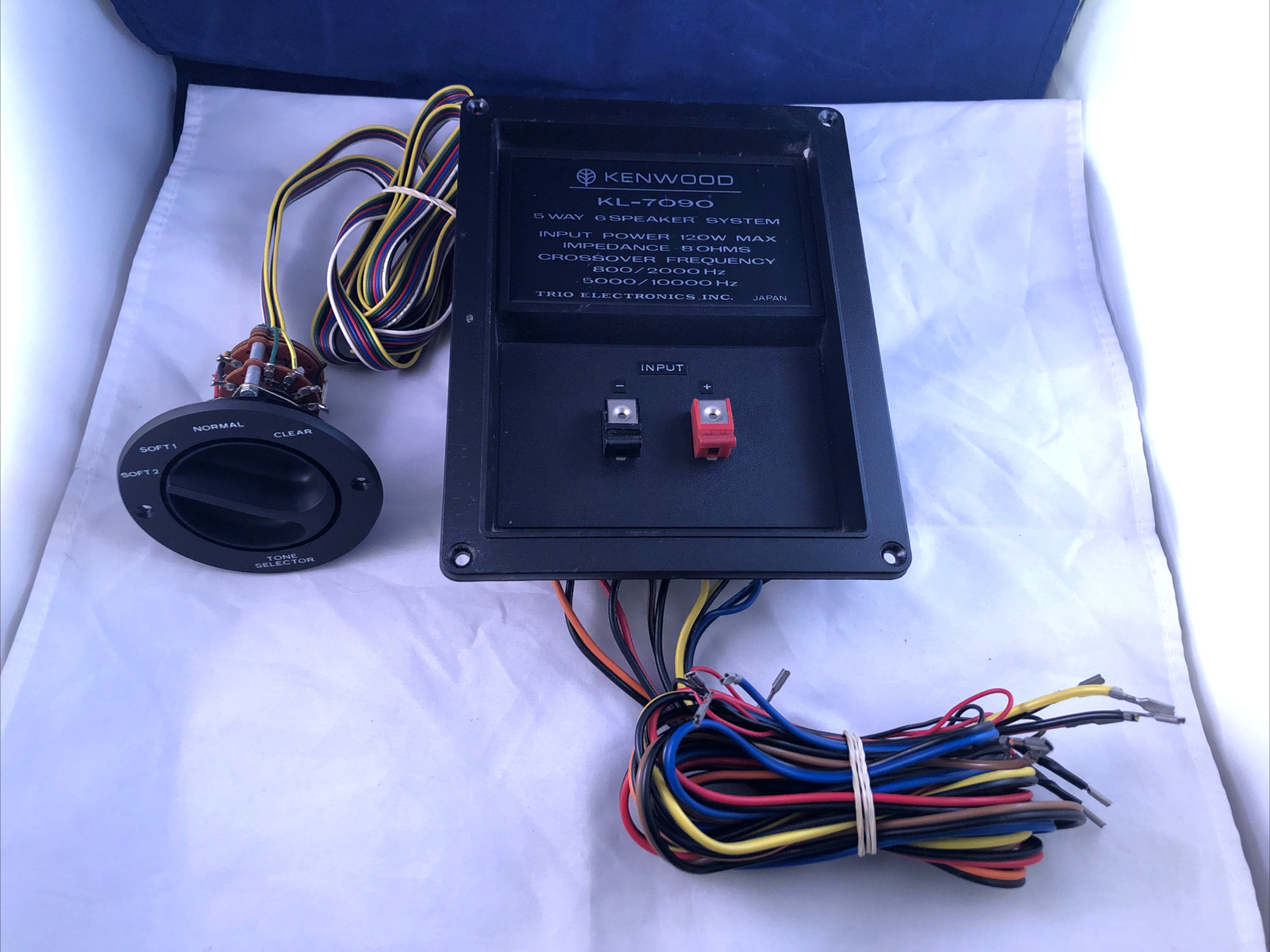
Mounted internally and accessible for tuning, the crossover allows users to tailor the speaker’s tonal balance. While exact adjustment ranges aren’t documented, the presence of this feature suggests Kenwood anticipated varied room acoustics and listener preferences. It also reflects a higher tier of design intent — this wasn’t a sealed-box product meant to be used one way. However, the lack of documentation on how to optimize it means many owners likely never touched it, leaving potential performance on the table. One listing confirms the inclusion of the original manual, which may contain crucial setup guidance now rare in the secondhand market.
Sealed Cabinet with Real Timber Construction
The KL-7090 uses a fully sealed acoustic suspension design, avoiding port noise and offering tighter transient response compared to bass-reflex cabinets. Constructed from real timber and finished in walnut, the cabinet feels substantial — weighing in at 44 lbs — and resists resonance better than particleboard alternatives. This build quality separates it from more budget-oriented contemporaries, though some users still criticize the industrial aesthetic, particularly the silver dust caps that clash with the warm wood finish. The cabinet’s internal volume, however, appears to be a limiting factor; collectors speculate it’s simply too small to allow the 10" woofer to produce meaningful low bass, explaining the frequent recommendation to pair these speakers with a subwoofer.
Collectibility & Value
The Kenwood KL-7090 has developed a niche following among vintage audio enthusiasts, particularly those restoring period-correct systems. A used pair was listed for HUF 134,250 on Jófogás in April 2026, while another listing on Reverb sold for $469.99 plus nearly $100 in shipping, suggesting strong demand when condition is high. Listings emphasize originality — matching serial numbers, intact badges, and working drivers — with one pair graded at "8/10 condition" and described as "nearly as clean" despite minor surface wear. Collectors are advised to inspect the dust caps, as depressions or warping are noted flaws. Despite their age, these speakers remain functional time capsules, though their sonic limitations mean they’re often valued as much for their visual and historical presence as for their audio fidelity.
eBay Listings

As an eBay Partner, we earn from qualifying purchases. This helps support our independent vintage technology research.
Related Models
- Kenwood kl-888s (Late 1970s (approximately 1978-1980))
- Kenwood kd-1500 (1972-1975)
- Kenwood ls-500 (Late 1970s (approximately 1978-1980))
- Kenwood kd-5070 (1979-1981)
- Kenwood kd-5077 (1978-1980)
- Sony ps-5550 (1978-1980)
- Sony ps-lx5r (1983-1985)
- Sony ss-7220a (1970s)
- Sony ss-97 (Late 1970s (approximately 1977-1979))
- Sony ss-999 (Late 1970s (approximately 1977-1979))