Kenwood KL-5090 (1973–1975)
Big, bold, and built like a battleship, these Japanese-flagged floorstanders deliver a surprisingly modern sound—if you can find a pair without cabinet rot.
Overview
You pull into the driveway with a pair of these beasts in the back of your wagon, and you know you’ve scored: the deep walnut veneer catching the afternoon light, the sheer mass of them making your floor creak in approval. The Kenwood KL-5090 isn’t subtle. At nearly 25 inches tall and tipping the scales at 33 pounds each, these are statement speakers from an era when Japanese manufacturers were proving they could out-engineer, out-build, and out-sound their Western counterparts. Made in Japan during the golden early '70s surge, the KL-5090 was part of Kenwood’s premium floorstanding lineup—a moment when the company wasn’t just chasing Hi-Fi credibility, it was building cabinets with the same care as furniture makers and loading them with drivers that could actually deliver on the promise.
Sonically, they’re a revelation if you’re used to the polite, compressed sound of many vintage bookshelf pairs. The KL-5090 is a true three-way, four-driver bass reflex design, which in 1973 was no small feat for a consumer-priced flagship. The result? Deep, articulate bass that doesn’t boom and fade, a clear midrange that lets vocals breathe, and highs that don’t shriek when the volume climbs. There’s a weight to the sound that feels almost physical—especially with rock or orchestral material—yet it never collapses into muddiness. These aren’t “hi-fi for the sake of specs” speakers; they were clearly voiced with real music in mind. Jazz double bass has texture, not just thump. Electric guitar solos cut without sibilance. And at moderate levels, they disappear into the soundstage in a way that belies their boxy, utilitarian looks.
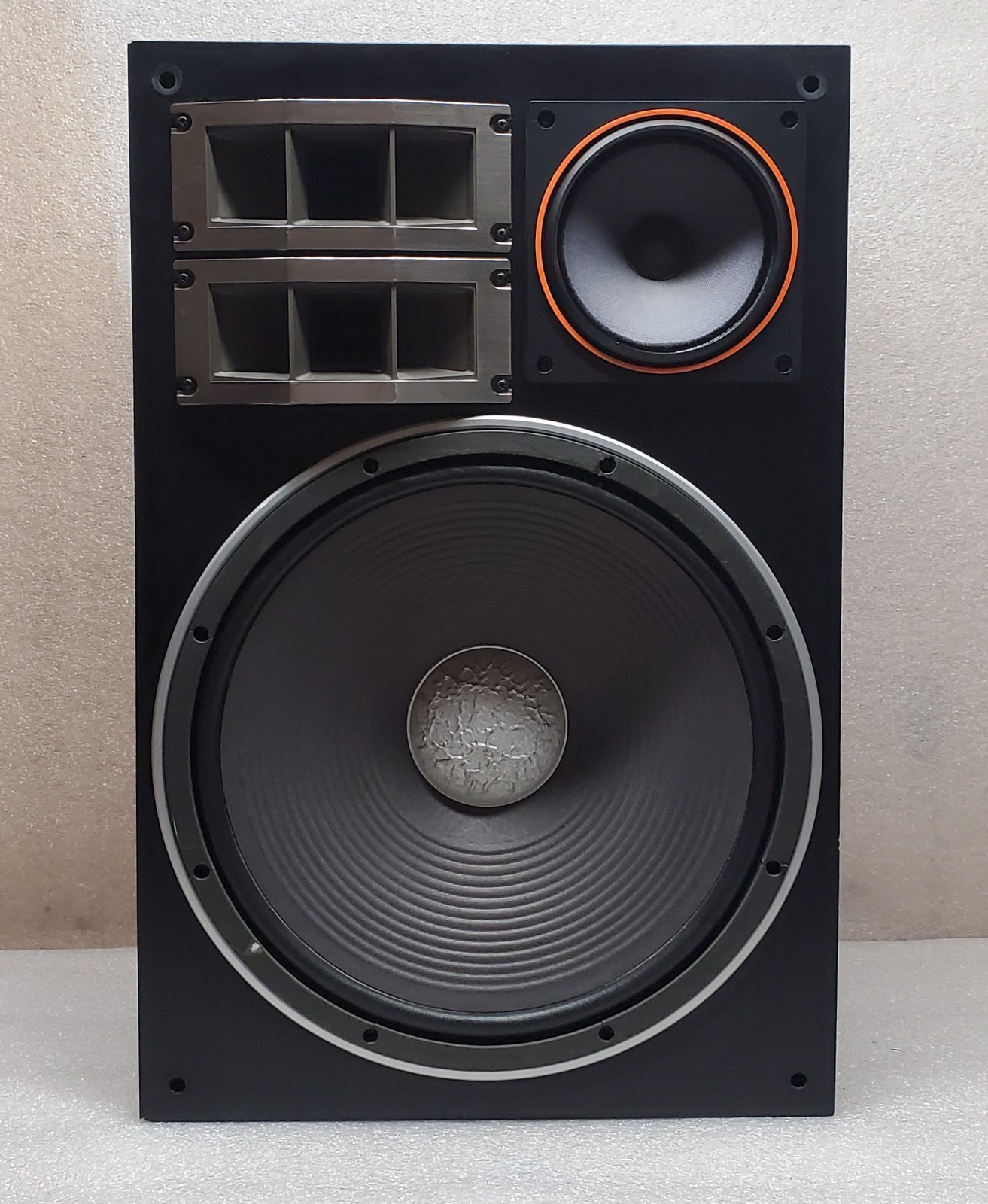
But let’s be real: you’re not buying these for their aesthetics. The front baffle is wide and flat, the tweeter mounted high, the midrange driver tucked below a massive 12-inch woofer. No fancy curvaceous enclosures here—just honest, functional design. The bass reflex port is at the rear, so you’ll want to give them some breathing room from the wall unless you like a boomy bottom end. And while the original foam grilles exist, most surviving pairs have lost them, leaving the drivers exposed like a vintage muscle car with no hood ornament. That’s fine. These speakers don’t need dressing up.
Specifications
| Manufacturer | Kenwood |
| Production Years | 1973–1975 |
| Original Price | Approx. 750 DM (West Germany) |
| Type | 3-way, 4-driver, bass reflex |
| Woofer | 1 x 30 cm (12") |
| Midrange | 1 x 10 cm (4") |
| Tweeter | 1 x 2.5 cm (1") dome |
| Recommended Amplifier Power | 30–150 watts |
| Impedance | 8 ohms nominal |
| Frequency Response | Not specified in research |
| Crossover Frequencies | Not specified in research |
| Dimensions (HxWxD) | 620 x 370 x 282 mm |
| Weight | 14.7 kg (32.4 lbs) per speaker |
| Color | Walnut veneer |
| Country of Manufacture | Japan |
| Grilles | Fabric-covered foam (often missing) |
| Binding Posts | Single-wire, screw-type |
| Port Location | Rear-facing |
Key Features
Three-Way Design with Fiber Surrounds
What separates the KL-5090 from many of its contemporaries is the use of fiber surrounds on both the woofer and midrange driver. While most Japanese and American speakers of the early '70s relied on foam surrounds that would inevitably disintegrate after 30 years, Kenwood’s choice of fiber here was quietly revolutionary. It means that original drivers—assuming they haven’t been abused—can still perform today without the dreaded “foam rot” that plagues so many vintage speakers. That’s a huge deal for longevity. You’re not automatically staring down a $200 reconing job the moment you plug them in. Of course, that doesn’t mean they’re immortal—surrounds can still dry or crack over decades—but the failure rate is far lower than with foam. And when they’re working right, the bass is tight and deep for a 12-inch cone of that era, with none of the flabby overhang that haunts lesser reflex designs.
Built Like Furniture, Not Plastic Boxes
These aren’t MDF monoliths—they’re real wood veneer over particleboard, finished to a standard that wouldn’t embarrass a mid-tier furniture brand of the time. The walnut is warm and consistent, with real grain that catches the light. Structurally, the cabinets are solid, but they’re not immune to the ravages of time and poor storage. The most common failure point isn’t the drivers or crossover—it’s the cabinet joints, particularly along the bottom edges. One listing from a UK vintage dealer explicitly noted that one enclosure was “starting to come apart at the joint” and would need gluing and clamping. That’s not uncommon. If you’re buying a pair, check the base seams with a fingernail. Any give means structural compromise, which will affect sound quality. A wobbly cabinet can cause diffraction, resonance, and even driver misalignment. But if they’re intact? You’ve got a pair of speakers that’ll hold up to decades more use.
Driver Layout and Soundstage Performance
The vertical alignment—tweeter on top, midrange in the middle, woofer below—is classic early '70s thinking, and it works. The KL-5090 throws a wide, stable soundstage that doesn’t collapse when you step off-axis. Vocals are anchored dead center, and instruments have real spatial placement. The dome tweeter isn’t as airy or extended as modern silk domes, but it’s smooth and never harsh—a sign of careful crossover design. And because the midrange driver is dedicated and not asked to handle bass frequencies, it stays clear even when the woofer is digging deep. This separation of duties is what makes three-ways like the KL-5090 still competitive with modern two-ways in the right setup. They don’t sound “old” if properly maintained. They sound *alive*.
Historical Context
The early 1970s were a turning point for Japanese audio. Brands like Kenwood, Pioneer, Sony, and Sansui were flooding Western markets with gear that offered performance once reserved for British or American high-end brands—but at half the price. The KL-5090 arrived in 1973, right in the middle of this surge, when consumers were waking up to the idea that “Made in Japan” didn’t mean cheap; it meant precision, reliability, and innovation. Kenwood was already respected for its receivers and tuners, but the KL-5090 was a statement: we can build speakers that compete with Tannoy, Wharfedale, and even early B&W.
They were part of a broader family that included the larger KL-7090 (with a 15-inch woofer) and the smaller KL-4090, positioning the 5090 as the sweet spot—big enough to impress, compact enough to fit in a living room. Competitors included the Sansui SR-335, the Yamaha NS-1000 (still years away), and various offerings from Fisher and Advent. But while Advent was pushing mass-market acoustic suspension designs, Kenwood stuck with bass reflex, aiming for efficiency and low-end extension—perfect for the rock and jazz records dominating the era. The KL-5090 wasn’t trying to be neutral; it was voiced to be engaging, dynamic, and full-bodied. And in that, it succeeded.
Collectibility & Value
The KL-5090 isn’t a unicorn, but it’s not common either. You won’t find them at every thrift store, but they surface regularly on eBay, HiFiShark, and specialty vintage audio dealers. Prices vary wildly based on condition—both cosmetic and structural. A pair with intact cabinets, working drivers, and no repair history typically sells between $250 and $400. That’s a steal for floorstanders of this size and capability, especially when you consider that a modern equivalent would cost twice as much. But beware: prices can spike when sellers realize they’ve got something rare. One eBay listing asked $349 plus $149 shipping for a pair—absurd, given the weight and fragility. Always check if shipping is included or if it’s going to double your cost.
The real risk isn’t price gouging—it’s cabinet damage. As noted in multiple sources, the bottom joints are prone to separation, especially if the speakers were moved frequently or stored in damp conditions. Check every seam. Tap the cabinet—hollow sounds or rattles mean internal bracing failure. Test each driver by gently pressing the cone; it should move freely without scraping. And if the foam grilles are missing? Don’t sweat it. They’re purely cosmetic and rarely survive this long.
Maintenance is minimal if the drivers are intact. The crossover components are likely paper capacitors and wire-wound resistors—nothing exotic, but also not immune to aging. If the sound is dull or one channel is weak, it may need a recapping. But unlike many vintage speakers, you’re not fighting foam decay from day one. That’s a major plus.
For collectors, the KL-5090 is a solid “player’s speaker”—not a museum piece, but a real, usable system that can hold its own in a modern setup. They pair beautifully with tube amps from the same era, but they’re efficient enough (not officially rated, but estimated around 89 dB) to work with solid-state receivers too. Just don’t pair them with a weak amp—the 12-inch woofer needs current to breathe.
eBay Listings

As an eBay Partner, we earn from qualifying purchases. This helps support our independent vintage technology research.
Related Models
- Kenwood kl-888s (Late 1970s (approximately 1978-1980))
- Kenwood kd-1500 (1972-1975)
- Kenwood ls-500 (Late 1970s (approximately 1978-1980))
- Kenwood kd-5070 (1979-1981)
- Kenwood kd-5077 (1978-1980)
- Sony ps-5550 (1978-1980)
- Sony ps-lx5r (1983-1985)
- Sony ss-7220a (1970s)
- Sony ss-97 (Late 1970s (approximately 1977-1979))
- Sony ss-999 (Late 1970s (approximately 1977-1979))