Kenwood KD-650 (1978)
Overview
The Kenwood KD-650 isn't a flashy relic from the late 1970s; it’s a no-nonsense statement of engineering intent. Released in 1978, it was built to deliver what audiophiles craved: rock-solid speed, minimal vibration, and a platform stable enough to let a good cartridge do its job. It was very good back in 1978 when it was made, and collectors now regard it as one of the very best turntables to come out of the 1970s and 1980s. Positioned as a mid-to-high-end model in Kenwood's lineup, it didn't rely on flash or gimmicks—just a heavy, non-resonant die-cast aluminum plinth, a precision belt-drive system, and one of the rarest features in Kenwood’s catalog: quartz phase-lock speed control.
For those who remember the era, or have rediscovered it through secondhand finds, the KD-650 delivers on its promise: pitch-perfect playback, album after album.
Specifications
| Manufacturer | Kenwood |
| Product type | Turntable |
| Production years | 1978 |
| Type | Belt-drive |
| Drive system | Belt-drive |
| Drive type | Quartz Phase-Lock |
| Motor | DC servo-controlled motor |
| Platter | 3.2 kg (7 lb) non-magnetic die-cast aluminum |
| Speeds | 33-1/3 and 45 rpm |
| Speed change | Electronic |
| Speed control | quartz lock |
| Pitch control | ±4% |
| Tonearm type | Straight, static-balanced |
| Cartridge weight range | 4-10 g |
| Plinth | Non-resonant, heavy die-cast aluminum |
| Suspension | Four-point spring suspension |
| Power supply voltage | 120 volts AC only (U.S.A. model) |
| Power supply voltage | Operate the unit on rated power supply voltage. (±5%) |
Key Features
Quartz Phase-Lock Speed Control
Unlike most Kenwood turntables of the era, the KD-650 features quartz phase-lock technology—an advanced system that uses a crystal reference to lock the platter speed with extreme accuracy. This isn’t just electronic speed selection; it’s continuous feedback regulation, ensuring that once the platter hits 33-1/3 or 45 rpm, it stays there. The speed change is electronic, eliminating mechanical clunks or belt shifting, and the ±4% pitch control allows for fine-tuning without destabilizing the lock.
3.2 kg Non-Magnetic Die-Cast Aluminum Platter
Mass matters, and the KD-650 doesn’t skimp. Its 3.2 kg platter provides exceptional rotational inertia, smoothing out any minor motor irregularities before they reach the stylus. Made from non-magnetic die-cast aluminum, it avoids interfering with the cartridge’s magnetic field—a detail often overlooked in lesser designs. Paired with the belt-drive system, it delivers a smooth, resonance-free spin that owners say translates directly into a stable soundstage and low background noise.
Straight, Static-Balanced Tonearm with 11 g Effective Mass
The tonearm is a straight, static-balanced design with a low-mass tubular aluminum armwand. The cartridge weight range of 4–10 g gives users flexibility, and collectors note that the arm’s rigidity and precision bearings contribute significantly to the turntable’s tracking accuracy and channel separation. It’s not a gimbal or gimbal-derived design, but a no-frills, well-executed static balance system that prioritizes consistency over adjustability.
Four-Point Spring Suspension in Die-Cast Aluminum Plinth
The entire turntable assembly rides on a four-point spring suspension system, isolating the platter and tonearm from external vibrations and internal motor noise. The plinth itself is constructed from heavy die-cast aluminum, chosen for its rigidity and non-resonant properties. This combination—massive base, compliant suspension—creates a stable acoustic platform. It’s a design philosophy borrowed from high-end broadcast turntables, adapted for the home listener.
DC Servo-Controlled Motor with +15V Regulation
The motor is a DC servo-controlled type, ensuring stable rotation under varying loads. According to service documentation, the motor drive circuit controls a +15V power supply, which powers the motor and contributes to its consistent performance. However, this also represents a known point of failure: sources suggest that losing the +15V rail is a common issue in aging units, often due to degraded capacitors or logic faults in the control circuit. While the motor itself is robust, the supporting electronics require attention in long-term ownership.
Historical Context
The KD-650 was positioned as a mid-to-high-end model in Kenwood's turntable lineup, released at a time when Japanese manufacturers were pushing the limits of analog playback. In 1978, direct-drive turntables were gaining favor for their speed accuracy, but Kenwood stuck with a refined belt-drive approach, enhanced here with quartz lock—a rarity in their catalog. It was very good back in 1978 when it was made, and today it's regarded as one of the very best turntables of its era. Its engineering reflects a transitional moment: analog precision meeting early digital control, all housed in a utilitarian yet effective mechanical design.
Collectibility & Value
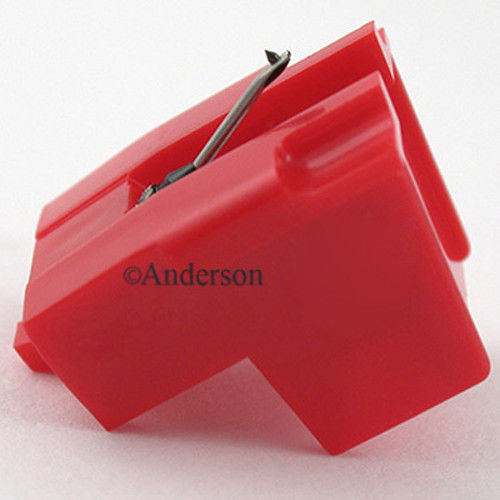
The KD-650 is praised for its solid construction, excellent speed stability, and low resonance. Owners appreciate its reliability and the quality of its tonearm, which is considered a good match for high-compliance cartridges of the era. According to user reports, logic faults are common in aging units, with one failed gate in the control circuit potentially disabling the turntable. The loss of the +15V power rail is another frequently cited issue, often requiring a full recapping and inspection of the motor drive board. Despite these electronic vulnerabilities, restored units have sold quickly—some in less than 24 hours, according to marketplace observations. Stylus replacements are available from third parties like Dacapo Audio, easing long-term maintenance. While current market prices are not documented, anecdotal evidence suggests strong demand among analog enthusiasts who value its quartz-locked performance and robust build.
eBay Listings


As an eBay Partner, we earn from qualifying purchases. This helps support our independent vintage technology research.
Related Models
- Kenwood kl-888s (Late 1970s (approximately 1978-1980))
- Kenwood kd-1500 (1972-1975)
- Kenwood ls-500 (Late 1970s (approximately 1978-1980))
- Kenwood kd-5070 (1979-1981)
- Kenwood kd-5077 (1978-1980)
- Sony ps-5550 (1978-1980)
- Sony ps-lx5r (1983-1985)
- Sony ss-7220a (1970s)
- Sony ss-97 (Late 1970s (approximately 1977-1979))
- Sony ss-999 (Late 1970s (approximately 1977-1979))