Kenwood KD-600 (1978–1981)
A turntable that doesn’t just play records—it anchors your system like a fortress, with a platter so massive you can feel inertia in your bones.
Overview
Lift the dust cover and your hand hesitates before pressing the touch sensor—because you know what’s coming. A 2.6kg die-cast aluminum platter, locked by quartz timing and driven by a 20-pole brushless motor, begins to spin with the silent authority of something engineered not just to last, but to dominate. The Kenwood KD-600 isn’t subtle. It’s a statement in mass and precision, a machine that treats resonance like an enemy and silence like a virtue. At 15.4kg, it doesn’t sit on your rack—it claims it. And when the needle drops, the sound isn’t just clean; it’s *still*, as if the entire system has taken a breath and refused to let go.
This was Kenwood’s answer to the Technics SL-1200 and Sony PS-X series: a direct-drive turntable built for stability, not convenience. No auto-lift, no tonearm memory—just manual operation from start to finish. But what it lacks in automation it makes up for in execution. The KD-600 shares its core architecture with the KD-650, differing only in one key respect: it ships without a tonearm. That’s not an omission—it’s an invitation. Kenwood included mounting bases for the Ortofon AS-212 MKII, Infinity Black Widow, and SME 3009 series, signaling this wasn’t just a high-end deck, but a platform for serious tonearm upgrades. It was a bold move in an era when most manufacturers were locking users into proprietary arms.
And then there’s the base. It doesn’t look like anything else. The Anti Resonance Compression Base (ARCB) is a two-layer composite—limestone, glass powder, and polyester resin on top, bonded to a rigid compression board below. It’s not granite, but it doesn’t need to be. This material doesn’t just damp vibrations; it swallows them. Combined with the massive platter and quartz-locked motor, the result is a turntable that laughs at feedback, laughs at floor-borne rumble, and laughs at the idea that direct-drive can’t be high-fidelity. In fact, it’s often argued—by owners, not marketers—that the KD-600 and KD-650 outperform their more famous Technics cousins in pitch stability and low-frequency control.
But let’s be clear: this isn’t a turntable you casually pick up. It’s heavy, complex, and finicky in its own way. The touch sensors can fail. The dust cover hinges crack under the weight. And if the original capacitors haven’t been replaced, the motor control board may already be on borrowed time. But when it’s working? When everything is aligned and the quartz lock indicator glows blue? There’s a reason people still hunt these down 45 years later. It’s not nostalgia. It’s because few turntables—then or now—make you feel like the music is physically *present* in the room.
Specifications
| Manufacturer | Kenwood |
| Production Years | 1978–1981 |
| Model | KD-600 |
| Type | Direct-drive turntable |
| Drive System | Quartz PLL direct-drive |
| Motor | 20-pole, 30-slot brushless DC servo motor |
| Platter | 33cm, 2.6kg aluminum alloy die-cast |
| Speeds | 33.33 rpm, 45 rpm |
| Wow and Flutter | Less than 0.025% WRMS |
| Signal-to-Noise Ratio | More than -75dB |
| Tonearm | None (armless version of KD-650) |
| Tonearm Mounting Options | Ortofon AS-212 MKII, Infinity Black Widow, SME 3009 series |
| Effective Length (if equipped) | 245mm |
| Overhang (if equipped) | 15mm |
| Stylus Pressure Range | 0 to 3g |
| Usable Cartridge Weight | 2 to 12g |
| Start/Stop Mechanism | Touch sensor |
| Speed Selection | Touch sensor with LED indicators |
| Quartz Lock Indicator | Yes (illuminated) |
| Dimensions | 490 x 165 x 460mm |
| Weight | 15.4kg |
| Construction | ARCB (Anti Resonance Compression Base) synthetic granite/marble composite |
| Power Supply | AC 120V / 240V, 50/60Hz |
Key Features
The ARCB Chassis: Not Granite, But Better
Kenwood didn’t just slap a heavy base on the KD-600 and call it a day. The ARCB (Anti Resonance Compression Base) is a purpose-built composite, engineered to absorb vibrations across the entire audible spectrum. The top layer—limestone, glass powder, and polyester resin—targets low-frequency resonance, while the bottom layer of homogenized compression board handles the highs. Bonded under pressure, the result is a rigid, non-resonant platform that doesn’t ring, flex, or transmit energy. It’s not a veneer or a cosmetic trick; it’s structural. And unlike some turntables that use constrained-layer damping, ARCB works passively, without tuning or adjustment. This is one of the reasons why, even today, the KD-600 doesn’t need isolation feet or expensive stands. It’s self-contained. Service technicians observe that the ARCB base rarely cracks or delaminates, even in poorly stored units—its durability is part of why so many remain in use.
Quartz-Locked Precision: No Guessing, Just Stability
The KD-600’s motor control isn’t just “quartz-locked”—it’s *overbuilt*. The phase-locked loop (PLL) system uses a thermally insulated crystal oscillator, shielding it from ambient temperature shifts that could affect timing. The 20-pole, 30-slot brushless DC motor delivers immense torque, allowing the 2.6kg platter to reach speed in under two seconds and maintain it with near-perfect consistency. Wow and flutter at 0.025% WRMS isn’t just impressive for the era—it’s still competitive with modern high-end decks. The quartz lock indicator, a small blue LED, confirms when the system has achieved lock, eliminating guesswork. Unlike belt-drive turntables that can drift or skip under load, the KD-600 holds its speed even when the stylus hits a deep groove or the speaker vibrates the floor. This isn’t just about specs; it’s about confidence. You never wonder if the pitch is right. It just *is*.
Armless by Design: A Canvas for Tonearm Enthusiasts
The absence of a tonearm on the KD-600 isn’t a cost-cutting measure—it’s a strategic choice. While the KD-650 came with Kenwood’s excellent 245mm S-shaped arm (the same used on the flagship KD-850), the KD-600 was marketed to users who already had a preferred arm or wanted to upgrade. The deck includes dual mounting bases, supporting not only Kenwood’s own arm but also high-end third-party models like the SME 3009 and Ortofon AS-212 MKII. This flexibility was rare in the late ’70s, when most manufacturers pushed proprietary solutions. By leaving the arm off, Kenwood turned the KD-600 into a modular platform—one that could grow with the user’s ambitions. Documentation shows that some owners paired it with FR, Denon, or even early Kuzma arms, creating systems that rivaled anything from Linn or Thorens.
Historical Context
The late 1970s were a turning point for turntable design. Belt-drive decks like the Linn LP12 were gaining cult status, but direct-drive technology was advancing rapidly, led by Technics and Sony. Kenwood entered this arena not as a follower, but as an innovator. The KD-600 and KD-650 weren’t just responses to the SL-1200—they were attempts to surpass it. Where Technics focused on DJ durability, Kenwood prioritized sonic neutrality and resonance control. The ARCB base, quartz-locked motor, and massive platter were all engineered to eliminate variables, creating a turntable that didn’t color the sound—it revealed it.
At $350 in 1978 (about $1,600 today), the KD-600 was expensive but not exorbitant. The KD-650, with its included arm, retailed for $400. For context, the Technics SL-1200MK2 launched at $450. Kenwood’s value proposition was clear: more mass, better materials, and superior speed stability, all in a sleek, minimalist package. It worked. The KD-600 and KD-650 became instant classics, particularly in export markets. Curiously, they were barely advertised in Japan—Kenwood didn’t promote the later “Supreme” series domestically, making these models more common in Europe and North America than in their home country.
Competitors like Pioneer and Marantz offered direct-drive decks, but few matched the KD-600’s combination of inertness and precision. The Sony PS-X series came close, but relied more on suspension and less on mass. The KD-600’s philosophy was different: don’t isolate the turntable from the world—make it immune to it.
Collectibility & Value
Today, the KD-600 is a prized find, though not as common as the KD-650. Its lack of a tonearm makes it less appealing to casual buyers, but for arm-savvy collectors, it’s a blank slate with a near-perfect foundation. In excellent working condition, prices range from $800 to $1,400, depending on completeness and provenance. Units with original packaging, manuals, and spare parts command premiums—especially if the touch sensors are responsive and the quartz lock engages reliably.
But ownership comes with caveats. The most common failure point is the touch sensor circuit, which relies on aging CMOS logic chips. When these fail, the turntable won’t start, even if power is present. Replacing them requires sourcing vintage ICs or modern equivalents, a job best left to experienced technicians. The dust cover hinges, stressed by the acrylic’s weight, are another weak spot—many KD-600s are missing one or both hinges, and replacements are scarce.
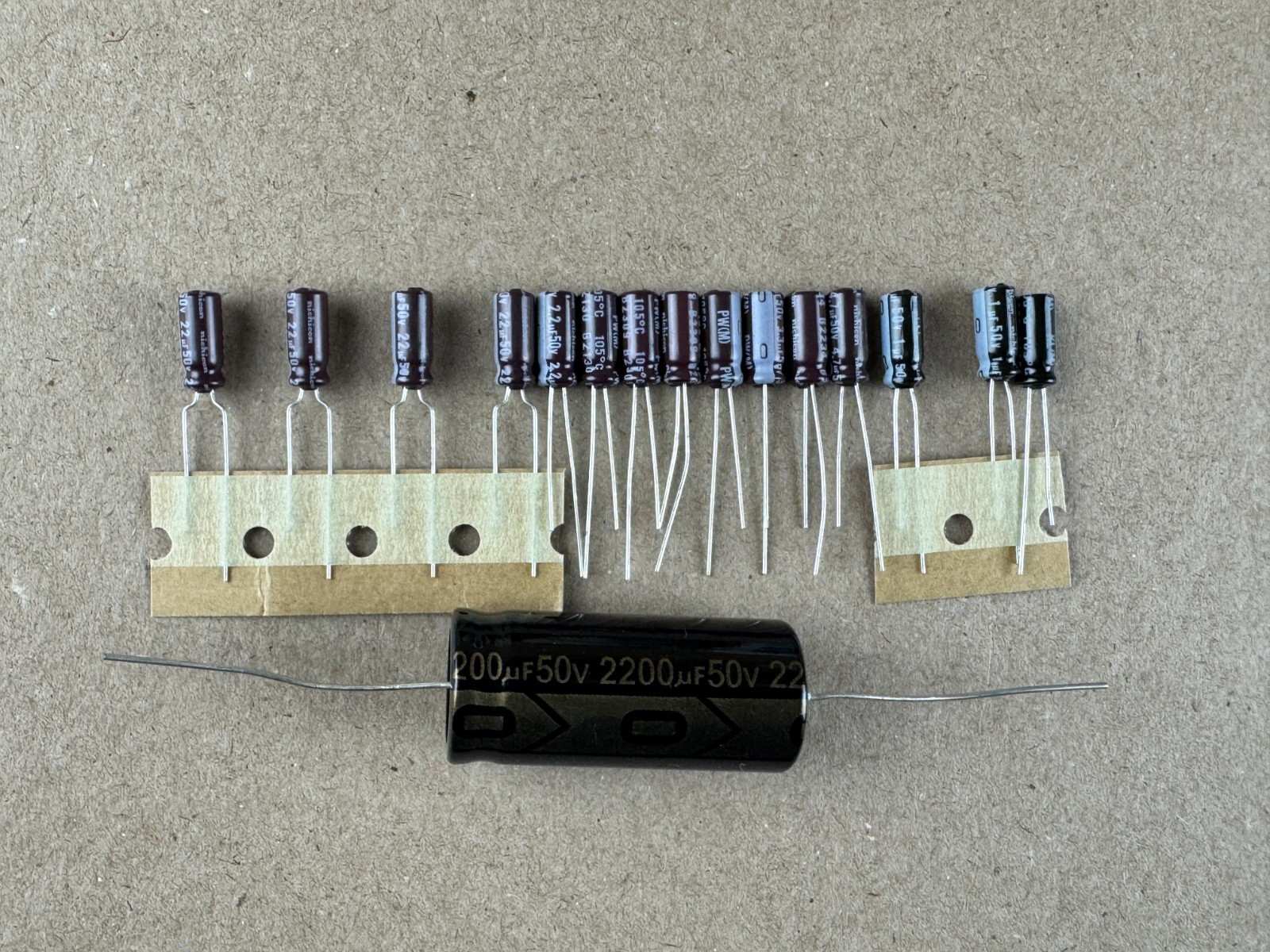
Capacitor degradation is inevitable. The motor control and power supply boards use electrolytics that dry out over time. While some units still run on original caps, service technicians strongly recommend a full recap as preventative maintenance. A proper overhaul—including touch sensor cleaning, bearing inspection, and speed calibration—can cost $200–$300, but it’s money well spent. Unlike some vintage gear that becomes unreliable with age, the KD-600, once restored, is famously durable. There are reports of decks running flawlessly for decades after a single service.
When buying, test everything: touch sensors, speed lock, braking, and platter wobble. Listen for motor hum or bearing noise. Check the ARCB base for cracks—especially near mounting points. And verify that the tonearm bases are intact and properly aligned. A non-working KD-600 is not a project for beginners. But a fully functional one? It’s a cornerstone.
eBay Listings


As an eBay Partner, we earn from qualifying purchases. This helps support our independent vintage technology research.
Related Models
- Kenwood kl-888s (Late 1970s (approximately 1978-1980))
- Kenwood kd-1500 (1972-1975)
- Kenwood ls-500 (Late 1970s (approximately 1978-1980))
- Kenwood kd-5070 (1979-1981)
- Kenwood kd-5077 (1978-1980)
- Sony ps-5550 (1978-1980)
- Sony ps-lx5r (1983-1985)
- Sony ss-7220a (1970s)
- Sony ss-97 (Late 1970s (approximately 1977-1979))
- Sony ss-999 (Late 1970s (approximately 1977-1979))