Kenwood KD-55F (1978–1980)
A turntable that hums to life with the quiet confidence of a quartz-locked motor and the faint smell of old rubber belts—this one still dances in time, even after decades on the shelf.
Overview
When you drop the needle on a Kenwood KD-55F, it doesn’t just play records—it executes them. There’s no wobble, no hunting for speed, no need to nudge the platter into sync. The moment you press start, the motor locks into place with the precision of a metronome calibrated in Tokyo and shipped out to living rooms across the world. This isn’t the warm, forgiving drift of a belt-drive classic; it’s the clean, clinical handoff of a direct-drive system built for consistency. And yet, despite its automation and plastic-heavy chassis, the KD-55F manages to sound more musical than its spec sheet suggests it should.
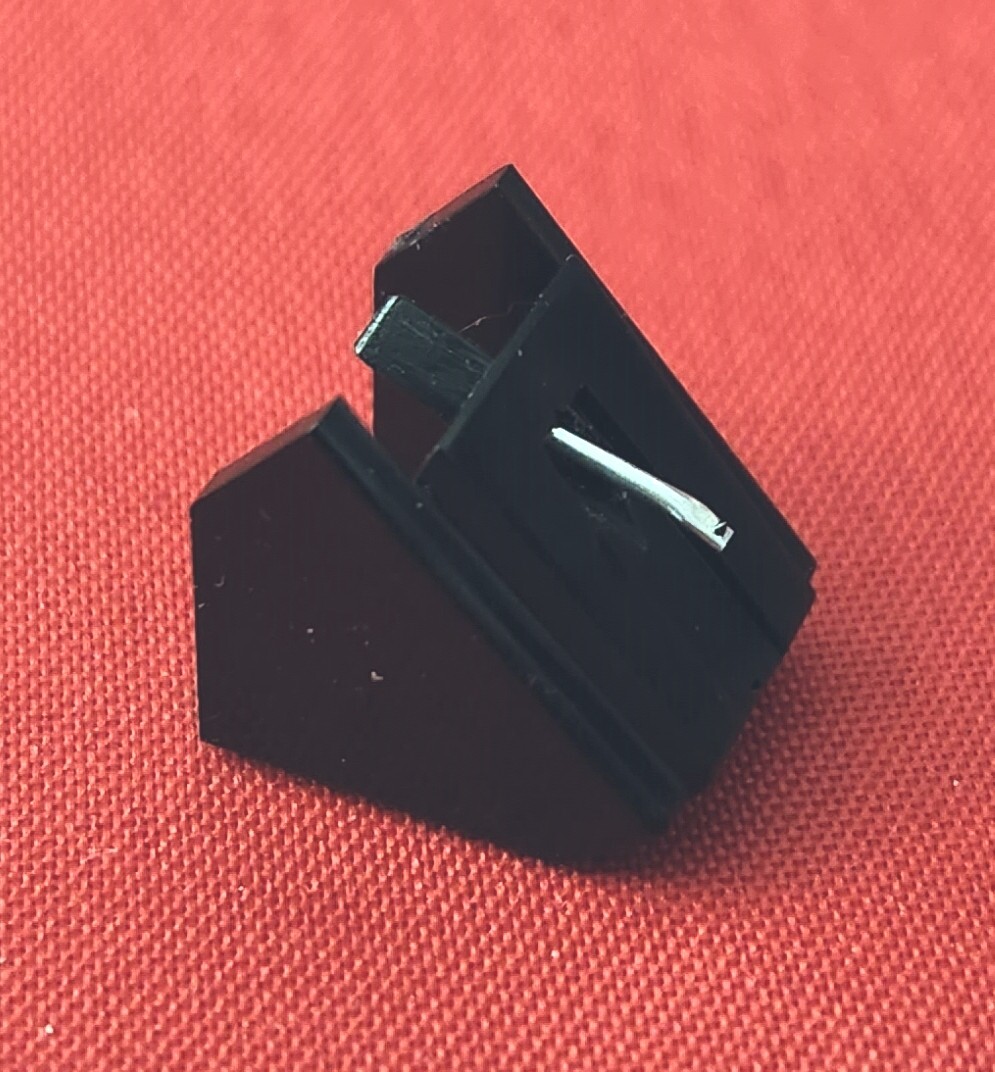
Positioned just below Kenwood’s elite KD-500 series but above the budget KD-50F, the KD-55F occupied a sweet spot in the late '70s hierarchy: fully automatic, quartz-regulated, and equipped with a real moving magnet cartridge out of the box. It wasn’t trying to be exotic or high-end, but it wasn’t disposable either. For many buyers in 1979, this was the turntable that bridged the gap between “starter” and “serious.” It came stock with the Kenwood V-50 MM cartridge and N-50 spherical stylus—modest performers by today’s standards, but competent enough to track without excessive wear and deliver a balanced midrange with just a hint of forwardness in the upper mids. Swap that stylus for a modern elliptical or upgrade the cartridge, and suddenly you’re hearing details that belie the turntable’s modest origins.
What stands out most about the KD-55F isn’t its sound alone, but its engineering ethos: everything is designed to work, and keep working, with minimal fuss. The tonearm glides smoothly on precision bearings, the auto-lift mechanism is reliable (if a bit clunky), and the platter spins with a satisfying inertia that belies its aluminum-over-MDF construction. It doesn’t have the heft of a Technics SL-1200, nor the upgrade path of a Linn LP12, but it was never meant to. It was meant to sit under a receiver, get used daily, and survive garage sales, college dorms, and basement storage with its functionality intact. And for that, it earns a kind of quiet respect—not as a cult classic, but as a survivor.
Specifications
| Manufacturer | Kenwood Corporation |
| Production Years | 1978–1980 |
| Original Price | $295 (USD) |
| Turntable Type | Direct Drive, Fully Automatic |
| Drive System | Quartz-Locked DC Servo Motor |
| Speeds | 33⅓, 45 RPM |
| Speed Accuracy | ±0.01% |
| Wow and Flutter | Better than 0.025% |
| Tonearm Type | S-Type, Static Balanced |
| Effective Tonearm Mass | 18 grams |
| Cartridge | Kenwood V-50 Moving Magnet (MM) |
| Stylus | Kenwood N-50, Spherical |
| Tracking Force | 1.0–1.5 grams (adjustable) |
| Anti-Skate | Adjustable, Calibrated Dial |
| Signal-to-Noise Ratio | 65 dB |
| Output Voltage | 4 mV at 1 kHz, 5 cm/sec |
| Load Impedance | 47 kΩ |
| Capacitance | 100–200 pF |
| Dimensions (W×H×D) | 450 × 145 × 360 mm |
| Weight | 9.8 kg (21.6 lbs) |
Key Features
Quartz-Locked Speed Control
The KD-55F’s most significant technical achievement is its quartz-locked speed regulation. Unlike cheaper turntables that rely on AC motor stability or basic tachometers, this model uses a crystal oscillator to maintain rotational accuracy within ±0.01%. That means no drift during long sides, no pitch wobble on sustained vocals, and no need to manually tweak the speed. For listeners who valued consistency over tweakability, this was a major selling point. The motor itself is a DC servo design with a large, heavy platter that spins with authority. Once up to speed, it feels rock-solid—no flutter, no motor noise bleeding into the signal, just clean rotation. This kind of precision was still relatively rare in consumer turntables at this price point in 1978, placing the KD-55F ahead of many contemporaries.
S-Type Tonearm with Jelco Influence
While Kenwood branded the tonearm as their own, service technicians and collectors note strong similarities to Jelco designs of the era—particularly in the bearing assembly and counterweight mechanism. With an effective mass of 18 grams, the arm is well-matched to medium-mass cartridges like the Shure M97xE or Audio-Technica AT95E, making upgrades straightforward. The s-shaped design allows for easy alignment using a standard protractor, and the built-in anti-skate dial is one of the more intuitive systems of its class—no guesswork, just a calibrated scale that actually works. Vertical tracking angle is fixed, which limits fine-tuning, but for a fully automatic deck, the geometry is surprisingly competent.
Fully Automatic Operation
From cueing to return, the KD-55F handles every step without user intervention. Press play, and the arm lifts, swings out, lowers onto the record, and begins playback. At the end of the side, it lifts again, returns to the rest, and powers down the platter. It’s not silent—the mechanism clicks and whirs with a distinct mechanical charm—but it’s reliable. Unlike some auto-return decks that struggle with warped records or misaligned arms, the KD-55F’s system was engineered with feedback sensors and smooth cam action that rarely misfires. The only real limitation is that it can’t distinguish between 7" and 12" records, so centering relies on proper placement. But once set, it performs like clockwork.
Historical Context
The late 1970s were a battleground for turntable dominance. Technics had already established the SL-1200 as the DJ’s weapon of choice, while Linn and Thorens catered to the audiophile elite. Kenwood, meanwhile, carved out a niche in the upper-mid tier with a series of direct-drive decks that prioritized reliability and precision over modularity. The KD-55F arrived in 1978 as part of a broader push to offer quartz-regulated performance without the flagship price tag. It shared core technology with the armless KD-500 and the slightly upgraded KD-550, but came fully assembled and ready to play—ideal for consumers who didn’t want to source a tonearm or fiddle with setup.
At the time, the market was flooded with semi-automatic belt-drives from brands like Sony, Pioneer, and Dual. Kenwood’s direct-drive approach set it apart, offering faster startup, better speed stability, and longer motor life. Competitors like the Pioneer PL-12D and Sony PS-X5 offered similar automation but relied on less robust belt systems that degraded over time. The KD-55F, by contrast, was built to last—its motor and control circuitry were derived from higher-end models, giving it an edge in longevity. While it never achieved the cult status of a Technics or the reverence of a Linn, it earned a quiet reputation among those who valued “set it and forget it” performance.
Collectibility & Value
Today, the Kenwood KD-55F trades in a narrow but stable band: $125–$225 for a fully functional unit in good cosmetic condition. Prices jump to $275+ if the original box, dust cover, and manual are included—rarities, given how often these were discarded. Units with the original V-50 cartridge and N-50 stylus are common, but collectors often replace both immediately, knowing the N-50’s spherical tip can wear grooves faster than modern elliptical styli.
The most common failure point is the rubber drive belt, though this is a misnomer—the KD-55F is direct drive and doesn’t use a belt for platter rotation. What *does* wear out are the rubber idler tires in the auto-lift mechanism and the damping gaskets under the platter. These dry out and crack over time, leading to sluggish arm movement or platter wobble. Replacements are available from specialty vendors like DaCapo Audio and LP Gear, but installation requires partial disassembly. The motor itself is generally bulletproof, though capacitors in the power supply can degrade after 40+ years, causing speed instability or failure to start. A recap by a qualified technician typically runs $80–$120, a worthwhile investment if the chassis is otherwise solid.
When buying, check that the auto-return works smoothly, that the platter spins without lateral play, and that the tonearm lowers and lifts without sticking. Avoid units with cloudy or cracked dust covers—replacement lids are nearly impossible to find. Also verify that the original cartridge hasn’t been damaged; while the V-50 is replaceable, a butchered headshell can complicate upgrades. Overall, the KD-55F is not a “project turntable,” but a functional vintage piece that rewards modest maintenance with years of reliable playback.
eBay Listings


As an eBay Partner, we earn from qualifying purchases. This helps support our independent vintage technology research.
Related Models
- Kenwood kl-888s (Late 1970s (approximately 1978-1980))
- Kenwood kd-1500 (1972-1975)
- Kenwood ls-500 (Late 1970s (approximately 1978-1980))
- Kenwood kd-5070 (1979-1981)
- Kenwood kd-5077 (1978-1980)
- Sony ps-5550 (1978-1980)
- Sony ps-lx5r (1983-1985)
- Sony ss-7220a (1970s)
- Sony ss-97 (Late 1970s (approximately 1977-1979))
- Sony ss-999 (Late 1970s (approximately 1977-1979))