Kenwood KD-37R (1988–1989)
That moment the needle drops and your MP3 collection suddenly feels like an afterthought.
Overview
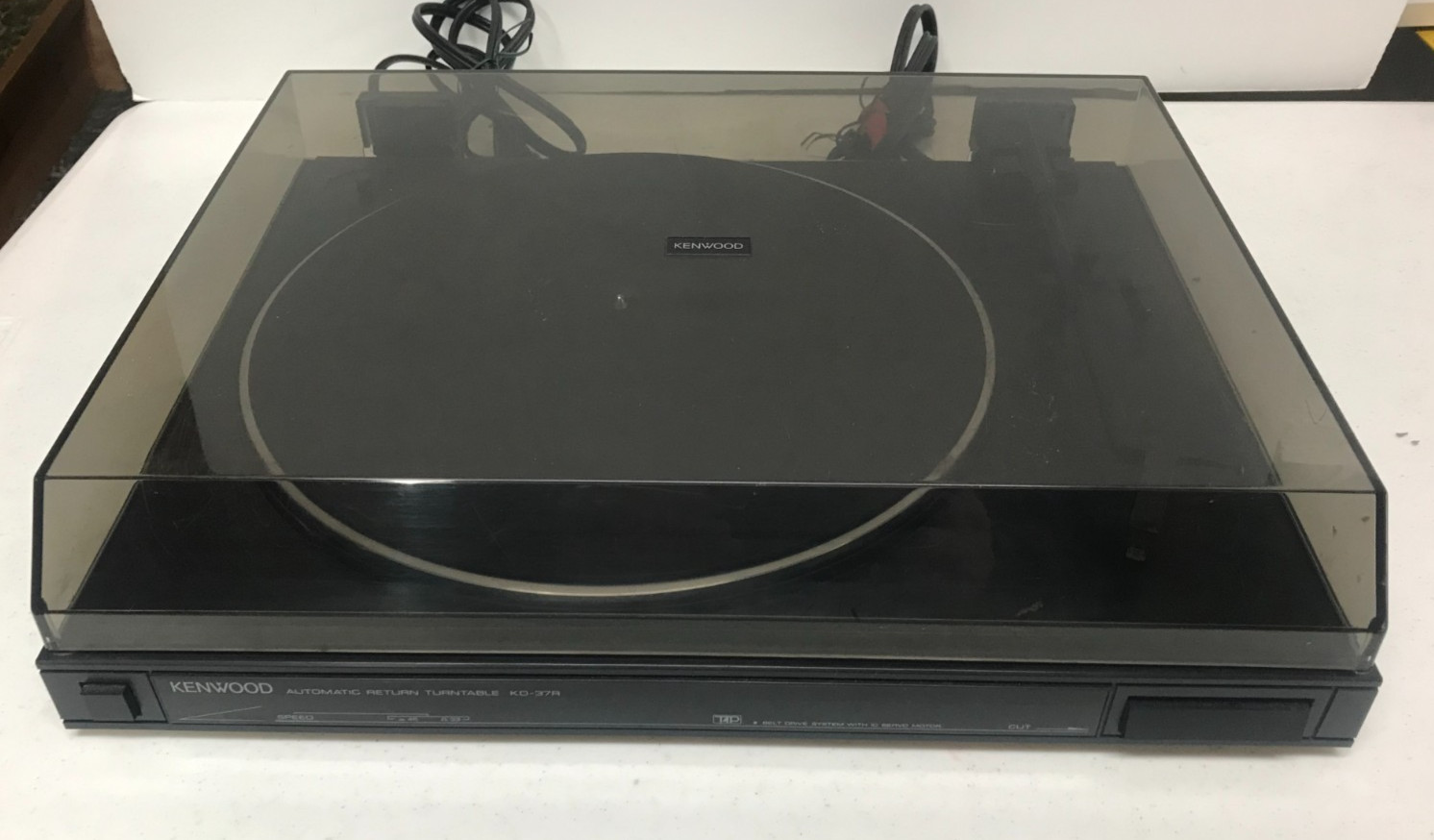
The Kenwood KD-37R isn’t some forgotten relic—it’s the turntable that quietly showed up in living rooms at the tail end of the analog era, doing its job with a kind of unassuming charm that still wins people over decades later. Built in Japan and rolling off the line between 1988 and 1989, it was part of the Kenwood V-57 complete system, a package meant to bring high-fidelity vinyl playback into the mainstream without fanfare. This is an automatic belt-drive turntable, the kind that lets you press play and walk away—arm lifts, returns, and shuts off all on its own. And while it didn’t make waves in the audiophile press, real-world owners keep coming back to it, not out of nostalgia, but because it delivers something that still matters: pure, uncluttered analog warmth.
It’s not flashy, but it’s got presence. The metal platter, rubber mat, center spindle, and pulley shaft form the core of a drive system that, when properly maintained, spins records with a steadiness that belies its modest price point. It outputs a phono-level signal, which means it needs a receiver or preamp with a dedicated phono input—something that trips up a lot of new users trying to hook it up to modern gear. But get that right, and the payoff is immediate. One listener put it best: “Pure Bliss. I feel like throwing all my MP3.” Another called it “pretty good for a start”—high praise for an entry-level table that wasn’t trying to be anything it wasn’t.
What’s interesting is how many people are still wrestling with this thing today. It’s not just about playing records; it’s about keeping them spinning right. The KD-37R has developed a quiet afterlife in forums and repair threads, where owners swap notes on grounding issues, speed quirks, and the eternal hunt for replacement belts. It’s the kind of gear that doesn’t just play music—it pulls you into its world, whether you want to be there or not.
Specifications
| Manufacturer | Kenwood |
| Product type | Auto Return Turntable |
| Production years | 1988 to 1989 |
| Drive type | belt-drive |
| Speeds | 33.3 and 45rpm |
| Dimensions | 420 x 118 x 365 mm (WxHxD) |
| Cartridge | Used the Kenwood V-67BL MM T4P Cartridge |
| Output signal type | Phono-level signal |
Key Features
Belt-Drive Simplicity
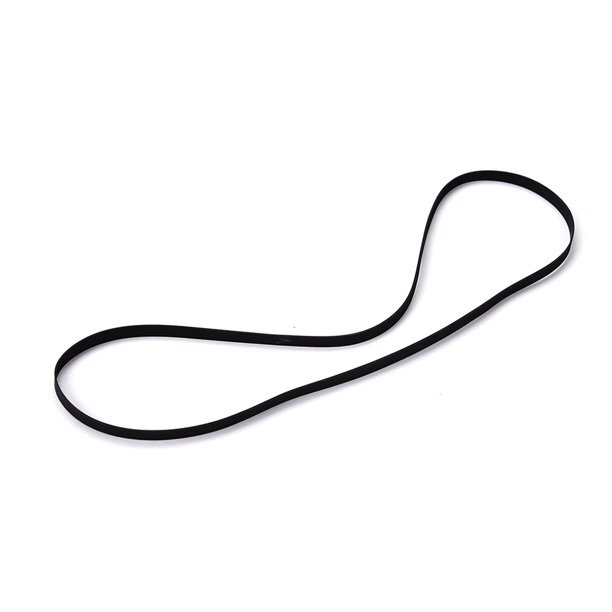
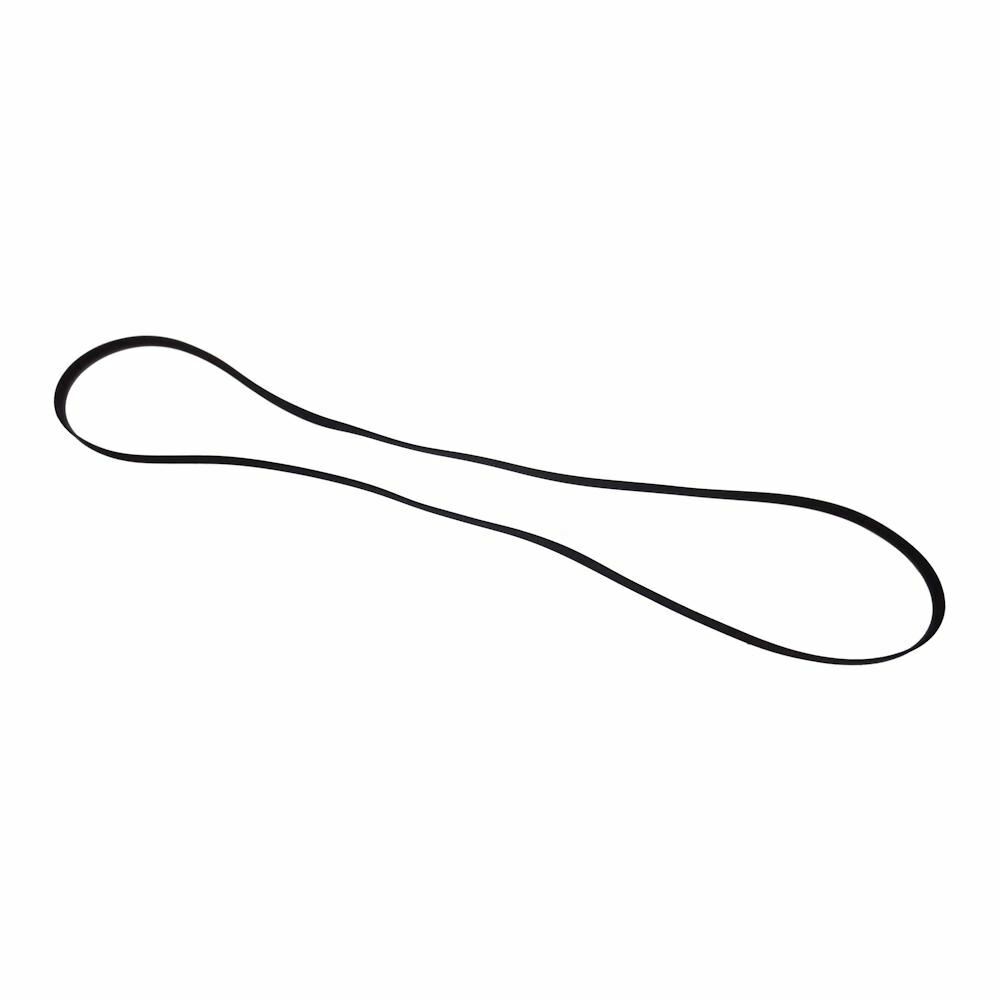
The KD-37R uses a belt-drive system, which isolates the platter from motor vibrations—something that matters more than specs can say. That rubber belt is both its strength and its Achilles’ heel. Over time, it dries out, stretches, or breaks, and when that happens, the whole rhythm of playback falls apart. But the design makes replacement accessible. There are guides out there—not official ones, but the kind passed hand to hand—detailing how to swap the belt, even how to shrink one that’s “slightly too large” using boiling water. It’s a hack, sure, but it speaks to the kind of ownership this turntable inspires: hands-on, patient, a little obsessive.
Auto-Return Mechanism
One of the defining features is the auto-return function. At the end of a record, the tonearm lifts, swings back to its cradle, and the turntable powers down. It’s the kind of convenience that defined late-’80s consumer audio—no need to hover by the player like a butler. But as many owners have discovered, this mechanism can gum up over time. The arm might not drop, or it refuses to return. Some report having to manually nudge gears under the platter to reset it. It’s not a flaw so much as a reminder: this is a mechanical device, and mechanics wear. With a little lubrication and care, it can still work like new—but expect to get your hands dirty.
Cartridge and Stylus
The KD-37R came equipped with the Kenwood V-67BL MM T4P cartridge, a moving magnet design that delivers a warm, balanced sound without harshness. It’s not exotic, but it’s competent. More importantly, it’s replaceable. Owners are advised to check the stylus condition before playing records—especially if the unit’s been sitting for years. A worn tip can ruin both your records and your listening experience. Replacement styli are available from specialty vendors, and while it’s not a plug-and-play upgrade like on higher-end models, it’s doable with a steady hand and a little patience.
Collectibility & Value
There’s no robust market data for the Kenwood KD-37R, but traces of its value linger in old listings. A serviced unit in “very good condition” once sold for $75 plus $30 shipping—nine years ago—suggesting it was never a high-value collector’s item, but rather a functional workhorse. The user manual still circulates, listed for sale at GBP 3.99 (approx US $5.32), a small price for a missing piece of the puzzle. What keeps this turntable alive isn’t its resale value, but its utility. People buy it not to flip, but to use.
And use it, they do—though not without hurdles. Grounding issues and low audio output are common when connecting to modern receivers lacking phono inputs. Some report the platter spinning too fast after a belt replacement, a frustrating quirk that points to belt tension or motor calibration. The auto-return and cut functions often fail, leaving the arm stranded at the end of a record. These aren’t dealbreakers, but they’re part of the ownership experience. Servicing may require oiling internal mechanisms, deoxidizing trimmers, and adjusting speed—tasks that demand time and care, but are within reach of the determined hobbyist.
For someone stepping into vinyl for the first time, the KD-37R remains a solid starting point. It’s not perfect, but it’s honest. It plays records, it looks the part, and when everything’s aligned, it delivers that moment everyone’s chasing—the one where the music stops being data and starts being real.
eBay Listings

As an eBay Partner, we earn from qualifying purchases. This helps support our independent vintage technology research.
Related Models
- Kenwood kl-888s (Late 1970s (approximately 1978-1980))
- Kenwood kd-1500 (1972-1975)
- Kenwood ls-500 (Late 1970s (approximately 1978-1980))
- Kenwood kd-5070 (1979-1981)
- Kenwood kd-5077 (1978-1980)
- Sony ps-5550 (1978-1980)
- Sony ps-lx5r (1983-1985)
- Sony ss-7220a (1970s)
- Sony ss-97 (Late 1970s (approximately 1977-1979))
- Sony ss-999 (Late 1970s (approximately 1977-1979))