Kenwood KD-3100 (1977–1979)
A heavy-footed, no-nonsense direct drive that plays it straight—solid engineering, minimal frills, and a platter that spins like it means business.
Overview
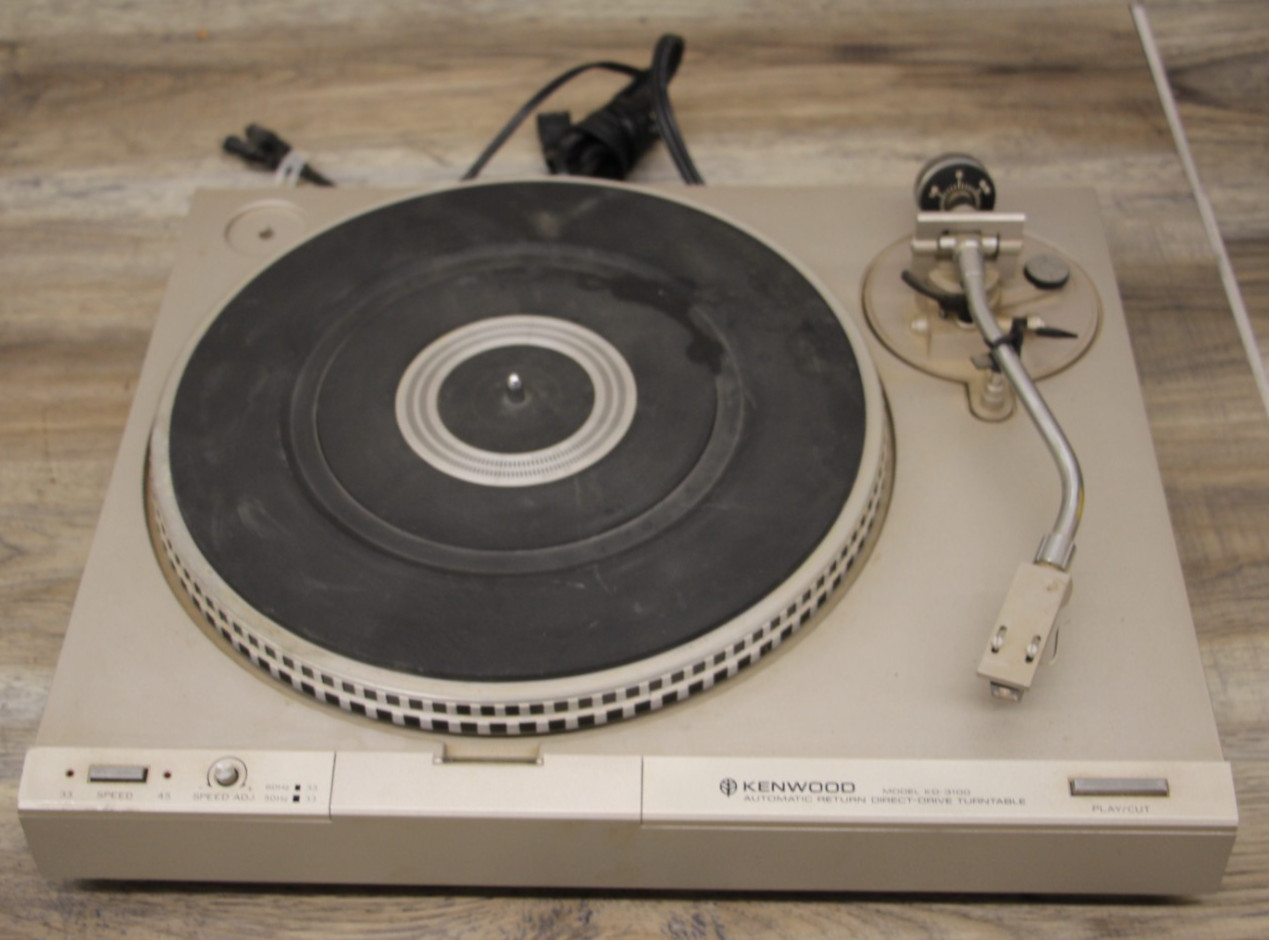
You don’t pick up a Kenwood KD-3100 expecting flash. It won’t wow you with glowing lights or chrome trim, and it definitely won’t auto-lift, scan, and catalog your record collection. What it will do—day after day, if treated right—is deliver stable, vibration-resistant playback with a confidence that belies its mid-tier status. This is the kind of turntable that shows up to work: thick plinth, deadened casing, and a direct drive motor that doesn’t flinch at speed changes. Built between 1977 and 1979, the KD-3100 landed in a crowded market where Technics was setting the quartz-locked standard, and Denon was quietly engineering tonearms that still earn respect today. Kenwood didn’t try to out-glitz them. Instead, they built something dense, grounded, and mechanically honest.
At the core is a platter with a moment of inertia rated at 220 kg·cm²—a figure that, in the late '70s, put it in serious company. That mass helps maintain rotational stability, smoothing over minor disturbances and delivering a consistent groove ride. The plinth isn’t wood or plastic junk; it’s Kenwood’s proprietary ARCB material, a composite blend of minerals, fiberglass, and polyester resin designed to absorb resonance like a studio wall. It works. Place your hand on the deck while it’s spinning, and you feel almost nothing—no hum, no buzz, just the faintest whisper of motion. The result is a background so quiet it lets midrange detail emerge without strain.
The KD-3100 is semi-automatic: you drop the arm, it plays, and when the record ends, it lifts and returns on its own. No manual lift, no awkward hovering over the lead-out groove. That auto-return system, while convenient, is also the turntable’s most common failure point. A small belt-driven motor handles the return mechanism, and after 40+ years, those tiny rubber belts are either hardened, cracked, or long gone. Replacements exist, but they’re not plug-and-play—owners report needing to disassemble part of the subchassis to access it. Still, when working, the return is smooth and gentle, not the jerky lurch some vintage auto-returns are known for.
Factory-fitted cartridges varied—some came with the Acutex 312, others with an Audio-Technica Series III in a P-mount adapter. Neither is legendary, but both are competent for casual listening and easily upgradeable. The tonearm itself is a straight aluminum tube with precision bearings and minimal play. It’s not a gimbal masterpiece like a Linn or a gimbaled SME, but it tracks reliably within its design limits. VTF adjustment is straightforward, and anti-skate is present, though basic. It won’t handle ultra-compliant moving coils out of the box, but for a moving magnet or modern DJ-style cartridge, it’s more than capable.
What you’re really buying with the KD-3100 is build quality. At around 15 pounds, it has heft without being unmanageable. The feet are simple rubber pads, not adjustable isolators, but the mass of the plinth and base does much of the damping work. It doesn’t need fancy feet to sit still. And unlike some of its contemporaries, it doesn’t rely on a suspended subchassis—a design that can sag or wear out. This is a rigid, fixed-structure deck, which makes it less prone to long-term mechanical drift but slightly more sensitive to speaker-induced vibration if placed on a flimsy surface.
It’s not perfect. The speed adjustment dial—useful for fine-tuning pitch or compensating for slightly off-pressings—is analog and not always precise. Some units drift over time, especially if the motor control circuit hasn’t been serviced. And while the direct drive system is robust, it’s not silent. Under quiet passages, a faint motor hum may be audible through sensitive speakers, particularly if the preamp gain is high. But these aren’t dealbreakers—they’re the trade-offs of a machine built for durability over audiophile mystique.
Specifications
| Manufacturer | Kenwood Corporation |
| Production Years | 1977–1979 |
| Original Price | Not available |
| Turntable Type | Direct Drive, Semi-Automatic |
| Motor | Direct Drive, Quartz-Locked |
| Speeds | 33⅓, 45 RPM |
| Speed Accuracy | ±0.05% |
| Wow and Flutter | 0.025% (weighted) |
| Platter Material | Die-cast aluminum |
| Moment of Inertia | 220 kg·cm² |
| Tonearm Type | Straight aluminum, dynamic balance |
| Effective Tonearm Length | 230 mm |
| Overhang | 18 mm |
| Cartridge Mount | P-mount (adapter for standard mount available) |
| Tracking Force Range | 0–3 grams |
| Anti-Skate | Adjustable, manual |
| Plinth Material | ARCB composite (minerals, fiberglass, polyester resin) |
| Dimensions (W×H×D) | 445 × 140 × 360 mm |
| Weight | 6.8 kg (15 lbs) |
| Power Supply | AC 120V / 60Hz (Japan: 100V) |
| Auto Return | Yes, belt-driven return mechanism |
| Start-up Time | 0.6 seconds to 33⅓ RPM |
| Speed Adjustment | ±8% variable pitch control |
Key Features
The ARCB Plinth: Built Like a Bunker
Kenwood didn’t mess around with flimsy MDF or hollow plastic. The KD-3100’s plinth is made from ARCB—a proprietary composite of minerals, glass fiber, and polyester resin—engineered to be dense, rigid, and acoustically inert. It’s not pretty, but it’s effective. Unlike wood, it doesn’t resonate sympathetically with bass frequencies, and unlike plastic, it doesn’t flex or warp over time. The result is a foundation that isolates the platter and tonearm from external vibrations. In practice, this means the KD-3100 can sit on a solid shelf or credenza without requiring elaborate isolation feet—though adding some won’t hurt. The material also gives the turntable its substantial 15-pound weight, contributing to overall stability. It’s a design philosophy that prioritizes function over form, and it aged well.
Heavy Platter, Solid Motor
The 220 kg·cm² moment of inertia isn’t just a number for brochure padding—it’s a real engineering choice that pays off in playback. A high-inertia platter resists speed fluctuations caused by record eccentricities or stylus drag. Once the motor spins it up (in under a second), it maintains momentum like a flywheel. The direct drive system uses a brushless motor with quartz phase-locked loop (PLL) speed control, ensuring accuracy within ±0.05%. That’s competitive even by modern standards. While not as silent as a belt drive, the motor doesn’t introduce audible rumble under normal conditions. However, if the control circuit degrades or the power supply capacitors dry out, speed instability can creep in—recapping the unit is a common restoration step for long-term reliability.
Semi-Automatic Operation Done Right
The KD-3100 doesn’t force you to babysit your records. Drop the tonearm, and it plays. At the end of the side, it lifts and returns automatically. The mechanism is driven by a small belt-connected motor, which is both its convenience and its Achilles’ heel. Over time, that belt dries out and snaps, leaving the arm stranded at the end of the record. Replacement belts are available, but installation requires partial disassembly—service technicians observe that first-time owners often underestimate the complexity. Once replaced, though, the system works reliably for years. Unlike some fully automatic decks that feel clunky, the KD-3100’s motion is smooth and deliberate. It’s a practical feature for everyday use, not a gimmick.
Historical Context
The late 1970s were a golden age for direct drive turntables. Technics had already released the SL-1200, which would go on to dominate DJ booths worldwide. Denon was refining its 1000-series decks with advanced tonearms and low-vibration motors. Kenwood, better known for receivers and tuners, entered the high-fidelity turntable market with a focused strategy: build something solid, reliable, and sonically neutral. The KD-3100 wasn’t aimed at audiophiles chasing exotic woods or suspended subchassis. It was for the listener who wanted a no-fuss, high-torque deck that could integrate seamlessly into a Kenwood separates system.
At the time, the competition was fierce. Pioneer, Sony, and Yamaha all had direct drive models, but many prioritized automation over sound quality. Kenwood sidestepped that trend. The KD-3100 shared design DNA with higher-end models like the KD-4100 and KD-5100—same ARCB plinth, similar motor architecture, and consistent mechanical layout. This meant that even at the mid-tier, owners got access to core engineering that trickled down from Kenwood’s flagship decks. It wasn’t the most glamorous option, but it was one of the most honest. In catalogs from 1980, Kenwood touted the KD-3100’s “excellent synchronisation characteristics” and “precision bearing” tonearm—claims backed by measured performance, not marketing fluff.
Collectibility & Value
The Kenwood KD-3100 isn’t a unicorn, but it’s not common, either. It occupies a sweet spot between obscurity and desirability—enough units were made that they surface regularly, but few collectors actively seek them out, keeping prices reasonable. As of 2025, working examples in good condition sell for $150–$250. Units with original cartridges and unblemished plinths—especially those with the Acutex 312 or Audio-Technica Series III—tend to command the higher end. Scratched lids, cracked plinths, or non-functional auto-return systems can drop value to $80–$120, particularly if the motor hasn’t been tested.
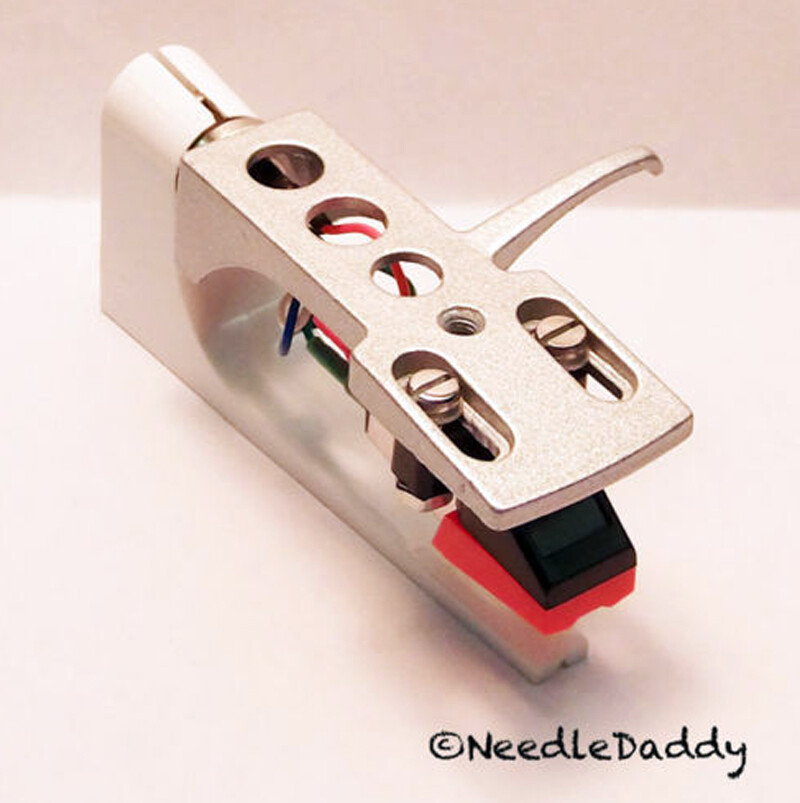
The most common failure point is the auto-return belt, followed by dried-out capacitors in the motor control circuit. Recapping the unit—replacing electrolytic capacitors—can cost $80–$150 if done professionally, but DIY kits are available. The P-mount tonearm limits cartridge options unless an adapter is used, so many owners upgrade to a standard mount armboard or fit a universal headshell. While not drop-in compatible with SME or Rega arms, the mounting pattern allows for third-party modifications.
When buying, test all speeds and ensure the auto-return engages reliably. Listen for motor hum during quiet passages, and check that the speed adjustment dial responds smoothly. The platter should spin freely without wobble, and the tonearm should lower and lift without sticking. If the unit powers on but won’t spin, the issue is often the motor driver IC or a failed capacitor—repairable, but not trivial. Overall, the KD-3100 is a sensible vintage purchase: not a showpiece, but a functional, well-built deck that can serve as a reliable entry into vinyl without breaking the bank.
eBay Listings


As an eBay Partner, we earn from qualifying purchases. This helps support our independent vintage technology research.
Related Models
- Kenwood kl-888s (Late 1970s (approximately 1978-1980))
- Kenwood kd-1500 (1972-1975)
- Kenwood ls-500 (Late 1970s (approximately 1978-1980))
- Kenwood kd-5070 (1979-1981)
- Kenwood kd-5077 (1978-1980)
- Sony ps-5550 (1978-1980)
- Sony ps-lx5r (1983-1985)
- Sony ss-7220a (1970s)
- Sony ss-97 (Late 1970s (approximately 1977-1979))
- Sony ss-999 (Late 1970s (approximately 1977-1979))