Kenwood GE-920 (1988–1989)
The biggest, bluest dancing VU display on any vintage graphic equalizer you’ll ever lay eyes on — and sound to match.
Overview
That first flicker of the V.F.D. bar graph in a dim room stops people in their tracks — a wide, luminous arc of cobalt light sweeping across 32 precise sliders, each one a tiny command post for sculpting sound. The Kenwood GE-920 isn’t just an equalizer; it’s a centerpiece, a statement, the kind of component you leave powered on just to watch it breathe. It arrived late in the golden era of home audio, 1988, when receivers were getting smarter and digital was creeping in, but Kenwood doubled down on analog precision with a dash of theatrical flair. Part of the high-end M-92 system, the GE-920 was never meant to be hidden. It was built to be seen, heard, and dialed in — whether you were flattening room acoustics or boosting the midrange on a snare drum just because you could.
And it sounds as clean as it looks. With a frequency response stretching from 10Hz to 100kHz — far beyond human hearing — and distortion figures so low they border on absurd (0.004% THD), the GE-920 doesn’t color your music so much as clarify it. Other equalizers from the era, even high-end ones, often added a slight haze or grain when engaged. Not this one. Slide it into the chain, and the signal path stays eerily transparent until you start nudging those sliders. Then, with ±12dB of cut or boost across 13 carefully spaced bands — from 32Hz up to 10kHz — you’re in full control. It’s surgical, but not sterile. There’s a smoothness to the way the filters interact, a lack of phase nastiness that plagues cheaper designs. You can make drastic adjustments and still avoid that “processed” sound that turns music into a laboratory experiment.
Positioned as the flagship graphic equalizer in Kenwood’s lineup, the GE-920 sat above the more common GE-720 and GE-820 models, not just in features but in build and presentation. It wasn’t a budget tweak tool; it was a system centerpiece, often paired with the M-92 preamp and KAC-920 power amp in full Kenwood M-92 setups. While competitors like Pioneer and Sony were moving toward digital tone controls or integrated room correction, Kenwood went the opposite direction — investing in high-grade analog circuitry, a massive front panel, and that unforgettable V.F.D. display. It wasn’t trying to be futuristic. It was trying to be definitive.
Specifications
| Manufacturer | Kenwood |
| Production Years | 1988–1989 |
| Original Price | 448 DM (Germany) |
| Type | Stereo Graphic Equalizer |
| Frequency Bands | 32, 55, 90, 150, 240, 400, 620, 1K, 1.6K, 2.6K, 4.2K, 6.8K, 10K (Hz) |
| Control Range | ±12 dB per band |
| Frequency Response | 10 Hz – 100 kHz |
| Total Harmonic Distortion | 0.004% |
| Signal to Noise Ratio | 100 dB |
| Input Sensitivity | Not specified in research |
| Output Level | Not specified in research |
| Input Impedance | Not specified in research |
| Output Impedance | Not specified in research |
| Inputs | RCA (unbalanced) |
| Outputs | RCA (unbalanced) |
| Remote Control | Yes (via RC-92 system remote) |
| Display | V.F.D. (Vacuum Fluorescent Display) bar graph |
| Color | Black front panel |
| Country of Origin | Japan |
| Weight | Not specified in research |
| Dimensions | Not specified in research |
Key Features
The V.F.D. Display: Equalization as Theater
Most graphic equalizers from the '80s settled for simple LED columns — functional, but forgettable. The GE-920 went full theater with a sweeping V.F.D. bar graph that tracks the audio signal in real time, glowing in that deep, cool blue unique to vacuum fluorescent tech. It’s not just decorative; it’s responsive, accurate, and wide enough to give a real-time visual map of your frequency balance. Audiogon users have noted it’s the largest V.F.D. display ever used on a consumer graphic equalizer — wider than any Pioneer, Sony, or Yamaha model of the time. That visual feedback makes it easier to spot resonant peaks or dips in your room, turning equalization into something you can see as clearly as you hear it. And when the music hits, those dancing bars turn your rack into a light show.
Analog Circuitry with Surgical Precision
Kenwood didn’t cut corners on the inside. The 13-band EQ uses high-quality op-amps and precision passive components to maintain signal integrity. The ±12dB range gives serious flexibility — enough to correct for poor room acoustics or speaker placement, or to tailor the sound for different genres. Unlike some graphic EQs that add noticeable hiss or muddiness when engaged, the GE-920’s ultra-low distortion (0.004%) and 100dB signal-to-noise ratio mean it stays out of the way until you want it to act. The frequency bands are spaced to cover the full audible spectrum without overlap gaps, and the filters are designed to minimize phase shift — a common flaw in cheaper EQs that can smear transients and ruin imaging.
System Integration and Remote Control
The GE-920 wasn’t meant to stand alone. It was a core part of the Kenwood M-92 system, designed to work seamlessly with the M-92 preamp and KAC-920 power amp. It supports the RC-92 system remote, allowing volume, source, and even EQ adjustments from the couch — a luxury in 1988. This level of integration was rare for an equalizer, which were often afterthoughts or third-party add-ons. Kenwood treated it like a first-class component, with matching build quality, layout, and connectivity. If you’re chasing a full M-92 system today, the GE-920 is the crown jewel — and often the hardest to find.
Historical Context
By 1988, the golden age of separates was winding down. Home theater was on the horizon, CDs had replaced vinyl as the dominant format, and many manufacturers were shifting focus to all-in-one systems or digital signal processing. Kenwood, however, was still committed to high-end analog performance — and the M-92 series was its swan song. The GE-920 arrived at a time when graphic equalizers were becoming less common in high-end setups, replaced by parametric EQs or digital room correction. But for enthusiasts who wanted precise, visible control over their sound, the GE-920 was a last, glorious analog statement.
It competed indirectly with high-end tone controls in preamps from brands like Marantz and Harman Kardon, but stood apart by offering full band-by-band adjustment. Unlike the more utilitarian equalizers from Yamaha or Technics, the GE-920 leaned into its visual presence — Kenwood knew people would want to show it off. It was also one of the last consumer equalizers to feature a V.F.D. display of this size, as the technology was being phased out in favor of LEDs and later LCDs. In that sense, the GE-920 is a time capsule: a high-performance analog tool wrapped in the fading glow of vacuum fluorescent elegance.
Collectibility & Value
The GE-920 is a niche collectible, but a passionate one. It doesn’t turn up often, and when it does, it’s usually part of a complete M-92 system or being hunted by someone restoring a vintage Kenwood stack. On the European secondhand market, listings have appeared in the €160–€300 range, though actual sold prices are harder to pin down. Given its rarity and role as a system flagship, a fully functional unit in good condition should command at least $250–$400 in the US, especially if it includes the remote and original packaging.
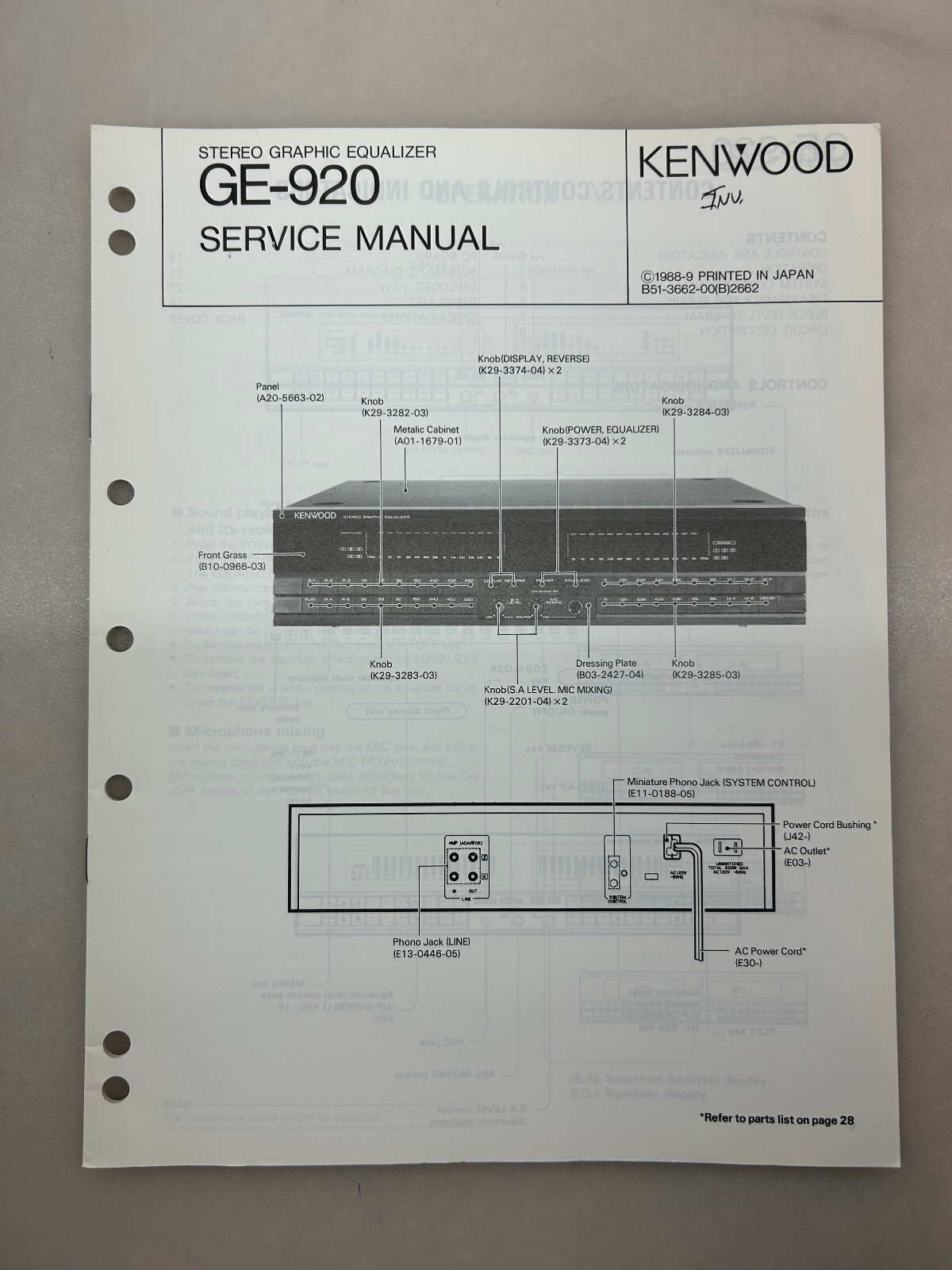
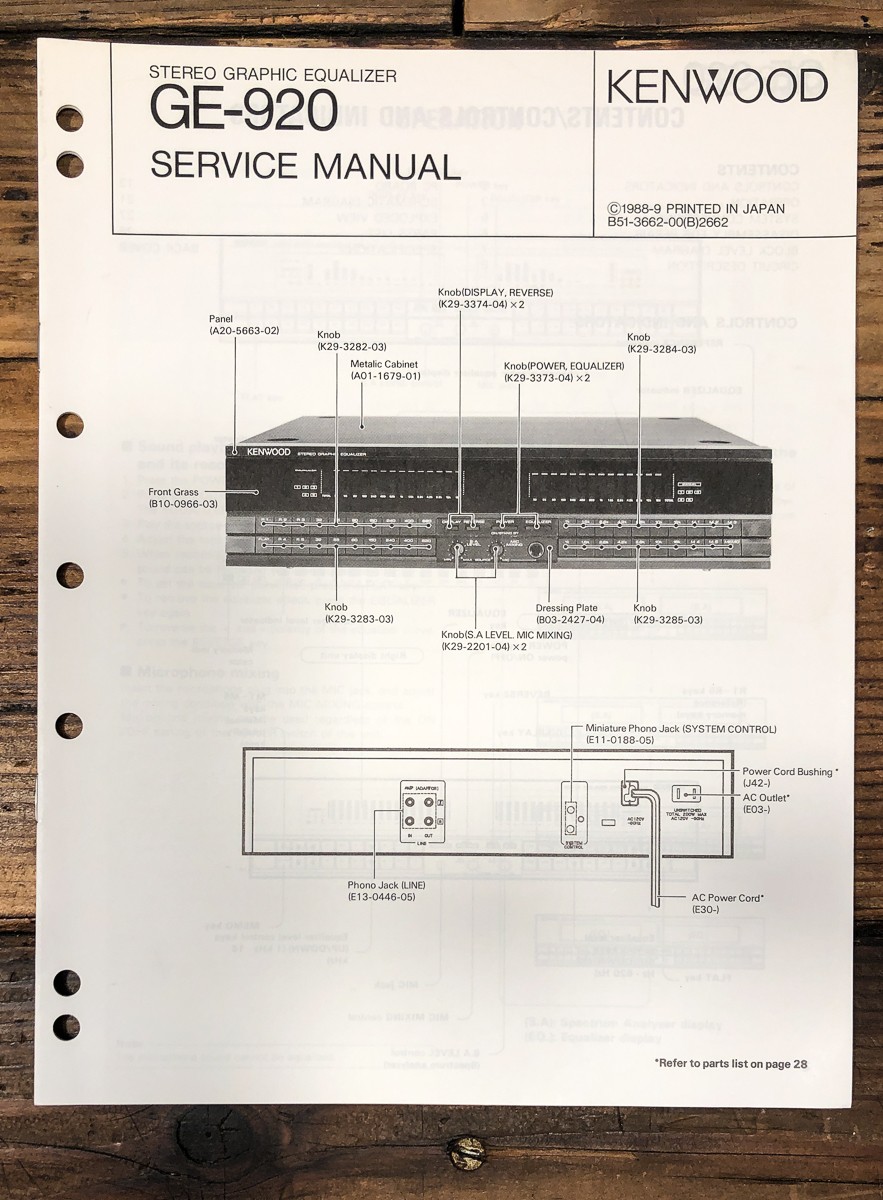
But there are real ownership considerations. V.F.D. displays from this era are prone to dimming or partial failure — and replacing one is nearly impossible today. Capacitors, especially in the power supply and signal path, will likely need recapping after 35 years, regardless of current performance. Service manuals exist (often sold on eBay), but sourcing exact replacements for the display or custom ICs could be a challenge. The sliders themselves are generally robust, but dirt and oxidation can cause scratchy operation — a careful cleaning with contact cleaner usually helps.
When buying, test the display across all segments, check for flickering or dead zones, and listen for hum or noise with the unit warmed up. Make sure the remote functions if included. Units described as “for parts” are often missing the display or have corroded circuitry — avoid unless you’re prepared for deep restoration. For those building a period-correct Kenwood system, the GE-920 is worth the hunt. For others, it’s a stunning conversation piece that actually improves your sound — not just a relic, but a working tool with a soul.
eBay Listings


As an eBay Partner, we earn from qualifying purchases. This helps support our independent vintage technology research.
Related Models
- Kenwood kl-888s (Late 1970s (approximately 1978-1980))
- Kenwood kd-1500 (1972-1975)
- Kenwood ls-500 (Late 1970s (approximately 1978-1980))
- Kenwood kd-5070 (1979-1981)
- Kenwood kd-5077 (1978-1980)
- Sony ps-5550 (1978-1980)
- Sony ps-lx5r (1983-1985)
- Sony ss-7220a (1970s)
- Sony ss-97 (Late 1970s (approximately 1977-1979))
- Sony ss-999 (Late 1970s (approximately 1977-1979))