JBL 2242H (1995)
Overview
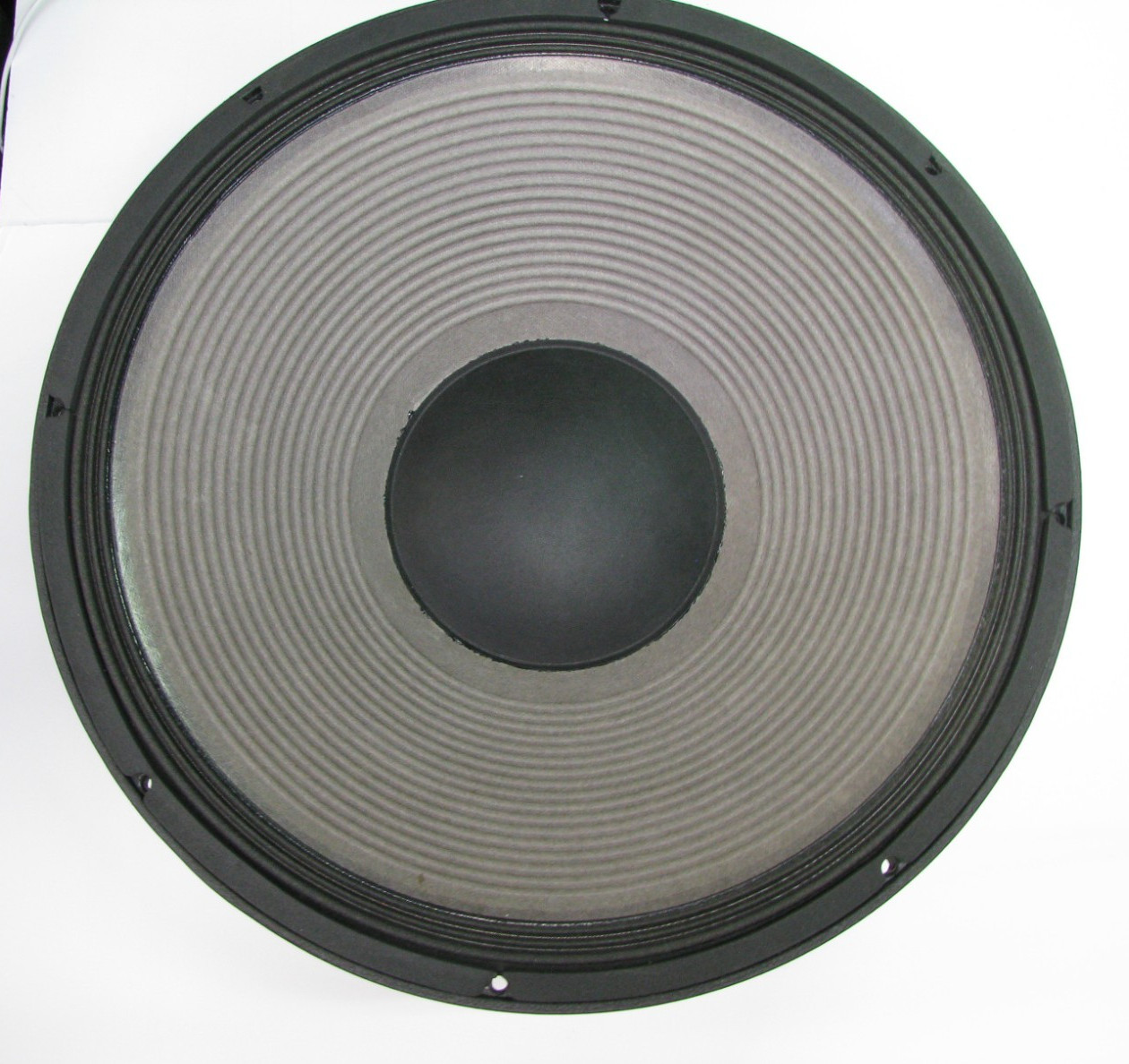
There's a particular thud a big cone makes when it bottoms out and the voice coil hits the backplate. Every soundman in the 1990s knew it, because most 18-inch woofers of the period weren't built to take a modern power amp's full output for four hours straight. The JBL 2242H was JBL's answer. It's a 46 cm cone-type woofer unit rated at 8 ohms nominal, a professional subwoofer driver rather than a home-audio collectible, and the sort of part that gets bought by the pallet rather than by the pair. According to Audio Database, it was released in 1995. Other documentation claims no production years were ever recorded, so treat the year as reported rather than settled.
The headline numbers from JBL's published manual are a nominal diameter of 18 in (460 mm), a frequency range of 25 Hz to 1.6 kHz, sensitivity of 99 dB SPL (1W @ 1m, half space), and 500 W continuous program power. Owners say the power figure undersells the driver. Audio Database lists an AES allowable input of 800W over the 50 Hz to 500 Hz band, and vendors have quoted both 800 watts AES and 1,600 watts program. That's a wide spread. JBL's own literature and the aftermarket numbers don't agree, so anyone buying a used 2242H to push hard should verify the specific variant and its documentation rather than trusting a single figure.
The physical package isn't in dispute. A 4 in (100 mm) edge-wound aluminum ribbon voice coil sits in a cast frame, the cone hangs on a double-roll polypropylene surround, and the whole assembly weighs 13.2 kg. That's a heavy piece of iron, and it explains why subwoofer cabinets need bracing. JBL's recommended crossover is 100 Hz at 24 dB per octave, and the company also specifies a 24 dB/octave high-pass filter at 30 Hz. Those two numbers show the intended role: a dedicated low-frequency driver, not a woofer asked to meet a midrange driver at 800 Hz.
The 2242H was designed for JBL's 4600 series subwoofer systems, specifically the Model 4698, and it also saw use in the Model 4648. From there it spread. Mix (August 1996, p.146) noted the 2242H as part of JBL's new transducer technology at the time, alongside the 2012H cone driver, and the driver subsequently turned up in installed systems and touring rigs throughout the late 1990s and 2000s. A JBL technical note on the VerTec line frames the 2242H as the culmination of a design philosophy reaching back to the company's earliest days. That's marketing language, though the driver's ubiquity in the following decade gives it some weight.
Key Features
Super Vented Gap Cooling
The 2242H's defining technology is Super Vented Gap, or SVG. The company's own specification document describes the new voice coil-magnet circuitry as Super Vented Gap technology. Audio Database explains the intent: the expanded gap cooling and symmetric field geometry configuration improve heat dissipation and magnetic circuit performance, which raises effective output through increased sensitivity and reduced power compression while also lowering distortion and improving transient behavior. In practice that's the difference between a subwoofer that stays composed through a long set and one that gets softer and muddier as the voice coil cooks. Owners consistently single out the 2242H for handling large amounts of power without thermal compression, and that reputation traces back to this cooling scheme.
Differential Drive Dual Voice Coil
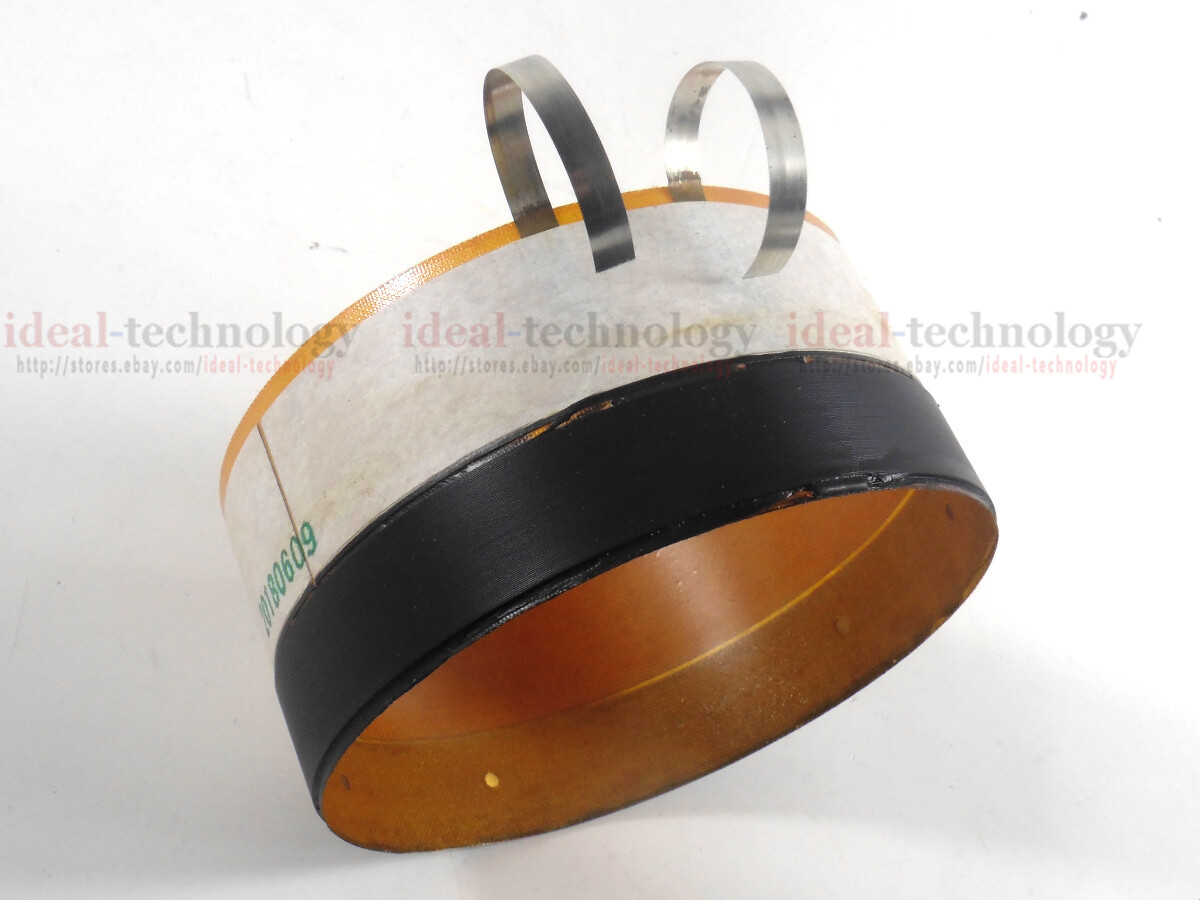
Inside sits JBL's Differential Drive dual voice coil design, wound as an edge-wound aluminum ribbon around a 4 in (100 mm) former. The aluminum-alloy former is a heat-sinking type, and the pole piece is vented. Both choices aim at pulling heat out of the gap rather than letting it build up. Audio Database's figures put the voice coil at Φ 100 mm edge-wound aluminum ribbon, with a DC resistance (Re) of 4.7 Ω, inductance (Le) of 1.25 mH, and a BL product of 23.7 T·m. One caveat for anyone testing a used unit: a measured DCR of around 5.2 has been reported on the 2242HPL variant, a little above the published 4.7 Ω. That's close enough to be normal meter and temperature variation, but know it before you declare a coil bad.
Double-Roll Polypropylene Surround and 9 mm Xmax
The cone rides on a double-roll polypropylene surround, a compliance choice that suits the driver's high-excursion brief. JBL quotes an Xmax (the peak linear displacement of the cone) of 9.0 mm, and the total peak-to-peak excursion is given as 18 mm within 10% linearity. That's a lot of travel, and it's why the 2242H can move serious air at low frequencies. The Thiele-Small data, per Audio Database: a free-air resonance (Fs) of 35 Hz, Qts of 0.28, Qms of 5.0, Qes of 0.29, Vas of 283 lit, reference efficiency of 4.0%, and an effective moving mass of 158 g. The low Qts says this driver wants a vented box and rewards a builder who models it properly.
Output and Enclosure Demands
JBL's specification document claims the 2242H can produce peak instantaneous outputs of 134 dB above 100 Hz measured at one meter, and describes it as greater than any other JBL low-frequency transducer of its day. Bass extension is quoted to 25 Hz, and Audio Database gives a frequency range (-10 dB) of 25 Hz to 1.6 kHz with a recommended maximum crossover of 1 kHz and a recommended enclosure volume of 140 to 340 lit. For builders, the mounting data is: overall diameter 464 mm with a depth listed as 212 mm in one source and 203 mm in another, a front baffle opening of 427 mm or a rear mounting of 428 mm, a discharge volume of 9 lit, and a net weight of 13.2 kg. The depth discrepancy is small but real, so measure your baffle before you cut.
Historical Context
JBL's specification document is direct about the 2242H's purpose. It's intended for applications where large amounts of low-distortion low-frequency acoustical power are required, along with excellent mid-bass transient behavior, with a typical application being a subwoofer for cinemas extending down to 25 Hz. That explains why the driver ended up in both fixed installs and touring racks. The 1996 Mix mention places it in a wave of new JBL transducer development, and the following decade of use in installed systems and touring rigs fits that placement.
The family tree affects what you'll find for sale. The 2242HPL is a Private Label version of the same speaker, used in the 4645B and 4645C theater subwoofers. It's functionally the same driver under a different designation, which matters when you're hunting replacement parts. The 2242H also served as the woofer in JBL's ASB6118 subwoofer system, described in JBL's own literature as a single 460 mm (18 in) SVG driver with a 100 mm (4 in) voice coil. The VerTec technical note ties the driver to JBL's line-array subwoofer development, framing it as part of the company's Differential Drive transducer push for that application.
Collectibility & Value
Nobody is putting a 2242H on a shelf to admire. This is a working driver, and its value is measured in output per dollar rather than collector sentiment. It has still developed a following in the DIY community, particularly for home theater subwoofer builds, where people model a box in software before cutting a single panel. Forum reports describe reaching 30 Hz in a 15-cubic-foot box tuned to 32 Hz, and one builder reported response described as dead flat in a well-damped 29-cubic-foot enclosure tuned to 28 Hz. Those are anecdotal.
Supply is better than you'd expect for a 1990s pro driver. Speaker Exchange has offered new production runs of the 2242H as OEM replacement units, and used examples surface on eBay in good working condition with reasonable regularity. Pricing is scattered. An aftermarket recone kit described as a "2249B, 18 inch, 2242h, TYPE hotrod" listing ran $500, while a replacement voice coil for the 2242H in 8 ohms listed at $23.98. One seller on a DIY forum floated an asking price of roughly 60% of new retail for a 2242H. That's about the best rule of thumb the record offers, since there's no confirmed current market price for a working driver in the documentation.
The maintenance warning bears repeating. Buyer feedback on a recone kit noted that the cone supplied was actually a 2241 cone, that the spider needed stiffening, and that it should have been an E spider. In other words, aftermarket recone kits can be mislabeled or built from the wrong parts. If you're reconing, check the kit against the actual driver before you glue anything. One forum comparison notes that the 2245 is a fairly similar driver but doesn't have the same longevity as the 2242. Aftermarket voice coils are widely available too, with one listing specifying a 99.3 mm coil for the 2242H. That's close to the 100 mm nominal, but check the tolerances before you commit.
eBay Listings


As an eBay Partner, we earn from qualifying purchases. This helps support our independent vintage technology research.
Related Models
- JBL 075
- JBL 077
- JBL 120Ti
- JBL 124A
- JBL 124H
- Braun AUDIO-1 (1965)
- Braun AUDIO-250 (1965)
- Magnavox Component Systems (1972)
- Acoustic Research AR (1967-1976)
- Acoustic Research 11