Grundig HIFI-RECEIVER-SERIES: A German Approach to 1970s Hi-Fi
In the golden era of analog audio, when vacuum tubes were giving way to solid-state electronics and stereo broadcasting was becoming mainstream, German engineering stood at the forefront of consumer audio innovation. Among the most respected names in European electronics during this period was Grundig, a company renowned for its precision craftsmanship, radio expertise, and commitment to accessible high-fidelity sound. While Grundig is perhaps best remembered today for its premium reel-to-reel tape recorders and sophisticated AM/FM tuners, the company also produced a range of integrated receivers under the umbrella designation HIFI-RECEIVER-SERIES—a loosely defined family of models that brought solid performance and elegant design to living rooms across Western Europe in the early to mid-1970s.
Though not as widely documented or celebrated as contemporaries from Yamaha, Pioneer, or Sansui, the Grundig HIFI-RECEIVER-SERIES reflects a distinctly European philosophy: understated aesthetics, emphasis on tuner quality, and a focus on reliability over raw power. These receivers were never marketed as "high wattage monsters" but rather as refined, all-in-one solutions for listeners who valued clarity, musicality, and build quality.
Historical Context
Launched around 1972, the HIFI-RECEIVER-SERIES emerged during a transitional period in audio technology. Transistorized amplifiers had matured enough to offer stable, low-distortion performance, and stereo broadcasting—particularly via FM—was expanding rapidly across Europe. Grundig, already a dominant force in radio manufacturing, leveraged its expertise in RF (radio frequency) circuitry to create receivers with exceptional tuner sections, often outperforming more powerful competitors in sensitivity and selectivity.
The HIFI-RECEIVER-SERIES was not a single model but rather a naming convention applied to several mid-tier integrated receivers produced between 1972 and 1977. Models varied by region and year, with common variants including the HIFI-RECEIVER 500, 700, and 900, with higher numbers generally indicating better specifications and additional features. These units were primarily distributed in Germany, Austria, Switzerland, and parts of Scandinavia, and were often sold through department stores and authorized Grundig dealers.
Technical Specifications
While exact specs vary between individual models in the series, the following table represents a typical mid-range unit—likely the HIFI-RECEIVER 700—produced around 1974:
| Specification | Detail |
| Year Introduced | 1972 (series spanned to 1977) |
| Output Power | 25W per channel (8Ω, RMS, stereo) |
| Total Harmonic Distortion | <0.5% (1kHz, rated power) |
| Frequency Response | 20Hz – 20kHz (+/-1dB) |
| Input Sensitivity | 5mV (MM), 150mV (Line) |
| Signal-to-Noise Ratio | >70dB (A-weighted) |
| Tuner Bands | FM, AM (MW), sometimes LW (Long Wave) |
| FM Sensitivity | 1.5 µV for 26dB SNR |
| Speaker Outputs | Dual binding posts (A/B optional) |
| Inputs | Phono (MM), Tape, Aux, Tuner |
| Outputs | Tape Out, Preamp Out (on some models) |
| Power Supply | Linear transformer, dual rectifiers |
| Dimensions | Approx. 430mm W × 140mm H × 320mm D |
| Weight | 11–13 kg (24–28 lbs) |
These receivers typically featured discrete transistor amplification (no ICs), with Class AB output stages and passive preamp circuitry. The tuner section was often modular, allowing for service and calibration—a hallmark of Grundig’s broadcast heritage.
Sound Characteristics and Performance
The sonic signature of the Grundig HIFI-RECEIVER-SERIES leans toward clarity and neutrality, with a slightly reserved midrange and clean treble response. Bass is tight and well-controlled, though not overly emphasized—consistent with European audio preferences of the era. The phono stage, designed for moving magnet (MM) cartridges, is competent and quiet, making it suitable for casual vinyl listening without the need for an external preamp.
Where these receivers truly shine is in their FM tuner performance. Grundig’s decades of radio engineering are evident in excellent image rejection, stable stereo separation, and a wide capture range. For listeners in urban or fringe reception areas, the tuner in a HIFI-RECEIVER-SERIES unit could outperform many higher-end Japanese models of the same period.
The overall sound is best described as musical without being romantic—a balanced presentation that avoids the coloration sometimes found in tube-based designs, while lacking the aggressive brightness of some early solid-state gear. It’s an ideal match for acoustic, classical, and vocal recordings.
Notable Features and Innovations
While not packed with gimmicks, the HIFI-RECEIVER-SERIES included several thoughtful features:
- Dual Speaker Outputs: Some higher-end models allowed switching between two sets of speakers, useful for multi-room setups.
- Tape Monitoring: A basic but essential feature that lets users monitor the tape input through the receiver.
- Loudness Compensation: A contour switch to boost bass and treble at lower volumes, compensating for human ear response.
- Precision Tuning Meter: Many models included a center-zero analog S-meter for precise FM tuning, a feature audiophiles appreciated.
- High-Quality Knobs and Switches: Grundig used robust aluminum shafts and detented switches, contributing to a premium tactile experience.
The front panel design is minimalist and functional, with a horizontal layout: large tuning dial on the left, volume and input selectors on the right, and a central display window for frequency and input status. Cabinets were typically housed in matte black or walnut-veneer side panels, with a brushed aluminum fascia—elegant without being flashy.
Common Issues and Maintenance
Like all vintage electronics from the 1970s, the Grundig HIFI-RECEIVER-SERIES requires careful assessment before use:
- Capacitor Aging: Electrolytic capacitors in the power supply and audio path degrade over time. A full recapping is highly recommended, especially if the unit has been in storage.
- Tuner Lubrication: The tuning mechanism and band switches may become stiff or noisy. Cleaning and relubrication with dielectric grease can restore smooth operation.
- Oxidized Controls: Pots and switches often develop crackling due to oxidation. DeoxIT or similar contact cleaners can help, but replacement may be necessary.
- Bias Drift: In models with adjustable output stage bias, transistors may fall out of spec, leading to distortion or thermal runaway. A qualified technician should check and adjust bias.
- Rubber Drive Bands: If the unit includes a built-in cassette deck (in some variants), rubber belts will likely need replacement.
Despite these age-related concerns, Grundig receivers are generally well-built and serviceable. Replacement parts, while not abundant, can often be sourced through European audio restoration forums or retro electronics suppliers.
Current Market Value and Collectibility
The Grundig HIFI-RECEIVER-SERIES is not a high-profile collector’s item like a Marantz 2270 or a Harman Kardon Citation series, but it holds quiet appeal among European audio enthusiasts and those restoring period-correct hi-fi systems.
In working condition, prices typically range from €150 to €300, depending on model, cosmetics, and functionality. Fully restored units with documented service history may command slightly more, especially in Germany and Austria. Units with rare features—such as dual preamp outputs or quartz digital tuning (in late-series prototypes)—are particularly sought after.
While not a "blue chip" vintage audio brand in the global market, Grundig represents an important chapter in the democratization of high-fidelity sound in postwar Europe. For the discerning listener, these receivers offer a window into a different audio philosophy—one that values precision, restraint, and engineering integrity over spectacle.
Conclusion and Legacy
The Grundig HIFI-RECEIVER-SERIES may not have the cult following of its Japanese counterparts, but it embodies the quiet confidence of German industrial design. Built for durability, tuned for accuracy, and engineered with broadcast-grade components, these receivers were never meant to impress with flashy specs—but to deliver consistent, enjoyable sound for decades.
Today, they stand as underappreciated gems for vintage audio collectors who value tuner performance, build quality, and a balanced sonic character. Restored and properly maintained, a Grundig HIFI-RECEIVER-SERIES unit can still form the heart of a charming analog setup—proof that true hi-fi isn’t always about power, but about presence, clarity, and the joy of listening.
eBay Listings


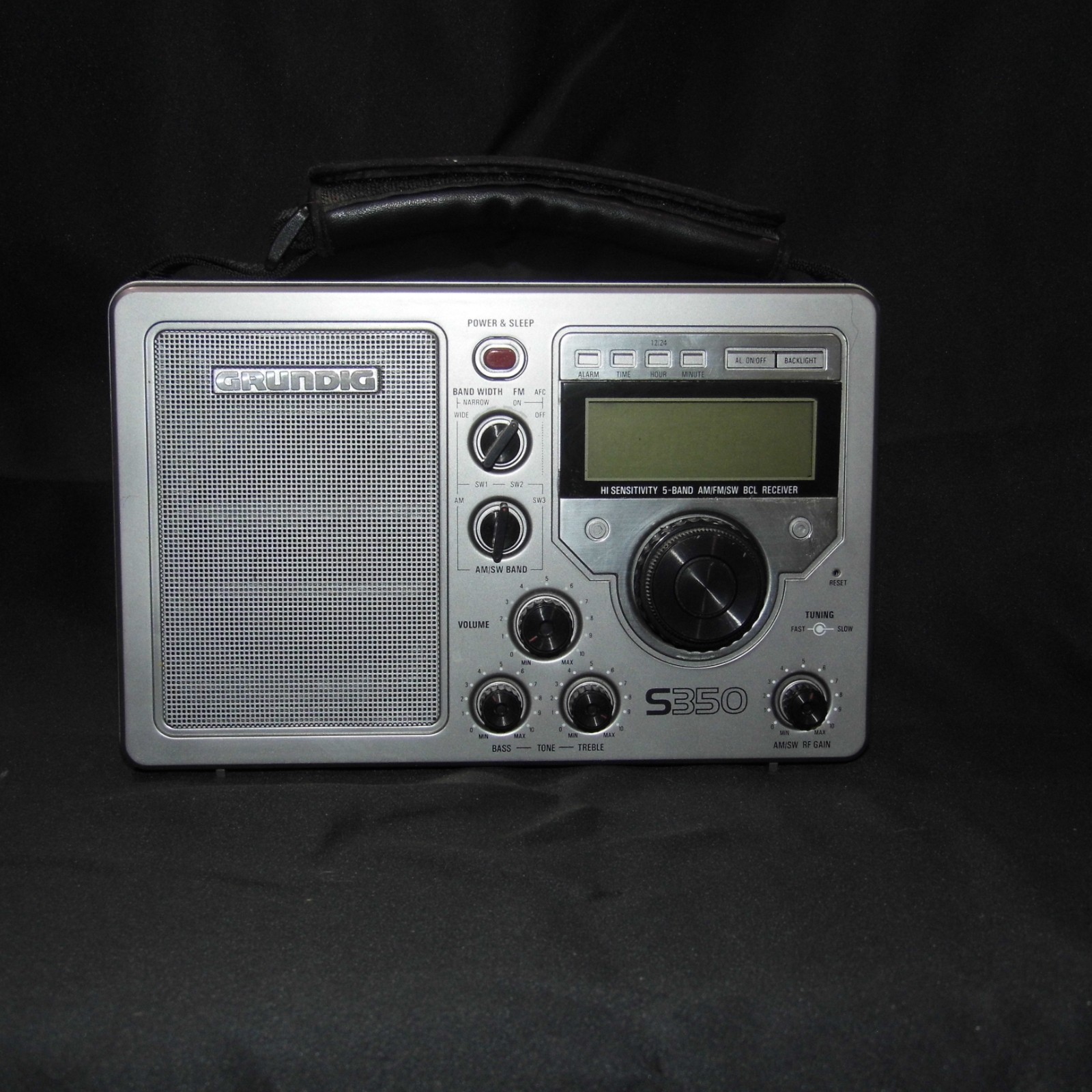
As an eBay Partner, we earn from qualifying purchases. This helps support our independent vintage technology research.
Related Models
- Grundig Other Receivers (1968)
- Pioneer QX-949A (1978)
- Pioneer SX-2000 (1978)
- Pioneer SX-2500 (1978)
- Marantz SR-2000 (1999–2001)
- Onkyo TX-1500MKII (1975)
- Pioneer QX-646 (1978)
- Pioneer SX-1900 (1978)
- Pioneer SX-201 (1978)
- Pioneer SX-251R (1976)