Fisher TX-200
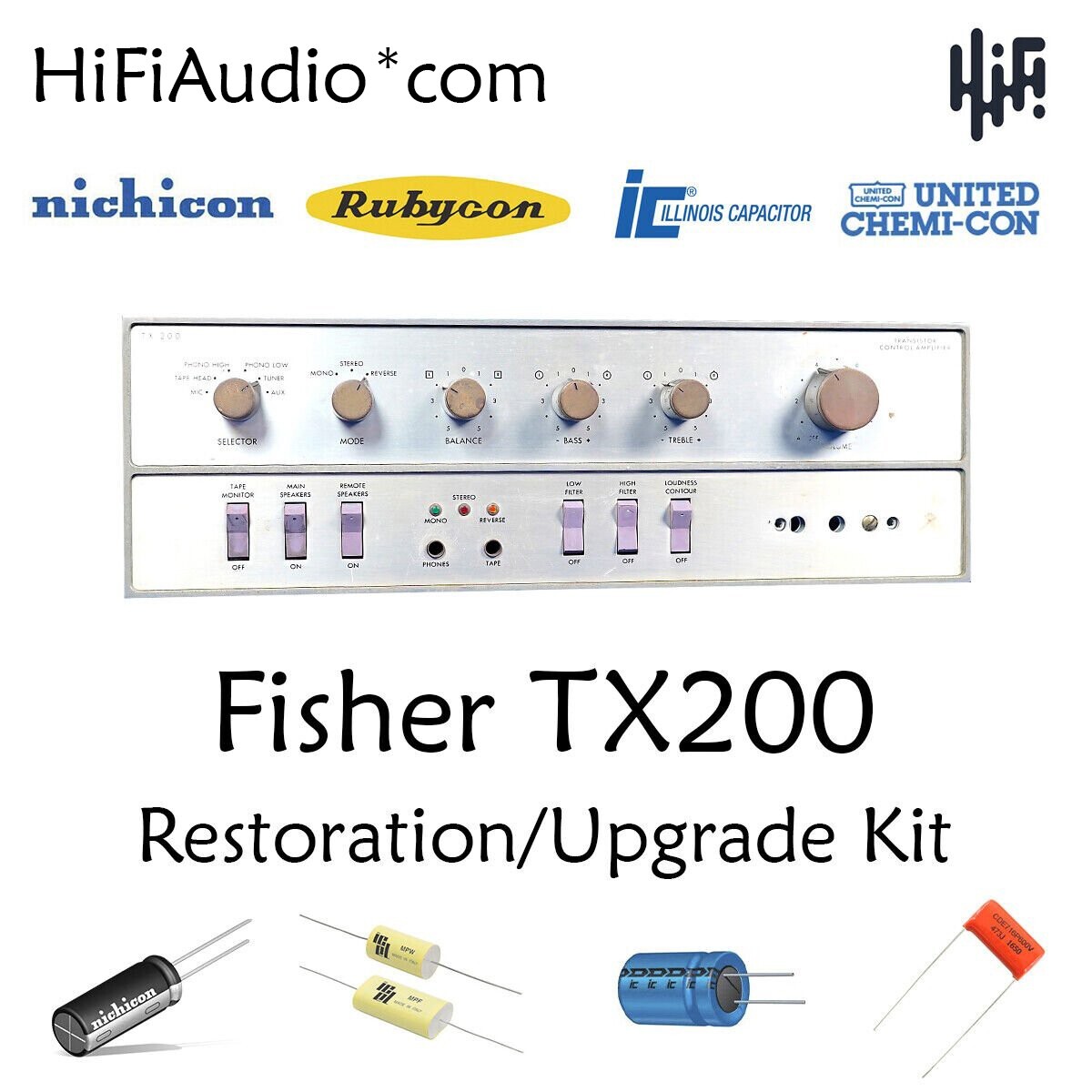
The Fisher TX-200 is a classic stereo receiver introduced in 1966, representing a pivotal moment in Fisher’s transition from vacuum tube to solid-state technology. Despite being an early solid-state design, the TX-200 is renowned for its warm, musical sound that closely emulates the tonal richness of tube amplifiers. With its robust construction, high-quality components, and elegant styling—including an optional wood cabinet—the TX-200 became a staple in mid-1960s high-fidelity audio systems.
Specifications
| Feature | Specification |
| Model | TX-200 |
| Brand | Fisher |
| Category | Cassette Deck / Receiver |
| Year of Production | 1966–1968 |
| Power Output | 25 watts per channel (stereo, RMS) |
| Number of Channels | 2 (Stereo) |
| Impedance | 4, 8, and 16 ohms (selectable) |
| Circuit Type | Solid-state (transistorized) |
| Power Supply | Dual power supplies |
| Input Sensitivity | Not available |
| Frequency Response | Not specified (typical for era: 20Hz–20kHz ±1dB) |
| Total Harmonic Distortion | Not specified (estimated <0.5%) |
| Tone Controls | Front-panel bass and treble |
| Monitoring | Tape monitor function |
| Headphone Output | Yes, stereo 1/4" jack |
| Cabinet Options | Metal chassis with optional wood cabinet finish |
| Dimensions | Approx. 17" W × 6" H × 14" D |
| Weight | Approx. 22 lbs (10 kg) |
Key Features
- Solid-State Design: One of Fisher’s early transistorized receivers, marking a shift from tube-based electronics while preserving a warm sonic character.
- Dual Power Supplies: Enhances channel separation and reduces crosstalk for improved stereo imaging.
- High-Quality Transformers: Contribute to stable power delivery and low noise performance.
- Tone Controls: Independent bass and treble adjustments on the front panel for personalized sound shaping.
- Tape Monitor Function: Allows users to switch between live input and tape playback seamlessly.
- Headphone Jack: Stereo output for private listening.
- Build Quality: Heavy-duty construction with durable knobs and switches, reflecting Fisher’s reputation for reliability.
Historical Significance
The Fisher TX-200 was released during a transformative period in audio engineering—the mid-1960s—when manufacturers were rapidly adopting solid-state technology. While many early transistor amplifiers suffered from harsh or clinical sound, the TX-200 stood out for its smooth, warm, and musical presentation, often compared favorably to tube-based predecessors. This made it a popular choice among audiophiles who wanted modern reliability without sacrificing sonic richness.
As part of Fisher’s professional-grade consumer line, the TX-200 was designed for integration into full hi-fi systems, often paired with Fisher turntables, tuners, and speakers. Its robust build and timeless sound have ensured its survival in the vintage audio market, where it remains respected for both performance and historical value.
Sound Signature
The TX-200 delivers a balanced and engaging listening experience characterized by:
- Warm midrange with excellent vocal clarity
- Smooth treble that avoids the harshness common in early solid-state gear
- Solid bass response, tight and well-controlled for its era
- Good stereo imaging and soundstage depth, aided by the dual power supply design
It excels with jazz, classical, and vocal recordings, offering a listening experience that feels natural and immersive.
Maintenance and Restoration Tips
Like all vintage electronics, the Fisher TX-200 benefits from careful maintenance to ensure reliable operation and preserve its value.
Common Issues
- Aging Capacitors: Electrolytic capacitors in the power supply and audio path should be tested or replaced, especially if the unit has been unused for years.
- Transistor Failures: While generally reliable, early transistors can fail; original parts may need sourcing from NOS (New Old Stock) suppliers.
- Noisy Controls: Bass, treble, and volume controls can develop crackles. Clean with contact cleaner or replace if worn.
- Dust and Oxidation: Internal cleaning and inspection are recommended before powering up a long-stored unit.
Recommended Upkeep
- Perform a capacitor recapping by a qualified technician to prevent potential damage.
- Use deoxit on switches and potentiometers to restore smooth operation.
- Check bias settings if applicable and ensure proper thermal management.
- Power up gradually using a dim bulb tester to avoid catastrophic failure.
Collectibility and Market Value
The Fisher TX-200 holds a collectibility rating of 7 out of 10 among vintage audio enthusiasts. Its appeal lies in its transitional technology, solid build, and pleasing sound signature. Units in working condition with original finishes—especially the wood cabinet variant—command higher prices.
- Market Value: $150–$300 USD, depending on condition, completeness, and cabinet type
- Restoration Potential: High—well-restored units can exceed $350 in audiophile circles
- Rarity: Moderately available on the secondhand market; fully operational units are increasingly sought after
Conclusion
The Fisher TX-200 is more than just a vintage receiver—it’s a bridge between the golden age of tubes and the modern solid-state era. With its warm sound, thoughtful design, and enduring build quality, it remains a rewarding piece for collectors, restorers, and analog audio lovers. Whether used as a centerpiece in a retro setup or restored to like-new condition, the TX-200 continues to deliver a listening experience that transcends its decades-old design.
eBay Listings


As an eBay Partner, we earn from qualifying purchases. This helps support our independent vintage technology research.
Related Models
- Fisher 800-T (1962)
- Fisher 332
- Fisher 400-R (1963)
- Fisher 400-T (1964)
- Fisher 432
- Pioneer QX-949A (1978)
- Pioneer SX-2000 (1978)
- Pioneer SX-2500 (1978)
- Marantz SR-2000 (1999–2001)
- Onkyo TX-1500MKII (1975)