Fisher 432 Receiver
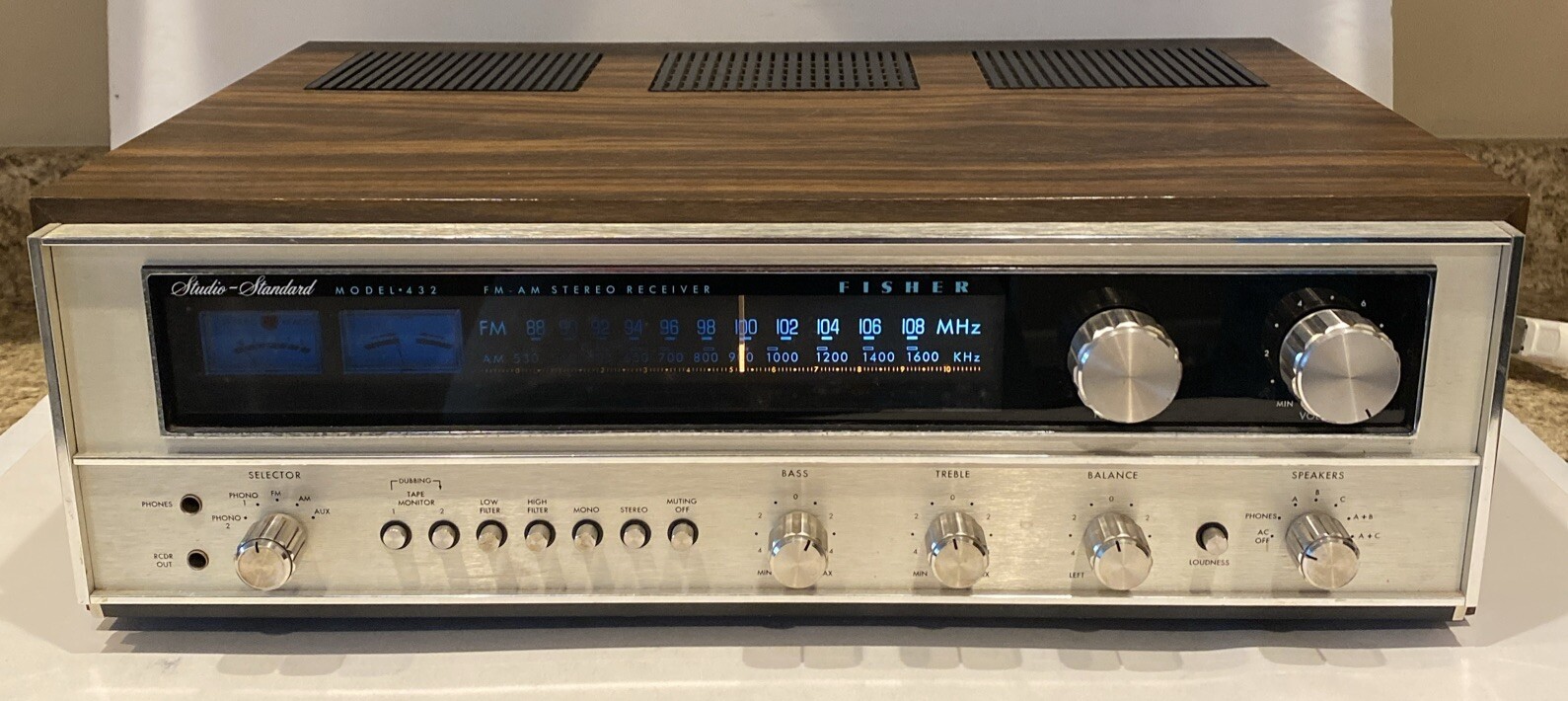
The Fisher 432 is a solid-state stereo receiver introduced in 1971 as part of Fisher's mid-range lineup during a pivotal era in audio technology. Representing the shift from vacuum tube to solid-state design, the 432 delivers the warm, musical sound Fisher is known for, while offering practical features for the audiophile and casual listener alike. Housed in an elegant walnut veneer cabinet, this receiver remains a sought-after piece for vintage audio enthusiasts seeking classic analog performance with reliable functionality.
Specifications
| Feature | Specification |
| Model | Fisher 432 |
| Year of Production | 1971–1972 |
| Power Output | 20 watts per channel (stereo, into 8 ohms) |
| Impedance | 8 ohms (nominal) |
| Frequency Response | Not specified (typical: 20Hz–20kHz, ±1dB) |
| Total Harmonic Distortion | Not specified (estimated <0.5% at rated power) |
| Input Sensitivity | Unknown |
| Inputs | Phono (MM), Tuner, Tape, Auxiliary |
| Outputs | Speaker A/B, Tape Out, Headphones (¼") |
| Tuner | FM/AM with analog dial and tuning meter |
| Tone Controls | Bass, Treble, Loudness Contour |
| Additional Features | Tape monitor, Stereo/Mono switch, Front headphone jack |
| Cabinet Finish | Walnut veneer |
| Dimensions | 17" W × 6" H × 14" D (approx.) |
| Weight | 22 lbs (approx.) |
Historical Context
The Fisher 432 was released at a time when consumer audio was undergoing a significant transformation. The early 1970s marked the decline of tube-based amplification and the rise of solid-state electronics, offering improved reliability, cooler operation, and longer lifespan. Fisher, already renowned for high-fidelity equipment, positioned the 432 as a dependable mid-tier receiver that balanced performance and affordability.
As part of Fisher's transition to modern circuitry, the 432 retained the brand’s signature sonic character—warm, smooth, and musically engaging—while embracing the precision and efficiency of transistorized design. Its inclusion of a high-quality FM/AM tuner, tape monitoring, and comprehensive input selection made it a versatile centerpiece for home stereo systems of the era.
The walnut cabinet and clean, functional front panel reflect the design ethos of the time: understated elegance paired with user-friendly operation. The 432 stands as a representative of its generation, capturing the essence of analog audio during a period of rapid technological evolution.
Sound Signature
The Fisher 432 delivers a warm and smooth sound profile, characteristic of Fisher receivers from the early 1970s. It emphasizes musicality over clinical accuracy, making it particularly enjoyable for jazz, classical, and vocal recordings. The bass is well-controlled but not overly aggressive, while the midrange is rich and present. High frequencies are smooth and non-fatiguing, contributing to a listening experience that feels natural and immersive.
Though not as powerful as high-end models of the time, the 20-watt output is sufficient for moderate room sizes, especially when paired with efficient speakers. The inclusion of loudness contour and tone controls allows users to tailor the sound to their preferences or room acoustics.
Maintenance and Restoration Tips
Like all vintage electronics, the Fisher 432 benefits from proper maintenance to ensure reliable operation and longevity.
Common Issues:
- Aging Capacitors: Electrolytic capacitors degrade over time and can cause hum, low output, or power supply failure. A full recapping of the power supply and signal path is highly recommended.
- Dirty Controls and Switches: Pots, switches, and jacks can develop crackling or intermittent connections. Use contact cleaner (non-residue type) to clean rotary controls and selector switches.
- Transistor Failures: While generally reliable, output or power supply transistors can fail. Testing with a multimeter or transistor checker can identify faulty components.
- Dial Lamp: The tuning meter illumination may burn out. Replace with a compatible low-voltage bulb (typically 6.3V or 12V, depending on circuit).
- Bias Adjustment: After recapping or transistor replacement, output stage bias should be checked and adjusted to ensure balanced operation.
General Tips:
- Power on the unit gradually using a variac to avoid stressing aged components.
- Allow warm-up time before extended use.
- Keep ventilation clear to prevent overheating.
- Use a surge protector to safeguard against voltage spikes.
Collectibility and Market Value
The Fisher 432 holds a collectibility rating of 6/10. While not as rare or powerful as flagship models like the Fisher 500 or 800 series, it remains a solid representative of early 1970s solid-state design. Its appeal lies in its combination of build quality, classic Fisher sound, and functional versatility.
In terms of market value, a working Fisher 432 in good cosmetic condition typically sells for $100–250. Units with original finish, clean dials, and fully operational tuners and amplifiers command higher prices. Fully restored models with recapped power supplies and verified performance may exceed $250 in the collector market.
Conclusion
The Fisher 432 is a well-rounded vintage receiver that embodies the transition from tube to solid-state audio. With its warm sound, practical features, and classic design, it remains a rewarding addition to any vintage audio setup. Whether used as a daily driver or restored as a collector’s piece, the 432 offers a genuine slice of 1970s hi-fi heritage with enduring appeal.
eBay Listings

As an eBay Partner, we earn from qualifying purchases. This helps support our independent vintage technology research.
Related Models
- Fisher 800-T (1962)
- Fisher 332
- Fisher 400-R (1963)
- Fisher 400-T (1964)
- Fisher 440-t
- Pioneer QX-949A (1978)
- Pioneer SX-2000 (1978)
- Pioneer SX-2500 (1978)
- Marantz SR-2000 (1999–2001)
- Onkyo TX-1500MKII (1975)