Denon DRA-2000: The Forgotten Console of High-End Audio
In the late 1970s, Denon—already renowned for its precision in turntable and cartridge engineering—ventured into a bold new territory with the DRA-2000, a unique and ambitious audio system that defied easy categorization. More than just a receiver or integrated amplifier, the DRA-2000 was conceived as a centralized audio command console, blending tuner, preamplifier, control logic, and system integration features into a single, elegantly designed unit. While not as widely recognized as Denon’s later receivers or CD players, the DRA-2000 remains a fascinating artifact of an era when Japanese audio manufacturers experimented with form, function, and futuristic design.
A Vision of Integrated Audio
Released in 1978, the Denon DRA-2000 arrived during a golden age of high-fidelity audio, when manufacturers were pushing the boundaries of both performance and aesthetics. At a time when most audiophiles assembled systems component by component, Denon proposed a different philosophy: cohesive integration. The DRA-2000 was not a standalone amplifier but rather a control and distribution hub, designed to work in tandem with external power amplifiers and source components. This modular approach was ahead of its time, echoing modern preamp-processors and smart audio hubs.
Though exact production numbers are unknown, the DRA-2000 was clearly a limited-run, high-end offering, likely aimed at affluent audiophiles and early adopters who valued sleek design and advanced functionality. Its brushed aluminum faceplate, recessed tuning dial, and minimalist layout reflect the Japanese design sensibility of the era—clean, precise, and understated.
Technical Specifications
Despite the scarcity of detailed documentation, surviving units and service manuals confirm the DRA-2000’s sophisticated internal architecture. It featured a dual-mono preamplifier section, high-quality passive components, and a meticulously laid-out circuit board designed to minimize signal degradation.
| Specification | Detail |
| Model | DRA-2000 |
| Manufacturer | Denon Ltd., Japan |
| Year of Release | 1978 |
| Category | Audio Control Console / Preamp-Tuner |
| Power Output | Not applicable (preamp only) |
| Impedance | Not applicable |
| Inputs | 4 line-level (RCA), 1 tape loop, phono (MM) |
| Outputs | Main pre-out, tape out, tuner out, remote control trigger |
| Tuner Sections | AM, FM with digital tuning display (LED) |
| Power Supply | Linear transformer-based, dual-regulated |
| Dimensions (W×H×D) | 430 × 146 × 335 mm |
| Weight | 12.5 kg |
| Finish | Brushed aluminum front panel, black chassis |
| Special Features | Remote control capability, system linking, illuminated VU meters |
One of the DRA-2000’s standout features was its early digital tuning display, using red LED readouts for both AM and FM bands—a rarity in 1978, when most tuners still relied on analog dials. The tuner section was highly sensitive, with a well-shielded IF stage and quartz-locked frequency synthesis, delivering excellent reception clarity.
Sound Characteristics and Performance
The DRA-2000 was engineered for neutrality and transparency, a hallmark of Denon’s design philosophy during this period. Its preamplifier stage employed discrete transistor circuitry (no op-amps), with carefully selected transistors and metal-film resistors throughout. The result was a sound signature that was detailed, dynamic, and remarkably open, with a low noise floor and excellent channel separation.
Phono stage performance was particularly impressive for its time. The MM (moving magnet) input offered accurate RIAA equalization and low distortion, making it well-suited for Denon’s own high-output cartridges like the DL-103. The line stages preserved the character of the source, whether it was a reel-to-reel deck, FM broadcast, or early CD player.
Because the DRA-2000 lacked built-in power amplification, its performance was highly dependent on the external amplifiers it drove. When paired with high-current power amps like the Pioneer M-200 or Yamaha B-1, it revealed its full potential: a wide soundstage, tight bass control, and articulate midrange clarity.
Notable Features and Innovations
What set the DRA-2000 apart from its contemporaries was its system integration capability. It included a remote control interface—a novelty in 1978—that allowed users to operate the tuner and input selection from a distance using an optional infrared remote. While primitive by today’s standards, this was a glimpse into the future of home audio automation.
Another forward-thinking feature was its modular signal routing. The DRA-2000 could act as a central switcher, allowing users to connect multiple sources and route them to different outputs—ideal for multi-room setups or complex listening environments. The inclusion of a dedicated tuner output meant the FM section could be used independently, feeding a secondary amplifier or recording device.
The front panel featured dual illuminated VU meters, not just for show but to monitor output levels across channels—especially useful when adjusting gain for tape recording. The meters, framed in chrome, added a touch of luxury and were a visual centerpiece of the unit’s design.
Common Issues and Maintenance
Due to its age and relative rarity, surviving DRA-2000 units require careful attention. Common issues include:
- Deteriorated electrolytic capacitors: The power supply and signal path capacitors should be checked or replaced, especially if the unit has been stored for decades.
- Fader potentiometer wear: The volume and balance controls may develop crackling or channel imbalance. These are high-quality Alps pots, but cleaning or replacement may be necessary.
- LED display failure: The red LED frequency readout can dim or fail entirely. Replacement LED modules are scarce but can sometimes be rebuilt with modern equivalents.
- Tuner alignment drift: The FM section may require realignment for optimal reception, especially if the unit has been moved or exposed to temperature extremes.
Owners are advised to have the DRA-2000 serviced by a technician experienced with vintage Japanese electronics. Due to its complex layout and high-quality construction, repairs can be challenging but are often worthwhile given the unit’s uniqueness.
Current Market Value and Collectibility
The Denon DRA-2000 is rare and underappreciated, making it a hidden gem in the vintage audio market. It does not command the high prices of Denon’s later PMA series amplifiers or its legendary DP-6000 turntable, but its scarcity and innovative design are slowly gaining recognition.
As of 2024, a fully functional DRA-2000 in good cosmetic condition typically sells for $400–$700, depending on region and included accessories. Units with the original remote or documentation may fetch higher prices. Given its status as a pioneering integrated console, the DRA-2000 has strong potential for future appreciation, particularly among collectors of rare Japanese audio gear.
Conclusion and Legacy
The Denon DRA-2000 stands as a testament to a moment of creative ambition in audio engineering. It was not merely a receiver, nor just a preamp—it was a vision of the future, where audio systems would be unified, intelligent, and elegantly controlled. Though it never achieved mass popularity, the DRA-2000 foreshadowed modern trends in home audio integration, remote control, and modular design.
For the discerning collector or vintage audio enthusiast, the DRA-2000 offers more than just sound—it offers historical significance, engineering craftsmanship, and a rare glimpse into Denon’s innovative spirit. In an age of streaming and digital convenience, the DRA-2000 reminds us of a time when audio was a tactile, physical experience—where every dial turned, every meter glowed, and every connection mattered.
If you’re lucky enough to find one in working order, consider it not just a piece of equipment, but a piece of audio history—Denon’s quiet revolution, hidden in plain sight.
eBay Listings

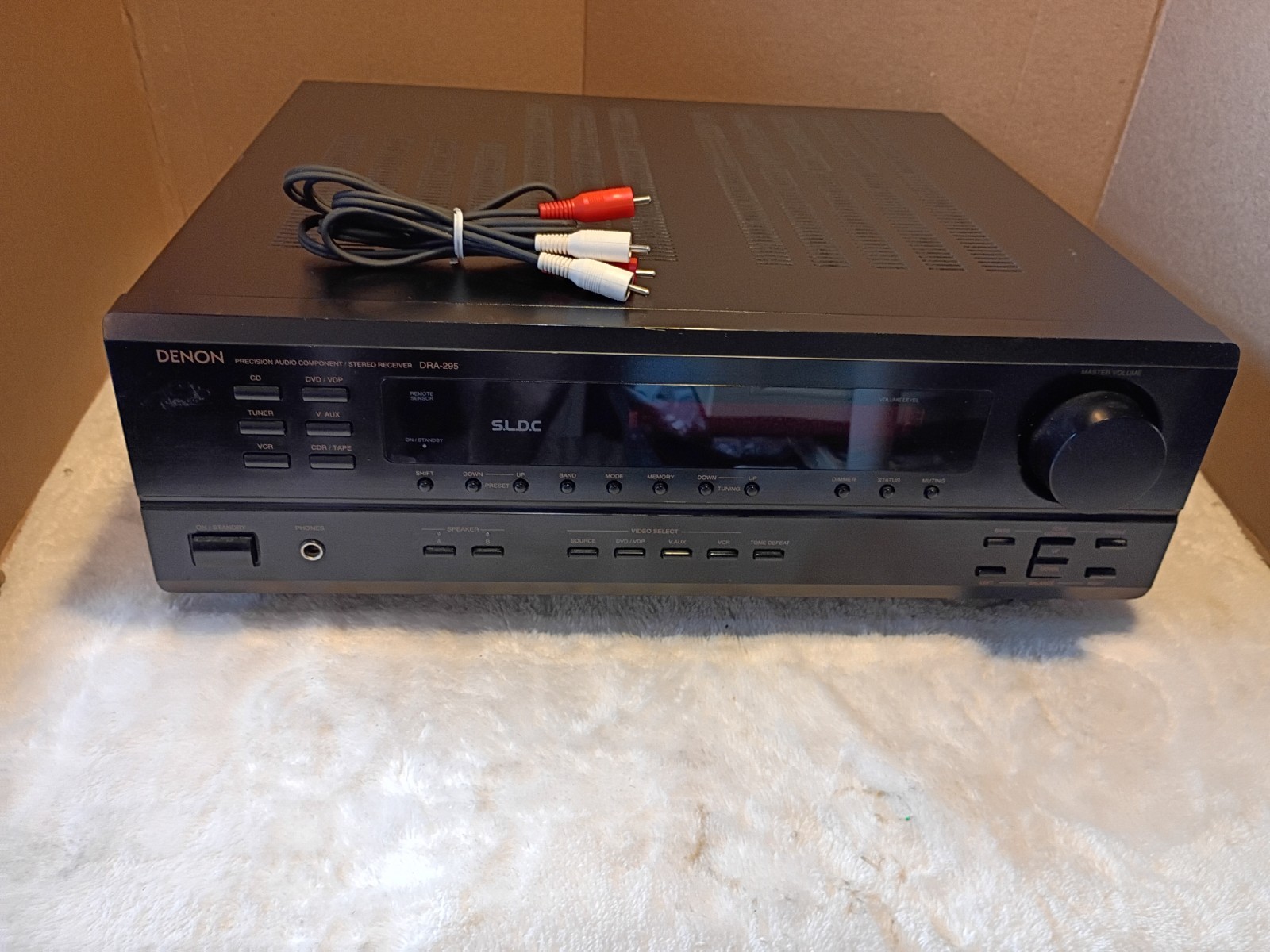


As an eBay Partner, we earn from qualifying purchases. This helps support our independent vintage technology research.
Related Models
- Denon PMA-700Z (1977)
- Denon DRA-735R (1993)
- Denon DRA-335R (1985)
- Pioneer QX-949A (1978)
- Pioneer SX-2000 (1978)
- Pioneer SX-2500 (1978)
- Marantz SR-2000 (1999–2001)
- Onkyo TX-1500MKII (1975)
- Pioneer QX-646 (1978)
- Pioneer SX-1900 (1978)