Denon DR-M33HX: The Precision Cassette Deck from Denon’s Golden Era
In the early to mid-1980s, Japanese audio manufacturers were at the peak of their analog engineering prowess. Denon, already renowned for its high-fidelity turntables and amplifiers, entered the cassette deck market with a series of reference-grade machines designed to elevate the humble compact cassette to near-reel-to-reel performance. Among these, the Denon DR-M33HX stands as a compelling, though somewhat under-the-radar, representative of Denon’s commitment to precision, durability, and sonic excellence.
Released in 1984, the DR-M33HX was positioned as a high-performance cassette deck aimed at serious audiophiles and semi-professional users who demanded accurate tape reproduction and reliable mechanical operation. While not as widely celebrated as contemporaries like the Nakamichi Dragon or the Revox B77, the DR-M33HX carved out a niche for itself with its robust build, advanced azimuth correction system, and Denon’s signature attention to detail.
Technical Specifications
The DR-M33HX was engineered with a dual-capstan, three-motor transport system—a hallmark of high-end cassette decks of the era. This design minimized tape flutter and ensured consistent tape-to-head contact, critical for preserving high-frequency detail and dynamic range.
| Specification | Detail |
| Year of Release | 1984 |
| Format | Compact Cassette |
| Tape Speed | 1⅞ ips (4.76 cm/s) |
| Head Configuration | Separate Record/Playback, Chrome-Erased |
| Motors | Three (Dual Capstan, Reel Drive) |
| Azimuth Adjustment | Manual (via screw) |
| Frequency Response | 30Hz – 18kHz (Type I), 30Hz – 19kHz (Type IV) |
| Wow & Flutter | < 0.065% (weighted) |
| Signal-to-Noise Ratio | 66dB (Type I), 72dB (Type IV) |
| Total Harmonic Distortion | < 1.5% (3% at 315Hz, 0dB) |
| Inputs/Outputs | Line In (RCA), Line Out (RCA) |
| Recording Equalization | 120μs (Type I), 70μs (Type IV) |
| Power Requirement | 120V AC, 50/60Hz |
| Dimensions (W×H×D) | 435 × 138 × 320 mm |
| Weight | 10.5 kg (23.1 lbs) |
The DR-M33HX supported all major tape types—Type I (Ferric), Type II (Chrome), and Type IV (Metal)—and featured switchable bias and equalization to optimize recording settings. Its discrete analog circuitry, including Denon’s proprietary head preamps, contributed to a clean, dynamic signal path with minimal coloration.
Sound Characteristics and Performance
The sonic signature of the DR-M33HX is best described as transparent, detailed, and dynamically expressive. Unlike some cassette decks that impart a warm or softened tonal balance, the DR-M33HX aimed for neutrality, letting the tape formulation and source material define the sound.
With metal tapes (Type IV), the DR-M33HX truly shines. It delivers extended high frequencies with minimal harshness, tight and well-controlled bass response, and a spacious stereo image. The use of separate record and playback heads ensures that recordings are captured with high fidelity, while playback benefits from precise azimuth alignment and minimal crosstalk.
Its dual-capstan system—featuring two rubber pinch rollers and a tension arm—maintains constant tape speed and pressure across the head gap. This results in exceptionally low wow and flutter, making the DR-M33HX ideal for capturing and reproducing music with complex transients, such as classical or jazz recordings.
While not quite reaching the legendary status of the Nakamichi Dragon in terms of sheer technical bravado, the DR-M33HX holds its own in real-world performance, particularly in midrange clarity and tonal accuracy.
Notable Features and Innovations
Denon equipped the DR-M33HX with several advanced features that reflected the state of the art in 1984:
- Dual-Capstan Transport: Minimizes tape slippage and ensures consistent contact with the heads, reducing modulation noise and high-frequency loss.
- Three-Motor Design: Dedicated motors for capstans and reel spindles eliminate mechanical crosstalk and improve speed stability.
- Manual Azimuth Adjustment: Allows users to fine-tune head alignment for optimal high-frequency response—critical when playing pre-recorded tapes that may have been recorded on misaligned machines.
- Discrete Head Amplifiers: Custom-designed circuitry ensures low noise and high slew rate for dynamic transients.
- Tape Type Selector with Bias Control: Enables optimal recording settings for Ferric, Chrome, and Metal tapes.
- Fluorescent VU Meters: Provide accurate visual feedback on recording levels, with peak hold functionality.
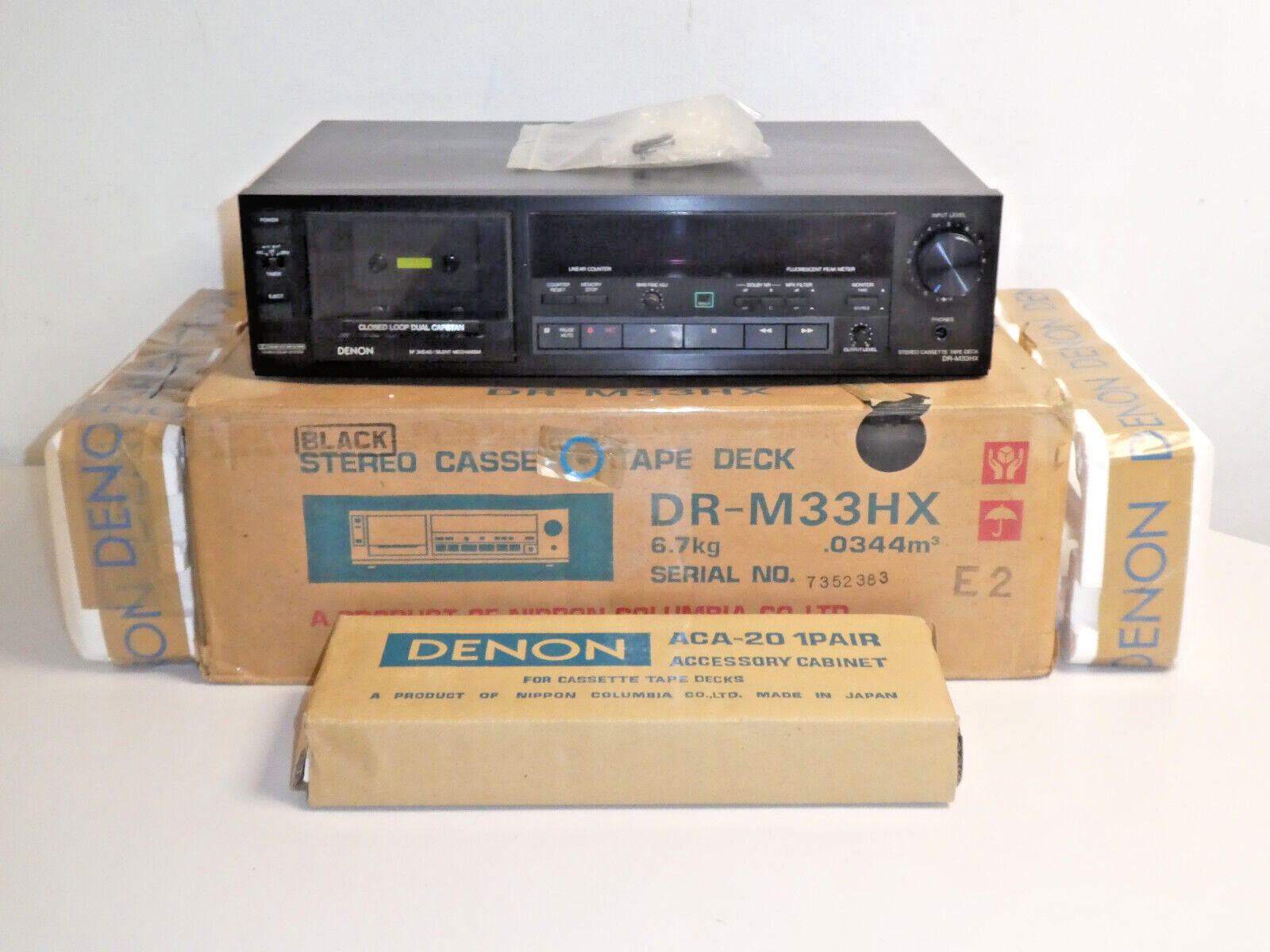
The front panel features a clean, functional layout with large transport controls, a tape counter, and illuminated function buttons. The build quality is exceptional—thick steel chassis, precision-machined head block, and high-quality potentiometers and switches throughout.
Common Issues and Maintenance
Like all high-performance cassette decks from the 1980s, the DR-M33HX requires careful maintenance to perform at its best. Common issues include:
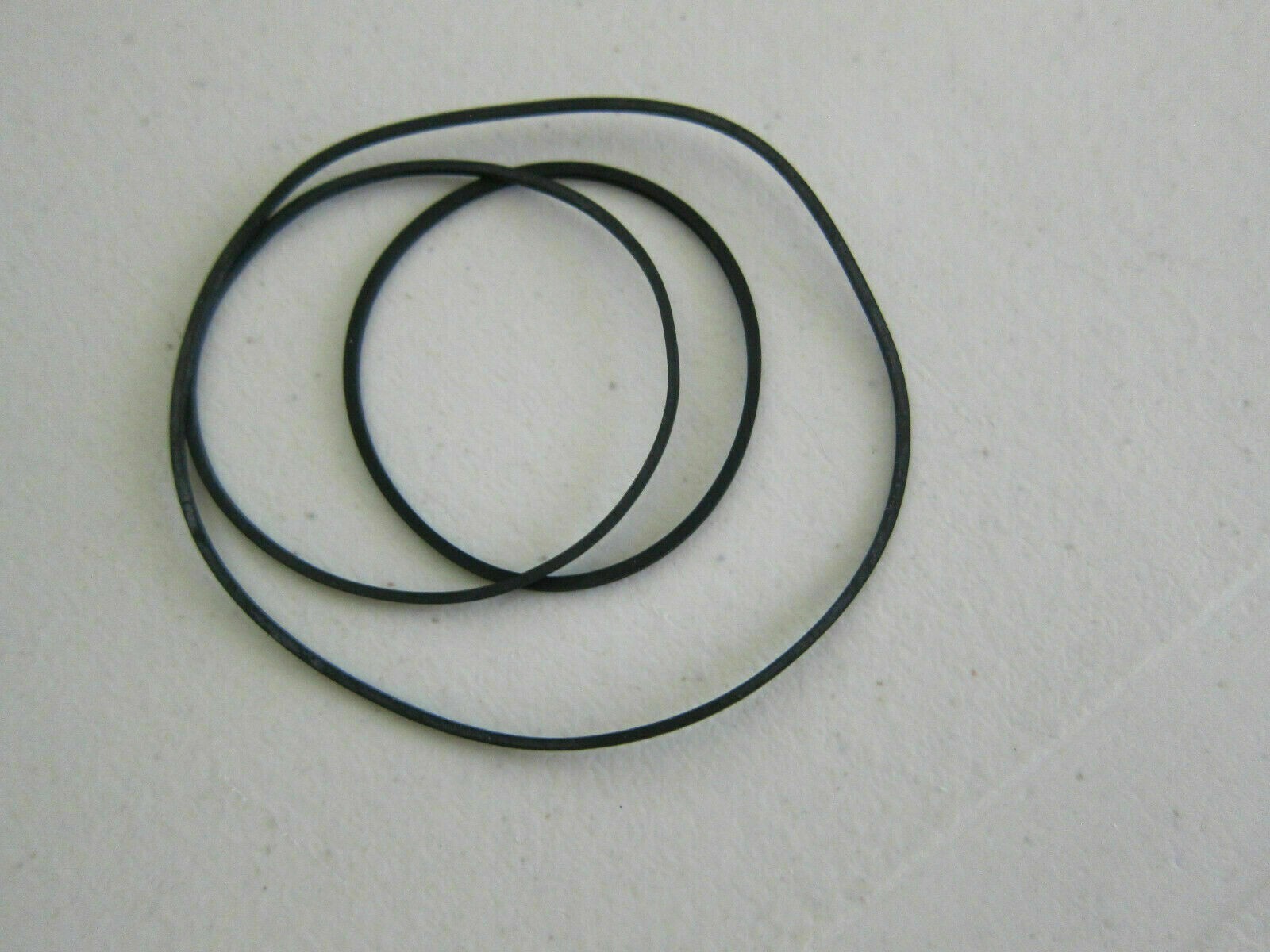
- Deteriorated Rubber Components: Pinch rollers and capstan tires can harden or crack over time, leading to speed instability and increased wow. Replacement with modern silicone-based parts is recommended.
- Dirty or Worn Heads: Playback heads can accumulate oxide buildup, dulling high frequencies. Regular cleaning with isopropyl alcohol and demagnetization are essential.
- Lubrication of Transport Mechanism: The complex gear train and sliding parts may require periodic lubrication with synthetic grease to prevent binding or noise.
- Capacitor Aging: While not as prone as amplifiers, the power supply and signal path may benefit from capacitor replacement after 40 years.
Fortunately, the DR-M33HX’s modular design makes servicing relatively straightforward for experienced technicians. Parts availability is limited but not impossible, especially given Denon’s broader service ecosystem.
Current Market Value and Collectibility
The Denon DR-M33HX remains a sleeper classic in the vintage audio community. It does not command the sky-high prices of the Nakamichi Dragon (which can exceed $2,000), but well-maintained units typically sell for $300–$500 on the secondhand market, depending on condition and completeness.
Its collectibility is growing among cassette enthusiasts and analog purists who appreciate its understated elegance and engineering rigor. While not as flashy or automated as some competitors, the DR-M33HX appeals to those who value precision, reliability, and sonic honesty.
It is particularly sought after by users building high-end analog chains where cassette remains a viable medium—for archiving reel-to-reel tapes, duplicating mixtapes with fidelity, or enjoying pre-recorded metal master cassettes.
Conclusion and Legacy
The Denon DR-M33HX may not be the most famous cassette deck of the 1980s, but it embodies the quiet excellence that defined Denon’s engineering philosophy during its analog heyday. It was never about gimmicks or excessive automation; instead, the DR-M33HX focused on fundamental performance: stable transport, accurate heads, and clean electronics.
In an era when digital formats were beginning to emerge, the DR-M33HX represented the pinnacle of what analog cassette technology could achieve. It stands as a testament to a time when engineers believed that even a compact cassette could deliver high-fidelity sound—if built with care, precision, and respect for the medium.
Today, the DR-M33HX is a rewarding machine for collectors and audiophiles alike. Restored to full health, it can still outperform many modern digital audio players in terms of musical engagement and analog warmth. For those exploring the golden age of cassette, the Denon DR-M33HX is a hidden gem worth discovering.
eBay Listings
As an eBay Partner, we earn from qualifying purchases. This helps support our independent vintage technology research.
Related Models
- Denon DR-M3 (1985)
- Denon DR-171 (1978)
- Denon DR-210 (1985)
- Denon DR-600 (1982)
- Denon DR-800 (1985)
- Sony TC-2050SD (1978)
- Aiwa AD-F990 (1993)
- Kenwood KX-3060 (1982)
- Sony TC-2130A (1974)
- Sony TC-2220 (1972)