Denon DR-600: The Forgotten Flagship of Cassette Fidelity
In the early 1980s, as the compact cassette format matured from a portable convenience into a serious medium for high-fidelity audio, Japanese manufacturers raced to push the boundaries of analog tape performance. Denon, already renowned for its cutting-edge turntables and studio mastering equipment, entered this arena with a quiet but potent statement: the Denon DR-600. Though less celebrated than contemporaries like the Nakamichi Dragon or Revox B77, the DR-600 stands as a masterclass in balanced, precision-engineered cassette deck design—crafted for the discerning listener who valued accuracy, durability, and musicality over flash.
Released in 1982, the DR-600 emerged during the golden age of cassette technology, a time when Dolby C noise reduction, three-head configurations, and quartz-locked transport systems became hallmarks of the high-end market. Denon, leveraging its deep expertise in professional audio and disc mastering, applied a no-compromise philosophy to the DR-600, positioning it as a reference-grade machine for critical home listeners and semi-professional users alike.
Technical Specifications
The DR-600 was engineered with meticulous attention to mechanical and electronic detail. It featured a full three-head configuration—separate record, playback, and erase heads—allowing for precise monitoring during recording and optimal head alignment for each function. The transport system was robust, utilizing a direct-drive dual capstan mechanism for exceptional tape stability and minimal wow and flutter.
| Specification | Detail |
| Year Released | 1982 |
| Format | 4-Track, 2-Channel Stereo (½" tape) |
| Tape Speed | 1⅞ ips (4.76 cm/s) |
| Heads | Three-motor, three-head system (Record, Playback, Erase) |
| Head Type | Discrete ferrite heads; record and playback independently adjustable |
| Azimuth Adjustment | Front-panel manual azimuth control for precise alignment |
| Noise Reduction | Dolby B and Dolby C |
| Frequency Response | 20Hz – 18kHz (with CrO₂ tape, Dolby C on) |
| Wow and Flutter | < 0.065% (weighted, RMS) |
| Total Harmonic Distortion | < 1.5% (at 3% output) |
| Signal-to-Noise Ratio | > 68 dB (Dolby C on, CrO₂ tape) |
| Input/Output | Line In (RCA), Line Out (RCA), 3.5mm headphone jack |
| Recording Bias | Automatic tape type sensing (Normal, CrO₂, Metal) |
| Motor System | Direct-drive dual capstan with servo control |
| Display | Analog VU meters for left and right channels |
| Dimensions | 435 mm × 140 mm × 320 mm (W×H×D) |
| Weight | 11.2 kg (24.7 lbs) |
Sound Characteristics and Performance
The Denon DR-600 was not designed to impress with exaggerated bass or shimmering highs—it aimed instead for tonal neutrality, dynamic clarity, and low distortion. Its sound signature is best described as transparent and composed, with a midrange that remains remarkably natural and uncolored. This fidelity stems from Denon’s use of high-quality head materials, precision tape guidance, and a clean, discrete amplifier circuit.
When paired with high-grade Type II (CrO₂) or early Type IV (metal) tapes and Dolby C engaged, the DR-600 delivers a frequency response that rivals many reel-to-reel systems of the era. The stereo imaging is stable and well-defined, with excellent channel separation (typically over 50 dB), allowing complex musical passages to unfold with clarity. The VU meters, while primarily functional, also contribute to the immersive experience, offering real-time visual feedback of recording levels.
One of the DR-600’s standout qualities is its low modulation noise and excellent dynamic range, especially when Dolby C is used. This made it a favorite among users who recorded live performances or made high-quality tape dubs from vinyl or FM broadcasts. Its ability to preserve subtle ambient cues and transient detail set it apart from mass-market cassette decks.
Notable Features and Innovations
While Denon did not reinvent the cassette deck with the DR-600, it refined existing technologies to an exceptional degree:
- Dual Capstan Transport: Unlike single-capstan designs that rely on the take-up reel for tension, the DR-600 uses two capstans—one at the supply and one at the take-up side—ensuring constant tape-to-head contact and minimizing speed variations. This results in ultra-low wow and flutter, critical for maintaining pitch stability.
- Front-Accessible Azimuth Control: A rare and welcome feature, the front-panel azimuth adjustment allows users to fine-tune the playback head alignment without opening the chassis. This is invaluable for optimizing high-frequency response, especially when playing tapes recorded on other machines.
- Intelligent Tape Sensing: The DR-600 automatically detects tape type (Normal, CrO₂, Metal) via a notched detection system and adjusts bias and equalization accordingly. This simplifies operation while ensuring optimal recording performance across different tape formulations.
- Discrete Head Amplifiers: The use of discrete transistor-based circuitry (rather than integrated op-amps) in the preamp stage contributes to the deck’s low noise floor and high transient response.
- Heavy-Duty Chassis: Encased in a rigid, double-layer steel chassis with internal damping, the DR-600 resists vibration and external interference, enhancing overall signal purity.
Common Issues and Maintenance
Like all high-performance analog tape machines from the 1980s, the Denon DR-600 requires regular maintenance to perform at its best. Over time, the rubber drive belts and idler tires can harden or crack, leading to speed instability or transport failure. These should be replaced with high-quality silicone equivalents.
The tape heads and pinch roller should be cleaned regularly with isopropyl alcohol and a demagnetizer used every few months to prevent buildup of residual magnetism, which degrades high-frequency response. Head wear is generally minimal due to the use of durable ferrite materials, but alignment—especially azimuth—may drift over decades and should be checked with a calibration tape.
Another potential issue is aging electrolytic capacitors in the power supply and signal path. Replacing these (a process known as "recapping") can restore the DR-600 to like-new performance and prevent hum, distortion, or channel imbalance.
Current Market Value and Collectibility
The Denon DR-600 remains a sleeper classic in the vintage audio world. While it doesn’t command the sky-high prices of the Nakamichi Dragon or even the TEAC A-3340S, it is increasingly sought after by cassette enthusiasts and Denon collectors. Well-maintained units in good cosmetic and working condition typically sell between $400 and $700, depending on accessories, original packaging, and provenance.
Its value lies in its build quality, sonic accuracy, and relative rarity—Denon produced far fewer DR-600 units compared to its mainstream models. As interest in analog tape revival grows—fueled by the resurgence of cassette culture and high-end tape formulations like the RMGI SM468—the DR-600 is gaining recognition as a serious contender in the high-fidelity cassette pantheon.
Conclusion and Legacy
The Denon DR-600 may not have been the loudest voice in the high-end cassette conversation, but it was one of the most articulate. It represents Denon’s commitment to engineering excellence, applying the same precision found in its professional disc-cutting lathes to the consumer cassette format. In an era obsessed with specs and showmanship, the DR-600 stood apart with its understated elegance and unwavering focus on sound quality.
Today, it serves as a reminder that great audio gear doesn’t need flashy branding or exotic materials—just thoughtful design, meticulous construction, and a passion for music. For those exploring the outer limits of what analog tape can achieve, the Denon DR-600 remains a compelling, and rewarding, choice. It’s not just a cassette deck—it’s a piece of Denon’s legacy, quietly spinning its way into audiophile history.
eBay Listings
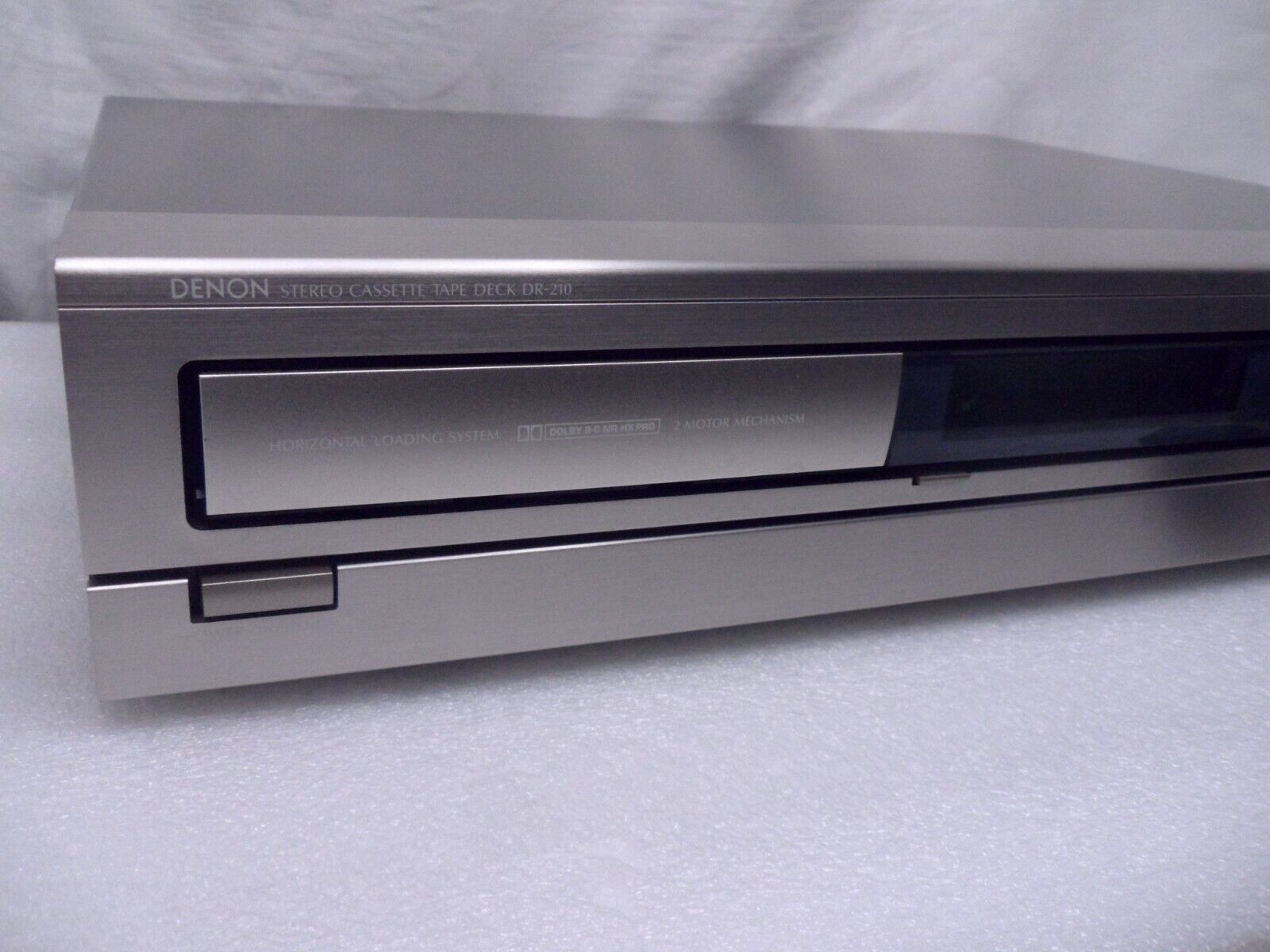
As an eBay Partner, we earn from qualifying purchases. This helps support our independent vintage technology research.
Related Models
- Denon DR-M3 (1985)
- Denon DR-171 (1978)
- Denon DR-210 (1985)
- Denon DR-800 (1985)
- Denon DR-M07 (1985)
- Sony TC-2050SD (1978)
- Aiwa AD-F990 (1993)
- Kenwood KX-3060 (1982)
- Sony TC-2130A (1974)
- Sony TC-2220 (1972)