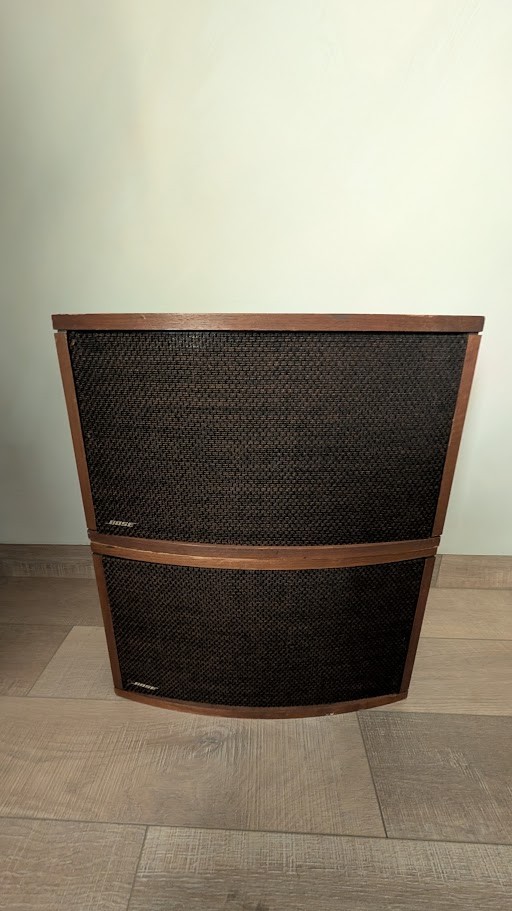
Bose 901 Series IV: The Iconic Direct/Reflecting Speaker System
Few loudspeakers start an argument like the Bose 901 Series IV. It came out in 1980 as an evolution of the original 901 from 1968, and it was the peak of Bose's direct/reflecting speaker philosophy. That approach ran against conventional wisdom about how sound should be reproduced at home. Many people love the spacious, enveloping sound. Purists criticize the reliance on equalization and the non-traditional dispersion.
Dr. Amar G. Bose, founder of Bose Corporation, designed the 901 Series IV around one idea. Instead of aiming all the sound straight at the listener, mimic the way we hear music in a concert hall, where much of what we perceive comes from reflections off walls and ceilings. That led to the direct/reflecting design, which became Bose's signature approach during the 1970s and 1980s.
Technical Specifications
The 901 Series IV is a passive loudspeaker system, but it cannot be used without the matching Bose EQ (equalizer)—typically the Bose EQ-1000 or EQ-2000 active equalizer. This is due to the speaker’s deliberately uneven frequency response, which is corrected electronically to achieve a flat, balanced sound.
| Specification | Detail |
| Model | 901 Series IV |
| Manufacturer | Bose Corporation |
| Year Introduced | 1980 |
| Type | Passive direct/reflecting loudspeaker |
| Drivers | 9 x 4" full-range midrange drivers, 1 x 8" servo-actuated bass driver |
| Bass Driver | 8" dynamic woofer with servo feedback |
| Frequency Response | 40 Hz – 18 kHz (with EQ) |
| Sensitivity | 89 dB (1W/1m) |
| Nominal Impedance | Not applicable (requires EQ unit) |
| Recommended Amplifier | 20–200 watts per channel |
| Crossover | Passive, internal; bass managed via EQ |
| Enclosure Type | Bass reflex with rear-firing ports |
| Finish Options | Walnut, black ash, rosewood (real wood veneers) |
| Dimensions (H×W×D) | 22" × 6.5" × 11" (55.9 × 16.5 × 27.9 cm) |
| Weight | 42 lbs (19 kg) per speaker |
| Required Accessories | Bose EQ-1000 or EQ-2000 equalizer |
Sound Characteristics and Performance
The sound of the Bose 901 Series IV is unmistakable. Eight of the nine drivers fire backward into the room and only one faces forward. The result is a diffuse, ambient soundfield that fills the listening space. Many listeners describe the spacious, concert-hall-like presentation as "being inside the music."
With the correct equalizer, the 901 Series IV sounds surprisingly full and balanced. The 8" servo-controlled woofer delivers deep, articulate bass down to 40 Hz, which is remarkable for a speaker of its era. The servo uses a feedback loop to monitor cone movement and correct distortion in real time. That was a rare feature in consumer speakers at the time.
The midrange is smooth and non-fatiguing, though not as detailed as some contemporary high-end speakers. The treble comes from the same 4" drivers used for the midrange. They are not traditional tweeters, so high-frequency extension is adequate but lacks the airiness and sparkle of dedicated tweeter designs.
The best thing about the 901 Series IV is its imaging and soundstage. Conventional speakers create a focused "stereo triangle." The 901s produce a wide, diffuse image that minimizes the perception of individual speakers. That makes them particularly effective in large rooms or non-ideal listening environments where traditional speakers might struggle.
Notable Features and Innovations
The 901 Series IV was packed with innovative features for its time:
- Direct/Reflecting Design: Eight rear-firing drivers ensure that most sound reaches the listener via room reflections, mimicking natural acoustic environments.
- Servo-Controlled Bass: The 8" woofer uses a feedback system to reduce distortion and improve low-end accuracy—a technology borrowed from professional audio and high-end engineering.
- Mandatory Equalization: The system includes a line-level active equalizer (EQ-1000/EQ-2000) that applies a precise correction curve to flatten the speaker’s response. This was a bold move, as it meant the speakers could not function properly without proprietary electronics.
- Real Wood Veneer Cabinets: The Series IV offered luxurious finishes in walnut, black ash, and rosewood, giving them a premium aesthetic that stood out in living rooms of the era.
Common Issues and Maintenance
The 901 Series IV is solidly built, but age has introduced some common issues:
- Aging Foam Surrounds: The foam gaskets around the 4" drivers degrade over time, leading to buzzing or loss of bass. Replacement with modern rubber surrounds is a common restoration step.
- Capacitor Drift in EQ Units: The EQ-1000 and EQ-2000 units may suffer from aging capacitors, which can affect sound balance. Re-capping by a qualified technician is often necessary.
- Cable Degradation: The internal wiring and external speaker cables can become brittle. Upgrading to modern oxygen-free copper cables can improve performance.
- Placement Sensitivity: The speakers require at least 1–2 feet of clearance from the rear wall to function properly. Incorrect placement can lead to boomy bass or weak imaging.
Clean the grilles and cabinets regularly, especially on vintage wood finishes. Keep the EQ unit in a well-ventilated area to prevent overheating.
Current Market Value and Collectibility
Today the Bose 901 Series IV sits in an odd spot in the vintage audio market. Hardcore audiophiles chase some contemporaries more (like the AR-3a or JBL L100), but the 901s remain highly collectible among Bose enthusiasts and retro audio fans.
A complete, working pair of 901 Series IV speakers with the original EQ unit typically sells for $400 - $800, depending on condition, finish, and included accessories. Rosewood and walnut finishes command a premium, especially if the wood veneer is in excellent condition. Fully restored systems with replaced drivers and recapped EQ units can fetch higher prices.
Part of the appeal is design history and cultural impact. The 901 Series IV was a staple in upscale homes throughout the 1980s and appeared in countless movies, TV shows, and design magazines.
Conclusion and Legacy
The Bose 901 Series IV challenged the norms of hi-fi design at a time when flat frequency response and forward-firing drivers were gospel. By embracing room acoustics and psychoacoustics, Bose built a system that prioritized perceived realism over measured accuracy.
Modern audiophiles may critique the reliance on equalization or the lack of pinpoint imaging. Still, the 901 Series IV delivered a lush, immersive listening experience that few speakers of its era could match. It helped bring high-quality sound into mainstream living rooms and built Bose's reputation as an innovator.
For collectors, restorers, or anyone curious about the evolution of speaker design, the 901 Series IV offers a fascinating glimpse into a different philosophy of sound reproduction—one where the room is not the enemy, but an essential part of the music.
Market Value
┌──────────────────────────────────────────────────────────────────────────┐
│ BOSE 901 SERIES IV                                              Nov 2026 │
├──────────────────────────────────────────────────────────────────────────┤
│ High      $624                                    Latest            $155 │
│ Median    $202                                    Trend                — │
│ Low       $105                                    Volume           ~7/mo │
├──────────────────────────────────────────────────────────────────────────┤
│   $700 ┤                                                                 │
│        │             .                                                   │
│        │                   .               .         .                   │
│   $443 ┤                              .      .                           │
│        │              ..            .           .         .           .  │
│        │.              .             .          .    .   .               │
│        │       . ..       ..           .  .. . . . .      .     .        │
│   $100 ┤.. . ..... .  . ..                .    .  .             .       .│
│        ├─────────────────────────────────────────────────────────────────│
│    vol │▅▅ ▁ ▂▂▅▁▄▁▁ ▁▂▅▁▁▁▂        ▁▁▁▁  ▂▂ ▂ █▂▁▁▄ ▂   ▁▂     ▂     ▁ ▁│
│        └─────────────────────────────────────────────────────────────────│
│         2026-01                      2026-05                      2026-10│
└──────────────────────────────────────────────────────────────────────────┘
eBay completed sales. Excludes accessories, parts, and non-working units. Hover points for details.
eBay Listings
Recently sold on eBay: $139–$435 (median $202, based on 67 completed sales, past 12 months)


As an eBay Partner, we earn from qualifying purchases. This helps support our independent vintage technology research.
Related Models
- Bose 102-S
- Bose 201-SERIES-II (1979)
- Bose 301-SERIES-I (1970)
- Bose 301-SERIES-II (1977)
- Bose 402V
- Braun AUDIO-1 (1965)
- Braun AUDIO-250 (1965)
- Magnavox Component Systems (1972)
- Acoustic Research AR (1967-1976)
- Acoustic Research 11