AR ES-1 (1980s)
That first deep thump of the platter settling into rotation—solid, unhurried, like a clockwork heart—tells you this turntable was built to disappear so the music doesn’t.
Overview
Slip the dustcover off an AR ES-1 and you’re not just uncovering a turntable—you’re revealing a philosophy. This isn’t a flashy showpiece with exposed gears or acrylic layers stacked like a layer cake. It’s a walnut-clad vault with a purpose: to spin records with enough precision and isolation to let you forget the machine was ever there. From the moment you lower the tonearm—typically a Jelco 250ST in stock form—onto a groove, the ES-1 delivers a kind of unforced realism that feels less engineered and more inevitable. It doesn’t shout its presence; it just makes the room disappear. That’s the magic of Acoustic Research’s late-era design thinking: not just low coloration, but a kind of neutrality that lets the recording, not the turntable, do the talking.
Introduced in the early 1980s, the ES-1 arrived when AR was no longer the scrappy innovator of the 1950s acoustic suspension speakers but a mature brand under Teledyne Technologies, still respected but navigating a crowded high-end market. The ES-1 wasn’t a radical departure—it leaned hard into proven principles. Its suspension-based subchassis design, borrowed from earlier AR turntables like the TP-1 and AR-X, isolated the platter and tonearm from external vibrations with a set of compliant springs. But where earlier models used more utilitarian materials, the ES-1 dressed up in real wood—usually solid cherry or walnut on three sides, with a veneered top. The plinth wasn’t just pretty; it contributed to the overall mass and damping, helping to suppress resonances that could smear detail. Inside, a 24-pole Hurst synchronous motor spun the 3.9-pound platter via belt drive, delivering smooth, low-jitter rotation. The bronze main well sleeve and sapphire thrust bearing with a captured carbide ball weren’t overkill—they were part of a system designed to minimize friction and wear over decades.
Compared to its sibling, “The AR Turntable” (often called the AR TT), the ES-1 was the more premium offering. Where the TT used Delrin for the main bearing sleeve and a veneer-over-particleboard plinth, the ES-1 stepped up with solid wood construction and a bronze sleeve, suggesting a focus on longevity and sonic refinement. It wasn’t the most adjustable table—no user-selectable speeds or fancy electronic speed control—but it didn’t need to be. It was meant to be set up once, carefully, and then left alone. And when it was properly calibrated, it could outperform far more expensive competitors of its era, including the Linn Sondek LP12 in certain aspects of tonal balance and pitch stability, according to some owner reports. It certainly gave the Ariston RD11 and the Pink Triangle Minx a run for their money in mid-tier analog performance.
Specifications
| Manufacturer | Acoustic Research (Teledyne) |
| Production Years | Early 1980s |
| Original Price | Not listed in research |
| Turntable Type | Belt drive, suspended subchassis |
| Platter Weight | 3.9 lb (1.8 kg) |
| Motor | 24-pole synchronous, 3 watt Hurst motor |
| Speeds | 33⅓, 45 RPM |
| Speed Accuracy | Not listed in research |
| Wow and Flutter | Not listed in research |
| Signal-to-Noise Ratio | Not listed in research |
| Tonearm | Typically Jelco 250ST (stock) |
| Effective Tonearm Length | Not listed in research |
| Bearing Material | Bronze main well sleeve, sapphire thrust plate with carbide ball |
| Plinth Material | Solid wood (cherry or walnut) on three sides, veneered top |
| Subchassis | Acrylic or similar compliant material (aftermarket mods common) |
| Dimensions | Not listed in research |
| Weight | Not listed in research |
| Power Supply | AC line powered, no external PSU |
Key Features
The Suspended Subchassis: Quiet as a Library
The ES-1’s most defining feature isn’t visible at first glance—it’s felt in the silence between the notes. The entire platter and tonearm assembly rides on a damped subchassis, suspended by three springs from the outer plinth. This isn’t just a gimmick; it’s a full mechanical isolation system that decouples the sensitive parts from floor vibrations, footsteps, or even loud bass from nearby speakers. When properly leveled and adjusted, the subchassis floats like a raft on still water. This design, inherited from AR’s earlier turntable experiments, was refined to near-ideal execution in the ES-1. Unlike rigid chassis tables that rely on mass and damping, the ES-1 uses compliance to reject energy—meaning it doesn’t absorb vibration so much as refuse to engage with it. The result? A blacker background, deeper soundstage, and a sense of ease in complex passages that cheaper or more rigidly mounted tables often struggle to match.
Bearing and Platter: Precision Without Pretense
The heart of any turntable is its bearing, and the ES-1’s combination of a bronze sleeve, sapphire thrust plate, and captive carbide ball is a study in understated durability. Sapphire and carbide are chosen for their extreme hardness and low friction—this isn’t a bearing that wears in; it’s one that resists wearing out. Over decades, the only real threat is dried lubricant or contamination from dust, not mechanical degradation. The 3.9-pound platter, while not as heavy as some audiophile darlings, has enough inertia to maintain stable speed between motor pulses, especially when paired with the 24-pole Hurst motor. That motor, though modest in power (3 watts), is overbuilt for the task—synchronous motors like this don’t vary speed with load, and the 24-pole design reduces cogging, leading to smoother rotation and lower wow. No fancy speed box or external controller needed: plug it in, let it spin up, and it just… stays there.
Real Wood, Real Craft
In an era when many manufacturers were switching to MDF or plastic laminates to cut costs, AR stuck with solid wood for the ES-1’s sides—usually cherry or walnut. This wasn’t just for looks. Solid wood has complex internal damping properties that engineered materials often lack. It doesn’t ring like metal or resonate like hollow plastic. Instead, it absorbs and dissipates energy in a way that complements the suspension system. The top surface is veneered, likely for flatness and stability, but the three-dimensional wood construction gives the plinth a density and acoustic inertia that cheaper sandwich constructions can’t replicate. It also ages beautifully—developing a warm patina, not a yellowed haze. Owners report that even 40-year-old examples, when cleaned and re-lubricated, look and perform like they’re half their age.
Historical Context
The ES-1 emerged during a transitional period for Acoustic Research. By the 1980s, the company was no longer the disruptive force it had been in the 1950s and ’60s, when Edgar Villchur’s acoustic suspension speakers revolutionized hi-fi. Under Teledyne, AR had become a respected but conservative brand, producing reliable, well-engineered gear without the marketing flash of newer competitors. The ES-1 reflected that ethos: it wasn’t trying to be the fastest, lightest, or most adjustable table on the market. It was trying to be the most *right*—to deliver a neutral, uncolored window into the recording without drawing attention to itself.
At the time, the analog world was fragmenting. On one side were minimalist, rigid-chassis designs like the Linn LP12, which relied on mass and external isolation. On the other were ultra-high-end suspended tables like the AR’s own earlier TP-1 or the British Roksan Xerxes. The ES-1 split the difference—offering suspension-based isolation in a more accessible, user-friendly package. It competed directly with tables like the Thorens TD-160, the Technics SL-1200 (in DJ-modded hi-fi form), and the NAD 5120. But where those often prioritized convenience or serviceability, the ES-1 leaned into refinement. It wasn’t sold with a cult following or a tweak-friendly reputation—yet. But over time, as original owners passed them down or sold them off, a quiet consensus emerged: this was one of the last great analog values from a fading era of American high-end audio.
Collectibility & Value
Today, the AR ES-1 trades in a sweet spot between affordability and performance. Mint-condition examples with original arms and dustcovers typically sell between $400 and $700, while fully restored or upgraded models—especially those with acrylic subchassis, aftermarket platters, or Rega arms—can fetch $900 or more. Cosmetically, the solid wood construction holds up well, but watch for faded veneers, cracked dustcovers, or missing feet. One leg missing isn’t uncommon, and replacements are available from specialty vintage audio suppliers, but mismatched or poorly fitted legs can upset the delicate balance of the suspension.
Functionally, the ES-1 is robust but not immortal. The belt, being rubber, will degrade over time—replacements are inexpensive and easy to install. The Hurst motor is generally reliable, but if it starts to hum or stutter, it may need cleaning or rewinding. The biggest red flag is a seized or gritty bearing. While the sapphire and carbide parts don’t wear easily, dried grease or contamination can cause binding. A smooth, silent spin with minimal lateral play is the sign of a healthy bearing. If it feels notchy or sticky, budget for a professional teardown and relube—this isn’t a DIY job for the faint of heart.
Another quirk: the tonearm wiring. Some owners report odd-size connectors that don’t match modern cartridges, requiring adapter cables or rewiring. The stock Jelco 250ST is competent but not exceptional—many buyers upgrade to a Rega RB300/301 or SME IV for improved tracking and detail retrieval. The armboard is often drilled for the Premier arm, suggesting AR may have offered different configurations, but this also makes swaps easier for modders.
For the buyer, the ES-1 represents a rare balance: a turntable that’s both a restoration project and a finished product. It can be enjoyed stock, or gently enhanced without losing its character. Unlike some vintage gear that demands a full overhaul, a clean, lubricated ES-1 with a new belt and decent cartridge will outperform many modern $1,000+ offerings. But it won’t forgive neglect. It wants to be maintained, not worshipped.
eBay Listings
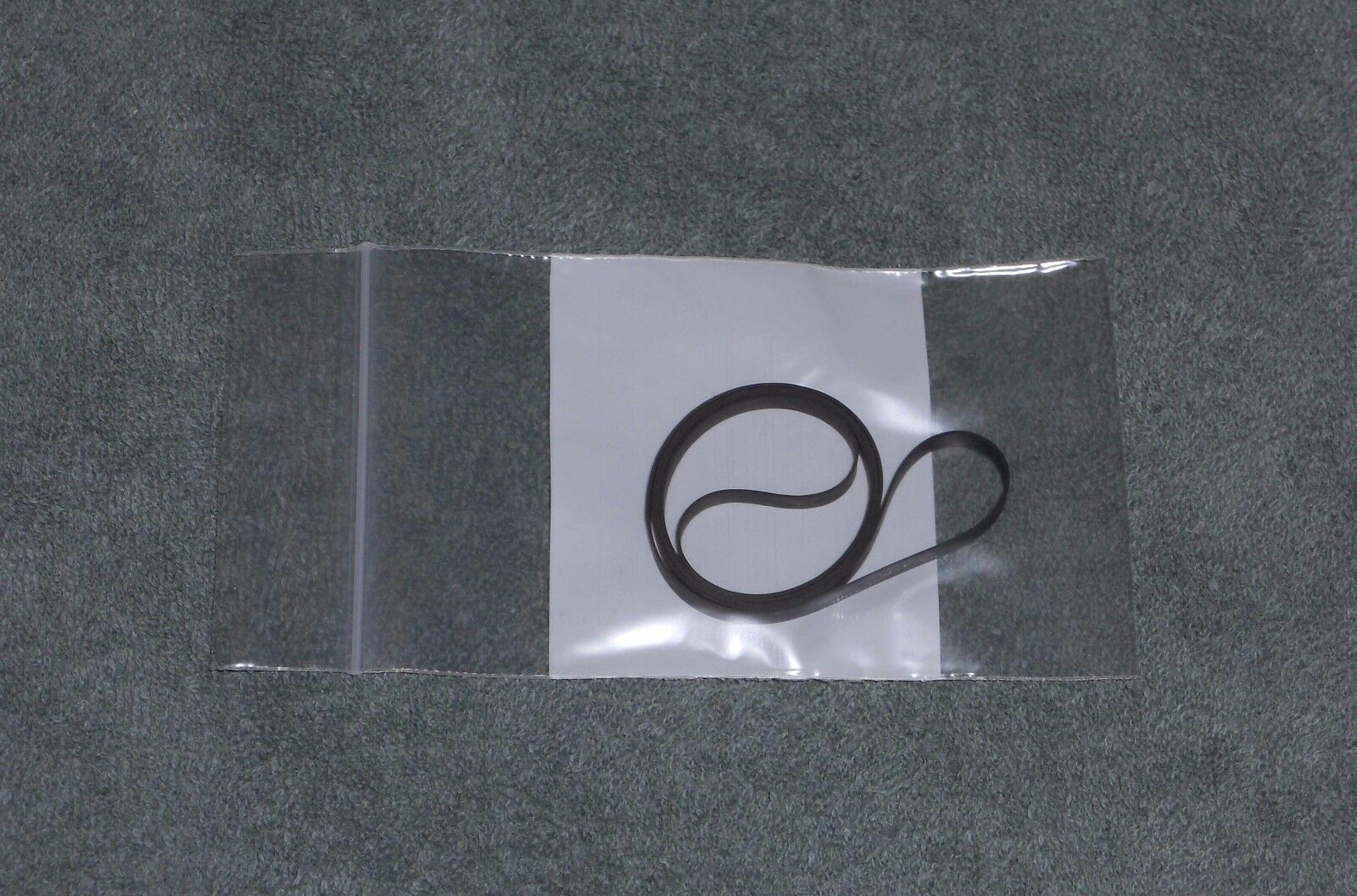


As an eBay Partner, we earn from qualifying purchases. This helps support our independent vintage technology research.