Altec 288 Compression Driver
The Altec 288 is a legendary large-format compression driver that defined the sound of cinema and professional audio for decades. Featuring a 1.75-inch diaphragm and massive Alnico V magnet, the 288 was the voice of the iconic Voice of the Theatre systems and countless professional installations worldwide.
Specifications
| Type | Large Format Compression Driver |
|---|---|
| Diaphragm Diameter | 1.75 inches (44.5mm) |
| Voice Coil Diameter | 2.80 inches (71mm) |
| Throat Diameter | 1.4 inches (36mm) |
| Magnet | Alnico V (3.4 lbs / 1.54 kg) |
| Gap Flux Density | 2.05 Tesla (at rest) |
| Nominal Impedance | 8 Ω (288-8) / 16 Ω (288-16) |
| Power Handling | 15W continuous |
| Frequency Response | 500 Hz - 15 kHz |
| Sensitivity | ~110 dB/W/m |
| Weight | ~13.3 kg (29.3 lbs) |
| Outside Diameter | 7.1 inches (180mm) |
Design Overview
The Altec 288 represents the golden age of American compression driver design. Its massive Alnico V magnet structure and precision-machined components exemplify the engineering excellence that made Altec the standard for cinema and professional sound.
Key design features include:
- Large Alnico Magnet: 3.4-pound Alnico V magnet provides exceptional magnetic stability and flux density
- Aluminum Diaphragm: Precision-formed aluminum with tangential suspension for smooth, extended response
- High Efficiency: ~110 dB sensitivity allows modest amplifiers to achieve cinema-level SPLs
- Robust Construction: Built to withstand the demands of continuous professional use
Applications
The 288 was the heart of Altec's most iconic systems:
- Voice of the Theatre A7 - The legendary cinema speaker
- Voice of the Theatre A5, A4 - Smaller VOTT variants
- Model 19 - Home speaker version
- Professional cinema installations worldwide
- Early recording studio monitors
In the Wild
Featured in Resistor Magazine's restoration profile of Iwan Arjanto's vintage speaker collection. The Altec 288 was the driver that started Arjanto's journey into horn-loaded speakers.
"The first time I heard an Altec horn was at my friend's house – he used to play around with full range drivers too – after hearing that horn I couldn't forget its sound. That's when the journey began, I began hunting many horns."
— Iwan Arjanto
Arjanto's first horn-type speaker purchase was actually a Fostex FD600 because it was affordable, but the Altec 511 horn (typically used with the 288 driver) was what opened his ears to the possibilities of horn-loaded systems. He has since built four pairs of Altec A7 speakers for customers, each using the classic 288 compression driver on the 811B sectoral horn.
Variants
- 288B: Common early version used in VOTT systems
- 288-8G / 288-16G: Later "G-series" versions with 8Ω and 16Ω impedance options
- 288-8K / 288-16K: Later versions with ferrite magnets (lighter weight, slightly different character)
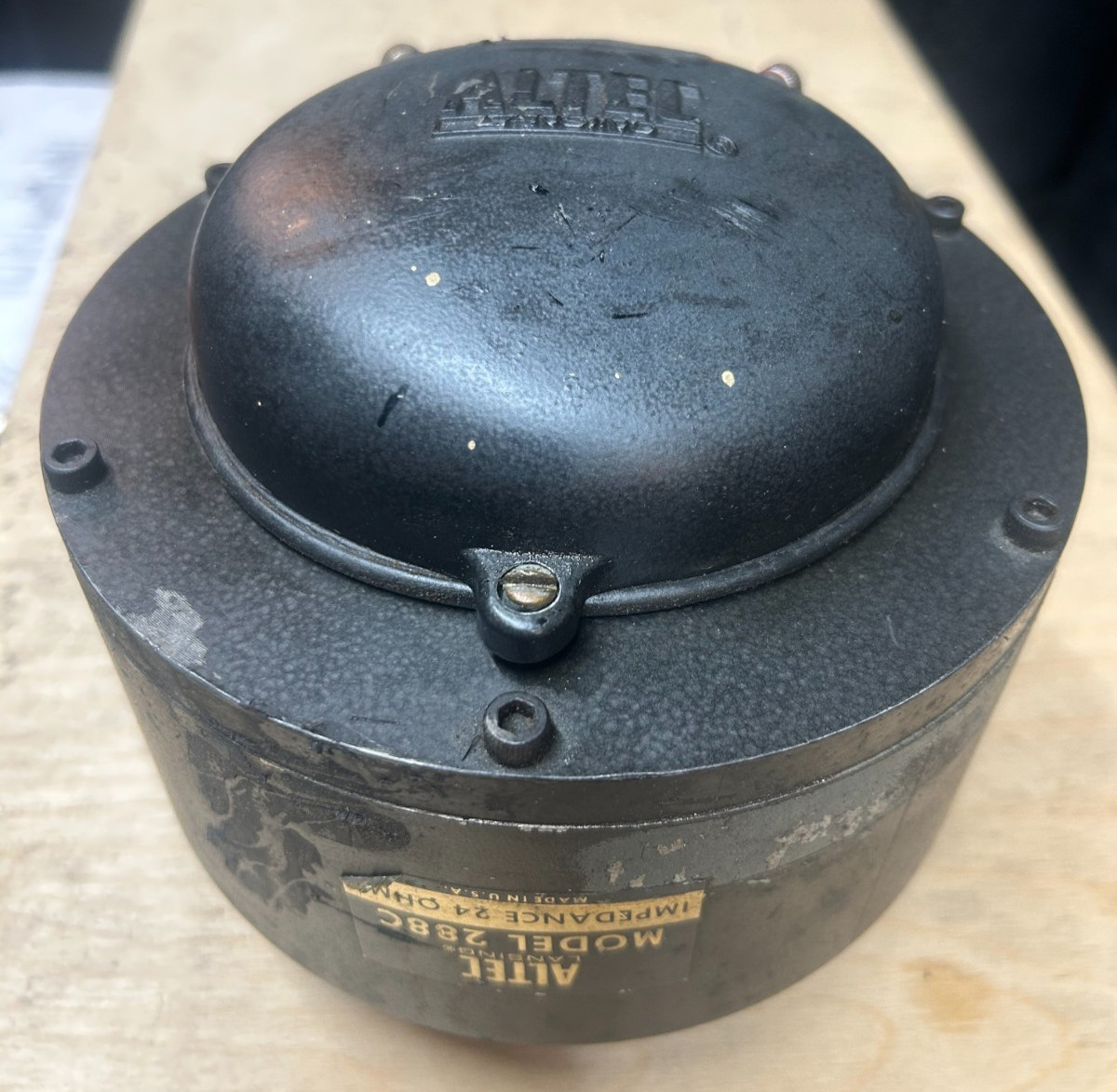
- 288C: Specific version mentioned in some VOTT documentation
Historical Significance
The 288 compression driver was developed during Altec's heyday and became the reference standard for cinema sound. Its distinctive character - dynamic, immediate, and effortlessly loud - defined the moviegoing experience for generations. The 288's efficiency (over 110 dB) meant that theaters could achieve realistic sound levels with relatively modest amplifier power.
Today, the 288 remains highly sought after by horn enthusiasts and vintage audio collectors. Its combination of historical significance, robust construction, and unique sonic character ensures its place in audio history.
Related Drivers
- Altec 291 - Updated design evolution of the 288
- Altec 802 - 2-inch throat home/compression driver
- Altec 806 - Professional 2-inch driver
- JBL 2420 - Contemporary JBL equivalent
eBay Listings


As an eBay Partner, we earn from qualifying purchases. This helps support our independent vintage technology research.
Related Models
- Altec 1221A
- Altec 3000B
- Altec 600B
- Altec 603
- Altec A4X
- Akai AM-2850 (1975)
- Akai AP-206 (1975)
- Nakamichi BX-1 (1985)
- Acoustic Research research-ar-17 (1978)
- Acoustic Research AR-19 (1994)