Akai MPC2000 (1997–2000)
Sixteen pressure-sensitive pads, a 100,000-note sequencer, and 32 MB of RAM - the machine that put a whole production studio under your fingers.
Overview
The MPC2000 carried Akai's sampling-and-sequencing workstation concept into the late '90s, and it did so by keeping the parts that mattered. Sampling, sequencing and editing all lived in one chassis, and the sixteen pressure-sensitive pads were how you drove all of it. EQ (February 1997, p.18) described it as a "virtual bandmate."
The sequencer handles 100,000 notes, spread across 99 sequences and 48 tracks per sequence, with 20 songs of up to 250 steps each. Sixteen MIDI output channels cover the external gear. The internal engine runs up to 32 voices of polyphony, depending on processing load, so dense arrangements will start stealing voices before you hit that ceiling. Each voice gets a two-pole low-pass filter, which is enough to shape a drum hit or take the edge off a sample.
Sampling runs at 44.1 kHz with 16-bit linear encoding. The machine shipped with 16 MB of memory, 11.5 MB of it available for sound, expandable to 128 MB via the optional EXM128 board. That works out to roughly 136 seconds of mono recording time at the stock 16 MB, and about 24 minutes and 28 seconds fully expanded in mono. Twenty-four programs and 5 MB of preset sound memory round out the internal storage.
The effects section is more generous than the spec sheet suggests: two stereo effects plus a master effect, with chorus, flanger, bit grunger, four-band EQ, compressor, phase shifter, tremolo, flying pan, reverb, and delay on the menu. The master bus offers four-band EQ and compression. None of these will replace a rack of outboard, but they let you finish a sketch without patching anything in.
Storage and I/O show the machine's age in practical ways. The unit takes a Compact Flash card, and Sound on Sound (April 1997, p.154) noted the pads had moved to the right-hand side of the machine. The card slot accepts cards from 32 MB to 2 GB. On the back, record inputs are two quarter-inch stereo phone jacks, pseudo-balanced, with an input impedance of 9k ohms and a maximum input level of +10 dBu. Stereo outputs are likewise two quarter-inch phone jacks, pseudo-balanced, at +11 dBu with a 1k-ohm output impedance and a +5 dBu maximum output. There's a single quarter-inch stereo headphone jack rated at 200 mW into 100 ohms, one MIDI in and one MIDI out on five-pin DIN, and a USB slave connector that supports USB Mass Storage Class on Windows 2000/ME/XP or later and Mac OS 9.x/10.x or later.
The display is a two-line, sixteen-character LCD with backlight. It's small by any standard, and the single biggest usability compromise on the machine. Navigating a 100,000-note sequencer and a sample library sixteen characters at a time takes practice. Owners report that the workflow rewards memorization: once you know the button combinations, the display stops being a bottleneck. Until then, it's a wall.
Portability is surprising for a machine with this much capability. The MPC2000 measures 266mm x 175mm x 44mm and weighs 1.34 kg. It can run for approximately 4.5 hours of continuous use with the LCD backlight on from a 12V DC 600mA supply (negative tip).
Data compatibility is broader than you'd expect from a 1997 machine. It reads MPC1000 SEQ, WAV, and PGM files; MPC2000/2000XL SEQ, WAV, SND, and PGM files, with most PGM parameters loading correctly; MPC2500 SEQ, WAV, and PGM; and MPC4000 SEQ, WAV, and PGM, though for the MPC4000 only drum programs load and only note assignment and tuning survive. MPC3000 SND files load through a computer, as do Z4/Z8 WAV and PGM files (drum programs only, note assign and tune). S5000/6000 WAV files also transfer through a computer. S1000 and S3000 files are not compatible.
Akai's own advertising positioned the MPC2000 as the natural continuation of the MPC line, and the period press largely agreed. Sound on Sound (March 1997, p.14) reported the UK price at £1199 including VAT, and noted that the series' core features had been retained - 32-voice polyphony, 16-bit sampling, dynamic low-pass filter and envelope per voice, and storage of up to 24 drum sets in memory, each holding 64 sound assignments. The MPC2000 wasn't a reinvention. It consolidated what had made the series popular, with the memory and sequencing capacity pushed up.
The machine does not have a large color screen, USB audio, or the kind of sample streaming modern producers take for granted. It has a Compact Flash slot, a USB Mass Storage connection for file transfer, and a two-line LCD. The workflow is deliberate and the learning curve is real.
eBay Listings

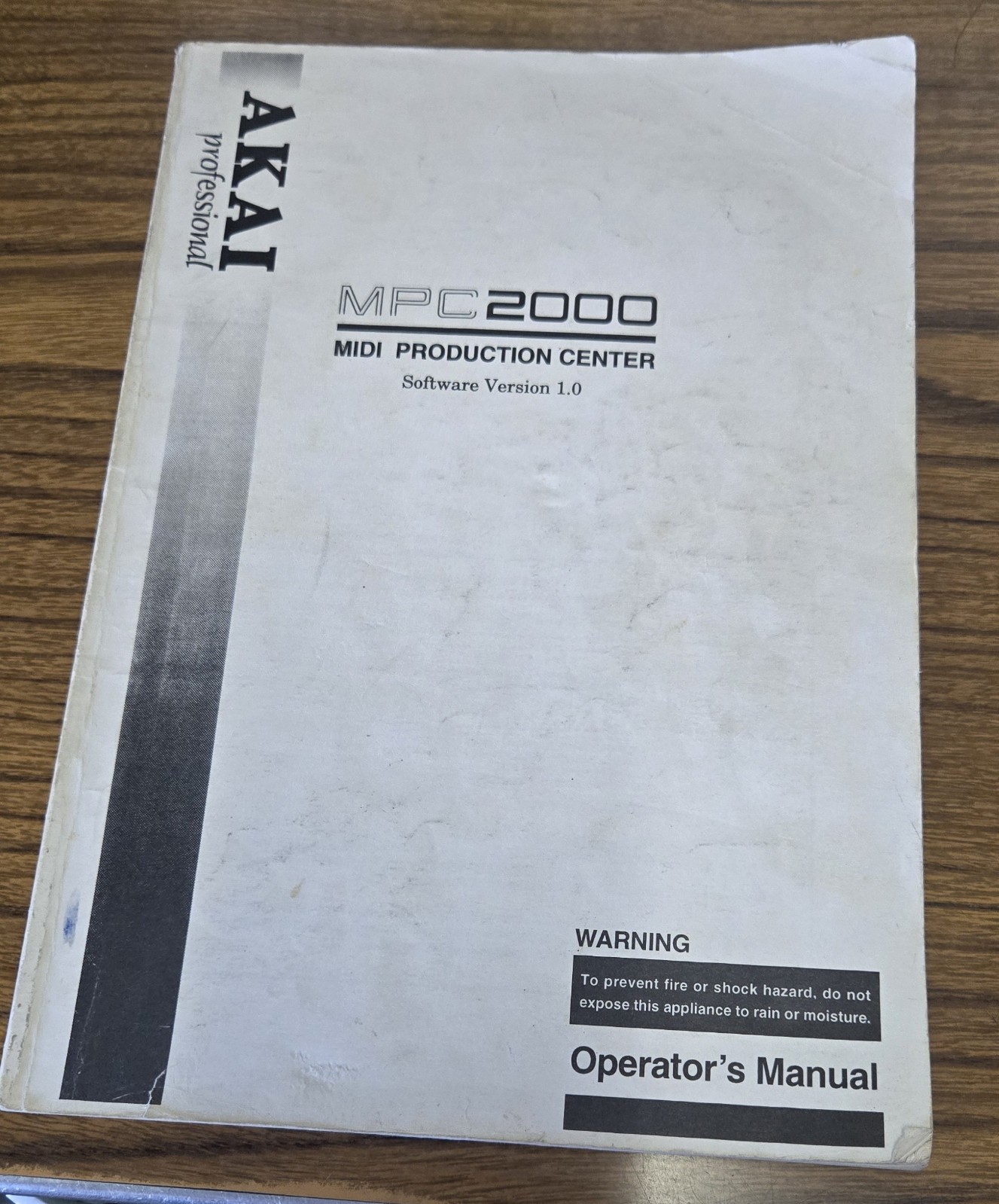


As an eBay Partner, we earn from qualifying purchases. This helps support our independent vintage technology research.
Related Models
- Akai S1100
- Akai S612 (1985-1986)
- Akai S700 (1987)
- Akai CD3000
- Akai CD3000XL
- E-mu Emulator III (1987-1991)
- Akai MPC 4000
- Akai MPC 60-II
- Akai MPC Element
- Akai MPC Key 61