Akai GXC-46: A Compact Cassette Workhorse of the Early '80s
Step into any bedroom, dorm, or modest living room in the early 1980s, and there’s a good chance you’d spot a sleek black box with a cassette slot and glowing VU meter—the Akai GXC-46. This unassuming deck wasn’t built for show, but it was built to work. At a time when cassettes were shedding their dictaphone roots and stepping into the spotlight as a serious music format, Akai delivered a compact, no-nonsense player that brought reliable recording and playback to everyday users. Affordable, durable, and surprisingly capable, the GXC-46 may not have chased audiophile glory, but it earned its place in the tape decks of history through sheer dependability.
Introduction and Historical Context
Launched in 1981, the Akai GXC-46 arrived as cassette culture hit full stride. No longer just for voice memos or car stereos, tapes were now the go-to medium for mixtapes, radio rips, and portable music. Dolby B noise reduction, CrO₂ tapes, and refined transport systems had elevated the format—features once reserved for high-end gear were trickling down. Akai, already respected for its reel-to-reel recorders and emerging video products, applied its engineering rigor to the cassette world. The result? Machines like the GXC-46: practical, well-built, and designed for real-world use.
Positioned as a compact cassette deck, the GXC-46 traded the bulk of full-size units for a footprint that slipped neatly into mini-systems or tight shelves. It wasn’t a dual-deck duplicator or a studio-grade recorder. Instead, it focused on one job: solid playback and recording in a single, streamlined chassis. Without dual motors or a three-head layout, it skipped the extras—but for students, teachers, and casual listeners who needed a deck that just worked, it was more than enough.
Technical Specifications
| Specification | Detail |
| Model | Akai GXC-46 |
| Year of Release | 1981 |
| Type | Compact cassette deck (playback/recording) |
| Head Configuration | Single play/record head |
| Motor Type | Belt-driven |
| Tape Speed | 1⅞ ips (4.76 cm/s) |
| Wow and Flutter | < 0.25% (unweighted) |
| Frequency Response | 60 Hz – 12 kHz (normal bias) |
| Signal-to-Noise Ratio | ~56 dB (Dolby B on) |
| Noise Reduction | Dolby B |
| Inputs | RCA line in (stereo) |
| Outputs | RCA line out (stereo), headphone jack |
| Power Supply | External AC adapter (9V DC) |
| Dimensions (W×H×D) | 260 × 70 × 150 mm |
| Weight | 2.1 kg (approx.) |
| Tape Compatibility | Type I (Normal), Type II (CrO₂) |
Sound Characteristics and Performance
Purists might have dismissed the GXC-46 as basic, but its sound was anything but harsh. For a compact, belt-driven deck, it delivered a clean, balanced response that handled everything from vinyl rips to late-night radio recordings with quiet confidence. The frequency range topped out at 12 kHz—short of the 15–16 kHz of premium decks—but still captured the heart of most music. Where it really shined was with Dolby B noise reduction engaged, taming the hiss that plagued Type I tapes and making CrO₂ recordings breathe with clarity.
Recordings often carried a slightly warm tonal signature, a gentle roll-off in the highs that softened edgy sources and gave voice recordings a natural presence. Bass stayed tight, thanks to consistent tape-to-capstan contact, though it lacked the punch of direct-drive giants. The single head design—handling both record and playback—was a cost-saving move, but it also meant fewer alignment headaches and easier maintenance. For copying albums, archiving lectures, or just playing mixtapes, the GXC-46 got the job done, day after day.
Notable Features and Innovations
Don’t let its modest specs fool you—the GXC-46 packed smart touches that elevated it above budget fare:
- Dolby B Noise Reduction: A game-changer for listenability, especially with mid-grade tapes.
- Headphone Output with Level Control: Rare in compact decks, this let users plug in and listen privately without extra gear.
- Tape Type Selection: Switch between Type I and Type II ensured proper bias and EQ, unlocking better fidelity from CrO₂ tapes.
- Compact and Lightweight Design: At just 2.1 kg and under 27 cm wide, it traveled easily and fit anywhere.
- External Power Supply: Kept internal circuitry cooler and quieter, reducing hum and interference.
The front panel was straightforward: labeled transport buttons, a basic VU meter (more visual flair than precision tool), and minimal clutter. No frills, no confusion—just a machine built for daily use.
Common Issues and Maintenance
Decades on, the GXC-46’s age shows where rubber meets the road—literally. Like most belt-driven decks of its era, it’s vulnerable to degraded rubber parts. But the good news? These are predictable, fixable issues:
- Worn or hardened drive belts: Cause speed wobble or transport failure. Modern silicone replacements restore smooth operation.
- Pinch roller hardening: Leads to inconsistent playback speed. Clean with isopropyl alcohol or replace for crisp tracking.
- Dirty or oxidized tape heads: Result in muffled sound or dropouts. A quick wipe with cleaning solution keeps things clear.
- Aging capacitors in the power supply: The external adapter can fail. Replacing suspect caps prevents damage to the deck.
Thankfully, the GXC-46 is a tinkerer’s friend. Its modular layout makes disassembly simple, and replacement belts and rollers are widely available. With basic care, a well-maintained unit sounds as good today as it did in 1981.
Current Market Value and Collectibility
The Akai GXC-46 isn’t a trophy piece, but it’s far from forgotten. Working units typically sell for $30–$60 USD, with price depending on condition and whether the original power adapter is included (a rare bonus). While it never came with a remote, its simplicity is part of the appeal.
Its charm lies in its honest functionality. For retro audio builders, tape digitizers, or anyone resurrecting a vintage setup, the GXC-46 is a budget-friendly gateway. It’s also a favorite among DIY audio enthusiasts who appreciate its accessible design and straightforward circuitry.
No, it won’t outperform a Nakamichi Dragon or even a TEAC A-2300. But it represents something just as important: the moment when decent tape recording became affordable for everyone. This was the deck that let students tape lectures, DJs test sets, and music lovers build mixtapes—without breaking the bank.
Conclusion and Legacy
The Akai GXC-46 wasn’t Akai’s flagship, but it was a quiet workhorse—a no-drama machine that delivered consistent performance year after year. In an era when music was going mobile and personal, it offered a simple, reliable way to record, play, and share sound.
Today, it stands as a symbol of analog accessibility. Whether you’re pulling old tapes from a box, building a period-correct stereo, or just savoring the tactile ritual of inserting a cassette, the GXC-46 remains a faithful companion. It doesn’t shout for attention. But in its understated design and steadfast operation, it speaks volumes about the golden age of Japanese consumer electronics—where practicality, durability, and smart engineering quietly changed how we listened.
eBay Listings
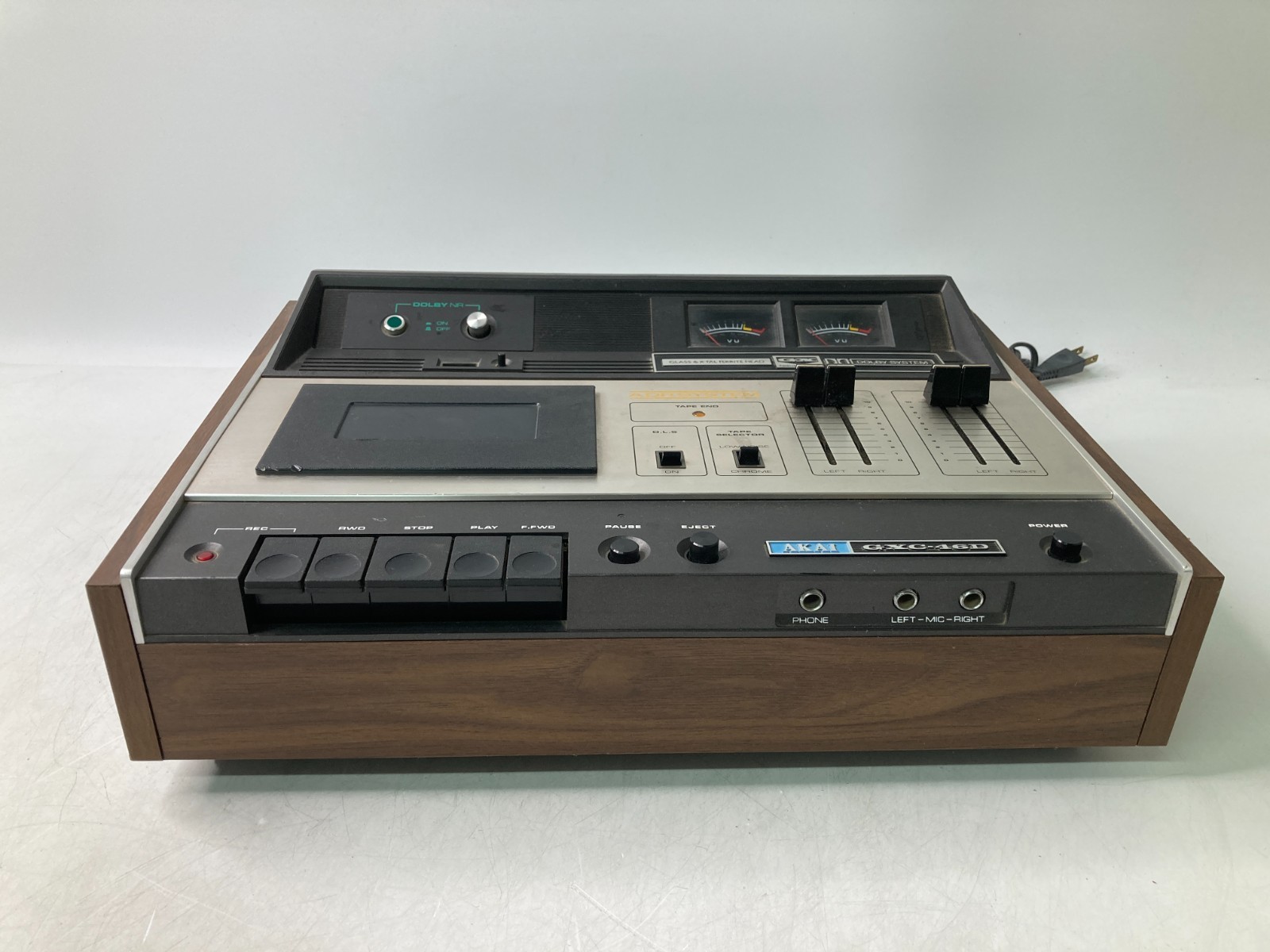

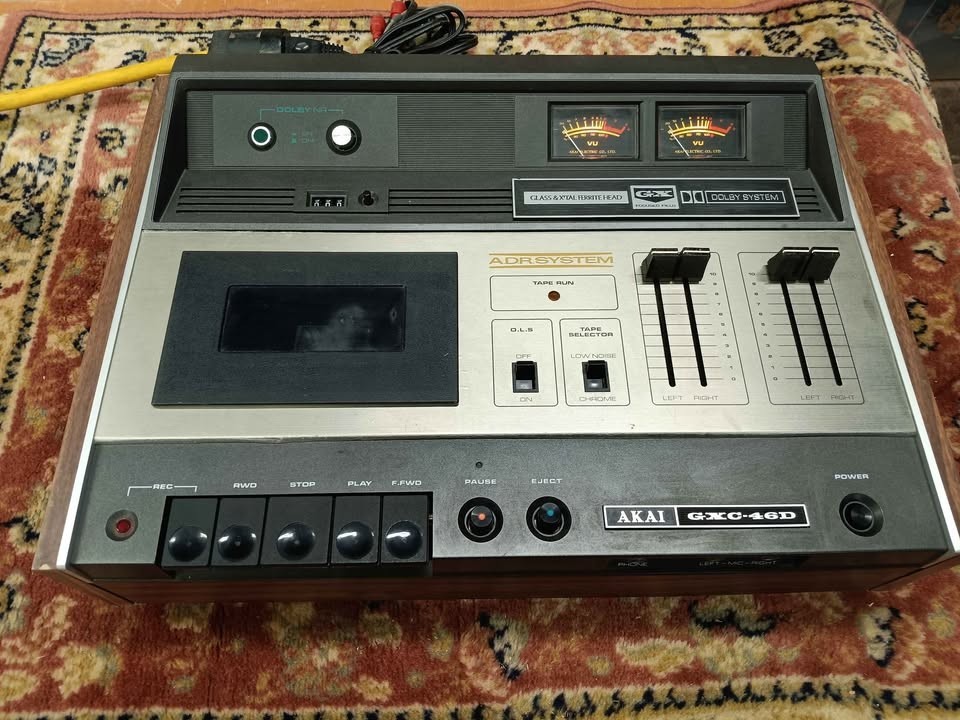

As an eBay Partner, we earn from qualifying purchases. This helps support our independent vintage technology research.
Service Manuals & Schematics
Related Models
- Akai CS-F33R (1985)
- Akai DX-59 (1983)
- Akai GX-280D-SS (1979)
- Akai DX-57 (1978)
- Akai AA-5200 (1978)
- Sony TC-2050SD (1978)
- Aiwa AD-F990 (1993)
- Kenwood KX-3060 (1982)
- Sony TC-2130A (1974)
- Sony TC-2220 (1972)