Akai GXC-36: The Precision Dual Cassette Deck for Audiophiles and Broadcast Professionals
In the golden era of analog audio—when cassette decks were not just convenient playback devices but serious instruments for high-fidelity recording and duplication—the Akai GXC-36 stood out as a remarkable achievement in tape deck engineering. Released in 1984, this dual-cassette deck was designed for users who demanded more than just basic tape-to-tape copying. Aimed at both serious home audiophiles and semi-professional users in radio, education, and studio environments, the GXC-36 combined advanced mechanics, thoughtful ergonomics, and broadcast-level reliability in a single, compact unit.
While Akai is perhaps best known for its reel-to-reel recorders and later for budget-friendly cassette players, the GXC-36 represented a departure—a premium product that showcased the company’s engineering prowess during the height of the cassette era. It was positioned as a high-performance machine, emphasizing accurate duplication, low wow and flutter, and consistent tape alignment—all critical for maintaining audio fidelity during transfers.
Technical Specifications
The Akai GXC-36 was built around a dual-motor, direct-drive capstan system with separate transport mechanisms for each deck, minimizing crosstalk and ensuring precise control over tape speed and tension. Its design prioritized duplication accuracy and long-term reliability, making it a favorite among users who needed consistent results over repeated use.
| Specification | Detail |
| Model | GXC-36 |
| Year of Release | 1984 |
| Type | Dual Cassette Deck |
| Tape Speed | 4.76 cm/s (standard) |
| Wow and Flutter | < 0.08% (weighted) |
| Frequency Response | 20 Hz – 18 kHz (with CrO₂ tape) |
| Signal-to-Noise Ratio | > 60 dB (Dolby B/C) |
| Head Configuration | Dual playback/record heads (one per deck) |
| Azimuth Adjustment | Fixed (non-adjustable) |
| Motors | Direct-drive capstan, dual-motor system |
| Display | Dual VU meters, LED indicators |
| Inputs/Outputs | Line In (RCA), Line Out (RCA), Headphone Out (¼") |
| Recording Modes | Normal (Type I), Chrome (Type II) |
| Noise Reduction | Dolby B and C (switchable) |
| Power Requirements | 120V AC, 60 Hz (North American model) |
| Dimensions | 430 × 135 × 300 mm (W×H×D) |
| Weight | 7.8 kg (17.2 lbs) |
Sound Characteristics and Performance
The GXC-36 was not designed as a primary playback machine for critical listening but rather as a high-precision duplication system. That said, its audio performance was impressive for a dual-deck configuration. Thanks to its high-quality record and playback heads—typically made with permalloy or similar soft magnetic materials—the deck delivered a clean, neutral sound with excellent channel separation and minimal distortion.
Users reported that the GXC-36 excelled in tape-to-tape copying, preserving the dynamic range and tonal balance of the original source when using good-quality tapes and proper bias settings. The inclusion of Dolby B and C noise reduction helped minimize tape hiss, especially on chrome tapes, which were becoming increasingly popular in the early 1980s.
One of the standout features was its low wow and flutter, a testament to the direct-drive capstan and precision pinch rollers. This made it suitable not only for music duplication but also for voice recording applications where pitch stability was essential—such as in radio production or language labs.
Notable Features and Innovations
The Akai GXC-36 packed several advanced features for its time:
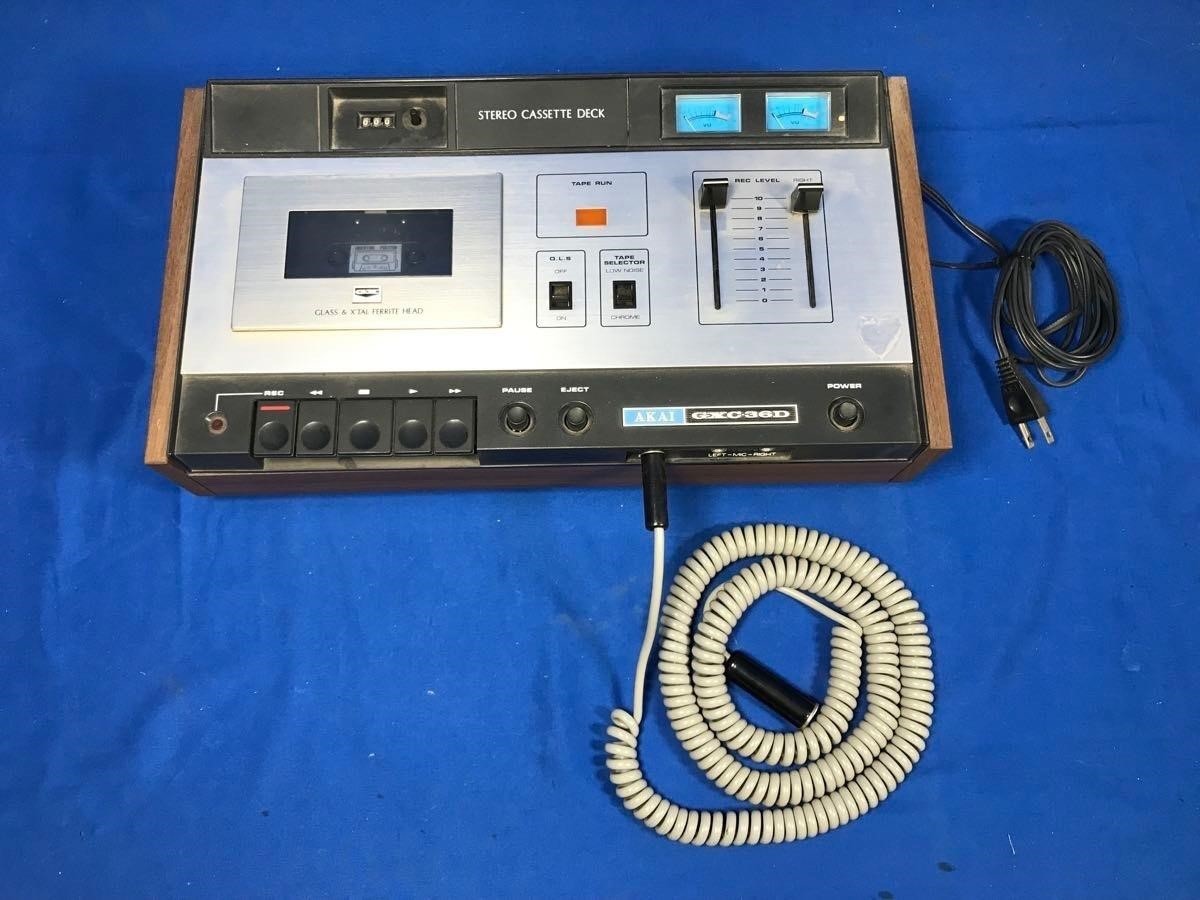
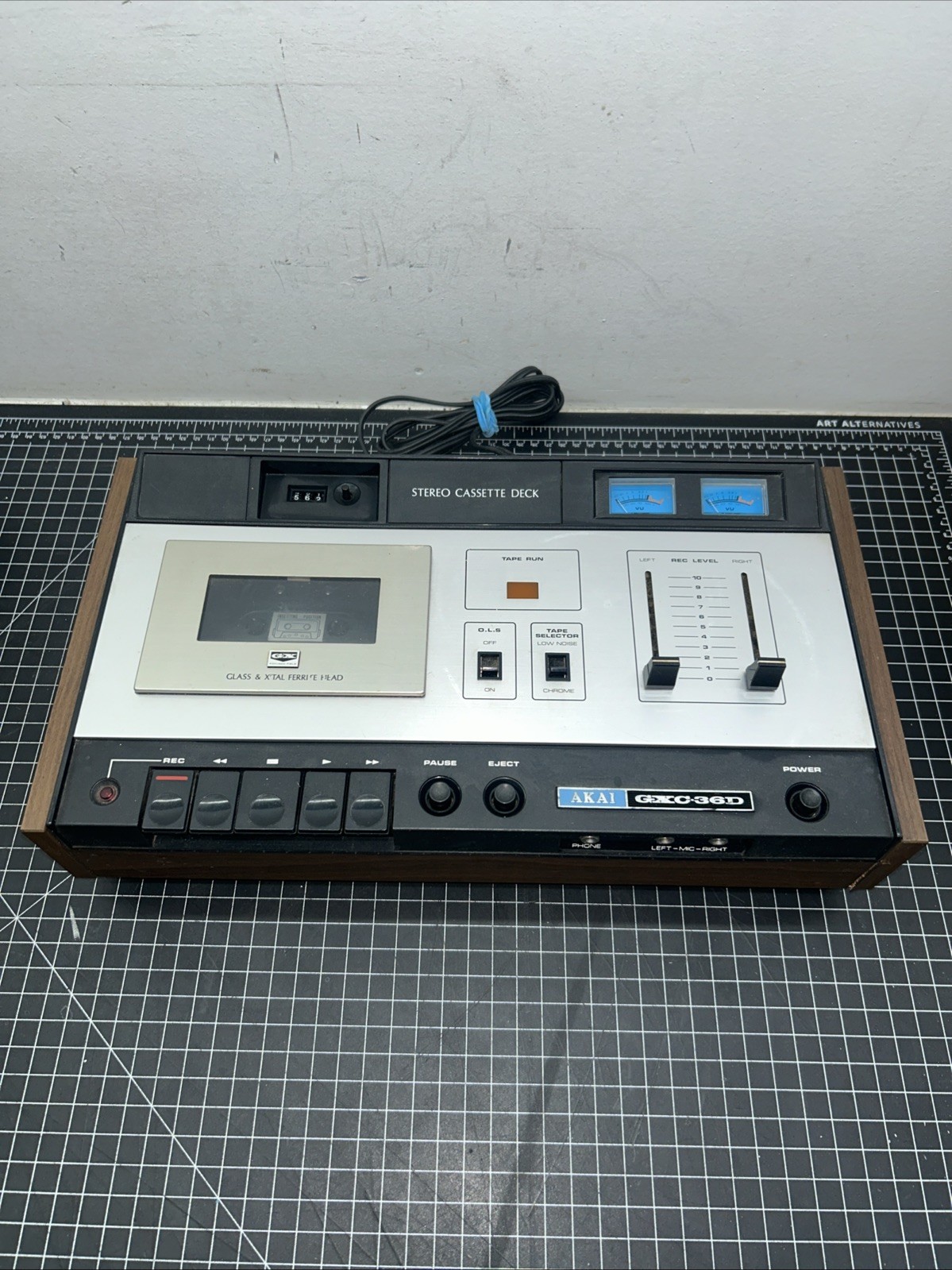
- Independent Transport Controls: Each deck had its own set of transport buttons (play, stop, rewind, fast-forward), allowing for seamless operation during duplication.
- Dual VU Meters: These provided real-time visual feedback on recording levels, helping users avoid distortion and under-modulation.
- One-Touch Copy Function: A dedicated button enabled instant start of duplication from Deck A to Deck B, simplifying the copying process.
- Auto-Reverse Playback (on some variants): While the standard GXC-36 did not support auto-reverse, certain regional variants or later models in the series included this feature.
- High-Contrast Display: The LED indicators and illuminated tape windows gave the unit a modern, professional look.
Another key design choice was the fixed azimuth alignment. While this limited user adjustability, it ensured consistent head alignment over time—ideal for environments where reliability trumped tweakability.
Common Issues and Maintenance
Like all vintage cassette decks, the Akai GXC-36 requires periodic maintenance to perform at its best. Over time, the rubber components—such as pinch rollers and drive belts (if present in idler-wheel variants)—can degrade, leading to speed instability or tape slippage. However, the GXC-36’s direct-drive system reduces reliance on belts, making it more durable than many contemporaries.
Common issues include:
- Pinch Roller Hardening: The rubber rollers can harden or become sticky with age. Cleaning with isopropyl alcohol or replacing them restores proper tension.
- Head Oxidation: Playback and record heads can accumulate oxide buildup. Regular cleaning with demineralized water or head-cleaning solution is recommended.
- Capstan Wear: The stainless steel capstan shafts are long-lasting, but any scoring or rust will affect tape speed and sound quality.
- Deteriorated Foam Pads: Internal foam pads used for tape guidance may disintegrate over time and should be replaced to prevent tape misalignment.
Owners are advised to have the deck professionally serviced if it hasn’t been used in decades. A full cleaning, demagnetization, and calibration can restore near-factory performance.
Current Market Value and Collectibility
The Akai GXC-36 is not as widely collected as some of the more famous cassette decks from Nakamichi or Revox, but it has developed a loyal following among analog enthusiasts, radio archivists, and DIY tapers. Its reputation for reliability and clean duplication makes it a practical choice for those still using cassette media for artistic or archival purposes.
On the secondhand market, working units typically sell for $150 to $300, depending on condition, included accessories, and geographic region. Fully serviced models with replaced rubber parts and calibrated heads command higher prices, especially if sold with original packaging and manuals.
While not a “holy grail” deck, the GXC-36 is increasingly recognized as a well-engineered, no-nonsense machine from a time when cassette duplication was a serious audio task. Its build quality and simplicity appeal to users who value function over flash.
Conclusion and Legacy
The Akai GXC-36 may not have the glamour of a Nakamichi Dragon, but it occupies a respected niche in the history of analog audio. It represents a time when cassette technology reached its peak—not just in sound quality, but in utility and precision. For educators, broadcasters, and home users who needed dependable, high-fidelity tape duplication, the GXC-36 delivered with quiet confidence.
Today, it stands as a testament to Akai’s commitment to quality engineering across their product lines. While the brand is often associated with reel-to-reel or budget audio gear, the GXC-36 proves they could compete in the mid-to-high-end cassette market when they chose to.
For collectors and analog enthusiasts, the GXC-36 is more than just a relic—it’s a functional piece of audio history, ready to spin tapes with the same reliability it showed over 40 years ago. In an age of digital perfection, there’s something deeply satisfying about the tactile precision of a well-maintained dual cassette deck. The Akai GXC-36 delivers exactly that.
eBay Listings

As an eBay Partner, we earn from qualifying purchases. This helps support our independent vintage technology research.
Related Models
- Akai CS-F33R (1985)
- Akai DX-59 (1983)
- Akai GX-280D-SS (1979)
- Akai DX-57 (1978)
- Akai AA-5200 (1978)
- Sony TC-2050SD (1978)
- Aiwa AD-F990 (1993)
- Kenwood KX-3060 (1982)
- Sony TC-2130A (1974)
- Sony TC-2220 (1972)