Akai GX-747DBX: The Pinnacle of Analog Cassette Fidelity
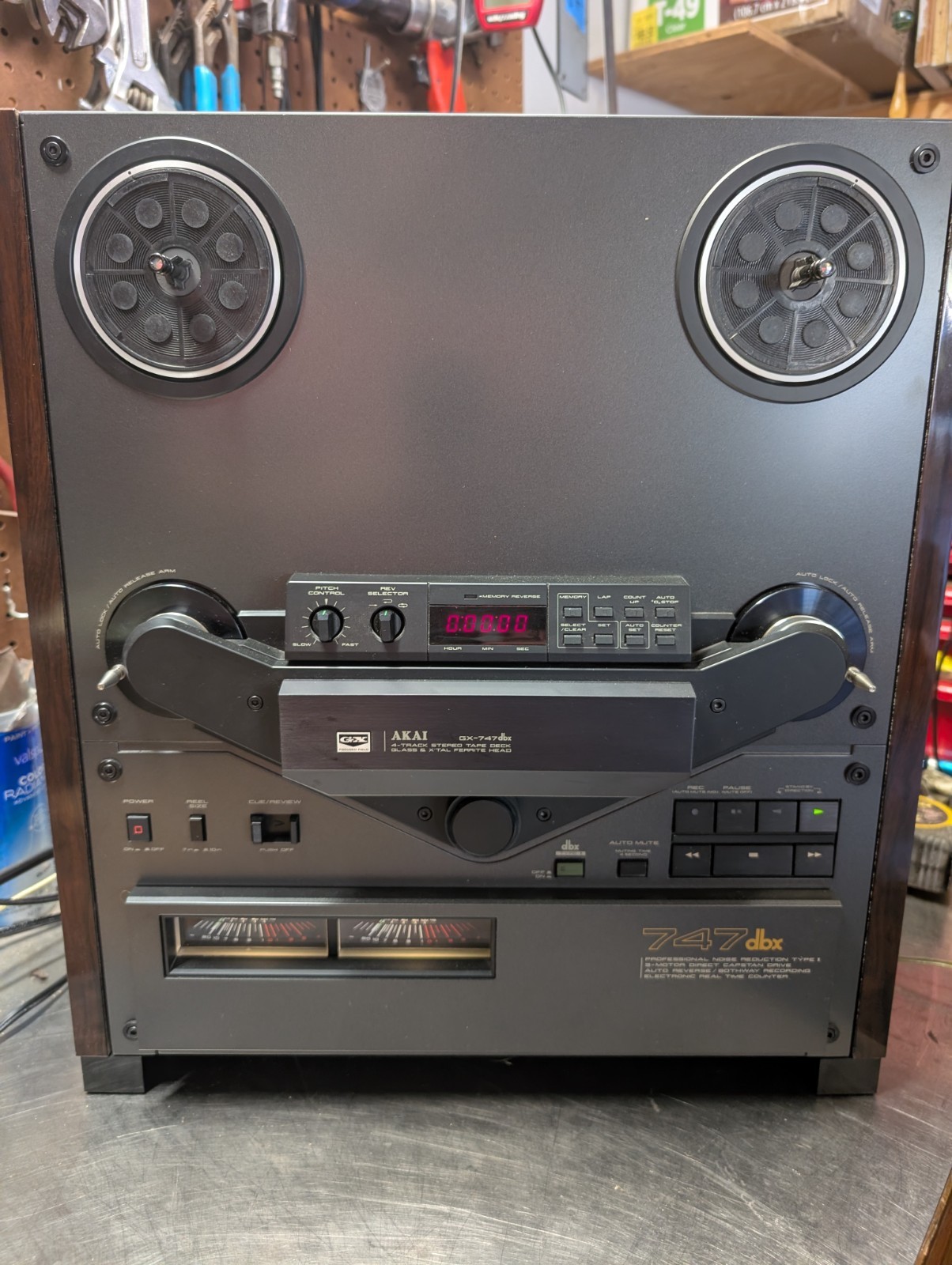
In the early 1980s, when audiophiles demanded the very best from analog tape reproduction, Akai delivered a masterpiece: the GX-747DBX. This dual-capstan, three-head cassette deck wasn’t just another player—it was a statement of engineering excellence, designed for critical listening, professional monitoring, and high-fidelity home recording. Combining Akai’s legendary mechanical precision with the revolutionary DBX noise reduction system, the GX-747DBX stood among the elite cassette decks of its era, competing with the likes of Nakamichi, Revox, and Tandberg.
Though not as widely celebrated as some of its contemporaries, the GX-747DBX earned a devoted following among engineers, broadcasters, and serious tape enthusiasts who valued its robust build, accurate tape handling, and exceptional sound quality. It represented the peak of cassette technology before the digital age began to eclipse analog formats.
Technical Specifications
| Specification | Detail |
| Model | GX-747DBX |
| Year Introduced | 1981 |
| Format | Stereo Compact Cassette |
| Head Configuration | 3-head (separate record, playback, erase) |
| Capstan System | Dual capstan, direct-drive |
| Tape Speed | 1⅞ ips (4.76 cm/s) |
| Motors | Three direct-drive motors (capstan, supply, take-up) |
| Frequency Response | 20Hz – 20kHz (±3dB) with DBX, Type IV |
| Signal-to-Noise Ratio | >80 dB (with DBX Type II/IV) |
| Wow and Flutter | <0.055% (weighted) |
| Total Harmonic Distortion | <0.7% at 3% output |
| Input/Output Levels | Line In: 150mV, Line Out: 150mV |
| Input/Output Impedance | 50kΩ input, 10kΩ output |
| Noise Reduction | DBX Type I and II (switchable) |
| Tape Types Supported | Type I (Ferric), Type II (Chrome), Type IV (Metal) |
| Bias & EQ | Switchable for CrO₂ and Metal tapes |
| Display | Fluorescent VU meters, tape type, NR status |
| Remote Control | Optional (via proprietary jack) |
| Dimensions | 485 mm × 146 mm × 375 mm (W×H×D) |
| Weight | 14.5 kg (32 lbs) |
| Power Requirement | 110–120V or 220–240V AC, 50/60 Hz |
Sound Characteristics and Performance
The GX-747DBX was engineered for accuracy and transparency, and it delivered in spades. Thanks to its three-head configuration, the deck allowed for true real-time monitoring during recording, a feature prized by musicians and home recordists. The separate playback head ensured optimal alignment and minimized wear, preserving tape life and fidelity.
With dual capstans and direct-drive motors, the GX-747DBX achieved exceptional tape speed stability. This translated into remarkably low wow and flutter—among the best in its class—resulting in a rock-solid stereo image and precise pitch reproduction. The deck handled dynamic transients with authority, making it ideal for classical, jazz, and rock recordings.
When paired with DBX noise reduction, the GX-747DBX achieved a signal-to-noise ratio that rivaled open-reel tape machines. Unlike Dolby B or C, which applied companding only to high frequencies, DBX Type I applied wide-band companding across the entire audio spectrum, virtually eliminating tape hiss without the "breathing" artifacts sometimes associated with Dolby systems. The result was a black background, allowing subtle details in recordings to emerge with startling clarity.
However, DBX required playback on a DBX-equipped machine to sound correct. Without decoding, tapes sounded overly compressed and harsh—this limited compatibility but ensured pristine results when properly matched.
Notable Features and Innovations
The GX-747DBX was packed with features that set it apart from consumer-grade decks:
- Dual Capstan Transport: Ensured consistent tape tension and minimized slippage, critical for high-speed editing and long-term reliability.
- Three Direct-Drive Motors: Eliminated belts (a common failure point), offering precise control and reduced mechanical noise.
- Selectable Bias and EQ: Users could optimize performance for Chrome (Type II) and Metal (Type IV) tapes, maximizing frequency response and headroom.
- Fluorescent VU Meters: Large, easy-to-read meters provided accurate level monitoring—essential for avoiding distortion during recording.
- Auto-Reverse Capability (in some variants): Though not universal, certain versions of the GX-747 series included auto-reverse, a rare feature in high-end decks.
- Professional Connectivity: Full line-level I/O, record inhibit switches, and support for external control made it suitable for studio integration.
The chassis was built like a tank—thick steel construction, isolated transport, and rubber-damped feet minimized vibration and external interference. The front panel featured a clean, functional layout with tactile switches and smooth transport controls, reflecting Akai’s focus on usability under pressure.
Common Issues and Maintenance
Like all high-performance analog gear from the 1980s, the GX-747DBX requires attentive maintenance to perform at its best:
- Capstan and Pinch Roller Wear: Over time, the rubber pinch roller can harden or crack. Replacement with a fresh, high-quality roller is essential for consistent speed and tension.
- Head Alignment: Misaligned heads—especially the separate playback head—can degrade frequency response and stereo imaging. Periodic demagnetization and alignment by a skilled technician are recommended.
- Motor Bearings: While direct-drive, the motors can suffer from dried lubrication. Squeaking or uneven rotation may indicate the need for servicing.
- DBX Circuit Degradation: The analog ICs and capacitors in the DBX circuit can drift over decades. If tapes sound distorted or lack dynamic range, recalibration or component replacement may be needed.
- Mode Switches and Relays: Mechanical switches for tape type, NR, and bias can become noisy or intermittent. Contact cleaner or replacement may be necessary.
Regular cleaning with isopropyl alcohol and proper demagnetization (using a quality tape head demagnetizer) will preserve performance. Playing tapes regularly also helps prevent internal lubricants from drying out.
Current Market Value and Collectibility
The Akai GX-747DBX is a sleeper classic in the vintage audio world. While not as aggressively sought after as the Nakamichi Dragon, it commands respect among tape enthusiasts for its build quality and sonic performance. Well-maintained units typically sell between $400 and $800, depending on condition, functionality, and whether they include original accessories or remote controls.
Its collectibility is growing, particularly among:
- Analog purists who appreciate its mechanical sophistication
- Field recordists using cassette for lo-fi or experimental music
- DBX enthusiasts exploring high-fidelity analog tape restoration
Because DBX-compatible decks are rarer than Dolby-equipped ones, the GX-747DBX holds niche appeal. Its value is likely to increase as functional, serviced units become scarcer.
Conclusion and Legacy
The Akai GX-747DBX was one of the last great analog cassette decks—a machine that pushed the limits of what the compact cassette could achieve. It combined precision engineering, professional features, and audiophile sound in a single, imposing chassis. While overshadowed in marketing by some of its rivals, it delivered performance that could stand toe-to-toe with the best.
Today, it represents more than nostalgia. For those who value tactile control, analog warmth, and mechanical integrity, the GX-747DBX remains a compelling choice. Whether used for archiving vintage tapes, creating new analog recordings, or simply enjoying music with unparalleled depth, this deck is a testament to a golden era of audio craftsmanship.
If you find a GX-747DBX in good working order, consider it not just a vintage curiosity—but a functional work of art from the final chapter of analog tape’s reign.
eBay Listings



As an eBay Partner, we earn from qualifying purchases. This helps support our independent vintage technology research.
Related Models
- Akai CS-F33R (1985)
- Akai DX-59 (1983)
- Akai GX-280D-SS (1979)
- Akai DX-57 (1978)
- Akai AA-5200 (1978)
- Sony TC-2050SD (1978)
- Aiwa AD-F990 (1993)
- Kenwood KX-3060 (1982)
- Sony TC-2130A (1974)
- Sony TC-2220 (1972)