Akai GX-400D-SS: The Precision Powerhouse of the Cassette Era
In the late 1970s, when high-fidelity cassette decks were pushing the boundaries of analog audio reproduction, Akai stood at the forefront of innovation. The Akai GX-400D-SS, introduced in 1979, was a bold statement of engineering excellence and meticulous design. Though not as widely celebrated as some of its contemporaries from Nakamichi or Sony, the GX-400D-SS carved out a loyal following among serious tape enthusiasts and broadcast engineers for its rock-solid transport, dual-capstan mechanism, and studio-grade performance.
Part of Akai’s elite GX-series — a lineage known for professional reliability and audiophile-grade sound — the GX-400D-SS was designed for users who demanded more than just convenience from their cassette equipment. It represented the peak of Akai’s cassette deck development, blending broadcast-level durability with audiophile sensibilities in a sleek, industrial design.
Technical Specifications
| Specification | Detail |
| Model | GX-400D-SS |
| Year Introduced | 1979 |
| Type | 3-head, dual-capstan cassette deck |
| Tape Speed | 1⅞ ips (4.76 cm/s) |
| Heads | Separate record, playback, erase heads |
| Motor System | Dual direct-drive motors |
| Capstan System | Dual capstan with rubber pinch rollers |
| Frequency Response | 30Hz – 18kHz (IEC II), 20Hz – 19kHz (metal) |
| Wow and Flutter | < 0.065% (weighted) |
| Signal-to-Noise Ratio | 66 dB (Dolby B), 72 dB (Dolby C) |
| Total Harmonic Distortion | < 1.5% |
| Input/Output | Line in/out (RCA), mic in (RCA) |
| Recording Modes | IEC I (Normal), II (Chrome), IV (Metal) |
| Dolby Noise Reduction | Dolby B and C |
| Bias Control | Manual (Normal, Chrome, Metal) |
| Display | VU meters, tape type indicator |
| Dimensions | 440 mm × 145 mm × 335 mm |
| Weight | 12.5 kg (27.5 lbs) |
| Power Requirements | 110–120V or 220–240V AC, 50/60 Hz |
Sound Characteristics and Performance
The GX-400D-SS was engineered for accuracy, not coloration. Its sound signature is best described as transparent, detailed, and dynamically expressive — a hallmark of Akai’s design philosophy during this era. The use of separate playback and record heads allowed for optimal alignment and minimized crosstalk, resulting in excellent channel separation and stereo imaging.
Thanks to its dual-capstan transport system, the GX-400D-SS achieved remarkable tape stability. Unlike single-capstan decks that rely on the take-up reel to pull the tape, the dual-capstan design uses a second capstan on the opposite side of the tape path to maintain constant tension and reduce flutter. This results in a cleaner, more stable high-frequency response and tighter bass control — critical for both music recording and broadcast applications.
The frequency response is impressively wide, especially when using metal tapes and Dolby C noise reduction. With a top-end extension reaching 19kHz and a deep, controlled low end, the GX-400D-SS could rival many open-reel recorders of the time in clarity and detail. Its low wow and flutter (under 0.065%) placed it among the most stable cassette decks available, making it a favorite for voice logging, field recording, and high-end home dubbing.
Notable Features and Innovations
Several features set the GX-400D-SS apart from its peers:
- Dual-Capstan Transport: A rare feature outside of professional decks, this system virtually eliminates tape flutter and ensures consistent head-to-tape contact.
- 3-Head Configuration: Separate record, playback, and erase heads allow for true monitoring of recorded material during recording — a must for studio use.
- Manual Bias and EQ Switching: Unlike many consumer decks that auto-sensed tape type, the GX-400D-SS gave users full manual control over bias and equalization settings for Normal, Chrome, and Metal tapes, enabling precise optimization.
- Direct-Drive Motors: Both capstans are driven by direct-drive motors, reducing mechanical wear and improving speed accuracy over time.
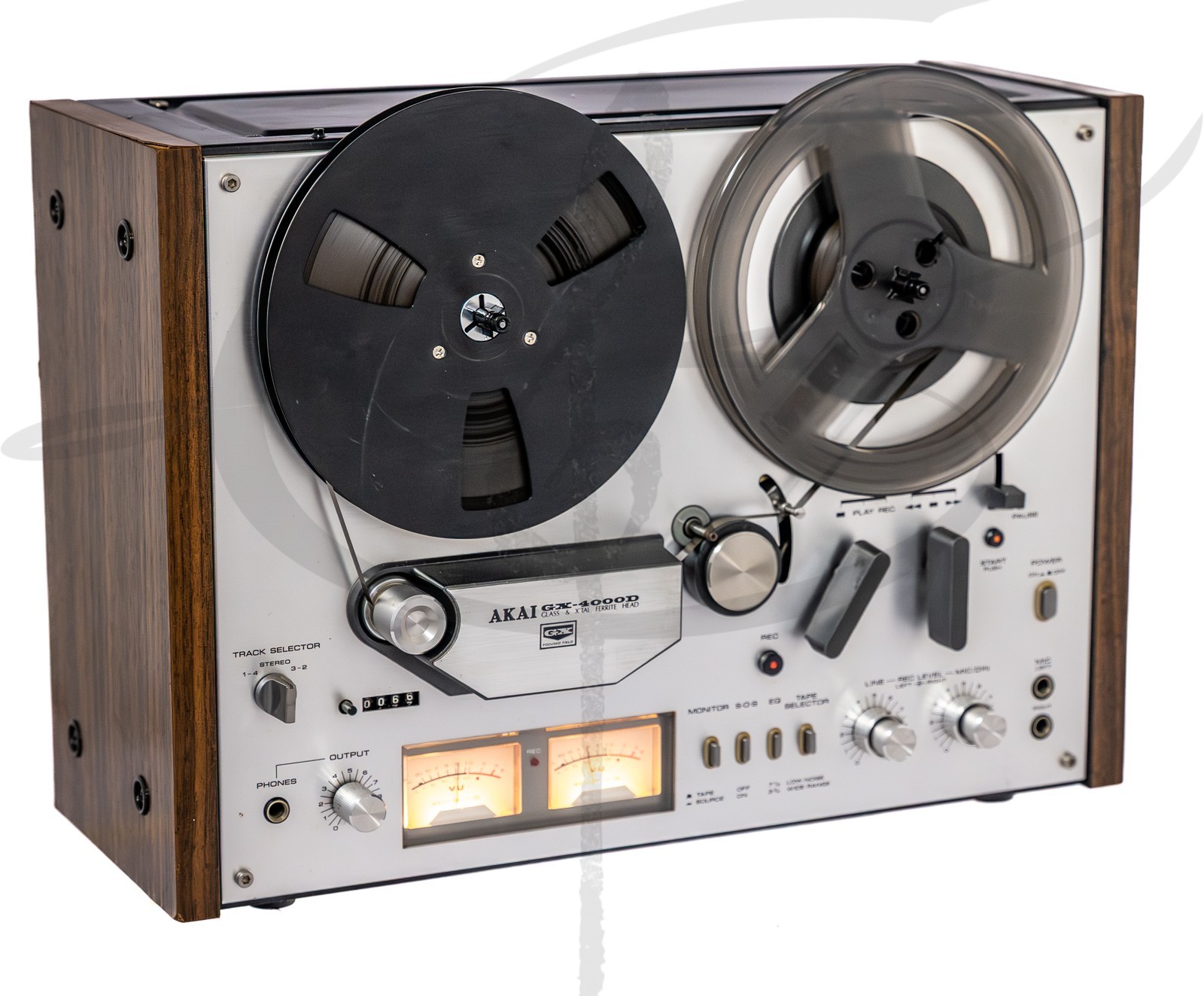
- Professional Build Quality: The chassis is constructed from heavy-gauge steel, with a rigid head mounting system to minimize vibration. The front panel features a brushed aluminum finish, and the transport is accessible via a hinged top cover — a nod to serviceability.
- Dolby B and C Support: At a time when Dolby C was still relatively new, Akai included both noise reduction systems, giving users flexibility in tape compatibility and noise management.
The inclusion of VU meters and mic input options also made the GX-400D-SS suitable for voice recording, interviews, and broadcast monitoring — roles where reliability and clarity were paramount.
Common Issues and Maintenance
Like all high-precision analog equipment from the late 1970s, the GX-400D-SS requires careful maintenance to perform at its best. Over time, several components may degrade:
- Pinch Rollers: The rubber pinch rollers can harden or become glazed, leading to speed instability. Replacement with fresh, high-quality rollers is recommended.
- Capstan Shafts: These should be cleaned regularly with isopropyl alcohol to prevent slippage and speed errors.
- Head Alignment: Misalignment can occur due to physical shock or wear. A professional demagnetization and alignment service is essential for optimal performance.
- Motor Bearings: Though robust, the direct-drive motors may require lubrication after decades of use.
- Capacitors: The internal power supply and signal path use electrolytic capacitors that may dry out over time. A recap (capacitor replacement) by a qualified technician can restore reliability and prevent channel imbalance or hum.
Due to its complex transport and professional nature, the GX-400D-SS is not recommended for novice restorers. However, for those willing to invest in servicing, it rewards with decades of reliable use.
Current Market Value and Collectibility
The Akai GX-400D-SS remains a niche but highly respected machine among vintage audio collectors. It is not as commonly found as models from Nakamichi or TEAC, partly due to lower production numbers and its professional orientation.
In today’s market (2024), a fully functional, well-maintained GX-400D-SS typically sells for $400–$700, depending on condition, provenance, and included accessories. Units with original packaging, manuals, or service records command premium prices, especially among broadcast equipment collectors.
Its collectibility is growing, particularly among enthusiasts of "forgotten giants" of the cassette era. While it lacks the celebrity status of the Nakamichi Dragon, the GX-400D-SS offers comparable engineering rigor and a more accessible price point. As interest in analog tape formats resurges — driven by metal tape enthusiasts and lo-fi musicians — the GX-400D-SS is gaining recognition as a serious tool for high-quality cassette production.
Conclusion and Legacy
The Akai GX-400D-SS is more than just a vintage cassette deck — it’s a testament to a time when analog engineering reached its zenith. Built for precision, durability, and sonic transparency, it served both professional and audiophile markets with quiet confidence.
Though overshadowed in the public eye by flashier competitors, the GX-400D-SS remains a hidden gem of the late 1970s audio landscape. For those who value mechanical excellence, manual control, and the pure, uncolored reproduction of magnetic tape, the GX-400D-SS is not just a collector’s item — it’s a working masterpiece.
If you’re lucky enough to find one in good condition, treat it to a proper service, pair it with a good preamp, and load a fresh reel of Metal II tape. You’ll hear why Akai’s GX-series still commands respect — decades after the last capstan spun.
eBay Listings


As an eBay Partner, we earn from qualifying purchases. This helps support our independent vintage technology research.
Service Manuals & Schematics
- Catalog — archive.org
Related Models
- Akai CS-F33R (1985)
- Akai DX-59 (1983)
- Akai GX-280D-SS (1979)
- Akai DX-57 (1978)
- Akai AA-5200 (1978)
- Sony TC-2050SD (1978)
- Aiwa AD-F990 (1993)
- Kenwood KX-3060 (1982)
- Sony TC-2130A (1974)
- Sony TC-2220 (1972)