Akai GX-265D: The Precision-Built Workhorse of the Cassette Era
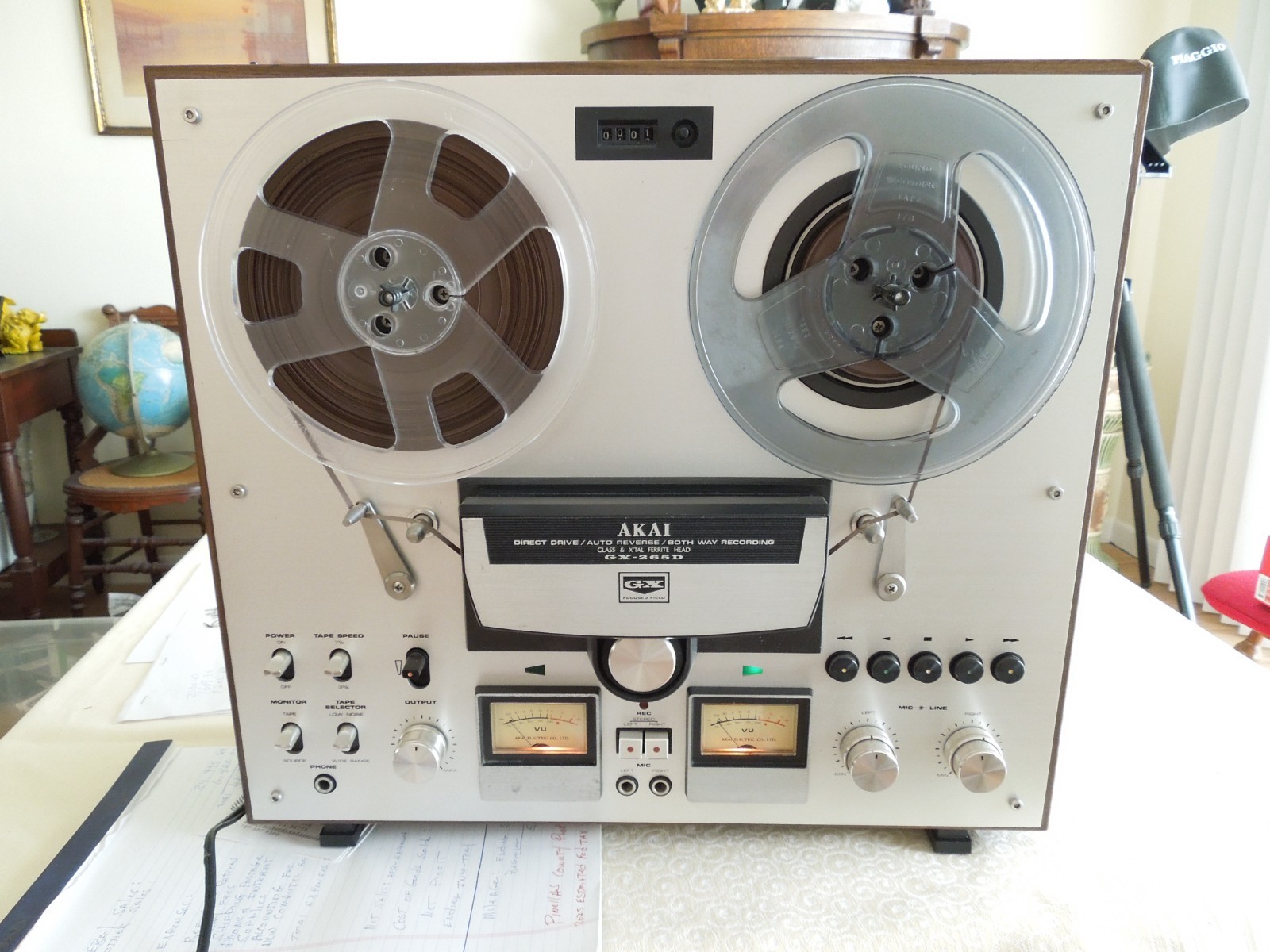
In the late 1970s, as the cassette format evolved from a portable dictation medium into a legitimate high-fidelity audio format, Japanese manufacturers raced to deliver machines that could rival reel-to-reel recorders in performance. Among these, Akai stood out for its commitment to engineering excellence and robust build quality. The GX-265D, introduced in 1979, was a flagship dual-capstan cassette deck that embodied Akai’s philosophy of precision, durability, and audiophile-grade performance.
Though not as widely celebrated as some of its contemporaries from Nakamichi or Sony, the GX-265D carved out a loyal following among serious tape enthusiasts, studio engineers, and broadcast professionals who valued reliability and mechanical sophistication. With its dual-capstan transport, three-head configuration, and comprehensive calibration features, the GX-265D was more than just a home audio component—it was a serious tool for critical listening and high-quality tape duplication.
Technical Specifications
| Specification | Detail |
| Year Introduced | 1979 |
| Format | 4-Track Stereo Compact Cassette |
| Heads | Three: Record, Playback, Erase |
| Tape Speed | 1⅞ ips (4.76 cm/s) |
| Capstan System | Dual Capstan with Rubber & Steel Pinch Rollers |
| Motor Type | Dual Direct-Drive Motors |
| Wow and Flutter | < 0.06% (Dolby On, RMS) |
| Frequency Response | 30Hz – 18kHz (Dolby B/C) |
| Signal-to-Noise Ratio | 68 dB (Dolby B), 72 dB (Dolby C) |
| Total Harmonic Distortion | < 1.5% |
| Input/Output | Line In/Out (RCA), Mic In (3.5mm) |
| Recording Modes | Type I (Normal), Type II (Chrome), Type IV (Metal) |
| Noise Reduction | Dolby B, Dolby C |
| Bias & EQ Adjustments | Front-panel switches for bias, level, and equalization |
| Display | VU meters, tape type indicator, mode indicators |
| Dimensions | 440 mm × 140 mm × 340 mm (W×H×D) |
| Weight | 11.5 kg (25.3 lbs) |
Sound Characteristics and Performance
The Akai GX-265D was engineered for neutrality and accuracy, making it a favorite among users who demanded faithful tape reproduction. Its three-head design allowed for separate record and playback heads, enabling real-time monitoring of recordings with exceptional clarity. The dual-capstan transport system—a hallmark of Akai’s high-end decks—minimized tape flutter and ensured consistent tape-to-head contact, resulting in one of the lowest wow and flutter measurements in its class.
Equipped with Dolby B and C noise reduction, the GX-265D delivered a remarkably clean signal, especially when paired with high-quality Type II (chrome) or Type IV (metal) tapes. Its frequency response was extended and well-balanced, with tight bass, clear mids, and smooth highs—avoiding the harshness that plagued some cassette decks of the era.
The deck’s ability to handle multiple tape types with user-adjustable bias and equalization settings gave it a level of versatility uncommon in consumer models. Audiophiles could fine-tune the recording characteristics to match specific tape brands, maximizing fidelity and minimizing distortion. This level of control made the GX-265D a favorite for making high-quality tape copies and archiving vinyl collections.
Notable Features and Innovations
The GX-265D was packed with features that reflected Akai’s engineering-first approach:
- Dual Direct-Drive Motors: Unlike belt-driven systems that could stretch or slip over time, the GX-265D used direct-drive motors for both capstans, ensuring precise speed control and long-term reliability.
- Three-Head Configuration: Independent record, playback, and erase heads allowed for accurate monitoring and professional-grade recording.
- User-Adjustable Calibration: Front-panel switches enabled users to adjust bias, record level, and playback equalization for Type I, II, and IV tapes—essential for optimizing performance across different media.
- Dual VU Meters: Large, easy-to-read VU meters provided real-time feedback on recording levels, helping prevent distortion and under-modulation.
- Solid Mechanical Construction: Built with a heavy steel chassis and vibration-damping materials, the GX-265D resisted resonance and maintained alignment even under heavy use.
- Professional Connectivity: RCA line inputs/outputs, a 3.5mm microphone input, and a 1/4" headphone jack made it suitable for both studio and home use.
One of the most distinctive aspects of the GX-265D was its dual-capstan system, which used two capstans (one at the supply side, one at the take-up) with opposing pinch rollers. This design virtually eliminated tape "sag" and ensured constant tension, reducing modulation noise and improving high-frequency response—a feature typically found in professional reel-to-reel machines.
Common Issues and Maintenance
Like all high-performance cassette decks from the 1970s and 1980s, the Akai GX-265D requires careful maintenance to perform at its best. Common issues include:
- Deteriorating Rubber Components: The pinch rollers and capstan tires can harden or crack over time. Replacement with modern silicone equivalents is recommended.
- Worn Belts: While the capstans are direct-drive, some internal mechanisms (such as tape counter or loading) may use belts that degrade.
- Head Alignment and Wear: Playback and record heads can become misaligned or worn. Professional demagnetization and alignment are essential for optimal performance.
- Dirty or Oxidized Controls: Pots and switches can become noisy with age. Cleaning with contact cleaner can restore smooth operation.
Because of its complex mechanical design, the GX-265D benefits from a full service by a technician experienced with vintage tape equipment. Regular cleaning with isopropyl alcohol and demagnetization (using a non-acoustic tape head demagnetizer) will help preserve its performance.
Current Market Value and Collectibility
The Akai GX-265D is not as widely collected as some of its flashier contemporaries, but it has gained recognition among cassette aficionados for its build quality and sonic accuracy. In good working condition, prices typically range from $250 to $450, depending on completeness, cosmetic condition, and calibration status.
Fully serviced units with replaced rubber parts and aligned heads command a premium, especially when paired with original packaging or accessories. While not as rare as a Nakamichi Dragon, the GX-265D is increasingly sought after by those building high-end cassette rigs or restoring vintage studios.
Its appeal lies in its no-nonsense engineering, durability, and the satisfying mechanical precision of its operation. For collectors who value function over flash, the GX-265D represents a high point in Akai’s engineering legacy.
Conclusion and Legacy
The Akai GX-265D may not have had the marketing hype of some of its rivals, but it stands as a testament to thoughtful, no-compromise engineering. In an era when cassette decks were rapidly advancing, Akai delivered a machine that balanced professional features with user accessibility.
Today, the GX-265D is appreciated not just as a nostalgic relic, but as a genuinely capable analog recorder. In the resurgence of cassette culture—driven by lo-fi aesthetics, DIY music, and analog warmth—the GX-265D offers a bridge between vintage authenticity and high-fidelity performance.
For the serious tape enthusiast, the GX-265D is more than a deck—it’s a precision instrument. And in the world of vintage audio, that’s a legacy worth preserving.
eBay Listings


As an eBay Partner, we earn from qualifying purchases. This helps support our independent vintage technology research.
Service Manuals & Schematics
- Service Manual — archive.org
- Catalog — archive.org
- Service Manual — archive.org
Related Models
- Akai CS-F33R (1985)
- Akai DX-59 (1983)
- Akai GX-280D-SS (1979)
- Akai DX-57 (1978)
- Akai AA-5200 (1978)
- Sony TC-2050SD (1978)
- Aiwa AD-F990 (1993)
- Kenwood KX-3060 (1982)
- Sony TC-2130A (1974)
- Sony TC-2220 (1972)