Akai CR-80D-SS: The Precision Cassette Deck from Japan's Golden Audio Era
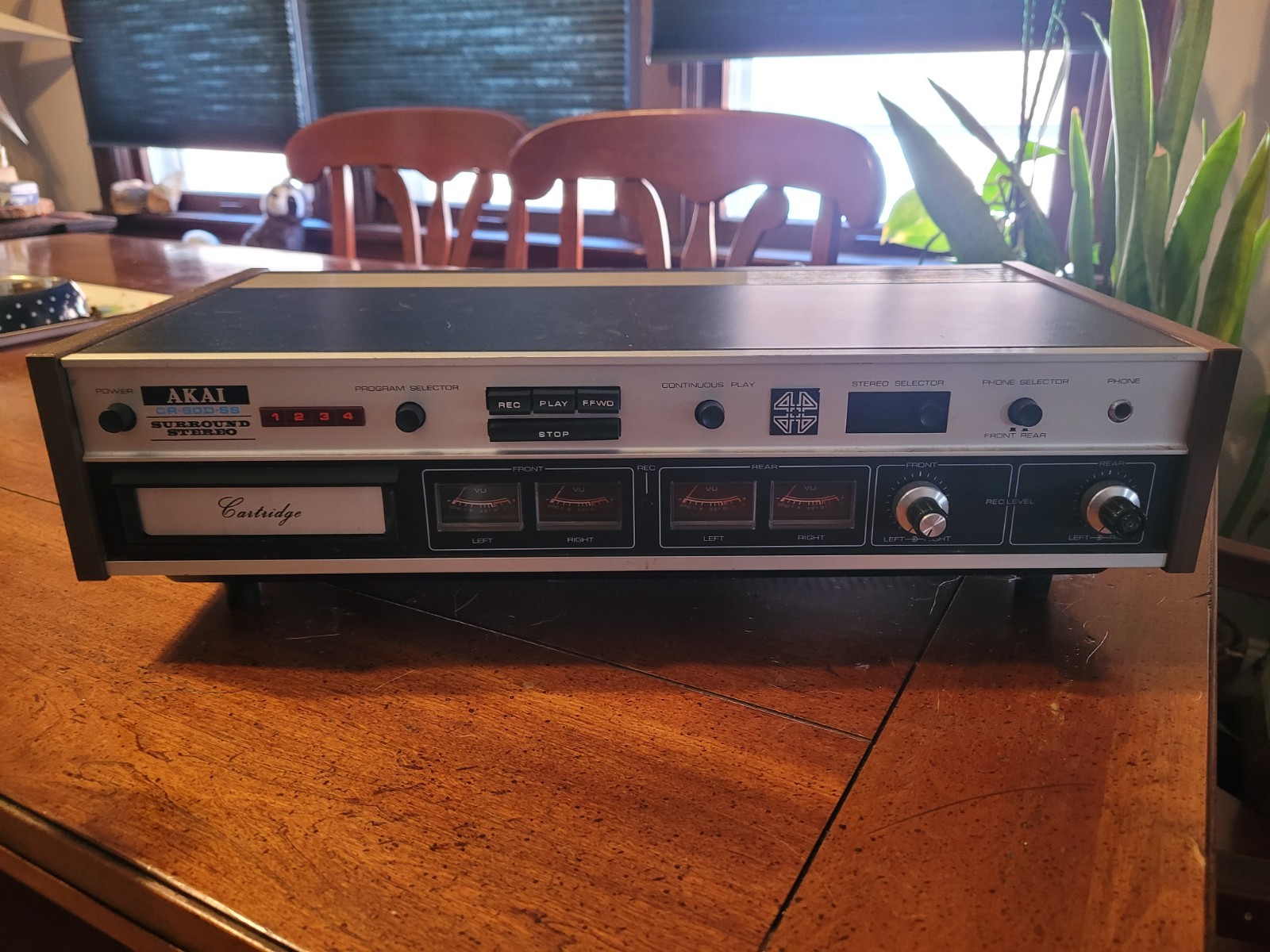
In the late 1970s, as the cassette format evolved from a medium for voice recording into a serious contender for high-fidelity music reproduction, Japanese manufacturers raced to push the boundaries of what compact tape could achieve. Among the most respected names in this golden age of analog audio was Akai, a company renowned for its professional reel-to-reel recorders and broadcast equipment. The Akai CR-80D-SS, introduced around 1978, stands as a testament to Akai’s engineering prowess and commitment to audio excellence. Though not as widely celebrated as some of its contemporaries from Nakamichi or Sony, the CR-80D-SS occupies a special niche among vintage cassette enthusiasts for its robust build, advanced features, and meticulous attention to detail.
A Legacy of Precision Engineering
Akai had already established a strong reputation in the professional audio world by the time the CR-80D-SS arrived. Unlike many consumer electronics brands that dabbled in audio, Akai approached cassette deck design with the rigor of a broadcast equipment manufacturer. The CR-80D-SS was positioned as a high-end dual-deck model, aimed at serious audiophiles, music duplicators, and semi-professional users who demanded reliability and sonic accuracy.
The "D" in the model name signifies its dual-cassette configuration—ideal for fast, high-quality tape duplication—while the "SS" suffix is believed to denote solid-state servo control, a feature that ensured precise tape speed regulation and minimized wow and flutter. This was a significant advancement over basic capstan-driven decks and placed the CR-80D-SS among the more sophisticated cassette machines of its time.
Technical Specifications
| Feature | Specification |
| Model | CR-80D-SS |
| Manufacturer | Akai Corporation, Japan |
| Year Introduced | 1978 |
| Type | Dual cassette deck |
| Tape Speed | 1⅞ ips (4.76 cm/s) |
| Recording System | 4-track, 2-channel stereo |
| Head Configuration | Dual playback/record heads (per deck) |
| Motor System | Dual direct-drive capstan motors |
| Wow and Flutter | < 0.08% (measured, RMS) |
| Frequency Response | 30 Hz – 18 kHz (with CrO₂ tape) |
| Signal-to-Noise Ratio | > 60 dB (Dolby B) |
| Harmonic Distortion | < 1.5% at 3% output |
| Input/Output | Line In/Out (RCA), headphone jack (¼") |
| Recording Modes | Type I (Normal), Type II (Chrome) |
| Noise Reduction | Dolby B (switchable) |
| Display | Dual VU meters, mechanical counter |
| Power Requirements | 120V AC, 60 Hz (North American version) |
| Dimensions | 440 mm (W) × 145 mm (H) × 320 mm (D) |
| Weight | 11.5 kg (approx. 25.3 lbs) |
Sound Characteristics and Performance
The Akai CR-80D-SS was engineered for accuracy and transparency, not coloration. Its dual high-quality record and playback heads—likely made from permalloy or similar high-permeability materials—delivered a balanced, detailed sound with excellent stereo imaging. The frequency response, especially when using chrome dioxide (CrO₂) tapes, extended well into the upper treble, capturing cymbal shimmer and vocal nuances with surprising clarity for a cassette deck of its era.
Thanks to its servo-controlled capstan system, speed stability was exceptional. Wow and flutter measurements below 0.08% placed it on par with many professional machines, ensuring that pitch remained rock-solid even during extended playback. This made the CR-80D-SS particularly well-suited for classical or jazz recordings, where timing and tonal accuracy are paramount.
The inclusion of Dolby B noise reduction helped mitigate tape hiss, especially on Type I (ferric) tapes, while still preserving high-frequency detail when properly calibrated. Users could toggle Dolby on or off depending on the tape being played, offering flexibility in playback scenarios.
Notable Features and Innovations
What set the CR-80D-SS apart from typical dual cassette decks of the late '70s was its semi-professional orientation:
- Dual Direct-Drive Capstans: Unlike belt-driven systems that could stretch or slip over time, the direct-drive motors provided consistent torque and speed control, enhancing long-term reliability.
- Independent Head Blocks: Each deck featured its own dedicated playback and record head, allowing for optimized alignment and minimizing crosstalk during duplication.
- Precision VU Meters: The large, dual VU meters weren’t just for show—they provided accurate visual feedback for level setting during recording, crucial for avoiding distortion or under-modulation.
- Mechanical Tape Counter: While not a digital counter, the mechanical counter was highly reliable and could be zeroed manually for cueing specific sections.
- Solid Build Quality: Housed in a heavy-gauge steel chassis with a brushed stainless steel (SS) front panel, the CR-80D-SS exuded durability. The transport mechanism was over-engineered, with metal gears and dampened tape guides.
Additionally, the deck supported both Type I (ferric) and Type II (chrome) tapes, with selectable bias and equalization—though manual adjustment was likely required for optimal performance with chrome tapes, a hallmark of high-end decks before auto-sensing became common.
Common Issues and Maintenance
Like all vintage cassette decks, the Akai CR-80D-SS requires careful maintenance to perform at its best:
- Deteriorating Rubber Components: The pinch rollers and any internal belts (if present in auxiliary mechanisms) can harden or crumble over time. Replacement with modern equivalents is essential.
- Head Oxidation: Tape heads should be cleaned regularly with isopropyl alcohol and demagnetized periodically to maintain clarity and high-frequency response.
- Capstan and Pinch Roller Alignment: Misalignment can cause speed instability or tape skewing. A professional alignment ensures optimal tape-to-head contact.
- Capacitor Aging: The internal power supply and signal path may contain electrolytic capacitors that degrade over decades. A recapping by a qualified technician can restore reliability and prevent noise or channel dropouts.
- Mechanical Wear: The dual-deck mechanism involves numerous moving parts. Lubrication of gears and transport linkages may be needed after decades of dormancy.
Despite these considerations, the CR-80D-SS is generally regarded as a robust and repairable unit, especially compared to more delicate consumer models.
Current Market Value and Collectibility
The Akai CR-80D-SS remains a rare and underappreciated gem in the vintage audio market. It doesn’t command the same prices as a Nakamichi Dragon or even a Revox B77, but its value among cassette aficionados is steadily rising. In good working condition, with clean heads and responsive mechanics, the CR-80D-SS typically sells for $250–$400 on the secondary market.
Its appeal lies in its dual-deck functionality, solid construction, and Akai’s professional pedigree. Collectors of broadcast gear, analog duplication enthusiasts, and those building a retro home studio often seek it out. Units with the original packaging, manuals, or service documentation can fetch premiums, especially in Japan and Europe where Akai’s reputation remains strong.
Conclusion: A Hidden Classic
The Akai CR-80D-SS may not be a household name, but it represents the quiet excellence of Japanese audio engineering at its peak. Built for precision, durability, and high-fidelity performance, it bridges the gap between consumer convenience and professional capability. For those who appreciate the tactile ritual of tape, the warmth of analog duplication, and the satisfaction of using a well-crafted machine, the CR-80D-SS offers a deeply rewarding experience.
In an era increasingly obsessed with digital perfection, the Akai CR-80D-SS reminds us that true fidelity also lies in craftsmanship, intention, and the soul of the machine. It’s not just a cassette deck—it’s a piece of audio history, quietly waiting to be rediscovered.
eBay Listings



As an eBay Partner, we earn from qualifying purchases. This helps support our independent vintage technology research.
Related Models
- Akai CS-F33R (1985)
- Akai DX-59 (1983)
- Akai GX-280D-SS (1979)
- Akai DX-57 (1978)
- Akai AA-5200 (1978)
- Sony TC-2050SD (1978)
- Aiwa AD-F990 (1993)
- Kenwood KX-3060 (1982)
- Sony TC-2130A (1974)
- Sony TC-2220 (1972)