Akai AA-910DB: The Sophisticated Dual Cassette Deck of the Late 1970s
In the golden era of cassette audio—when mixtapes ruled, portability mattered, and high-fidelity home recording was becoming accessible—the Akai AA-910DB emerged as a standout among dual cassette decks. Released in 1978, the AA-910DB was engineered for audiophiles, music enthusiasts, and home tapers who demanded precision, convenience, and professional-grade features in a single unit. While not as widely celebrated as some of its contemporaries from Sony or TEAC, the AA-910DB carved out a niche as a technically advanced, feature-rich machine that combined the practicality of dual cassette operation with the sonic refinement of dbx noise reduction.
Akai, a Japanese electronics company best known for its reel-to-reel tape recorders, video equipment, and later digital audio workstations, brought its legacy of engineering excellence to the cassette domain with models like the AA-910DB. This deck was more than just a tape copier—it was a serious audio tool designed for high-quality duplication, monitoring, and playback, all while maintaining signal integrity and minimizing noise.
Technical Specifications
| Feature | Specification |
| Model | Akai AA-910DB |
| Year Introduced | 1978 |
| Type | Dual cassette deck |
| Tape Speed | 1⅞ ips (4.76 cm/s) |
| Recording System | Full-track mono / stereo |
| Playback System | Stereo, 2-track |
| Noise Reduction | dbx Type I (switchable) |
| Motor Type | Dual direct-drive motors |
| Transport Mechanism | Auto-reverse (tape flipping) |
| Wow and Flutter | < 0.08% (weighted) |
| Frequency Response | 30Hz – 15kHz (with dbx), 50Hz – 13kHz (line) |
| Signal-to-Noise Ratio | > 80dB (with dbx), ~60dB (without) |
| Total Harmonic Distortion | < 1.5% |
| Inputs | Line In (RCA), Mic In (¼" jack) |
| Outputs | Line Out (RCA), Headphone Out (¼" jack) |
| Headphone Impedance | Supports 8–600Ω |
| Power Supply | AC 120V / 240V (region-specific) |
| Dimensions | 440 mm (W) × 145 mm (H) × 320 mm (D) |
| Weight | 10.5 kg (23.1 lbs) |
Sound Characteristics and Performance
The Akai AA-910DB was engineered with fidelity in mind. Unlike many budget dual cassette decks of the era that prioritized copying speed over sound quality, the AA-910DB featured precision tape heads, robust motor control, and advanced electronics that delivered a remarkably clean and dynamic audio reproduction.
Its most defining sonic feature was the inclusion of dbx Type I noise reduction, a professional-grade system that dramatically reduced tape hiss by compressing the dynamic range during recording and expanding it on playback. When engaged, dbx allowed the AA-910DB to achieve a signal-to-noise ratio exceeding 80dB—rivaling that of some open-reel recorders of the time. However, this came with a caveat: dbx recordings required dbx-compatible playback equipment to sound correct. Playing a dbx-encoded tape on a standard deck resulted in a harsh, over-bright sound due to the lack of decoding.
Without dbx, the AA-910DB still performed admirably, with a warm yet detailed midrange, solid bass response, and clear highs—typical of well-calibrated cassette decks using high-quality tape formulations like chrome or metal. The frequency response extended to 15kHz with dbx, making it suitable for duplicating LPs and even pre-recorded music cassettes with minimal generational loss.
Notable Features and Innovations
The AA-910DB was packed with features that set it apart from simpler copy decks:
- Auto-Reverse with Tape Flipping: Unlike later auto-reverse decks that used dual-playback heads, the AA-910DB physically flipped the cassette using a mechanical carousel system. This ensured optimal head contact and consistent performance on both sides, though it introduced a brief pause during side changes.
- Dual Direct-Drive Motors: Each tape transport was powered by its own direct-drive motor, minimizing speed fluctuations and ensuring precise tape tension—critical for high-fidelity recording and duplication.
- dbx Type I Noise Reduction: A rare feature on consumer cassette decks, dbx gave the AA-910DB a professional edge, especially for users duplicating music or archiving vinyl collections.
- Independent Record/Playback Decks: Each cassette well operated independently, allowing for selective recording from external sources, internal dubbing, or monitoring one tape while recording another.
- Level Meters and VU Calibration: Equipped with dual VU meters, the AA-910DB allowed users to monitor input and output levels with precision, aiding in optimal level setting to avoid distortion or under-recording.
- Mic Input with Gain Control: A convenient feature for recording live sources directly to tape, such as vocals or acoustic instruments.
- Headphone Monitoring with Source Selection: Users could monitor either tape, the line input, or the mic source through the headphone jack, making it ideal for editing and real-time monitoring.
Common Issues and Maintenance
Like all vintage tape decks, the Akai AA-910DB requires attention to remain in working order. Over four decades, rubber components degrade, tape heads oxidize, and mechanical linkages stiffen.
- Deteriorated Rubber Parts: The capstan tires, pinch rollers, and auto-reverse mechanism rely on rubber components that harden or crumble over time. Replacement with fresh, high-quality parts is essential for proper operation.
- Dirty or Worn Tape Heads: The record and playback heads should be cleaned with isopropyl alcohol and demagnetized periodically. Over time, heads may wear or become misaligned, requiring professional alignment for optimal performance.
- dbx Circuit Drift: The dbx encoding/decoding circuitry can drift due to aging capacitors or resistors. If dbx tapes sound distorted or overly bright, recalibration or component replacement may be needed.
- Mechanical Sticking in Auto-Reverse: The tape-flipping mechanism is complex and can jam if not lubricated or if debris accumulates. Regular cleaning and servicing are recommended.
- Capacitor Aging: Electrolytic capacitors in the power supply and audio circuits may leak or lose capacitance, potentially causing hum, distortion, or failure to power on.
Restoration of the AA-910DB is feasible with proper tools and parts, and many vintage audio technicians are familiar with Akai’s mechanical designs. Replacement belts and service manuals, while not abundant, are available through specialty suppliers and online communities.
Current Market Value and Collectibility
The Akai AA-910DB is not a mainstream collector’s item like a Nakamichi Dragon, but it holds steady appeal among cassette enthusiasts, DIY tapers, and those restoring vintage audio chains. Its combination of dbx support, dual direct-drive motors, and auto-reverse functionality makes it a functional gem for those who value both performance and nostalgia.
In working condition, the AA-910DB typically sells for $150–$300, depending on cosmetic condition, completeness (including original remote or accessories), and performance. Units that have been professionally serviced or restored command higher prices. Non-working units may go for $50–$100 as project machines.
While not yet a "holy grail" deck, its rarity and technical sophistication suggest growing interest as cassette culture experiences a resurgence, particularly among younger audiophiles discovering analog media.
Conclusion and Legacy
The Akai AA-910DB stands as a testament to Akai’s commitment to quality and innovation during the cassette era. More than just a duplication tool, it was a serious audio instrument that bridged the gap between consumer convenience and professional performance. Its use of dbx noise reduction, precision mechanics, and thoughtful design reflect a time when engineers pushed the limits of magnetic tape technology.
Today, the AA-910DB is appreciated not only for its functionality but also as a symbol of analog craftsmanship. For collectors, restorers, and tape enthusiasts, it offers a rewarding experience—whether you're making the perfect mixtape, archiving vinyl, or simply enjoying the tactile ritual of cassette culture. In an age of digital perfection, the Akai AA-910DB reminds us that warmth, character, and mechanical elegance have their own enduring appeal.
eBay Listings


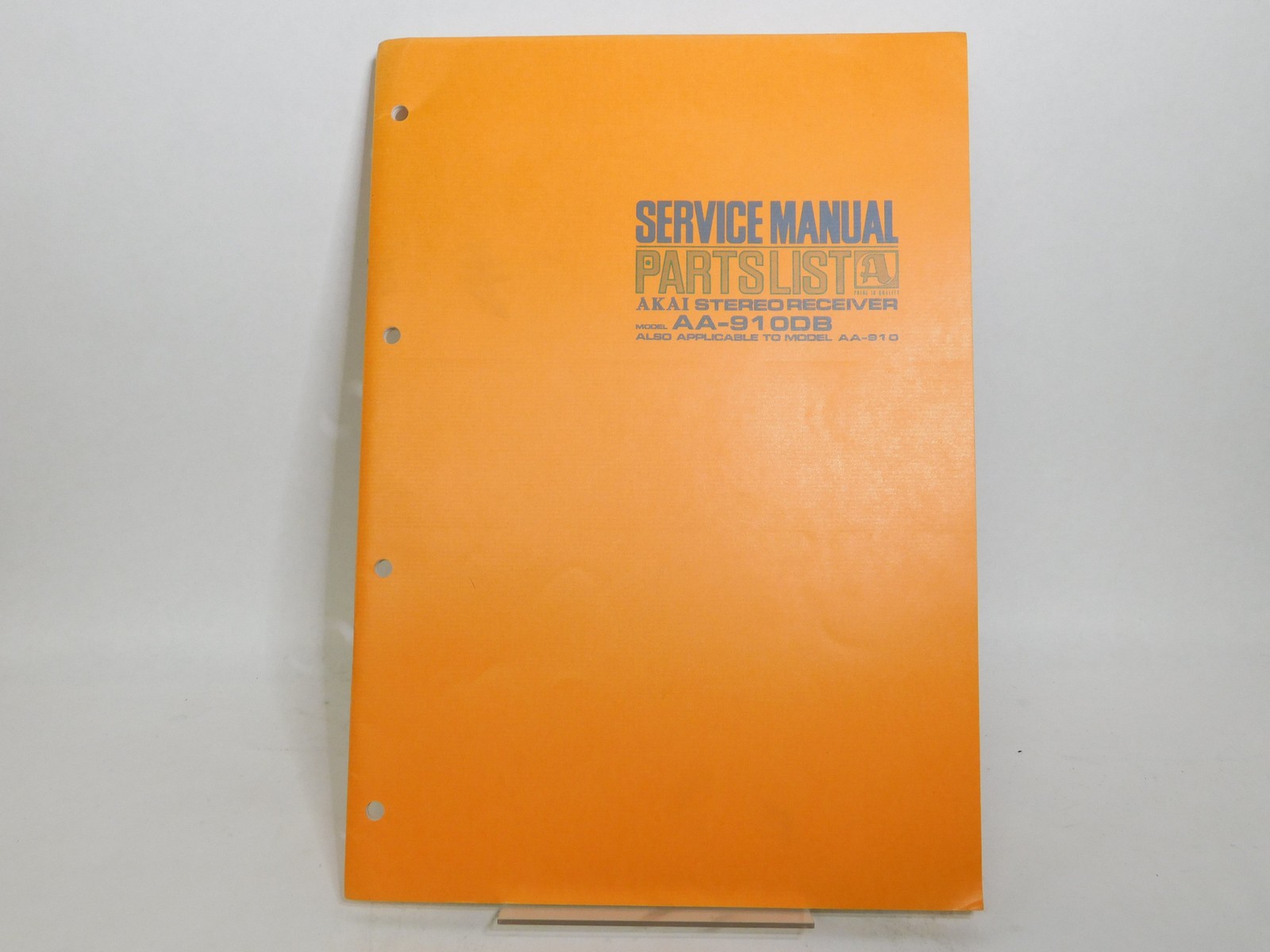
As an eBay Partner, we earn from qualifying purchases. This helps support our independent vintage technology research.
Related Models
- Akai CS-F33R (1985)
- Akai DX-59 (1983)
- Akai GX-280D-SS (1979)
- Akai DX-57 (1978)
- Akai AA-5200 (1978)
- Sony TC-2050SD (1978)
- Aiwa AD-F990 (1993)
- Kenwood KX-3060 (1982)
- Sony TC-2130A (1974)
- Sony TC-2220 (1972)