Aiwa AF-5080: The Quiet Master of the Cassette Era
In the early 1980s, when the battle for analog audio supremacy raged between brands like Nakamichi, Sony, and Technics, Aiwa carved out a unique niche—not with flamboyant design or excessive power, but with precision engineering, understated elegance, and a commitment to high fidelity. Among its most respected offerings was the Aiwa AF-5080, a dual cassette deck that represented the pinnacle of Aiwa’s cassette technology during the analog tape renaissance.
Released in 1983, the AF-5080 wasn’t designed to be flashy. Instead, it was engineered for audiophiles and serious tape enthusiasts who valued accurate duplication, low noise, and consistent playback quality. At a time when home taping was both a cultural phenomenon and a practical necessity, the AF-5080 stood as a benchmark for what a dual cassette deck could achieve—offering professional-grade features in a compact, reliable package.
Technical Specifications
The AF-5080 was built around Aiwa’s philosophy of "refined performance without excess." It featured dual motors, independent tape transport systems, and advanced noise reduction compatibility, making it ideal for high-quality cassette duplication and archival.
| Specification | Detail |
| Model | Aiwa AF-5080 |
| Year of Release | 1983 |
| Type | Dual Cassette Deck |
| Tape Speed | 4.76 cm/s (standard) |
| Wow and Flutter | < 0.08% (WRMS) |
| Frequency Response (Type I) | 40 Hz – 14,000 Hz |
| Frequency Response (Type IV) | 30 Hz – 16,000 Hz |
| Signal-to-Noise Ratio | 66 dB (Dolby B), 72 dB (Dolby C) |
| Noise Reduction Systems | Dolby B, Dolby C, Dolby HX Pro |
| Head Configuration | Separate Record/Playback Head, Dedicated Erase Head |
| Motor System | Dual Direct-Drive Motors |
| Display | Analog VU meters for both decks |
| Inputs | RCA Line In (stereo) |
| Outputs | RCA Line Out (stereo) |
| Dimensions | 430 × 140 × 320 mm |
| Weight | 9.8 kg |
| Power Requirements | 120V AC, 60 Hz (North American model) |
| Impedance | 8Ω |
| Years Produced | 1976-1978 |
One of the most notable aspects of the AF-5080 was its inclusion of Dolby HX Pro (Headroom Extension)—a feature typically reserved for high-end decks from brands like Revox or Studer. HX Pro wasn’t a noise reduction system per se, but rather a dynamic biasing technique that allowed for cleaner high-frequency recording on metal and chrome tapes by adjusting the bias signal in real time based on the audio content. This gave the AF-5080 an edge in clarity and headroom, especially when recording high-energy music.
Sound Characteristics and Performance
The AF-5080 delivered a balanced, transparent sound signature that prioritized accuracy over coloration. Its separate record and playback heads ensured minimal crosstalk and optimal alignment, while the dual direct-drive motors provided stable tape speed and excellent speed consistency—critical for maintaining pitch accuracy and minimizing wow and flutter.
When paired with high-quality Type II (chrome) or Type IV (metal) tapes, the AF-5080 could produce recordings that approached the fidelity of early digital formats. The Dolby C and HX Pro combination significantly reduced tape hiss and improved high-frequency extension, making cassettes recorded on the AF-5080 surprisingly competitive with pre-recorded commercial tapes.
Playback performance was equally impressive. The deck’s well-shielded heads and low-jitter transport meant that tapes recorded on other machines could be played back with remarkable clarity and minimal distortion. For collectors and archivists, this made the AF-5080 a trusted tool for preserving analog recordings.
Notable Features and Innovations
While the AF-5080 lacked the auto-reverse functionality or digital displays found on some contemporaries, its feature set was purposefully refined:
- Dolby HX Pro Support: Rare in consumer dual cassette decks, this gave the AF-5080 professional-grade recording headroom.
- Independent Dual Decks: Each deck operated independently, allowing for flexible recording from external sources, tape-to-tape dubbing, or monitoring one deck while recording on the other.
- Analog VU Meters: Large, easy-to-read VU meters provided real-time feedback on recording levels—essential for avoiding distortion and maximizing dynamic range.
- Metal Tape Compatibility: The deck automatically detected metal tapes and adjusted bias and equalization accordingly, ensuring optimal performance across all tape types.
- Solid Build Quality: Constructed with a rigid steel chassis and high-quality components, the AF-5080 was built to last. Its weight (nearly 10 kg) reflected its serious engineering intent.
Common Issues and Maintenance
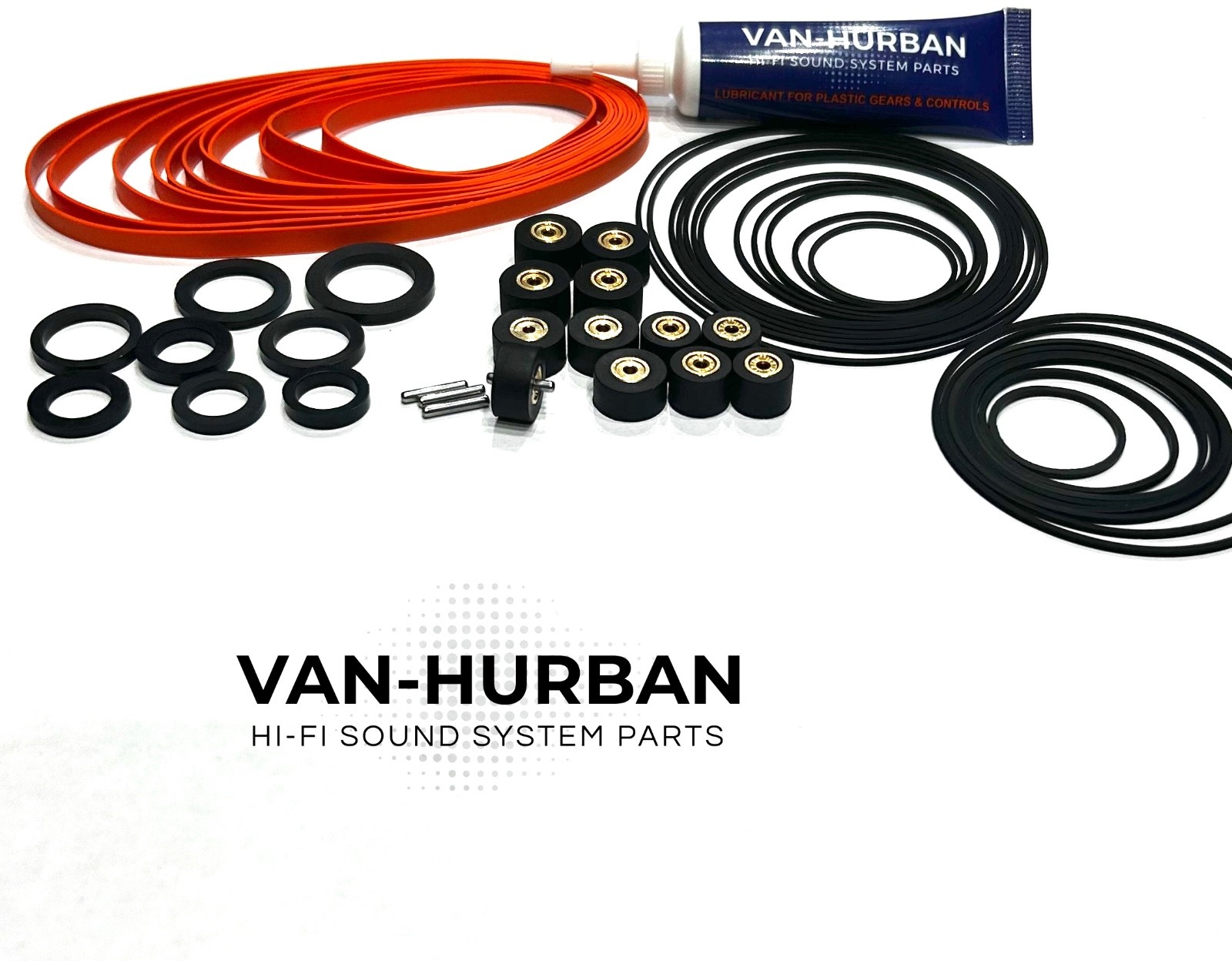
Like all vintage tape decks, the Aiwa AF-5080 requires regular maintenance to perform at its best. Over time, the rubber drive belts and pinch rollers can harden or crack, leading to speed instability or tape slippage. These are easily replaceable with modern equivalents.
The tape heads and capstan should be cleaned regularly with isopropyl alcohol and a lint-free swab. Demagnetizing the heads and tape path every few dozen hours of use is also recommended to maintain optimal frequency response and reduce noise.
One potential issue with long-term storage is oxidation of internal switches and potentiometers. If the deck has been unused for years, a few cycles of operation and contact cleaner may be needed to restore smooth function.
Due to its relatively simple mechanical design (no auto-reverse mechanism), the AF-5080 is less prone to complex transport failures than some of its contemporaries. Its modular construction also makes servicing straightforward for experienced technicians.
Current Market Value and Collectibility
The Aiwa AF-5080 is not as widely collected as some of the more famous decks from Nakamichi or Tandberg, but it has developed a loyal following among cassette enthusiasts and analog purists. Its inclusion of Dolby HX Pro and metal tape support makes it a sleeper hit in the vintage audio community.
On the secondary market, a fully functional Aiwa AF-5080 in good cosmetic condition typically sells for $150–$250, depending on region and included accessories. Units with original packaging, manuals, or unopened belts can command higher prices, especially in Japan and Europe where cassette culture remains strong.
While not a "trophy" piece like the Nakamichi Dragon, the AF-5080 is increasingly recognized as a serious tool for high-quality tape duplication and analog archiving. Its reliability, performance, and understated design make it a favorite among those who value substance over show.
Conclusion and Legacy
The Aiwa AF-5080 may not have the name recognition of some of its flashier rivals, but it represents the quiet excellence that defined Aiwa’s engineering ethos. In an era when many manufacturers were chasing gimmicks, Aiwa focused on fundamentals: precision mechanics, advanced tape technology, and faithful sound reproduction.
Today, the AF-5080 stands as a testament to the golden age of cassette audio—a time when a well-made tape deck could deliver near-hi-fi performance in the home. For collectors, musicians, and analog lovers, the AF-5080 remains a highly capable, underrated machine that deserves a place in any serious vintage audio setup.
If you’re looking for a no-nonsense, high-performance dual cassette deck that combines professional features with everyday usability, the Aiwa AF-5080 is a hidden gem well worth discovering.
eBay Listings


As an eBay Partner, we earn from qualifying purchases. This helps support our independent vintage technology research.
Related Models
- Aiwa AD-F990 (1993)
- Aiwa AA-8700 (1981)
- Aiwa AA-8900 (1982)
- Aiwa AD-1200 (1980)
- Aiwa AD-1250 (1982)
- Sony TC-2050SD (1978)
- Kenwood KX-3060 (1982)
- Sony TC-2130A (1974)
- Sony TC-2220 (1972)
- Sony TC-FX6 (1982)