Wurlitzer 200A Electric Piano (1968–1982)
A transistor-powered titan of tone, the 200A’s snappy, bell-like bark cut through rock, jazz, and soul like a switchblade in a velvet glove.
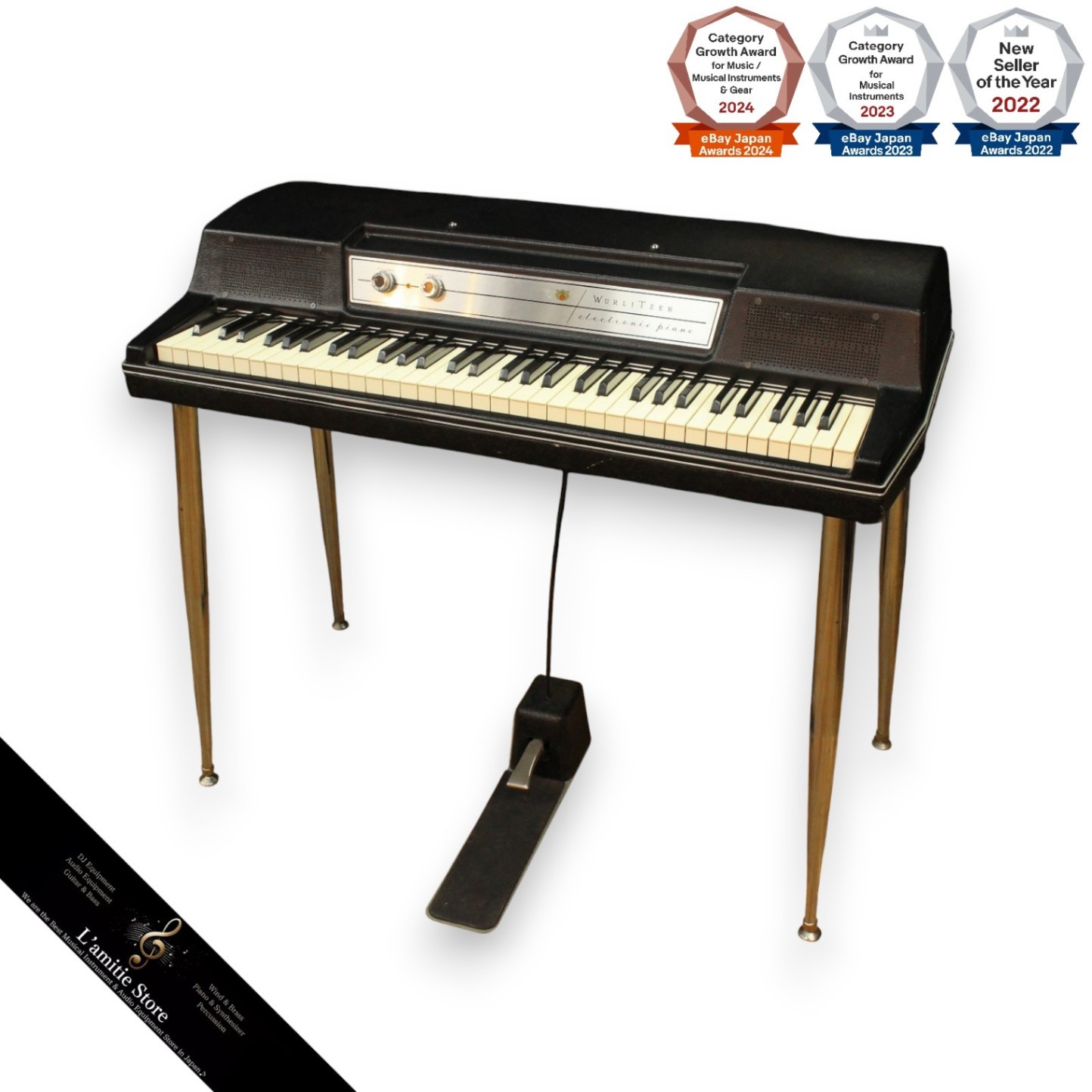
The Wurlitzer 200A isn’t just a keyboard—it’s a time machine. Crank it up, hit a chord with some overdrive, and suddenly you’re backstage at The Doors’ 1970 Isle of Wight set, or in the studio with Stevie Wonder during the Talking Book sessions. Produced from 1968 to 1982, though the solid-state 200A variant launched in 1970, this electric piano carved its niche not by mimicking the acoustic grand, but by inventing a voice all its own: bright, nasal, punchy, and unapologetically midrange-forward. Where the Fender Rhodes sang with a warm, mellow shimmer, the Wurlitzer 200A spoke—with attitude, clarity, and a distinctive “bark” that made it a favorite for stabbing stabs, rhythmic comping, and solos that refused to be buried in the mix.
Its 64-note electro-mechanical reed system gave each key a tactile, almost percussive response, and the all-transistor amplifier (a major upgrade over the tube-based original Wurlitzer 200) made it road-worthy in an era when gear reliability was a constant gamble. At 47 pounds, it wasn’t light, but it was portable enough for gigging musicians—especially when you consider the alternative: hauling a piano. The 200A became a staple across genres, from Ray Manzarek’s hypnotic organ-and-Wurlitzer interplay in The Doors to Billy Preston’s gospel-infused funk with The Beatles and beyond. It wasn’t just a tool; it was a sonic signature.
| Specification | Value |
|---|---|
| Keyboard | 64 keys (F to C), full-sized, velocity-sensitive reed-based electro-mechanical action |
| Sound Generation | Electromechanical reed system with capacitive pickup |
| Amplifier Power | 15 watts RMS |
| Speaker | 1x 10-inch speaker |
| Frequency Response | 60 Hz - 7 kHz |
| Input Impedance | 1 megohm |
| Output Jack | 1/4-inch unbalanced |
| Dimensions | 38.5 x 14.5 x 7 inches (97.8 x 36.8 x 17.8 cm) |
| Weight | 47 lbs (21.3 kg) |
| Power Supply | 120V AC, 60 Hz (North America) |
| Country of Manufacture | United States |
| Original MSRP | $595 (1970) |
- Electromechanical Reed Tone Generator: Unlike the tines of a Fender Rhodes Mark I, the 200A uses free-swinging steel reeds that vibrate near capacitive pickups. This design yields a sharper, more focused attack—think “ping” instead of “thud.” The reeds are tuned with precision (often to A4=440 Hz), and their physical nature means they can go out of tune with temperature or corrosion, but when properly maintained, they deliver a crystalline, expressive tone that responds beautifully to playing dynamics.
- All-Transistor Amplifier (15W RMS): The 200A’s switch from the tube-based Wurlitzer 200 to a solid-state amplifier in 1970 wasn’t just a tech upgrade—it was a reliability revolution. No more microphonic tubes, no warm-up time, no fragile glass bottles. The 15-watt amp, while modest by modern standards, was loud enough for small gigs and had just enough headroom to break into sweet, musical overdrive when cranked. That overdriven “growl” became a hallmark of the Wurlitzer sound in rock and funk contexts.
- Portable, Stage-Ready Design: At 47 pounds, the 200A wasn’t featherlight, but its integrated handle, rugged wooden case, and self-contained amp and speaker made it one of the first truly portable electric pianos that didn’t sacrifice tone for mobility. The 64-key range (F to C) covered most musical needs, and the full-sized keys offered a playing experience far superior to the toyish portables of the era.
Historical Context
The Wurlitzer 200A didn’t emerge in a vacuum—it arrived at a pivotal moment in music history. The late 1960s saw the decline of the big band era and the rise of rock, soul, and jazz fusion, all genres that demanded new sounds and greater portability. Acoustic pianos were impractical for touring, and early synthesizers were still monophonic curiosities. Enter the electric piano: a bridge between tradition and innovation. The Wurlitzer 200, introduced in 1968, was already gaining traction, but its tube amplifier was a liability on the road. Wurlitzer listened: in 1970, they released the 200A, replacing the tubes with transistors and instantly boosting reliability.
This shift mirrored a broader industry trend—solid-state electronics were overtaking vacuum tubes in everything from radios to guitar amps. The 200A was part of that wave, but it also stood apart. While the Fender Rhodes Mark I dominated with its lush, vibraphone-like tones, the Wurlitzer 200A offered something more aggressive—a voice that could cut through a rock mix without effects. It wasn’t trying to be pretty; it was trying to be heard. Artists like Ray Manzarek didn’t just use it—they weaponized it. The 200A’s tone became synonymous with the psychedelic and progressive rock movements, but it also found a home in funk (Stevie Wonder’s “Superstition” intro is Wurlitzer magic) and even early disco.
Wurlitzer didn’t stop at the 200A. In 1974, they released the Wurlitzer 206A, an upright cabinet version with the same electronics and keyboard, aimed at home and studio use. Meanwhile, the Wurlitzer 203A offered a more compact, student-friendly alternative. But it was the 200A that became the legend—a workhorse that could handle the rigors of touring while delivering a tone no other keyboard could match.
Collectibility & Value
Today, the Wurlitzer 200A is highly desirable, though not rare—production was steady throughout the 1970s, and many units survive. As of 2025, a well-maintained 200A in good playing condition typically sells for between $1,200 and $2,500 USD. Units with original finish, clean electronics, and tuned reeds command the higher end, especially if they include the original cover or gig bag. The market has been buoyed by a resurgence in analog gear, film and TV scoring (where vintage textures are prized), and the rise of boutique sample libraries that often use 200A recordings as source material.
But buyer beware: these instruments are nearly 50 years old, and age takes its toll. The most common issues include corroded or detuned reeds—especially in humid climates—which can cause notes to sound weak or out of tune. Key bushings wear down over time, leading to wobbly keys and lost velocity sensitivity. And while the solid-state amp was a leap forward in 1970, the capacitors and output transistors are now decades past their design life; many units require a “recap” (capacitor replacement) to restore full functionality and prevent damage. When shopping, listen for consistent volume across the keyboard, check for key wobble, and test the output jack for crackling. A 200A in good condition is a joy to play—but a neglected one can become a $2,000 paperweight. Find one that sings, and you’re not just buying a keyboard. You’re buying a piece of rock history.
eBay Listings


As an eBay Partner, we earn from qualifying purchases. This helps support our independent vintage technology research.
Related Models
- Casio VL-1 (1979-1984)
- Hohner Clavinet D6 (1971-1982)
- Rhodes Mark I Stage Piano (1969-1983)