Roland JD-800 (1991–1995): The Analog Soul in a Digital Body
A hands-on, slider-festooned digital synth that defied the menu-diving trend of the '90s and rekindled the joy of real-time sound design.
Overview
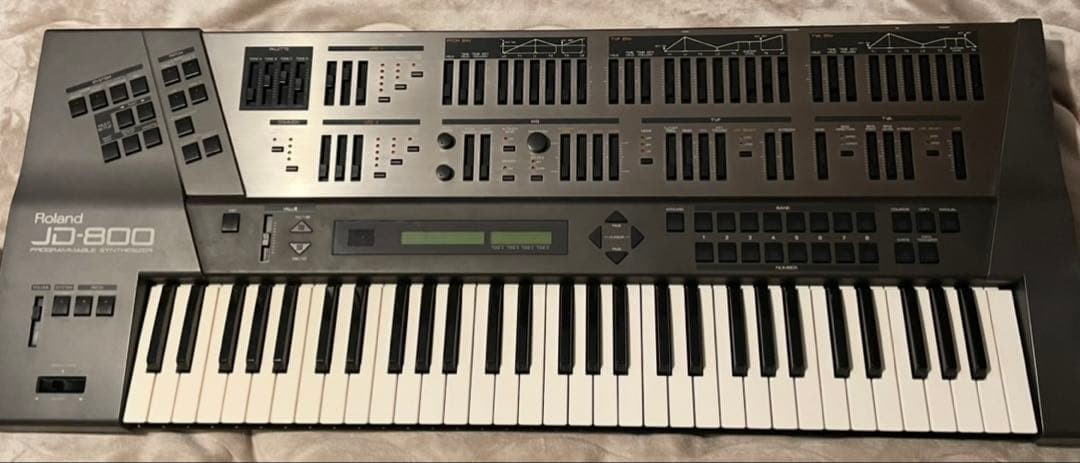
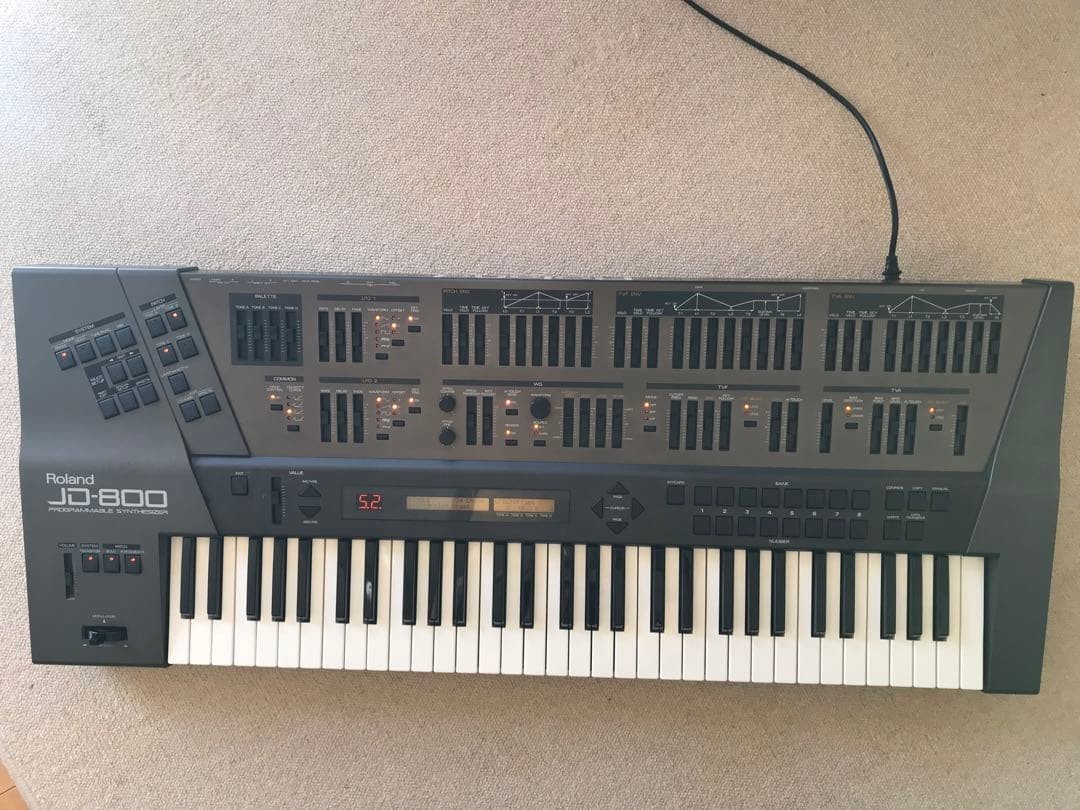
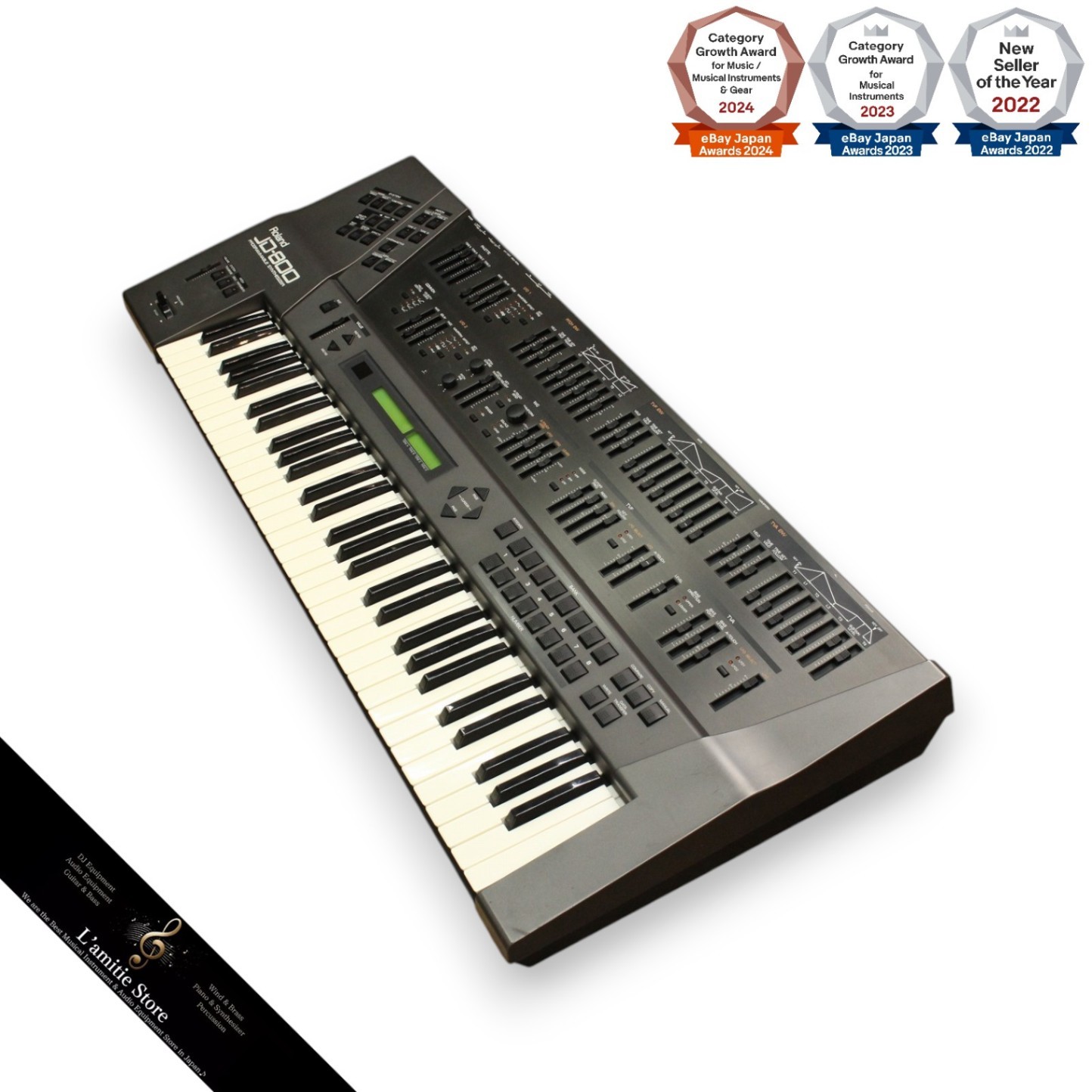
The Roland JD-800 wasn’t just another digital synthesizer dropped into the early '90s synth market—it was a statement. At a time when workstations like the Korg M1 ruled the charts with preset-heavy, menu-navigated interfaces, the JD-800 roared onto the scene with 96 physical sliders, switches, and knobs, daring users to *touch* their sound. Released in 1991, it combined the clarity and versatility of sample-based synthesis with the tactile immediacy of vintage analogs. This wasn’t a synth you programmed by squinting at a tiny screen; it was one you wrestled with, tweaked, and sculpted like clay. And if you’ve ever twisted a filter cutoff with your pinky while modulating an LFO with your thumb, you know exactly what I mean.
Used by film composers, progressive rockers, and electronic pioneers—from BT to Vangelis—the JD-800 carved out a niche for itself in soundtracks, ambient textures, and lush pads that felt organic despite their digital DNA. Its 64-voice polyphony was generous for the era, and its 16-part multitimbrality made it a legitimate workstation alternative. But what truly set it apart was its philosophy: sound design should be *felt*, not buried in submenus. In an age where “digital” often meant “sterile,” the JD-800 proved that warmth, movement, and expressiveness could still thrive—especially when you had hands-on control over every parameter.
Specifications
| Synthesis Type | Sample-based subtractive synthesis |
| Polyphony | 64 voices |
| Multitimbrality | 16 parts |
| Oscillators per Voice | 2 |
| Filter Type | Analog-style 24dB/oct low-pass, 12dB/oct high-pass, 12dB/oct band-pass |
| Envelope Generators | 4 (2 ADSR for filter and amplitude, 2 for modulation) |
| LFO Count | 2 |
| LFO Waveforms | Sine, Triangle, Square, Sawtooth, Sample & Hold, Noise |
| Keyboard | 61 keys, velocity-sensitive, channel aftertouch |
| Display | 2-line x 40-character backlit LCD |
| Memory | 640 internal patches (384 ROM, 256 RAM), 640 card patches (via PCM card) |
| Effects | Reverb, chorus, delay, multi-effects (32 algorithms) |
| Audio Outputs | 2 x 1/4" (L/Mono, R), 1 x 1/4" headphone |
| Audio Inputs | 1 x 1/4" (mix input) |
| MIDI | In, Out, Thru |
| Dimensions | 980 mm x 365 mm x 110 mm |
| Weight | 14.5 kg |
| Power Supply | AC adapter (included), 100–240 V AC, 50/60 Hz |
| Country of Manufacture | Japan |
| Original MSRP | $2995 (1991) |
Key Features
- 96 Real-Time Sliders and Switches: This is the JD-800’s beating heart. Unlike most digital synths of its era, which buried parameters under layers of menus, the JD-800 put nearly every parameter on the front panel. Want to tweak attack time? There’s a slider. Modulation depth? Another slider. Filter resonance? You get the idea. It’s like Roland took the control panel of a modular synth and shrunk it down to desktop size. I’ve spent hours just wiggling sliders during a reverb tail, watching a pad evolve in real time—it’s hypnotic, and frankly, a little addictive.
- High-Resolution 20-bit D/A Converters: In 1991, many synths still used 16-bit converters, which could sound grainy or harsh, especially in pads and strings. The JD-800’s 20-bit output stage delivered a smoother, more analog-like warmth. It’s not just marketing fluff—play a long, evolving pad on a JD-800 and then on a contemporaneous 16-bit machine, and you’ll hear the difference: the JD-800 breathes. It’s less “digital sheen,” more “living organism.”
- Sample-Based Subtractive Architecture: The JD-800 uses PCM waveforms (many derived from Roland’s own Roland D-50) but routes them through analog-modeled filters and envelopes. This hybrid approach gives it the best of both worlds: the realism of sampled instruments and the malleability of subtractive synthesis. You can start with a piano sample and turn it into a growling bass with a few tweaks—something the D-50 could only dream of.
- 32 Onboard Effects Algorithms: From vintage-style delay to lush stereo chorus, the effects engine is deep. I’ve used the “SFX 1: Analog Delay” patch to turn a simple arpeggio into a cascading, retro-futuristic waterfall. And the reverb? Thick, immersive, and never metallic. It’s one of the few synths where the built-in effects are genuinely worth using in a final mix.
Historical Context
The early '90s were a strange time for synthesizers. The analog era had ended, but the digital one hadn’t quite found its soul. Instruments like the Korg M1 dominated with their preset-heavy, sequencer-packed designs—perfect for pop music, but limiting for sound designers. The Roland D-50, released in 1987, had been revolutionary with its LA synthesis, but by 1991, its menu-driven interface felt increasingly archaic. Roland needed a successor that didn’t just iterate—it needed to *rebel*.
Enter the JD-800. It was, in many ways, a reaction against the coldness of digital synthesis. Where others were minimizing physical controls, Roland doubled down. It was as if they looked at the M1, then at a Moog, and said, “Why not both?” The result was a synth that appealed to both the pragmatist (with its solid 64-voice polyphony and multitimbral capabilities) and the purist (with its hands-on editing and rich, evolving textures). Its success paved the way for the Roland JD-990, a rack-mount version with expanded memory and effects, released in 1993. But the JD-990, while powerful, lacked the tactile thrill of the original’s wall of sliders. The JD-800 wasn’t just a synth—it was a manifesto: that creativity shouldn’t be bottlenecked by interfaces.
Collectibility & Value
Today, the JD-800 is a sought-after gem. With a production run from 1991 to 1995 and manufactured exclusively in Japan, it’s uncommon—not rare, but not exactly common either. In 2025, a working unit in good condition typically fetches between $1200 and $2000 USD, with mint examples (especially those with clean sliders and a bright LCD) commanding the higher end. Its desirability remains high among synth enthusiasts, film composers, and anyone who values real-time control over menu diving.
But beware: the JD-800 isn’t without its age-related issues. The most common is LCD screen degradation—those backlit 2-line displays are prone to dimming, ghosting, or complete failure. Replacement screens exist, but installation is fiddly. More insidious are the slider potentiometers. After decades of use, they can develop crackles, jumps, or dead zones. Cleaning helps, but on heavily used units, replacement is often necessary. When buying, test every slider, check the aftertouch response, and verify all MIDI ports. Also, look for the original power supply—while universal adapters work, the included one is rated for 100–240V, making it truly global. If you find one in good shape? Don’t hesitate. This is one of the last great hands-on digital synths, and they’re not getting any younger.
eBay Listings
As an eBay Partner, we earn from qualifying purchases. This helps support our independent vintage technology research.
Service Manuals & Schematics
- Service Manual — archive.org
Related Models
- Roland D-50 (1987-1992)
- Yamaha DX7 (1983-1987)
- Access Virus A (1997-1999)
- Access Virus B (1999-2002)
- Access Virus C (2002-2004)
- Access Virus (1997-1999)
- Casio CZ-101 (1984-1988)
- Clavia Nord Lead (1995-2003)
- Ensoniq ESQ-1 (1986-1989)
- Korg Wavestation (1990-1994)