Roland D-50 (1987–1992): The Digital Dawn of the 1980s Synth Revolution
The Roland D-50 didn’t just enter the synth world—it rewired it, fusing sampled transients with synthesized textures to create a sonic palette that defined an era.
Overview
If you’ve ever heard the shimmering pad in Michael Jackson’s “Dirty Diana,” the crystalline piano of Enya’s “Orinoco Flow,” or the haunting textures in the Aliens film score, you’ve heard the Roland D-50. Released in 1987, this 61-key digital synthesizer wasn’t just another box in the rack—it was a seismic shift in how synthesizers could sound, look, and function. At a time when the market was split between the cold precision of Yamaha’s FM synthesis (as heard in the DX7) and the bulky, expensive sample-based synths like the Fairlight CMI, the D-50 arrived as a pragmatic genius: a machine that could convincingly emulate acoustic instruments while still offering rich, evolving electronic textures—all at a price point that working musicians could stomach.
The D-50’s magic lay in its Linear Arithmetic (LA) synthesis, a proprietary Roland method that paired short, high-fidelity sampled attack transients (like the hammer strike of a piano or the breath of a flute) with looped synthesized waveforms for the sustain portion. This hybrid approach sidestepped the memory limitations of 12-bit, 31.25 kHz sampling by only storing the most perceptually critical part of a sound—the initial attack—and synthesizing the rest. The result? Instruments that didn’t just “sound like” pianos or strings—they felt like them, with a presence and realism that FM synthesis alone couldn’t deliver. Suddenly, digital synths weren’t just for bells and metallic tones; they could breathe.
And breathe they did—across pop, film, and electronic music. Artists from Jean-Michel Jarre to Vince Clarke (Erasure) embraced the D-50 for its lush, cinematic quality. It became the go-to for TV themes, movie scores, and arena pop, its reverb-drenched pads and glassy leads forming the sonic wallpaper of the late 1980s. With 16-voice polyphony and 8-part multitimbrality, it was also a powerhouse in the studio, capable of layering multiple sounds or driving entire arrangements via MIDI. The D-50 didn’t just succeed—it dominated, selling over 100,000 units and becoming the best-selling professional synthesizer of its time.
Specifications
| Synthesis Method | Linear Arithmetic (LA) Synthesis |
| Polyphony | 16 voices |
| Multitimbrality | 8 parts |
| Oscillators | 1 or 2 per voice (sample-based or synthesized) |
| Sample Rate | 31.25 kHz |
| Bit Depth | 12-bit |
| Effects | Integrated reverb, chorus, and multi-effects |
| Keyboard | 61 keys, velocity-sensitive, aftertouch-capable |
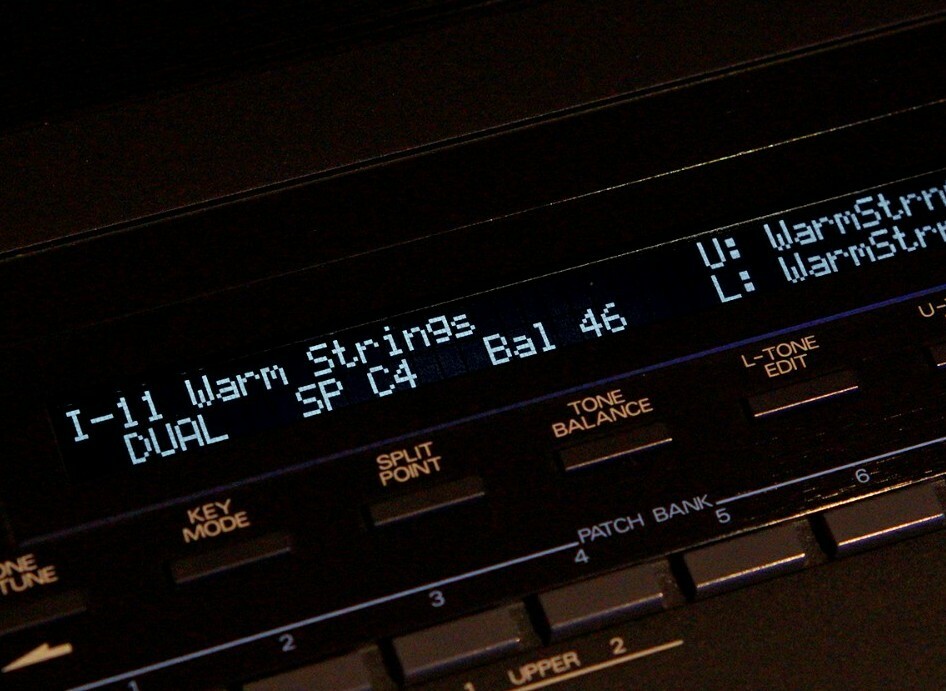
| Display | 2-line x 40-character LCD |
| Memory | 64 internal patches, 64 card patches (via ROM/RAM cards) |
| Dimensions | 1030 mm x 348 mm x 110 mm |
| Weight | 19.5 kg |
| Audio Outputs | 2 x 1/4" (L/Mono, R) |
| Audio Inputs | 1 x 1/4" (external input for effects processing) |
| Foot Controllers | 1 x 1/4" for damper pedal, 1 x 1/4" for control pedal |
| MIDI | IN, OUT, THRU |
| Power Supply | AC adapter (internal power supply) |
Key Features
- Linear Arithmetic (LA) Synthesis: This was the D-50’s crown jewel. By combining 160 short, 12-bit attack samples (called “partials”) with traditional subtractive synthesis for the sustain phase, Roland achieved a realism that was previously impossible in a sub-$2,000 synth. The attack of a real piano key strike would play for milliseconds, then seamlessly transition into a synthesized waveform—your ear couldn’t tell the difference. This wasn’t just clever engineering; it was auditory sleight of hand.
- Integrated Digital Effects: While most synths of the era treated effects as an afterthought (if at all), the D-50 had a built-in digital reverb, chorus, and multi-effects processor—standard. This meant that even factory presets like “Digital Native Dance” or “Fantasia” sounded polished and spatial right out of the box. The reverb alone was worth the price of admission; lush, cathedral-like, and perfectly tuned to the synth’s character.
- External Audio Input for Effects Processing: A rare and brilliant touch. You could route an external signal—say, a vocals or another synth—through the D-50’s effects engine. This turned the D-50 into a studio-grade effects unit, decades before such flexibility became common.
- 64-voice Patch Memory with Expandable Cards: The D-50 shipped with 64 internal patches and supported 64 additional sounds via Roland’s M-64C or M-512C memory cards. These cards became legendary, with titles like “Orchestral” and “Special FX” expanding the D-50’s sonic palette into uncharted territory. The ability to swap and share sounds was a proto-viral moment in synth culture.
Historical Context
The D-50 didn’t emerge in a vacuum. It was the answer to a growing dissatisfaction with the Yamaha DX7’s FM synthesis, which, while revolutionary, often sounded cold and clinical. By 1987, musicians were hungry for warmth, for breath, for the illusion of acoustic authenticity—something the DX7 struggled to deliver. Roland’s earlier attempt, the Roland D-5, was a noble but underpowered precursor, lacking effects and polyphony. The D-50 fixed all that.
It also arrived just as digital audio workstations and MIDI sequencing were becoming mainstream. The D-50’s 8-part multitimbrality made it a natural centerpiece in a MIDI studio, capable of playing bass, pads, leads, and effects simultaneously. Its success spurred a wave of LA-inspired synths, including its own successor, the Roland D-70, and even influenced competitors like the Yamaha SY77, which blended FM and sampling in its own way. But none captured the zeitgeist quite like the D-50. It was the first digital synth that didn’t feel like a compromise—it felt like the future.
Collectibility & Value
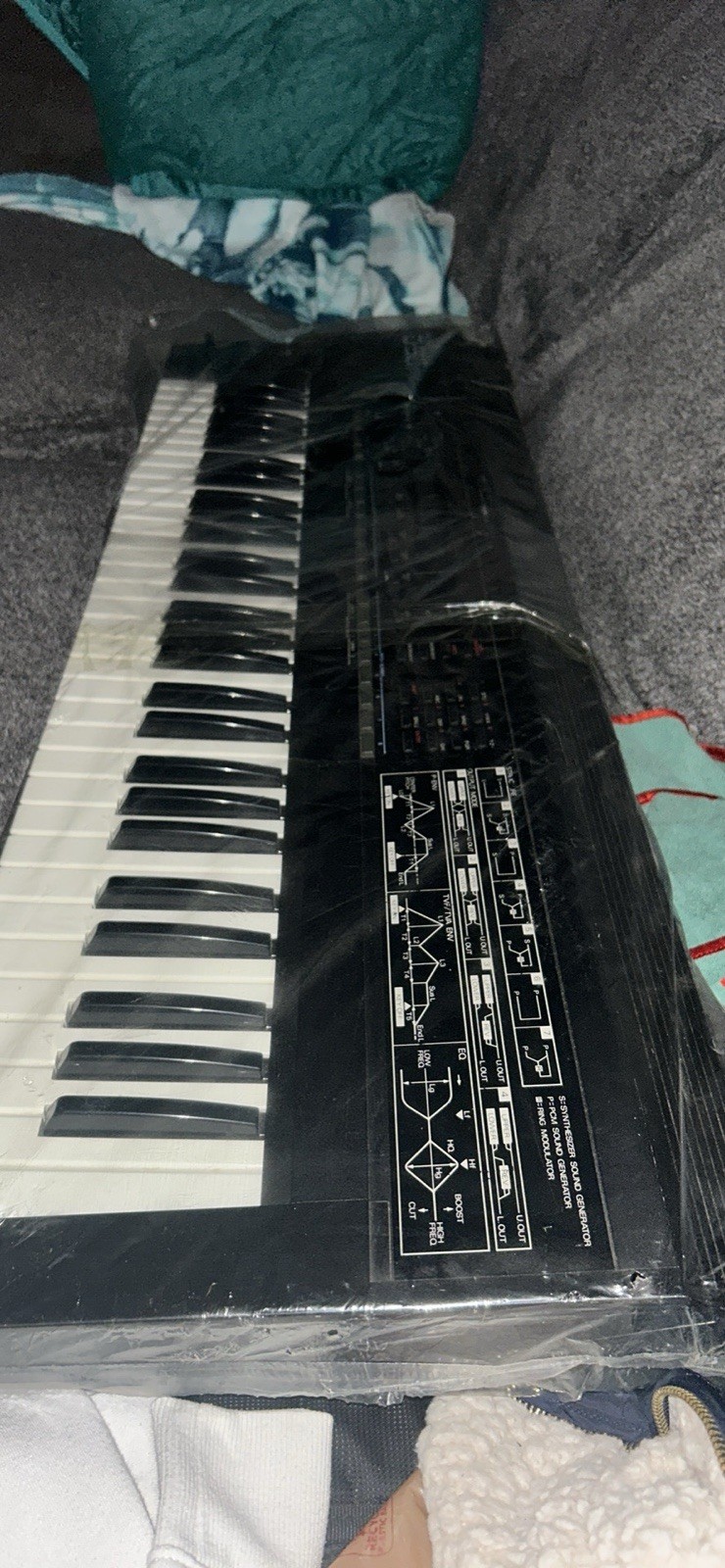
Today, the Roland D-50 is a highly sought-after classic, with a current market value ranging from $1,200 to $2,200 USD (2025), depending on condition and included accessories. While not exceedingly rare—over 100,000 were made—it’s uncommon to find one in full working order. Its desirability remains very high among synth collectors, film composers, and 1980s music revivalists.
However, potential buyers should be cautious. Two issues plague aging units: capacitor leakage from the internal power supply (which can damage the main board) and failing membrane switches on the control panel. The latter can make editing sounds a frustrating game of “button roulette.” When purchasing, look for units with replaced power supply capacitors and responsive controls. Original wood side panels and included memory cards (especially rare ones like the M-128C “Super Quartet”) can significantly increase value. And if you find a D-550 desktop unit with its original rack ears and footswitch—consider it a minor miracle.
eBay Listings


As an eBay Partner, we earn from qualifying purchases. This helps support our independent vintage technology research.
Related Models
- Roland JD-800 (1991-1995)
- Yamaha DX7 (1983-1987)
- Access Virus A (1997-1999)
- Access Virus B (1999-2002)
- Access Virus C (2002-2004)
- Access Virus (1997-1999)
- Casio CZ-101 (1984-1988)
- Clavia Nord Lead (1995-2003)
- Ensoniq ESQ-1 (1986-1989)
- Korg Wavestation (1990-1994)