Rhodes Mark I Stage Piano (1970–1983): The Portable Engine of 1970s Sonic Revolution
Not just an electric piano—this 60-pound slab of American ingenuity rewired the sound of jazz fusion, funk, and rock with its singing tines and piano-like touch.
Overview
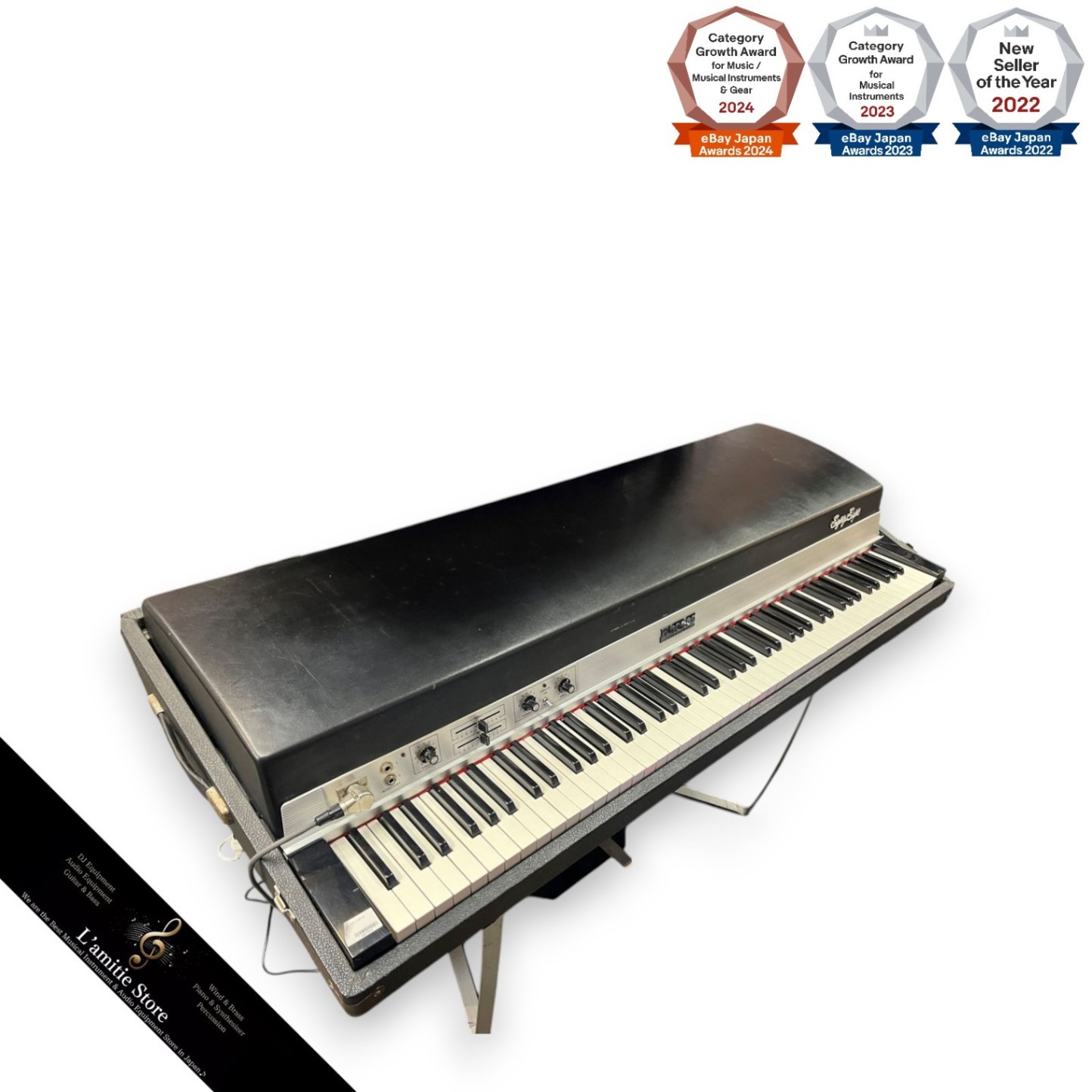
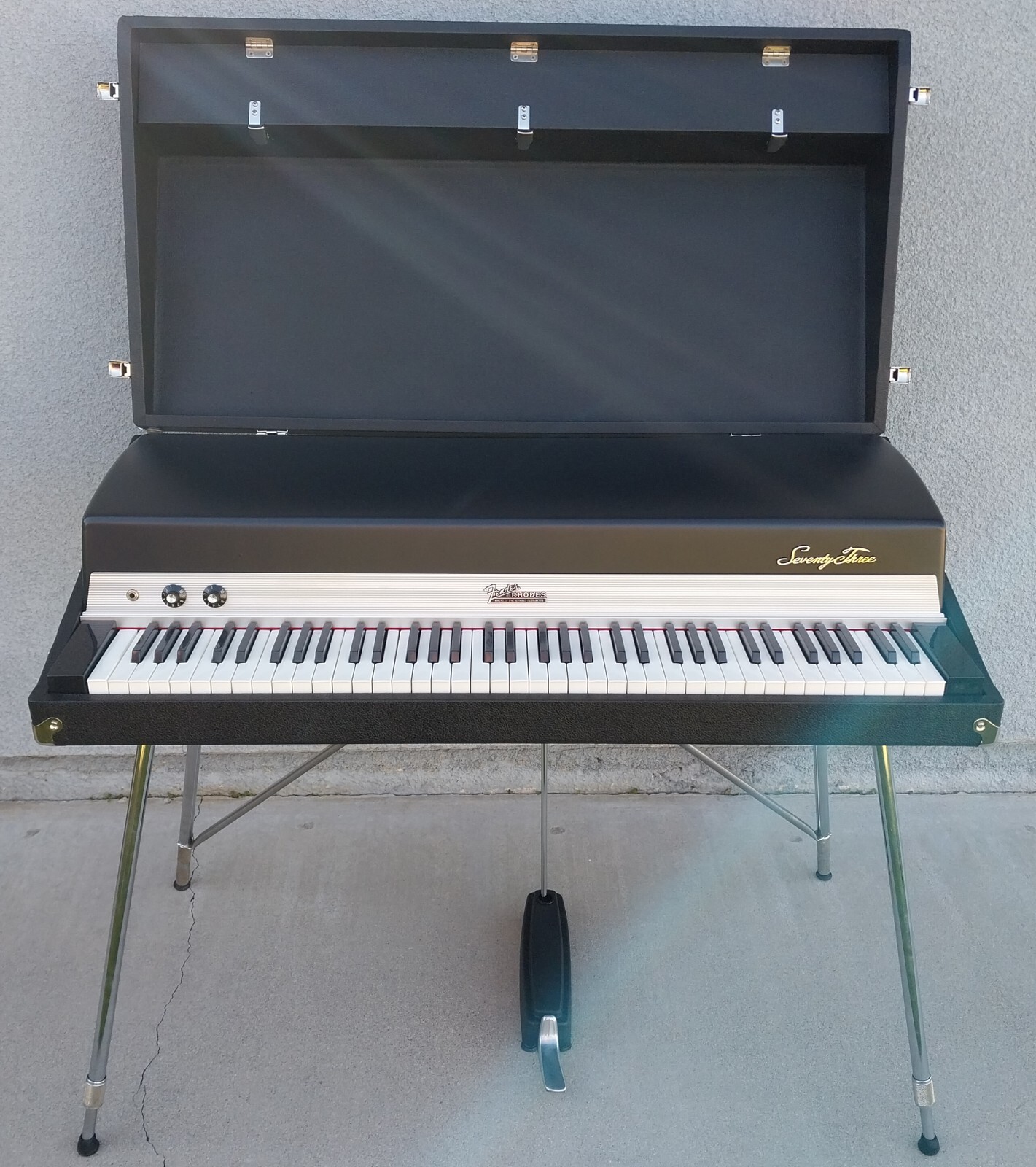
The Rhodes Mark I Stage Piano isn't merely a keyboard; it's a cultural artifact that hums with the electricity of a thousand live recordings and studio sessions from the golden age of analog. From Herbie Hancock’s modal explorations on Head Hunters to Stevie Wonder’s genre-defying runs on Songs in the Key of Life, the Mark I Stage Piano was the unassuming workhorse behind some of the most expressive electric piano tones ever captured. Unlike its bulkier sibling, the Mark I Suitcase Piano, the Stage model stripped away the built-in amp and speaker, trading convenience for portability—making it the go-to for touring musicians who needed a professional-grade electric piano that wouldn’t break their backs—or their tour van’s suspension.
What set the Mark I apart wasn’t just its sound, but its feel. With a 73-note, F-to-F keyboard featuring a weighted electric piano action, it was one of the few portable keyboards of its era that responded meaningfully to touch. Play softly, and the tone breathes like a muted trumpet; dig in, and it snarls with harmonic richness. This dynamic expressiveness made it a favorite among players who treated the keyboard like a true instrument, not just a sound module. And that sound—ah, that sound. Born from metal tines plucked by hammers and magnetically amplified, it was warm, bell-like, and organic in a way that no analog synth of the time could replicate. It didn’t imitate the piano; it reimagined it.
Specifications
| Keyboard | 73 keys (F-F), weighted electric piano action |
| Sound Generation | Electromechanical (tine-based) |
| Amplification | None (passive output; requires external amplifier) |
| Output Impedance | 8 ohms |
| Frequency Response | 60 Hz - 5 kHz |
| Signal to Noise Ratio | 70 dB |
| Total Harmonic Distortion | 1% at full output |
| Dimensions | 46 in x 16 in x 6 in (116.8 cm x 40.6 cm x 15.2 cm) |
| Weight | 60 lbs (27.2 kg) |
| Years Produced | 1970–1983 |
| Country of Manufacture | United States |
| Original MSRP | $1295 (1979) |
Key Features
- Tine-based electromechanical sound generation: Unlike reed-based designs such as the Wurlitzer 200A, the Rhodes used precisely tuned metal tines—tiny stiff wires—struck by piano hammers. When vibrated, these tines passed through electromagnetic pickups (much like a guitar), generating a sustain-rich, harmonically complex tone that’s instantly recognizable. The high end has a bell-like chime; the low end, a woody thump.
- Built-in preamplifier with tone shaping: While the Stage Piano lacks a power amp, it includes an onboard preamp with volume, treble, and bass controls—rare for a passive instrument. This allowed players to shape their tone before hitting the PA or recording console. The AV series (1978 onward) upgraded this preamp with improved headroom and a more refined EQ curve, making it a favorite among studio engineers.
- 73-key weighted action: At a time when most “portable” keyboards had synth-action keys (light, springy, and expressionless), the Mark I offered a real piano-like touch. The action, while not identical to an acoustic grand, was far more responsive than anything else in its class. This made it a natural fit for jazz and fusion players who demanded dynamic nuance.
- Modular design for touring: The Stage Piano was designed to be disassembled. The harp (the tine and pickup assembly) could be removed, and the entire unit packed into a road case. This modularity made it a staple on 1970s tours—though anyone who’s lugged one to a gig will tell you “portable” is a relative term when you’re dealing with 60 pounds of cast aluminum and steel.
Historical Context
The Mark I Stage Piano emerged at a pivotal moment: the late 1960s and early 1970s, when jazz was fusing with rock, funk was crystallizing its groove, and studio experimentation was peaking. Acoustic pianos were impractical for touring, and early synthesizers—while revolutionary—lacked the warmth and familiarity of a piano. The Rhodes filled that gap perfectly. It wasn’t trying to be a synth; it was trying to be a better electric piano. And in that mission, it succeeded spectacularly.
Its predecessor, the Rhodes Piano Bass (1960–1965), had already proven the viability of tine-based electromechanical design, but only covered the lower register. The Mark I expanded that concept into a full melodic instrument. By 1973, the standardized Mk I 73 model had ironed out early production inconsistencies in tine alignment and harp tension, delivering a more reliable and consistent tone. The 1978 AV/TV series further refined the electronics and finish—“TV” denoting a matte black cabinet to reduce glare under studio lights—cementing its status as a professional tool.
Its main competitor, the Wurlitzer 200A, offered a punchier, more aggressive sound thanks to its reed-based design, but lacked the Rhodes’ dynamic range and sustain. While the Wurlitzer cut through a mix like a knife, the Rhodes sang. By the early 1980s, digital pianos and synthesizers began to eclipse electromechanical instruments, but the Mark I’s reign had already left an indelible mark. Its successor, the Rhodes Mark II (1983–1984), attempted to modernize the design with MIDI and updated electronics, but arrived too late to stem the tide of digital dominance.
Collectibility & Value
Today, the Rhodes Mark I Stage Piano is very highly desirable among collectors, studio owners, and analog purists. With a current market value ranging from $2,500 to $4,500 USD (2025), it’s no longer an affordable vintage curiosity—it’s a serious investment. Its uncommon status (fewer than 10,000 estimated surviving units in playable condition) only adds to its allure. But buying one requires vigilance.
The most common issues stem from its electromechanical nature: tine and hammer wear can lead to inconsistent tone or lost notes, especially in heavily played units. Over decades, hammers lose their resilience, and tines can corrode or go out of tune. Corrosion on internal contacts and preamp components is also frequent, particularly in the output jacks and EQ circuitry. A well-maintained Mark I should have even volume across the keyboard, clean sustain, and no buzzing or grounding issues. Look for AV/TV series models if you value studio-ready reliability, and always test the preamp’s tone controls—they should sweep smoothly without crackling.
For those willing to restore one, the payoff is immense. A properly serviced Mark I doesn’t just sound vintage—it sounds alive. In an age of flawless digital emulations, there’s still no substitute for the subtle imperfections, the mechanical breath, the way the tines respond to a player’s soul. It’s not just a keyboard. It’s a time machine.
eBay Listings


As an eBay Partner, we earn from qualifying purchases. This helps support our independent vintage technology research.
Related Models
- Casio VL-1 (1979-1984)
- Hohner Clavinet D6 (1971-1982)
- Wurlitzer 200A Electric Piano (1968-1982)