Korg M1 (1988–1995): The Digital Workstation That Defined a Decade
The Korg M1 wasn’t just a synthesizer—it was the Swiss Army knife of late-’80s music production, packing pristine PCM sounds, sequencing, and effects into one revolutionary box that became the backbone of pop, R&B, and electronic music worldwide.
Overview
If you heard a synth pad, electric piano, or crisp digital piano in a hit song between 1989 and 1995, there’s a shockingly high chance it came from a Korg M1. More than just another digital keyboard, the M1 was the first true all-in-one music workstation to achieve mass success—blending high-quality sampled sounds, a powerful 16-track sequencer, and lush built-in effects into a single, relatively affordable package. It didn’t just ride the wave of digital synthesis; it created the tsunami. With over 250,000 units sold (a staggering number for any professional synth), the M1 became the best-selling synthesizer of its era, a title it held for years. It was the go-to instrument in studios from Los Angeles to London, found on stages with artists like Michael Jackson, Enya, and Seal, and quietly powered countless jingles, film scores, and dance tracks.
What made the M1 so special wasn’t just its specs—it was its immediacy. Unlike earlier digital synths that required deep programming to yield usable sounds, the M1 came loaded with 100 presets so polished and musical that most users never needed to tweak them. The “Universe” pad, with its shimmering, evolving textures, became the default ambient backdrop for ballads across the globe. “Organ 1” defined the crisp, punchy tonewheel sound of ’90s R&B. And let’s not forget “Piano 16,” a bright, cutting electric piano that graced more pop choruses than we can count. These weren’t just presets—they were sonic archetypes. The M1’s AI Synthesis engine (more on that later) gave these sounds a realism and expressiveness that analog synths couldn’t match and earlier samplers couldn’t afford. For the first time, a single keyboard could realistically cover an entire arrangement—from drums to bass to strings—without needing a rack full of gear.
Specifications
| Synthesis Type | PCM sample-based synthesis with digital filters |
| Polyphony | 16 voices |
| Multitimbrality | 16 parts |
| Oscillators | 619 PCM waveforms |
| Filters | Digital low-pass, high-pass, band-pass, and band-reject with resonance |
| Envelope Generators | 2 ADSR envelopes per voice |
| LFO | 2 LFOs per voice with multiple waveforms |
| Effects | 24-bit digital effects processor with reverb, chorus, delay, and multi-effects |
| Keyboard | 61 keys, velocity-sensitive, no aftertouch |
| Display | 160×48 pixel backlit LCD |
| Memory | 1.2 MB ROM, 320 KB RAM (user memory for programs and sequences) |
| Storage | 3.5-inch floppy disk drive (external optional) |
| Sequencer | 16-track MIDI sequencer with 100,000 note capacity |
| MIDI | In, Out, Thru |
| Audio Outputs | 2 main outputs (L/R), 1 headphone output |
| Dimensions | 990 mm × 375 mm × 110 mm (39.0 in × 14.8 in × 4.3 in) |
| Weight | 16.5 kg (36.4 lbs) |
Key Features
- AI Synthesis (Advanced Integrated Synthesis): This wasn’t just marketing fluff—AI Synthesis was Korg’s clever solution to the limitations of early digital sampling. Instead of looping a single waveform (which could sound static), the M1 combined a short, high-resolution PCM sample of a real instrument’s attack transient (like the initial “thump” of a piano key) with a longer, looped body sample. This hybrid approach gave sounds a natural, dynamic character that fooled ears in a way raw samples couldn’t. It’s why “Piano 16” has that satisfying “click” at the start and “Universe” swells so organically.
- Integrated 16-Track Sequencer: Long before DAWs, the M1 let you compose entire songs on the keyboard. With 100,000 notes of capacity (plenty for most pop songs), you could layer drums, bass, chords, and leads—all synchronized and stored on a 3.5” floppy. It turned the M1 into a portable studio. I’ve seen producers build full demos on nothing but an M1 and a tape deck. The sequencer wasn’t flashy, but it was rock-solid and intuitive once you learned its quirks.
- 24-Bit Digital Effects Engine: While the synth engine used 16-bit samples, the effects processor was 24-bit—giving reverb, chorus, and delay a clarity that still holds up. The “Hall Reverb” on “Universe” is iconic. You could assign effects per track or globally, and the multi-effects algorithms (like “Mod Delay”) added subtle movement that made static pads come alive. It’s rare for a synth’s effects to become part of its sonic identity, but the M1’s did.
- 619 PCM Waveforms: From orchestral strings to TR-808 drums, the M1’s ROM was packed with usable, high-quality samples. Korg didn’t just sample instruments—they curated them. The “Sweep” pad, “Mallet 1,” and “Bass 17” are still staples in modern sample packs. And unlike some competitors, the M1’s samples were recorded at multiple velocities, adding dynamic realism.
Historical Context
The M1 didn’t emerge in a vacuum. It arrived in 1988, just as the analog synth era was fading and digital technology was maturing. Yamaha’s DX7 had proven the market for digital synths, but it was notoriously difficult to program. Samplers like the Fairlight CMI and E-mu Emulator were powerful but cost tens of thousands. Korg’s own Korg D1 (1987) was a noble attempt at a digital piano/workstation but lacked the M1’s versatility. The M1 struck the perfect balance: affordable at $1,795 (still a serious investment, but studio-budget feasible), easy to use, and sonically rich. It wasn’t the first workstation—Yamaha’s Yamaha SY77 followed close behind in 1989 with FM + sampling—but the M1 beat it to market and won on sheer usability and sound quality.
Korg followed up the M1 with the Korg 01/W in 1991, which improved on the formula with more memory and better effects. But the M1’s legacy was already cemented. It defined the “Korg sound” for a generation and set the template for future workstations like the M3 and Triton. Even today, modern Korg synths include “M1 Collection” presets as a nod to its influence. The M1 wasn’t just a product of its time—it shaped the sound of its time.
Collectibility & Value
Despite its age, the M1 remains highly desirable. Units in good condition typically sell for $800 to $1,500 in 2025, with mint examples fetching more. They’re common on the used market, but working, fully functional units are becoming rarer. The biggest threats? Aging electrolytic capacitors, especially near the power supply—leakage can damage the motherboard if not caught early. The 3.5” floppy drive (often external) is another weak point; belts dry out, heads gum up, and replacement drives are scarce. When buying, look for a unit with a responsive keyboard, clean display, and intact knobs. Test all outputs and MIDI ports. Bonus points if it includes the original manual and floppy disks—original media adds value and authenticity. For modern use, many owners retrofit USB floppy emulators or use SCSI adapters. But honestly? Once you hear “Universe” swell through vintage speakers, you’ll understand why people still hunt these down.
eBay Listings


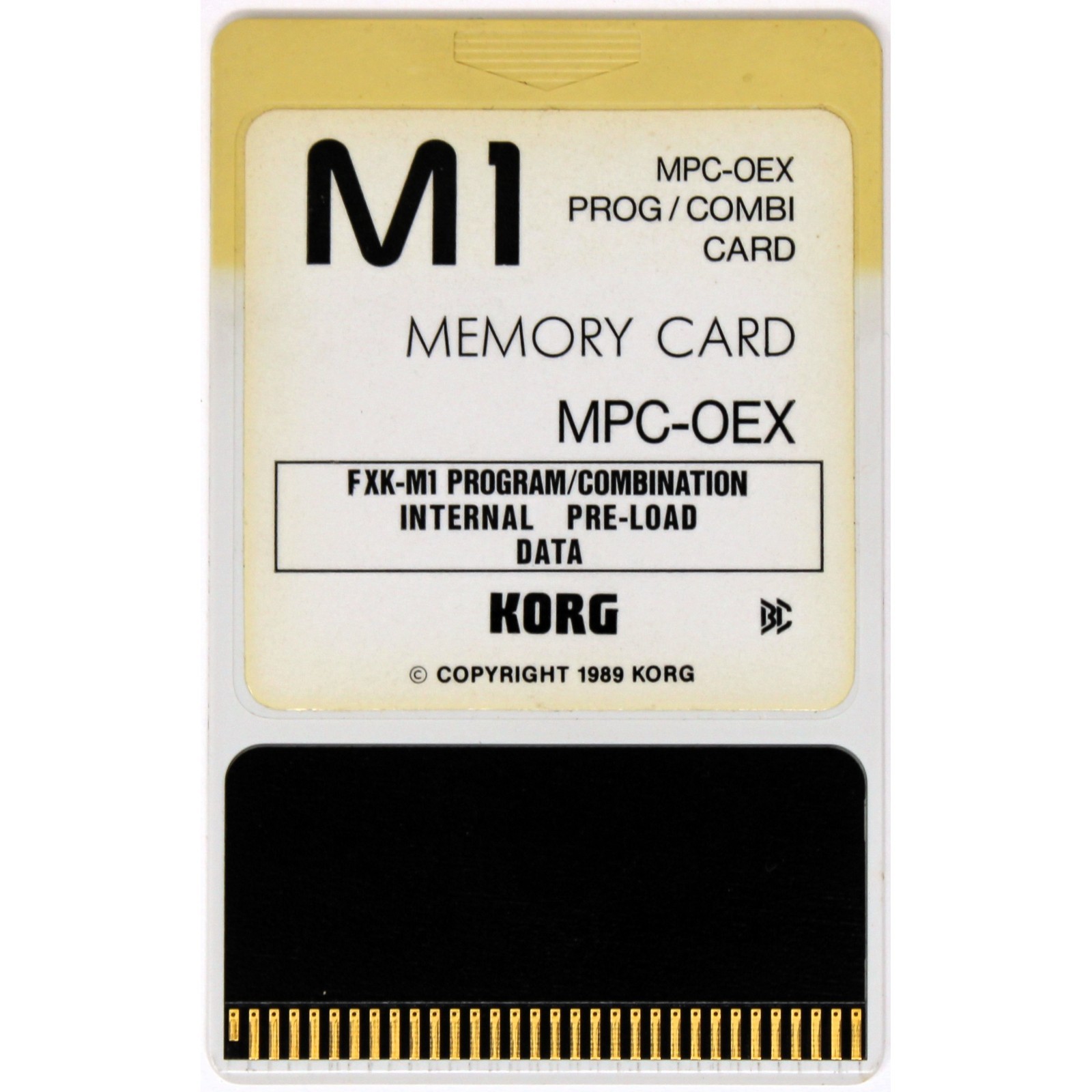

As an eBay Partner, we earn from qualifying purchases. This helps support our independent vintage technology research.