Hohner Clavinet D6 (1971–1982): The Funk Machine That Bit Back
A German-engineered electro-mechanical marvel whose staccato bark became the rhythmic backbone of 1970s funk, rock, and jazz fusion—equal parts clavichord, electric guitar, and percussive weapon.
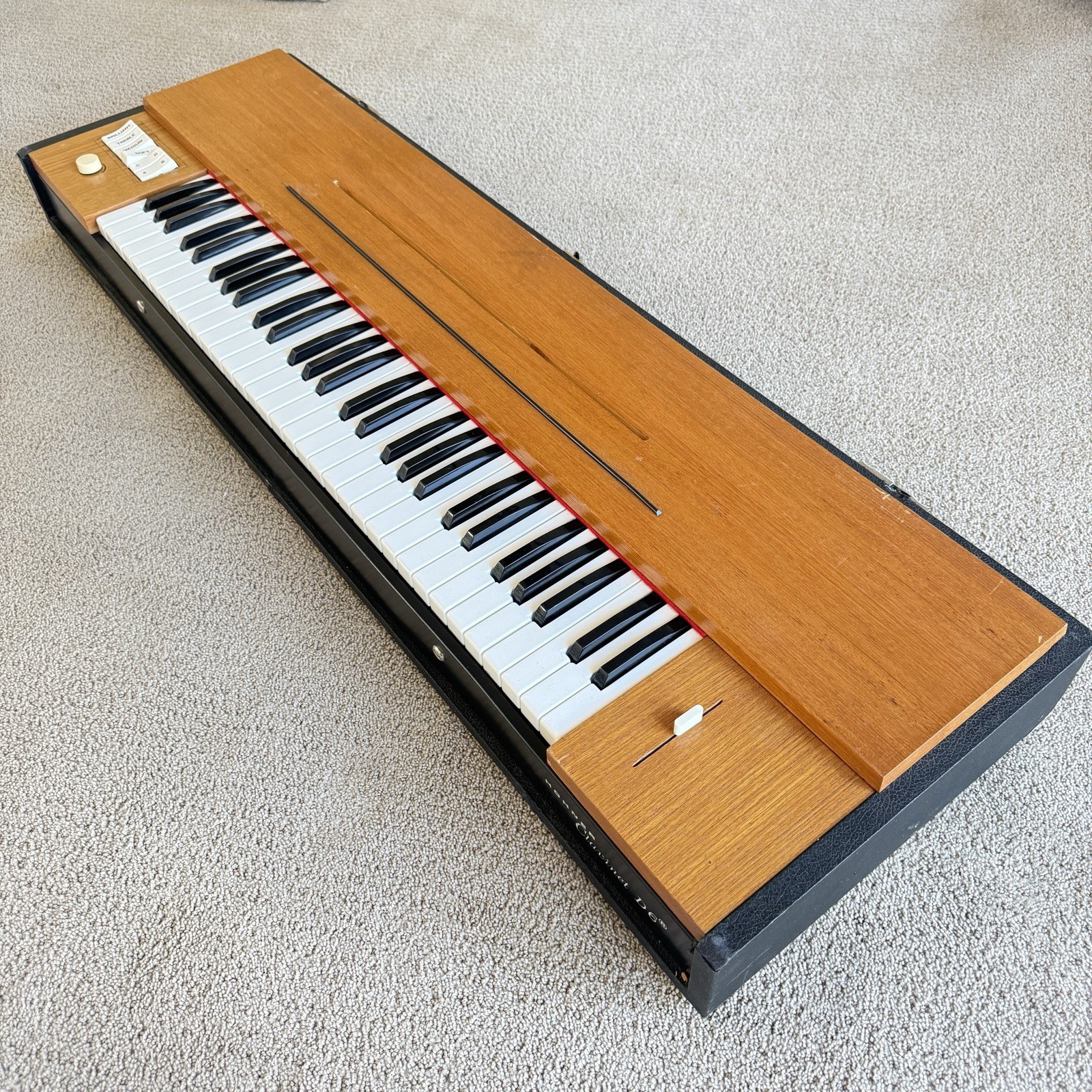
The Hohner Clavinet D6 isn’t just a keyboard—it’s a sonic scalpel. Born in Trossingen, West Germany, in 1971, this 60-key electro-mechanical beast carved its niche with a tone so aggressive, so dynamically responsive, that it didn’t just complement rhythm sections—it led them. Unlike the warm, bell-like sustain of the Fender Rhodes Electric Piano, the Clavinet D6 attacked. Its sound—imagine a gutbucket electric guitar run through a treble-heavy wah pedal, plucked with surgical precision—was immediate, punchy, and dripping with attitude. It was the sound of a finger snap turned up to eleven, the sonic equivalent of a James Brown downbeat.
Its ascent to legend was swift and well-earned. Stevie Wonder wielded the D6 like a secret weapon on classics like “Superstition” and “Higher Ground,” where its staccato riffs became as iconic as the lyrics. Herbie Hancock’s Head Hunters album leaned heavily on its razor-sharp attack, and Eddie Van Halen—yes, that Van Halen—used it for texture on early recordings. The D6 didn’t just play chords; it played rhythm, groove, and tension. With its velocity-sensitive action, players could go from whisper-quiet plucks to snarling stabs just by varying finger pressure, a level of expressiveness rare in keyboards of the era. It wasn’t trying to emulate anything—it was creating a new sonic language.
| Brand | Hohner |
| Model | Clavinet D6 |
| Category | portable_keyboards (Synthesizers) |
| Years Produced | 1971–1982 |
| Country of Manufacture | Germany |
| Keyboard | 60 keys (F1–E6), full-sized, velocity-sensitive |
| Action Type | electro-mechanical reed and hammer system |
| Output Power | 1.5 watts RMS |
| Output Impedance | 10 kΩ |
| Frequency Response | 60 Hz – 8 kHz (-3 dB) |
| Total Harmonic Distortion | < 1% at 1 kHz |
| Signal-to-Noise Ratio | 60 dB |
| Dimensions | 99 x 37 x 12 cm (39 x 14.5 x 4.7 in) |
| Weight | 22 kg (48.5 lbs) |
| Power Supply | 220–240 V AC (with step-down transformer for 110–120 V regions) |
| Outputs | 2 x 1/4" TS (normalled, left/right or dual mono) |
| Inputs | None |
| Controls | Four-band EQ (Bass, Low Mid, High Mid, Treble), Vibrato On/Off, Volume |
| Original MSRP | $1,295 (1976) |
Key Features
- Velocity-Sensitive Electro-Mechanical Action: Unlike most keyboards of the era, the D6 didn’t rely on simple key contacts. Each key triggered a small rubber-tipped hammer that struck a tensioned metal reed—similar in concept to a reed organ or harmonica. This mechanical system translated finger velocity into tonal dynamics with startling realism. Play softly, and it whispers; dig in, and it snaps. This made it uniquely expressive, especially for funk players who needed rhythmic precision and dynamic contrast.
- Four-Band EQ for Surgical Tonal Shaping: While many vintage keyboards offered basic tone controls, the D6’s four-band EQ (Bass, Low Mid, High Mid, Treble) was unusually sophisticated. It allowed players to dial in everything from warm, rounded comping to the now-legendary “quack” tone—achieved by cutting bass and treble while boosting both mids. This tone became the backbone of funk rhythm guitar before Nile Rodgers and Chic even hit the charts.
- Built-In Vibrato Circuit: The D6’s vibrato wasn’t an afterthought—it was a lush, analog modulation that added depth and movement without muddying the attack. Engaging the vibrato transformed the D6 from a rhythmic tool into a lead instrument, perfect for jazzy solos or psychedelic textures. The 1976 Mk II revision improved this circuit for greater stability and smoother sweep.
- Dual 1/4" Outputs with Normalled Configuration: The D6 offered two outputs that could be used in stereo or dual-mono setups. When only one cable was plugged in, the outputs were normalled (connected), making it easy to integrate into live rigs. This flexibility was rare in portable keyboards of the 1970s and showed Hohner’s attention to real-world usability.
Historical Context
The Clavinet D6 didn’t emerge in a vacuum—it was the refined evolution of Hohner’s earlier experiments with electro-mechanical keyboards. The Hohner Clavinet C (1968) and the upright Hohner Clavinet L laid the groundwork, but both suffered from limited tonal control and less portable designs. The D6, introduced in 1971, was the first to combine portability, expressive dynamics, and studio-grade tone shaping in one package. It was a direct response to the growing demand for stage-friendly, electrically amplified keyboard instruments that could cut through loud rock and funk bands.
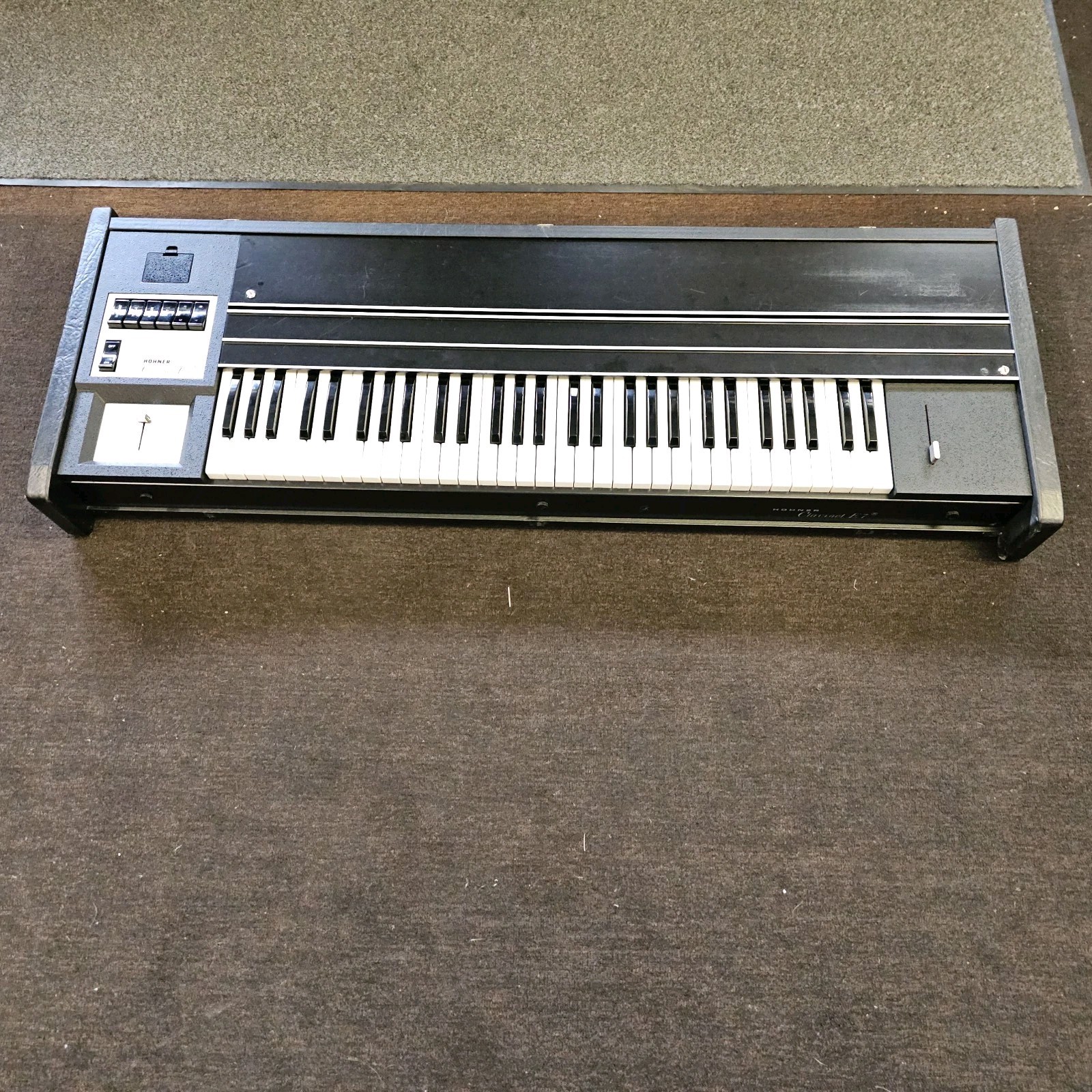
By the mid-1970s, the D6 faced competition not just from other clavichords but from the rising tide of analog synthesizers. Yet, while synths offered otherworldly textures, they often lacked the organic attack and tactile feedback that funk and R&B players craved. The D6 filled that gap perfectly—mechanical, immediate, and unapologetically physical. Its success paved the way for the Hohner Clavinet E7 (1977–1982), which added preset sounds and a more modern aesthetic but never quite matched the D6’s raw character. The D6 also stood in stark contrast to the Fender Rhodes Electric Piano, which offered warmth and sustain where the D6 delivered bite and decay. Together, they represented two poles of the electric keyboard universe—yin and yang, mellow and mean.
Collectibility & Value
Today, the Clavinet D6 is a prized relic of the analog era, with a desirability rating that borders on cultish. In 2025, a fully functional, well-maintained D6 typically fetches between $2,500 and $4,500 USD, with mint-condition Mk II models commanding the upper end. Its rarity—while not extreme—is compounded by its fragility. Fewer than 10,000 units were reportedly produced over its 11-year run, and many have succumbed to age-related failures.
The most notorious issue? The rubber hammer tips. Over time, these degrade into sticky goo, robbing the instrument of its signature attack. Replacing them requires a full re-tipping job—a labor-intensive process that can cost over $500. Equally common are crackling pots and switches, especially in the EQ and vibrato circuits, due to decades of use and oxidation. The internal wiring is delicate, and grounding issues can introduce hum or signal dropouts. Buyers should insist on a hands-on test: check every key for consistent response, listen for noise in the pots, and verify that the vibrato engages smoothly. A D6 that plays like new is a triumph of preservation—and worth every penny.
eBay Listings


As an eBay Partner, we earn from qualifying purchases. This helps support our independent vintage technology research.
Related Models
- Casio VL-1 (1979-1984)
- Rhodes Mark I Stage Piano (1969-1983)
- Wurlitzer 200A Electric Piano (1968-1982)