Farfisa Compact (1964–1972): The Italian Organ That Wired the 1960s
A transistorized tour de force from Italy, the Farfisa Compact delivered a reedy, cutting tone in a featherweight chassis—making it the go-to combo organ for garage bands, psychedelic pioneers, and pop provocateurs from Rome to San Francisco.
Overview
The Farfisa Compact wasn’t just an organ—it was a cultural signal booster. Introduced in 1964 by the Italian manufacturer Farfisa (Fabbrica Italiana Sintetizzatori e Organi Elettrici), this portable transistor organ arrived at the perfect moment: the British Invasion was in full swing, garage rock was boiling over, and musicians were ditching bulky tube-driven consoles for something they could actually lug into a club without a forklift. At 38 pounds and with a sleek, space-age design that screamed "future," the Compact became the weapon of choice for keyboardists who wanted presence without the plumbing. Its bright, nasal timbre—somewhere between a church organ and a mosquito on amphetamines—cut through guitar-heavy mixes like a scalpel, making it indispensable in an era when sonic clarity meant survival.
Farfisa didn’t invent the combo organ, but they perfected the formula for rock ‘n’ roll. While competitors like the Vox Continental had their devotees (notably Ray Manzarek of The Doors), the Compact offered a more dynamic playing experience thanks to its touch-sensitive keyboard—a rarity in transistor organs of the era. You could actually feel the difference between a whisper and a shout, which gave performances an expressive edge that pre-programmed polysynths would spend a decade trying to replicate. It wasn’t subtle, and it wasn’t supposed to be. This was an organ built for attitude: used by The Rolling Stones on “We Love You,” deployed by Pink Floyd in their early psychedelic freakouts, and heard on countless garage 45s from Fresno to Florence.
Specifications
| Brand | Farfisa |
| Model | Compact |
| Category | Organs (Synthesizers) |
| Years Produced | 1964–1972 |
| Country of Manufacture | Italy |
| Keyboard | 2-octave (44 keys), touch-sensitive |
| Polyphony | Fully polyphonic (per key) |
| Voice Presets | 8: Principal, Flute, Vox Humana, String I, String II, Oboe, Clarinet, Bass |
| Amplifier Power | 12 watts RMS |
| Speakers | Two 8-inch oval speakers |
| Impedance | 8 ohms |
| Frequency Response | 50 Hz - 12 kHz |
| Total Harmonic Distortion | <5% |
| Signal-to-Noise Ratio | 60 dB |
| Dimensions | 39.4 x 15.7 x 11.8 inches (100 x 40 x 30 cm) |
| Weight | 38 lbs (17.2 kg) |
| Power Supply | 115V/230V AC, 50/60 Hz |
| Original MSRP | $595 (1967) |
Key Features
- Touch-sensitive keyboard: Unlike most transistor organs of the era—which responded to key press with all the nuance of a light switch—the Compact’s keyboard actually reacted to velocity. Press harder, get louder. This wasn’t MIDI-level dynamics, but in 1965, it was borderline revolutionary. It allowed for expressive phrasing that made the organ feel more like a wind instrument than a preset box.
- Integrated bass section: The lower octave wasn’t just a gimmick—it had its own volume and tone controls, letting players layer a punchy, sub-adjacent bassline under the main voices. This turned the Compact into a one-man rhythm section, especially when paired with a drum machine or a hyperactive drummer.
- Eight distinct voice presets: From the reedy Vox Humana (which sounded nothing like a human voice but everything like a haunted accordion) to the surprisingly lush String I and String II settings, the voice selection offered real tonal variety. The Clarinet and Oboe presets were comically nasal—perfect for mocking orchestral pretensions in a garage rock context.
- Portability as philosophy: At 38 pounds and with a low center of gravity, the Compact could be tossed in a van and survive the tour from hell. Compare that to a Hammond B-3 with a Leslie speaker, which required a roadie and a chiropractor, and you see why the Compact became the organ of the working musician.
Historical Context
The Farfisa Compact didn’t emerge in a vacuum. It was a direct response to the Vox Continental, which had captured the early ’60s organ market with its minimalist design and bright tone. But the Continental had weaknesses: fragile build, non-touch-sensitive keys, and a tendency to go out of tune when the temperature changed. Farfisa saw an opening. By leveraging Italy’s postwar electronics boom and a design language that flirted with futurism, they built an organ that was not only more durable but more expressive.
The Compact also reflected a broader shift in music technology: the move from home and church organs to instruments built for performance. This was the dawn of the "combo" organ—designed to be played in a band ("combo") rather than in a parlor. Farfisa followed the Compact with the Farfisa Compact Duo in 1966, adding a second manual for layered textures, and then the Farfisa Compact Deluxe in 1968 with improved voicing and chrome trim that screamed "I’ve made it." But the original Compact remained the purest expression of the concept: minimal, aggressive, and utterly of its time.
By the early 1970s, the organ’s reign was waning. Synthesizers like the Moog and ARP were offering deeper sound design, and the Compact’s preset-only architecture began to feel limiting. Yet its legacy endured. The sound of the Compact is embedded in the DNA of garage rock, psychedelia, and even new wave—listen to early Talking Heads or Devo, and you’re hearing its ghost. It proved that an electronic instrument could be both affordable and artistically vital.
Collectibility & Value
Today, the Farfisa Compact is uncommon but not extinct. Roughly one in three you’ll find online actually works, which says more about component aging than build quality. In 2025, a fully functional, cosmetically decent unit sells for $800–$2,000 USD, with mint examples in original cases commanding the upper end. The Compact Duo and Compact Deluxe variants trade at a slight premium, but purists often prefer the rawness of the original.
The biggest enemies? Capacitor degradation and key contact wear. The original electrolytic capacitors in the power supply and audio path are now 50+ years old and prone to leakage or failure—leading to hum, distortion, or complete silence. The key contacts, made of conductive rubber, degrade over time, causing dead notes or intermittent triggering. A full recap and contact cleaning can run $300–$500, but it’s money well spent: a restored Compact plays like a time machine. Look for units with all original knobs and no cabinet cracks—replacements exist, but the ivory-colored plastic on later models yellows at different rates, creating a mismatched zombie aesthetic.
If you’re hunting one down, prioritize functionality over cosmetics. These weren’t built to museum standards—they were road warriors. A scuff or two just proves it was loved. But make sure the touch sensitivity still works. That’s the soul of the machine.
eBay Listings
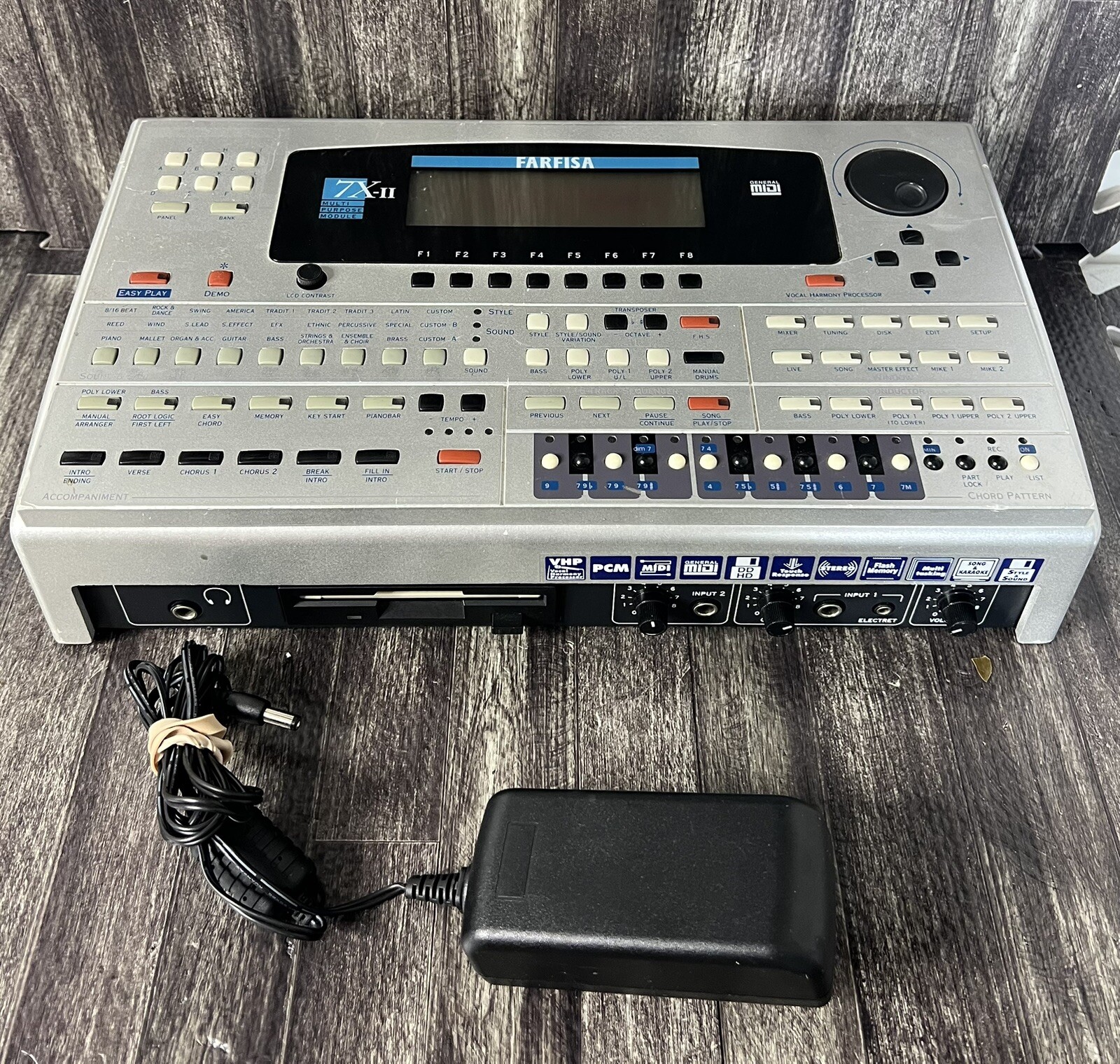
As an eBay Partner, we earn from qualifying purchases. This helps support our independent vintage technology research.
Service Manuals & Schematics
- Schematic — archive.org
- Service Manual — archive.org
Related Models
- Hammond B-3 (1954-1974)
- Vox Continental (1962-1971)