ARP Omni-1 (1975–1977)
That first chord hits like a sunbeam through stained glass—warm, shimmering, impossibly wide—and you realize this isn’t just a string machine, it’s a time machine.
Overview
The ARP Omni-1 doesn’t announce itself with aggression. It arrives like a cathedral of sound, built from one part polyphonic string ensemble, one part monophonic synthesizer, and a dash of studio-grade engineering that somehow still feels alive after nearly fifty years. Plug it in, power it up (after the requisite five-minute warm-up), and that chorus-phased string section blooms into the room like fog rolling over a lake at dawn. It’s not just lush—it’s dimensional, almost breathing, thanks to ARP’s proprietary 3-voice Chorus Phaser circuit that modulates the string tones in three slightly different directions, creating a stereo image so wide it feels like it’s coming from everywhere and nowhere at once. This is the sound that defined late ’70s atmosphere—the sigh behind The Cars’ “Moving in Stereo,” the melancholic haze of Joy Division’s later recordings, the unspoken tension in countless film cues that wanted to feel both synthetic and human.
But the Omni-1 is more than just a preset string box. It’s a hybrid instrument, split into three distinct sonic zones: the polyphonic Strings section (featuring Violin and Viola waveforms), a monophonic Synthesizer section with a voltage-controlled filter and ADSR envelope, and a Bass section that—unlike its successor—runs through the same VCF, giving it a rare fatness for a machine of its era. The keyboard is divided so you can play strings with your right hand and trigger the synth or bass lines with your left, all simultaneously. And because the Strings and Synthesizer sections each have their own dedicated outputs, you can route them to separate amps or effects chains, panning the strings wide while keeping the synth lead tight and dry. It was a clever workaround for true polyphony, and for 1975, it felt like magic.
The Omni-1’s architecture is paraphonic, not fully polyphonic—meaning all notes share a single filter and envelope. Play a chord, and every note rises and falls together. That can be a limitation, but it’s also part of the charm. There’s a cohesion to the sound, a unity, that makes it feel less like a keyboard and more like an orchestra responding as one. The synth section, while modest, is built on ARP’s trusted analog circuitry: a single oscillator with sawtooth and square waveforms, a 4-pole low-pass filter that sings when opened, and an LFO that feeds into vibrato and filter modulation. It won’t scream like a 2600 or growl like an Odyssey, but it has presence—warm, rounded, and surprisingly expressive when paired with the decay-time foot controller that adjusts envelope release on the fly.
What’s striking today is how intentional the Omni-1 feels. This wasn’t ARP’s first stab at a string machine—the Quartet and Solina had already laid the groundwork—but the Omni-1 was the first to integrate synthesis into the formula without sacrificing the string engine’s integrity. It wasn’t trying to be everything; it was trying to be the best at one thing: providing a portable, reliable, and emotionally resonant orchestral backdrop with just enough flexibility to let players shape their own voice. And for a brief window between 1975 and 1977, it succeeded wildly.
Specifications
| Manufacturer | ARP Instruments, Inc. |
| Production Years | 1975–1977 |
| Original Price | $2,250 |
| Keyboard | 49 keys, F–F, velocity- and aftertouch-insensitive |
| Polyphony | Paraphonic (polyphonic strings with monophonic synth and bass) |
| Oscillators | 1 main oscillator (sawtooth, square) for synth section; divide-down top-octave generator for strings |
| Waveforms | Sawtooth, square (synth); Violin, Viola, Cello, Bass (preset string section) |
| Filter Type | 4-pole low-pass VCF (24dB/octave), resonant |
| Filter Envelope | ADSR with dedicated slider controls |
| LFO | 1 LFO (sine wave), modulates vibrato and filter cutoff |
| Envelope Generator | AR (Attack-Release) for strings; ADSR for synth section |
| Chorus/Phaser | Patented ARP 3-voice Chorus Phaser (applied to string section only) |
| Outputs | 2x 1/4" (Strings, Synthesizer); 1x XLR (Strings) |
| Inputs | 1x 1/4" foot controller (decay time); 1x 1/4" sustain pedal |
| MIDI | None (pre-MIDI era) |
| Power | 120V AC, 60 Hz (internal power supply) |
| Weight | 33 lbs (15 kg) |
| Dimensions | 37" x 12.5" x 4.5" (W x D x H) |
| Construction | Wooden side panels, metal chassis, membrane switches with LED indicators |
| Special Features | Split keyboard function, mixable string and synth sections, dedicated bass VCF path |
Key Features
The Chorus Phaser That Changed Everything
The heart of the Omni-1’s magic lies in its patented 3-voice Chorus Phaser—a circuit so effective that it became the sonic fingerprint of an entire generation of string machines. Unlike simple chorus effects that merely duplicate and modulate the signal, ARP’s design splits the string output into three parallel paths, each modulated at slightly different rates and depths, then recombined in stereo. The result isn’t just movement—it’s depth, dimension, and a subtle unpredictability that mimics the natural tuning variations of real string sections. It’s why the Omni-1 never sounds static, even when holding a single chord for minutes. This effect is applied only to the string section, leaving the synth and bass dry and direct, a smart design choice that lets players layer textures without muddying the mix. Later string machines would copy the concept, but few ever matched the elegance of ARP’s original implementation.
Synth Section With Real Teeth
While many string machines treated the synth portion as an afterthought, the Omni-1’s monophonic section is built with serious analog intent. The 4-pole VCF is the same topology found in ARP’s flagship synths—smooth, musical, and capable of everything from warm pads to snarling leads when driven hard. The inclusion of a full ADSR envelope (unlike the simpler AR on the strings) means you can shape notes with precision, and the LFO’s ability to modulate both pitch and filter cutoff opens up expressive possibilities. It won’t replace a modular rig, but it’s more than a novelty—it’s a legitimate lead and bass voice that holds its own in a mix. And crucially, the bass section routes through this same filter, giving the Omni-1 a low-end weight that the Omni-2 would lose in its redesign. That single change makes the Mk I the preferred version for players who want both atmosphere and punch.
Split Personality, Seamless Integration
The Omni-1 isn’t just three instruments in one—it’s three instruments that were clearly designed to work together. The keyboard splits at a user-selectable point, letting you play strings above and synth or bass below. But what elevates it is the mix control: a slider that blends the string and synth outputs internally, allowing for hybrid tones that blur the line between orchestral and electronic. Want a cello line with a hint of sawtooth grit? Dial it in. Need a bass that starts with a string attack before dropping into filtered depth? The Omni-1 lets you carve that sound without patching a single cable. It’s a simple interface, but it’s intuitive and powerful, a testament to ARP’s focus on usability without sacrificing sonic range.
Historical Context
The ARP Omni-1 arrived at a moment when keyboardists were desperate for polyphony. In 1975, true polyphonic synths were either nonexistent or prohibitively expensive—Moog’s Polymoog wouldn’t arrive until 1975 and cost nearly twice as much. Most players relied on Mellotrons for orchestral textures, but those machines were heavy, fragile, and required constant tape maintenance. The Omni-1 offered a compelling alternative: a portable, solid-state instrument that could generate lush, moving string sounds with the reliability of analog electronics. It wasn’t trying to replace the Mellotron—it was trying to replace the entire string section.
ARP positioned the Omni-1 as a “symphonic electronic keyboard,” a term that sounds almost comically ambitious today but made perfect sense then. It competed directly with the Eminent Solina (whose string engine it improved upon), the Roland RS-202, and the Korg PE-1000, but it stood apart with its integrated synth section and superior build quality. Where others offered presets and little else, the Omni-1 gave players control—over filter sweeps, envelope shapes, and signal routing. It wasn’t a workstation, but it was a tool for composers and gigging musicians who needed flexibility without complexity.
The timing was critical. Released just as prog rock was peaking and new wave was beginning to stir, the Omni-1 found its way into studios and touring rigs with surprising speed. Tangerine Dream used it for atmospheric beds, Kraftwerk for rhythmic precision, and The Cars for that iconic, creeping tension in “Moving in Stereo.” By the time the Omni-2 arrived in 1978—lighter, cheaper, but with a simplified synth section and no bass VCF—the original Mk I had already carved its legacy. It was ARP’s best-selling instrument, with around 4,000 units built, a remarkable number for a $2,250 synth in the mid-’70s.
Collectibility & Value
Today, the ARP Omni-1 trades in a narrow but passionate market. Well-maintained units sell between $2,800 and $4,200, with pristine examples in original road cases fetching premiums—especially if they include the original manual and spec sheet. The Calzone flight case, while heavy, is a sought-after companion, a sign the synth was taken seriously by its original owner. Cosmetic condition matters less than function; the wooden side panels can be refinished, but a dead Chorus Phaser or unstable tuning can cost $800+ to repair.
The biggest threat to longevity is capacitor failure. The Omni-1’s power supply and audio path rely on aging electrolytics that dry out over time, leading to hum, channel dropouts, or complete failure. A full recap is not optional—it’s essential for any unit that hasn’t been serviced in the last 15 years. Service technicians observe that the membrane switches, while durable, can develop contact issues, and the slider potentiometers often require cleaning or replacement. The key bushings wear out, leading to wobbly keys, but replacements are available from specialty synth shops.
Buyers should test every function: the split point, the mix control, both outputs, and the foot controller. The Chorus Phaser should produce a smooth, shimmering effect without crackling or imbalance. Tuning stability across the keyboard is a key indicator of health—drift of more than a few cents suggests the need for calibration or oscillator board work. Units advertised as “fully serviced” from reputable shops like Synthchaser or Ripped Ear are worth the premium; untested “as-is” listings on eBay are lottery tickets.
Despite its age, the Omni-1 remains relevant. Modern software emulations like GForce’s Virtual String Machine and Puremagnetik’s Kardoni capture its essence, but they can’t replicate the physicality of playing a real machine—the weight of the keys, the glow of the LEDs, the way the sound fills a room. For players who want that authenticity, the Omni-1 isn’t just a collectible—it’s a working instrument, one that still delivers a sound no plugin has fully duplicated.
eBay Listings

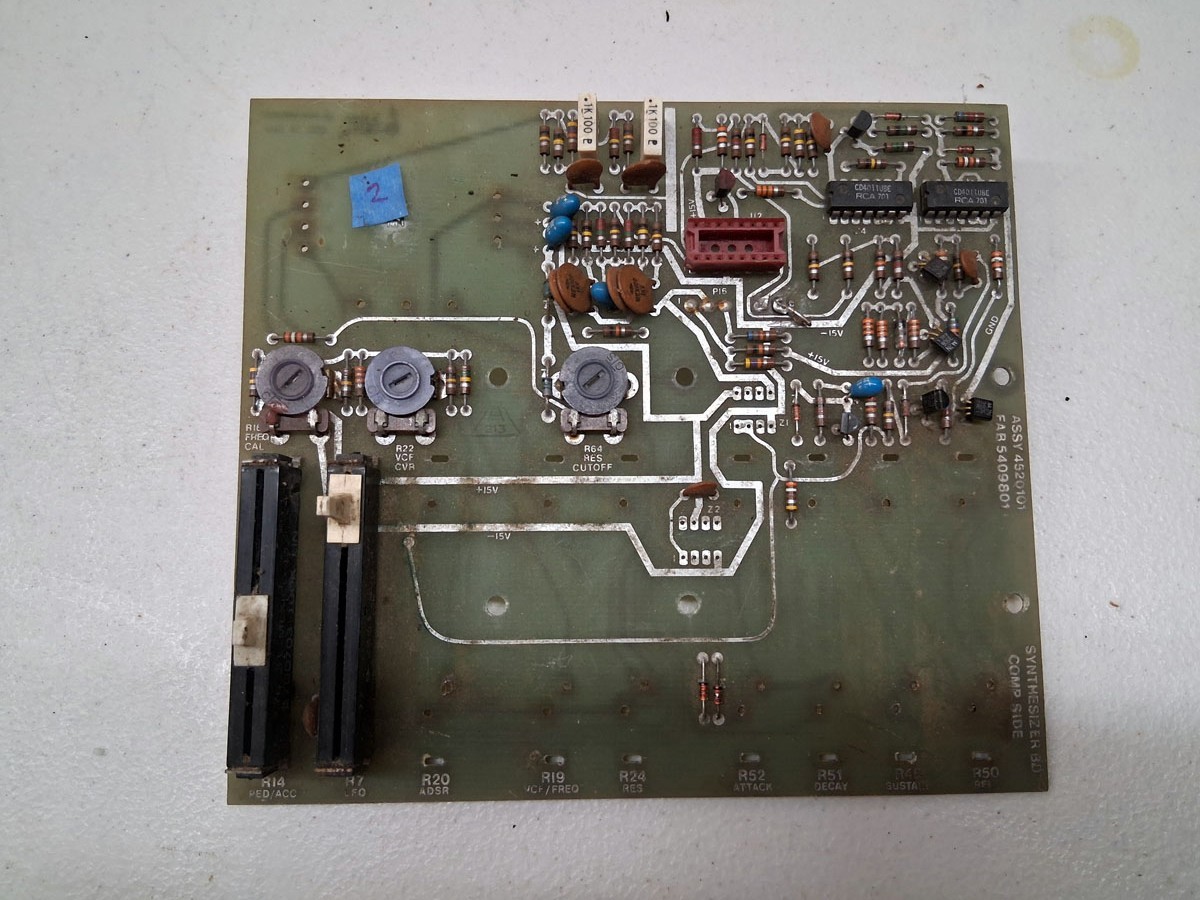

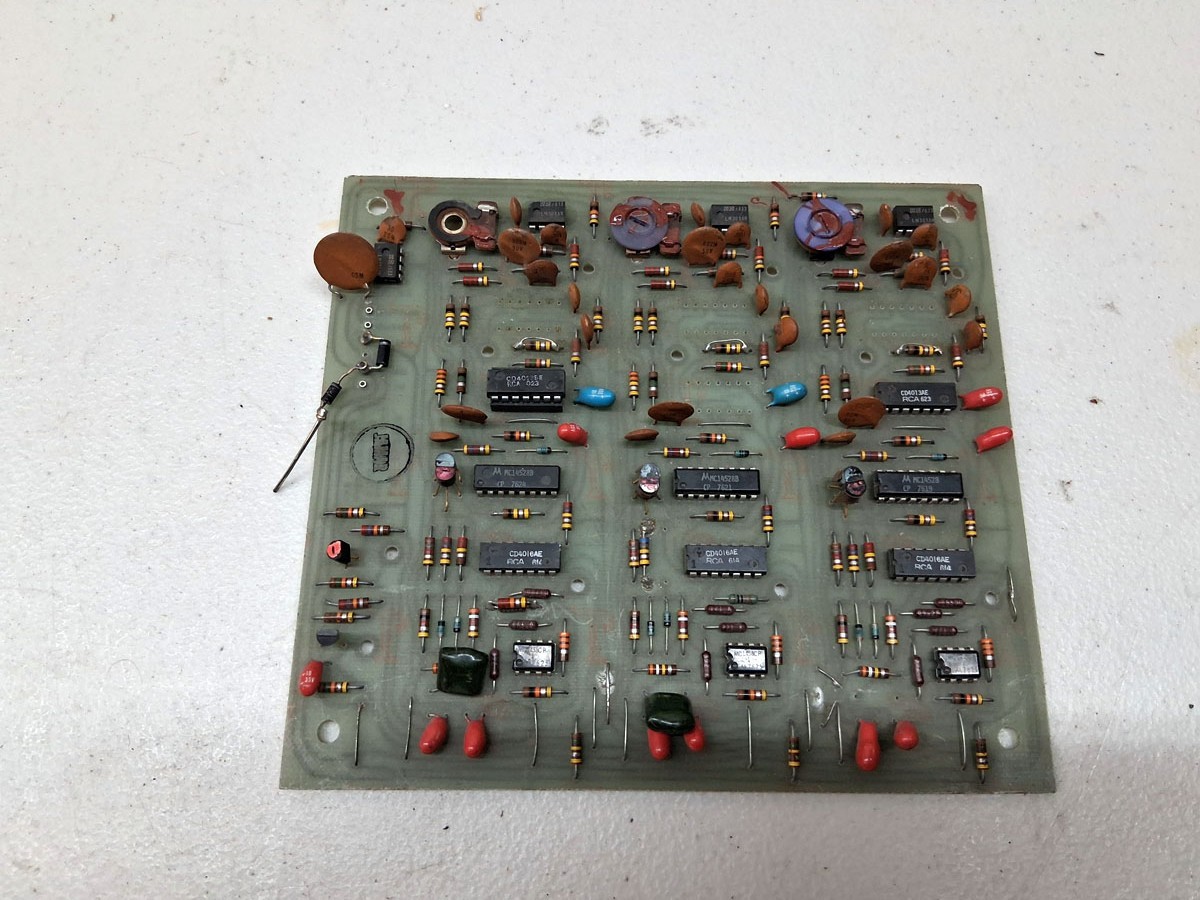
As an eBay Partner, we earn from qualifying purchases. This helps support our independent vintage technology research.