ARP Omni (1975–1977)
That lush, shimmering string pad behind “Moving in Stereo” or “Age of Consent”? Chances are, it wasn’t an orchestra—it was this box, half-dead on a repair bench somewhere, waiting to sing again.
Overview
Turn it on, and the ARP Omni doesn’t so much boot up as exhale—a warm, chorused swell of strings that feels like stepping into a recording studio in 1977, when polyphony was still magic and synthesizers weren’t supposed to play chords. The Omni wasn’t the first string machine, but it was ARP’s first real shot at cracking the divide-down code, and it arrived with a quiet confidence: no patch cables, no modules, just a keyboard that promised an orchestra in a road case. It delivered—not perfectly, not cleanly, but with a character so distinct it became the backbone of new wave, art rock, and studio pop before most players even knew its name.
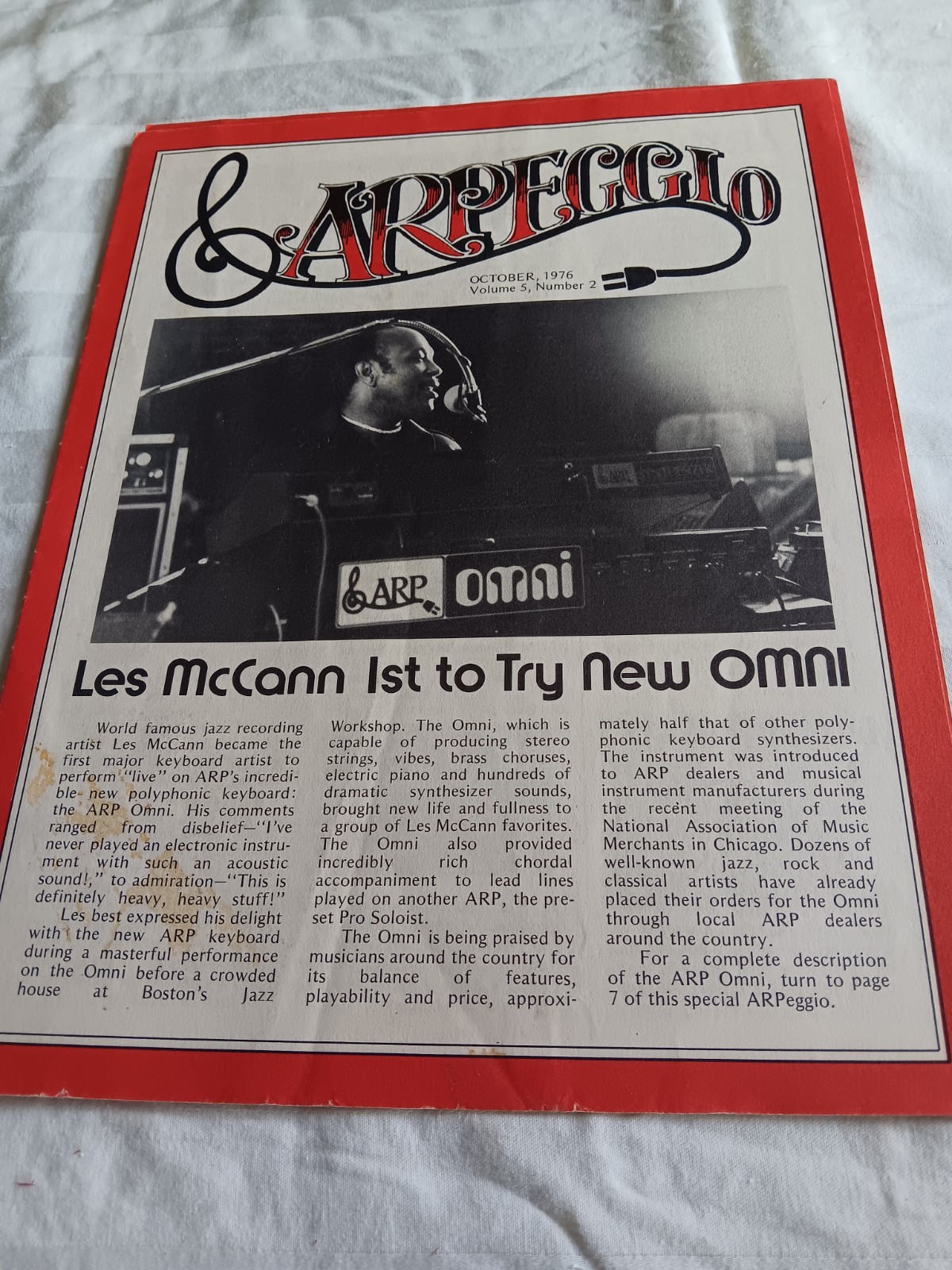
The Omni splits itself into three worlds: the top-octave divide-down string section (polyphonic, chorused, and unapologetically artificial), a monophonic synthesizer section with filter, envelope, and oscillator controls, and a dedicated bass voice that growls with a simplicity bordering on rudeness. It’s not a full synth in the Odyssey sense—there’s no oscillator sync, no noise source, no LFO modulation routing—but it doesn’t pretend to be. Instead, it’s a hybrid, a compromise born from a time when full polyphony meant $10,000 and a truck. At $2,250, the Omni was expensive for a preset machine, but it was a bargain compared to a Polymoog. And unlike ARP’s earlier String Ensemble (which was actually a rebadged Eminent 310), the Omni was all ARP—designed in-house, built in Massachusetts, and wrapped in a sleek, wood-paneled chassis that looked like it belonged on a prog rock stage.
What makes the Omni special isn’t its specs—it’s the way it sounds when the chorus is cranked and the strings swell under a minor chord, or how the bass section can lock in with a drum machine and refuse to let go. It’s the machine that defined The Cars’ icy textures, Prince’s early funk sketches, and Joy Division’s cavernous atmospheres. It’s not subtle. It doesn’t do nuance. But it does mood, and it does it better than almost anything else from its era.
Specifications
| Manufacturer | ARP Instruments, Inc. |
| Production Years | 1975–1977 |
| Original Price | $2,250 |
| Polyphony | Full polyphony (strings/synth section), monophonic (bass) |
| Oscillators | Top-octave divide-down (strings), 1 VCO (synth section), 1 VCO (bass) |
| Waveforms | Violin, Viola (strings); Sawtooth, Square (synth and bass) |
| Filter Type | 24dB/oct Low Pass Filter (synth and bass sections) |
| Envelope Generator | ADSR (synth section), ADR (bass section) |
| Chorus/Phaser | Built-in Chorus Phaser (strings and synth) |
| Keyboard | 49 keys, non-weighted, split capable |
| Split Function | Yes, allows string/synth or string/bass split |
| Outputs | Stereo 1/4" jacks, XLR outputs |
| Inputs | Foot pedal (sustain, decay control), systems interface for ARP gear |
| MIDI | No |
| Power | 115V AC, 60Hz (with internal power supply) |
| Weight | 33 lbs (15 kg) |
| Dimensions | 37" x 12" x 5" |
| Color Scheme | Wood paneling with silver faceplate (Mk I) |
Key Features
The String Section: Artificial, But Addictive
The Omni’s string engine is built on a top-octave divide-down oscillator—a design borrowed from electronic organs, where a single high-frequency signal is electronically divided to produce all the lower notes. It’s not true analog synthesis, but it’s clever, efficient, and, in the Omni’s case, beautifully colored by ARP’s proprietary Chorus Phaser circuit. This isn’t just a detune effect; it’s a swirling, three-dimensional modulation that gives the strings their signature wobble and depth. Unlike the thinner, more brittle sound of some string machines, the Omni’s strings feel thick, almost viscous, especially when layered with the synth section. The controls are minimal—just volume sliders for Violin and Viola—but the result is deceptively expressive. Play a slow arpeggio with the chorus on, and it feels like you’re underwater, each note trailing a shimmering echo.
Synth and Bass: Monophonic Muscle
While the strings handle the harmony, the synth and bass sections are where the Omni gets serious. The synth voice is a straightforward analog monosynth: one VCO with sawtooth and square waveforms, a 24dB/oct low-pass filter, and a full ADSR envelope. It’s not as aggressive as the Odyssey, but it’s warmer, more rounded—perfect for lead lines that cut without screaming. The bass section is even simpler: a single oscillator, a fixed 2-pole filter, and an ADR envelope with a staccato switch that kills the decay for tight, punchy notes. It’s the kind of bass that doesn’t need effects—just hit a root note and let it growl. When layered under the strings, it creates a full, orchestral bottom end that few machines of its time could match.
Split Keyboard and Integration
One of the Omni’s most practical features is its split capability. The keyboard can be divided so that the left hand plays strings while the right plays synth or bass—ideal for one-man arrangements or live performance. There’s no programmable split point; it’s fixed, but it’s placed logically around middle C. The systems interface on the back allows connection to other ARP gear like the 2600 or Axxe, letting the Omni act as a controller or sound source in a larger setup. It’s not MIDI, but in 1976, it was forward-thinking.
Historical Context
The Omni arrived at a moment when synthesizers were still exotic, expensive, and mostly monophonic. Bands wanted lush textures—strings, brass, choirs—but hiring session players was costly, and organs couldn’t deliver the same emotional weight. The solution? Divide-down technology, which allowed full polyphony without the complexity of individual oscillators per voice. Eminent had done it first with the Solina, and ARP had distributed their String Ensemble in the U.S. But by 1975, ARP was ready to make their own version—one that didn’t just mimic strings but integrated them with a real synth voice. The Omni was that answer: a self-contained symphonic keyboard that could do strings, leads, and bass without a patch cord in sight.
It wasn’t alone. Competitors like the Polymoog and the Yamaha CS-80 offered true polyphonic synthesis, but at triple the price and twice the weight. The Omni carved its niche as the “affordable” polyphonic synth—still pricey, but within reach of serious studio musicians and touring acts. Its timing was perfect: just as new wave and synth-pop were emerging, the Omni offered a sound that was both futuristic and nostalgic, artificial yet emotionally resonant. It wasn’t long before it appeared on records by The Cars, Joy Division, Prince, and Foreigner—often uncredited, but unmistakable once you’ve heard it.
Collectibility & Value
Today, a working ARP Omni is rare—genuinely rare. Most units found on the market are non-functional, and for good reason: the power supply and tantalum capacitors are notorious failure points. Owners report that nearly every Omni, regardless of condition, needs a full recap, especially on the power board and in the AR (Audio Research) capacitor arrays. These old tantalums can leak, short, or even smoke when powered after decades of dormancy. Service technicians observe that restoration isn’t optional—it’s mandatory. A proper rebuild can cost $400–$600, depending on parts and labor, and it’s not a job for beginners. The circuitry is dense, and the power supply runs high voltages.
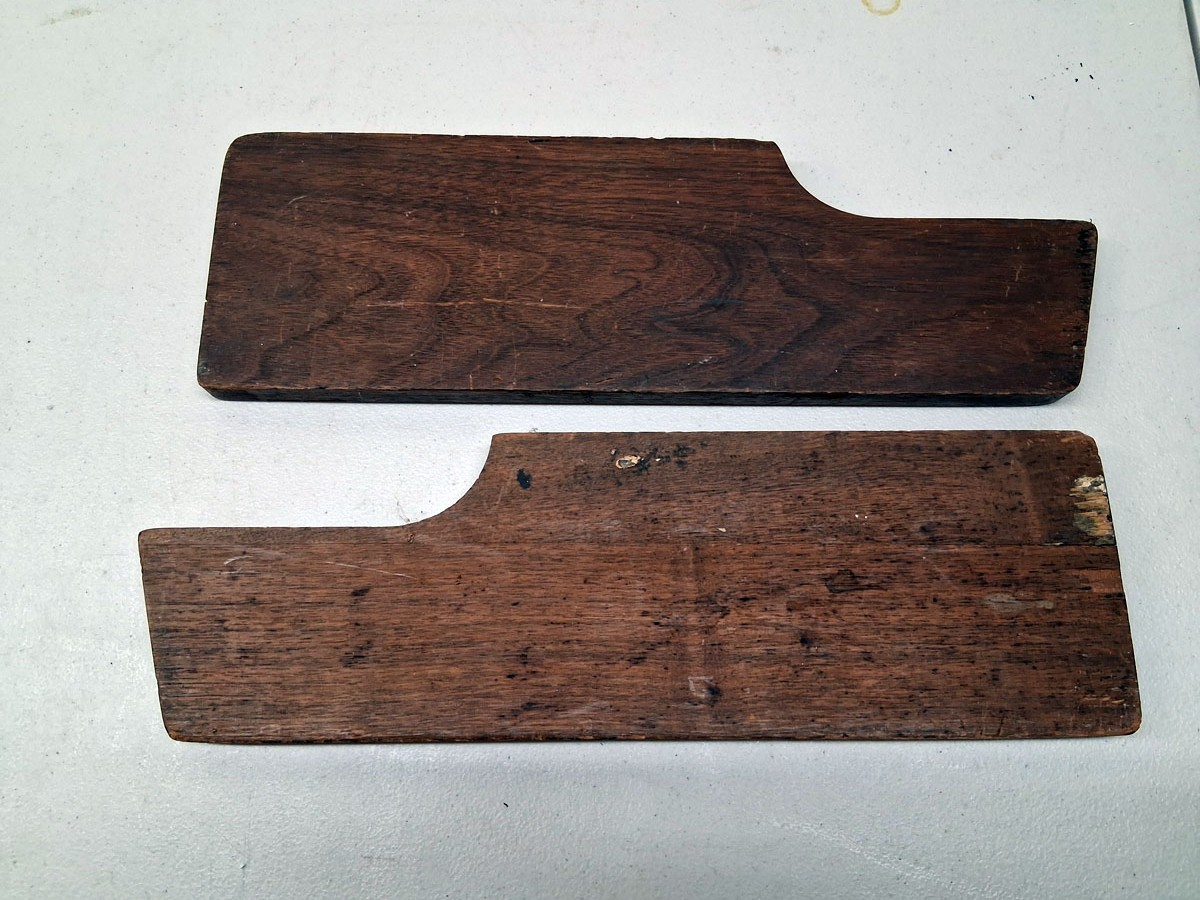
That said, a fully restored Omni is a prized possession. In excellent condition, with clean sliders, working chorus, and stable tuning, it can fetch $2,500–$3,500. Units with original documentation, demo records, or factory service tags command premiums. Cosmetic condition matters—chipped wood veneer or faded faceplate text can knock $500 off the value. Be wary of “tested working” claims on eBay; without a recent service history, assume it’s on borrowed time. Always ask for a video of the unit powering up and playing through all sections. If the strings sound thin or the bass cuts out, it’s likely still suffering from capacitor issues.
The Mk I (1975–1977) is the original model, with wood panels and a silver faceplate. It’s slightly rarer than the Omni-2, which followed in 1977 with an all-steel chassis, orange-and-black styling, and an improved chorus circuit. While the Omni-2 is more robust mechanically, many purists prefer the Mk I’s warmer, slightly looser sound. Neither is objectively better—they’re siblings with different personalities.
eBay Listings


As an eBay Partner, we earn from qualifying purchases. This helps support our independent vintage technology research.
Service Manuals & Schematics
- Service Manual — archive.org
- Service Manual — archive.org
- Service Manual — archive.org
- Service Manual — archive.org
- Service Manual — archive.org