ARP 3620 (1974–1980)
The keyboard that finally gave the 2600 a voice worth doubling
Overview
Plug in the ARP 3620 and you’re not just connecting a controller—you’re unlocking the full personality of the 2600. Before this keyboard arrived in 1974, the 2600 was a sonic powerhouse trapped in monophonic purgatory, its three oscillators and rich filter screaming for more expressive control. The 3620 didn’t just add keys—it added dimension. Suddenly, you could latch chords, layer two notes with independent pitch control, and modulate them with an onboard LFO that didn’t eat up precious patch points. It was the first ARP keyboard that felt like it was designed *with* the synth, not just bolted on after the fact.
Compared to its predecessors—the skeletal 3601 and the slightly more refined 3604—the 3620 was a revelation. It wasn’t just duophonic; it was *smart* duophonic. The interval latch let you hold one note while playing melodies over it, and the repeat mode gave you a built-in arpeggiator before the word was even in the synth lexicon. The dedicated LFO wasn’t just tacked on—it fed directly into the pitch path with delayed vibrato, so your bends bloomed naturally instead of slamming in at full intensity. And the pitch-bend knob? It had a dead zone in the center, so you weren’t accidentally warping your tuning every time you rested your hand. These weren’t gimmicks—they were solutions to real playing problems.
Positioned as the premium controller for the 2600P v4.0 and all subsequent models, the 3620 sat at the top of ARP’s keyboard hierarchy. It wasn’t the cheapest, and it wasn’t the most portable, but it was the only one that turned the 2600 into something approaching a performance instrument. Where the 3604 felt like an afterthought, the 3620 felt like a partner. It didn’t just send CV and gate—it shaped how you interacted with the synth, encouraging layering, modulation, and live expression. For players who wanted to move beyond single-note lines, this was the missing link.
Specifications
| Manufacturer | ARP Instruments |
| Production Years | 1974–1980 |
| Keyboard Type | Remote duophonic keyboard |
| Keys | 49 |
| Velocity Sensitivity | No |
| Aftertouch | No (original), Yes (Korg reissue) |
| Polyphony | Duophonic (2-note) |
| Oscillators | None (controller only) |
| LFO | 1, with triangle, square, and random waveforms; delayed vibrato |
| Modulation Sources | Pitch bend, LFO, footswitch control |
| Control Outputs | Two CV outputs (KBD CV-1 and KBD CV-2), Gate, Trigger |
| Features | Interval latch, repeat mode, transpose, single/multi-trigger switch, pitch bend with center detent |
| Footswitch Inputs | 2 (portamento, latch) |
| Power Requirements | Powered via main 2600 unit |
| Dimensions | 914 x 274 x 158 mm / 36.0 x 10.8 x 6.2 inches |
| Weight | 11.3 kg / 24.91 lbs |
| Compatibility | ARP 2600P v4.0, ARP 2601 v1.0–v3.0 |
| Color | Gray faceplate (1974–1976), Orange-over-black (1977–1980) |
Key Features
Duophony Done Right
The 3620 didn’t just allow two notes—it managed them intelligently. CV-1 tracked the lowest note played, CV-2 the highest, and both stayed locked until all keys were released. This wasn’t just for chords; it meant you could set up one oscillator on the 2600 to follow CV-1 and another to follow CV-2, then play intervals that stayed perfectly tuned. The interval latch took it further: hold a note, press the latch button, release the key, and that pitch stayed active while you played melodies over it. It wasn’t polyphony, but it was expressive in a way that felt musical, not mechanical. This wasn’t a feature for showing off—it was a compositional tool.
Onboard LFO with Purpose
Most vintage keyboards either lacked an LFO or offered one that felt like an afterthought. The 3620’s LFO was different—it was built for performance. With triangle, square, and random waveforms, it could deliver smooth vibrato or jagged tremolo, and the delayed vibrato function meant your notes started clean before the modulation crept in. You could route it via the pitch-bend knob or assign it to a footswitch, so you weren’t stuck with constant wobble. And because it was hardwired into the pitch path, it didn’t eat up a modulation bus on the 2600 itself—leaving those precious inputs free for external control.
Repeat Mode: The Accidental Arpeggiator
Flick the repeat switch and the 3620 started retriggering held notes at a rate controlled by the LFO. No external clock, no patching—just instant rhythmic pulsing. It wasn’t a full arpeggiator, but in the right patch, it could generate hypnotic sequences that felt alive. Combined with the interval latch, you could hold a bass note and have a high oscillator pulsing above it, creating motion without touching a sequencer. It was the kind of feature that felt like a happy accident—until you realized how often you reached for it.
Historical Context
The 3620 arrived at a turning point for ARP. The 2600 had already proven itself as a studio workhorse, but its original keyboards were anemic—barebones controllers that treated the synth like a lab instrument, not a performance tool. In 1973, Tom Oberheim had already hacked the 3604 into a duophonic beast, proving there was demand for more expressive control. ARP responded not with a new synth, but with a smarter keyboard. The 3620 was their answer: a dedicated duophonic brain that elevated the entire 2600 platform.
It launched with the 2600P v4.0, just before the legal fallout with Moog forced ARP to ditch the beloved 4012 filter. That timing meant the 3620 became the face of the 2600’s later years—years when the synth’s sound was changing, but its playability was finally catching up. While competitors like Moog stuck with monophonic controllers, and Oberheim was still building discrete voice modules, ARP quietly gave users a way to layer sounds without going full polyphonic. It wasn’t as flashy as a polysynth, but it was more flexible than anyone gave it credit for.
Collectibility & Value
Today, the 3620 is only as valuable as the 2600 it’s paired with—but in the right context, it’s essential. A 2600 without a 3620 feels incomplete, like a car without a steering wheel. On the market, standalone 3620 keyboards in working condition typically sell between $1,800 and $2,800, depending on color scheme and condition. The gray-faced units (1974–1976) command a slight premium for their association with the last of the 4012-filter 2600s, while the orange-over-black models (1977–1980) are more common but still desirable.
Common failures center on the keyboard contacts and internal wiring. The Pratt-Reed keybed, while robust, can develop dead spots if the contacts oxidize or misalign. The gate/CV buss wiring is delicate, and improper repairs—like daisy-chaining resistors instead of grounding each key individually—can cause runaway notes or stuck triggers. The LFO section, especially the delay circuit, is prone to capacitor drift, leading to uneven or non-functional vibrato. A full service by a technician familiar with ARP’s quirks typically runs $400–$600, including recapping and contact cleaning.
When buying, test every key across both CV outputs, check that the interval latch holds cleanly, and verify that the repeat function triggers reliably. The pitch-bend knob should have a smooth sweep with a clear center detent—no wobble. Avoid units with replaced sliders or drilled panels; these often indicate past damage or botched repairs. And remember: the original 3620 has no aftertouch. If a seller claims it does, they’re likely describing the Korg reissue.
eBay Listings
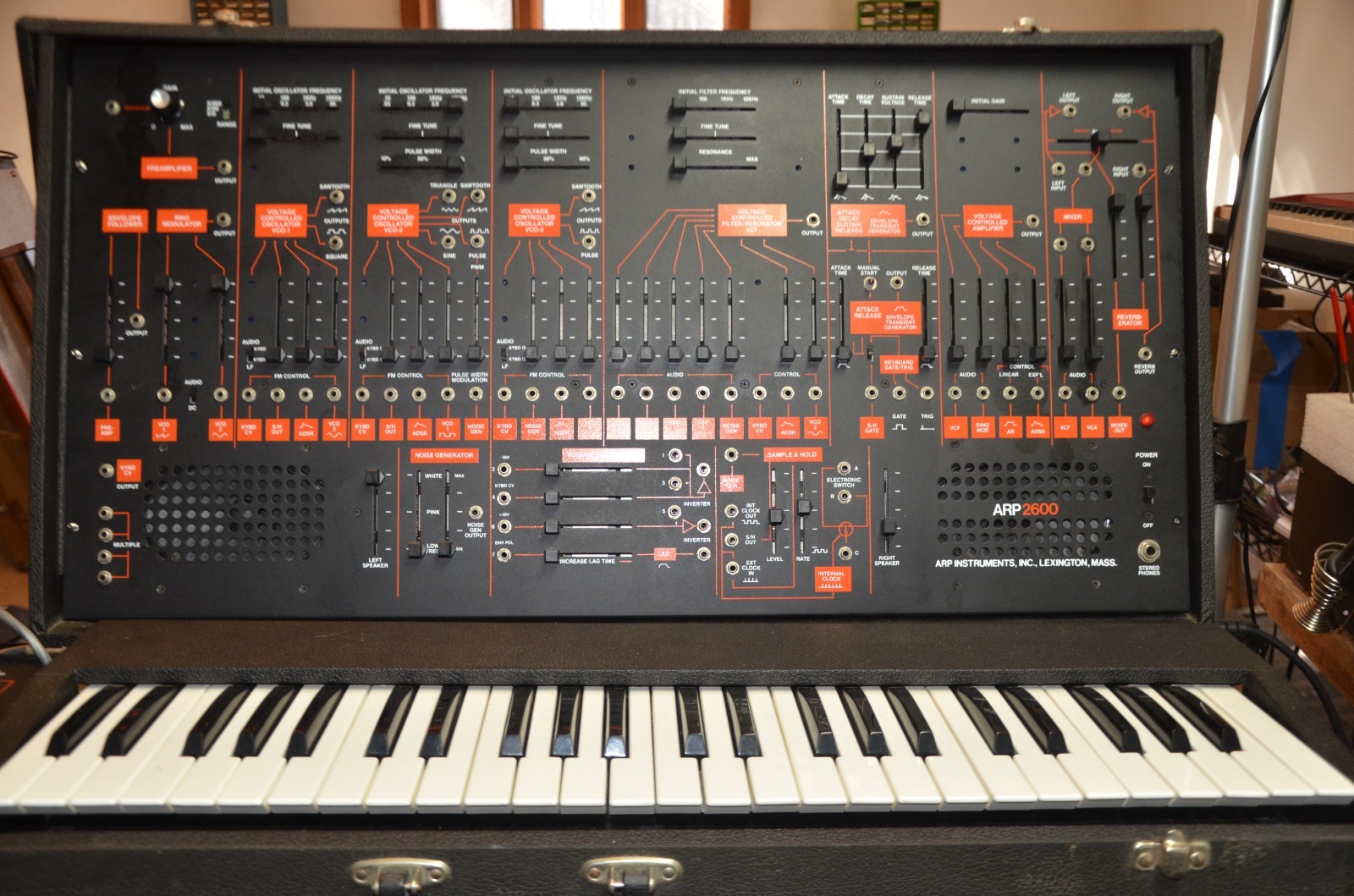
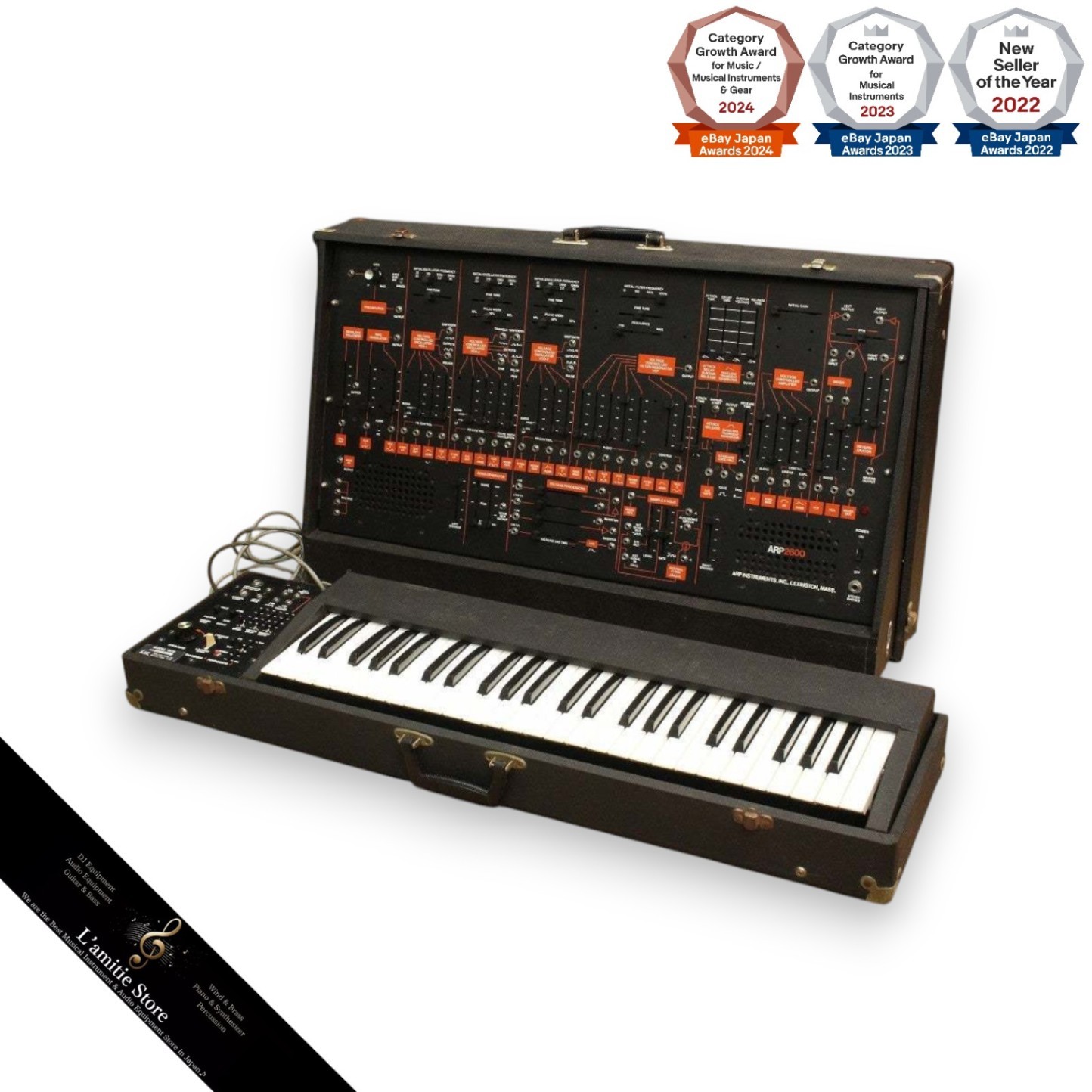

As an eBay Partner, we earn from qualifying purchases. This helps support our independent vintage technology research.
Service Manuals & Schematics
- Service Manual — archive.org
- Service Manual — archive.org
- Owner's Manual — archive.org