ARP Solina String Ensemble (1974–1981)
That shimmering, chorus-drenched string pad that floated through a thousand 70s records? This is where it came from.
Overview
Turn it on, hit a chord, and you’re instantly wrapped in that thick, undulating haze—the kind of sound that made studio engineers smile and session players lean back in their chairs like they’d just remembered a perfect summer afternoon. The ARP Solina String Ensemble doesn’t just make string sounds; it creates atmosphere. It’s not trying to fool anyone into thinking a symphony’s in the room, but it *does* make you feel like one should be. There’s a warmth to it, a slow-motion wobble in the pitch and amplitude that feels alive, almost breathing. It’s the sound of Richard Wright letting chords hang in space during “Shine On You Crazy Diamond,” of Stevie Wonder painting emotional backdrops behind Peter Frampton’s soft-rock confessions, of Parliament tearing the roof off with a solo that sounds like a brass section on hallucinogens. This thing wasn’t just a keyboard—it was a texture machine, a mood generator, the secret sauce in disco, prog, funk, and soft rock for nearly a decade.
And yet, strip away the chorus and you’re left with something surprisingly thin—almost hollow. The individual voices (violin, viola, trumpet, horn, cello, contrabass) aren’t particularly convincing on their own. The oscillators aren’t VCOs; they’re derived from a divide-down organ-style circuit, meaning all notes are generated from a single master frequency source, then electronically divided to create the rest of the keyboard. It’s efficient, reliable, and polyphonic across all 49 keys, but it lacks the dynamic richness of true analog synthesis. What saves it—what *defines* it—is the triple BBD (bucket-brigade device) chorus effect, driven by two LFOs that create a complex, swirling modulation. That’s the magic. That’s why people still hunt for these. The chorus doesn’t just add movement; it thickens, blurs, and humanizes the sound, turning simple waveforms into something that feels orchestral, even if it’s technically synthetic.
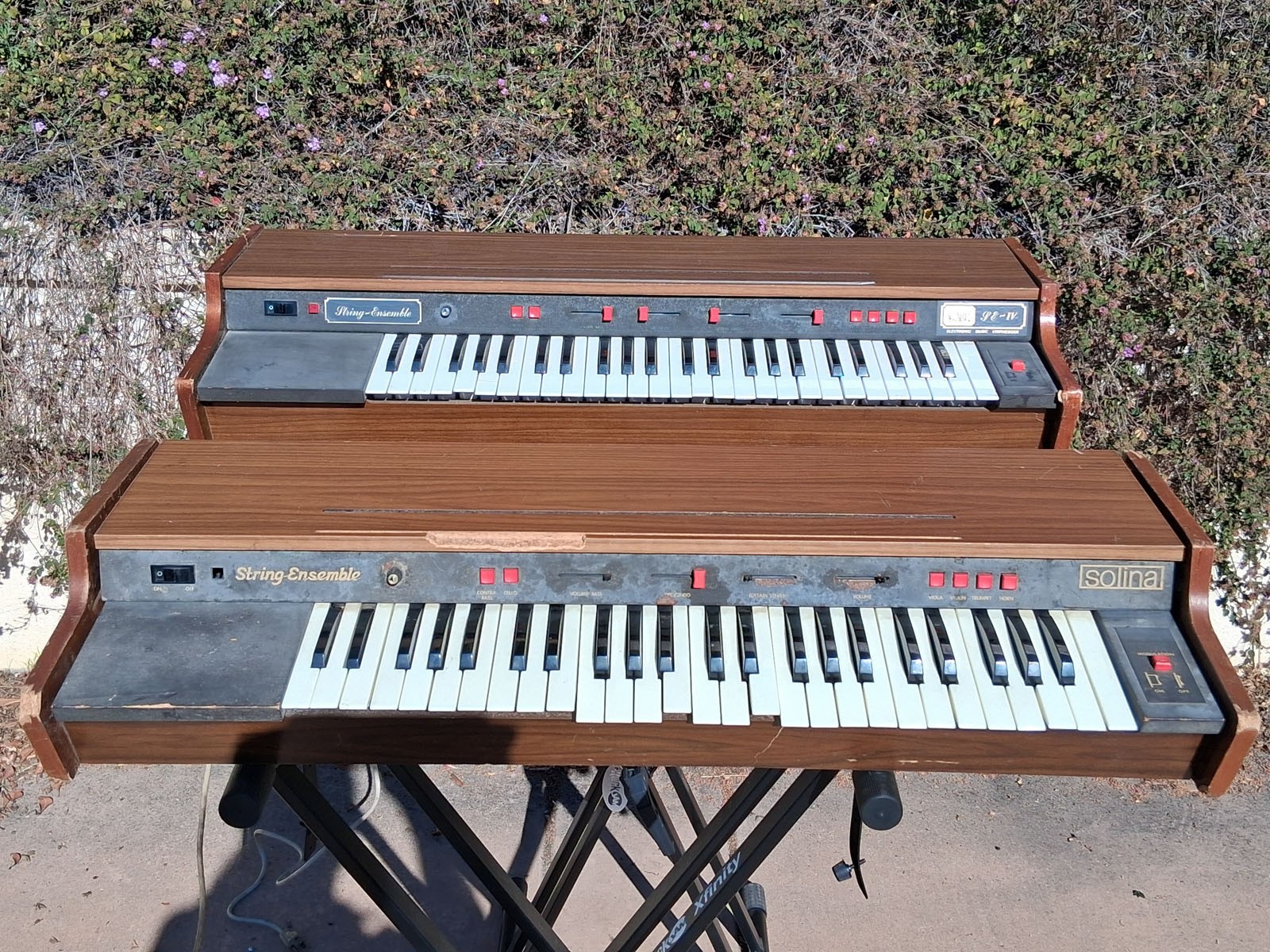
Originally built by Dutch organ manufacturer Eminent BV as the Solina String Ensemble, it was rebadged and distributed in the U.S. by ARP Instruments—the same company behind the Odyssey and 2600—from 1974 to 1981. ARP didn’t design it, but they recognized its potential and gave it credibility in the American market. Over its production run, four versions emerged: the SE-I with mono output and fixed chorus, the SE-II adding a chorus on/off switch, the SE-III upgrading to stereo outputs with a redesigned chorus, and the SE-IV (the most sought-after) featuring stereo outs and front-panel LEDs to show which voices are active. It wasn’t a synthesizer in the traditional sense—no filters, no envelopes you could shape, no real modulation routing—but it didn’t need to be. It was a specialized instrument, built for one job: lush, enveloping ensemble textures. And in that role, it was unmatched.
Specifications
| Manufacturer | ARP Instruments (U.S. distributor), Eminent BV (designer/manufacturer) |
| Production Years | 1974–1981 |
| Original Price | $1,995 (1975 USD) |
| Keyboard | 49 keys, polyphonic |
| Polyphony | Full (49-note) |
| Timbrality | 6 preset voices: Violin, Viola, Trumpet, Horn, Cello, Contrabass |
| Oscillator Type | Sub-octave divider network (digital/analog hybrid) |
| Synthesis Type | Analog subtractive (no filter) |
| LFOs | 2 (driving triple BBD chorus) |
| Effects | Built-in triple bucket-brigade device (BBD) chorus |
| Filter | None |
| Attenuator | AR (Attack-Release) envelope for crescendo effect |
| Controls | Individual on/off switches for each voice, volume, crescendo, sustain, tuning |
| Outputs | Mono (SE-I, SE-II), Stereo (SE-III, SE-IV) |
| Inputs | None (no external audio processing) |
| External Control | Gate output only (no CV/Gate input) |
| Memory | None (no patch storage) |
| Weight | 40+ lbs (wood cabinet model) |
| Dimensions | Approx. 36" x 14" x 6" |
Key Features
The Chorus That Changed Everything
The heart of the Solina’s identity isn’t in its voices—it’s in its modulation. The triple BBD chorus, powered by two low-frequency oscillators, is what transforms the machine from a simple preset keyboard into a sonic event. Unlike a standard chorus that just duplicates and modulates a signal, this one uses multiple delay lines with slightly different timing and depth, creating a rich, three-dimensional shimmer. It’s not subtle. It’s not clean. It’s wobbly, slightly detuned, and gloriously imperfect—exactly what gives it that human, almost organic feel. You can’t turn it off on the earliest models (SE-I), which tells you how central it was to the design. Later versions added a defeat switch, but most players leave it on. Why would you want to hear the Solina without its soul?
Divide-Down Polyphony Done Right
Before polyphonic synths like the Prophet-5, most keyboardists had to choose between monophonic leads or preset organs and string machines. The Solina used divide-down technology—common in organs—to achieve full 49-note polyphony without the cost or complexity of individual oscillators per voice. It’s not as flexible as true polyphony, but it’s rock-solid and never drops notes. This made it ideal for sustained chords and layered textures, especially in live settings where reliability mattered. The trade-off? No individual note shaping, no filter sweeps, no real dynamics beyond the built-in crescendo control. But again, that wasn’t the point. The Solina wasn’t meant to be tweaked—it was meant to be played, and to sound huge from the first keystroke.
Layering as Composition
With six distinct voices—three string, three brass—players could mix and match to create custom ensemble patches. Stack violin, viola, and cello for a full string section. Add trumpet and horn for a brassy punch. Use just contrabass for a deep, pulsing foundation. The cello and contrabass are monophonic, which means they only play one note at a time in the lower register, but that actually works in the Solina’s favor—bass lines stay clean and defined under the polyphonic wash above. The lack of a dedicated keyboard split means you can’t play bass and strings independently, but in practice, most users treated it as a pad instrument with optional bass reinforcement. The real art was in choosing combinations that sat well in a mix—something players like Herbie Hancock and Bernie Worrell mastered on the fly.
Historical Context
The mid-70s were a golden age for electronic textures in popular music. Synths were no longer novelties; they were tools. But true polyphonic analog synths were still rare and expensive. The Solina filled a gap: it gave keyboardists an affordable way to add orchestral color without hiring session musicians or relying on Mellotrons (which were bulky, unreliable, and sample-limited). It arrived at the perfect moment—just as prog rock was peaking, disco was exploding, and funk bands were embracing electronic instrumentation. Artists who wanted lush backgrounds but didn’t need full orchestration found a best friend in the Solina.
Its closest competitors were the Yamaha SS-30 and the Roland RS-202, but neither had the same depth of chorus or the same cultural footprint. The Solina was heard everywhere: Elton John’s “Someone Saved My Life Tonight,” the Rolling Stones’ “Fool to Cry,” KC & the Sunshine Band’s “Please Don’t Go,” and the Buggles’ “Video Killed the Radio Star” all feature its signature sound. It wasn’t just a studio tool—bands like Rainbow and Birth Control used it live, where its reliability and immediate sound made it a stage favorite. Even as true synths advanced, the Solina remained relevant because it did one thing so well that no one bothered to improve on it—at least not until decades later.
Collectibility & Value
Today, a working ARP Solina String Ensemble in good condition will set you back $2,500 to $4,500, with SE-IV models commanding the highest prices—especially if they have the modulation defeat switch and stereo outputs. Cosmetic condition matters less than function, but the heavy wood cabinets often suffer from chipped edges, warped panels, and failing key contacts. The real danger lies in the electronics: the BBD chips that create the chorus are prone to failure, and replacement parts are scarce. Recapping the power supply is almost mandatory on units that haven’t been serviced in 20+ years. Many units also suffer from failing sliders and brittle internal wiring. There’s no user-serviceable memory or firmware—just analog circuits that degrade over time.
Before buying, test every voice, check for even key response, and listen for chorus artifacts like static, dropouts, or uneven modulation. The stereo models should output a balanced signal from both left and right jacks. If the chorus sounds thin or broken, assume a costly repair is needed. Some technicians specialize in Solina restorations, but labor can run $500–$1,000 depending on the board revisions and chip availability. Despite the risks, demand remains strong—especially among producers chasing authentic 70s textures. It’s not a beginner’s synth, but for those who know what it’s for, it’s worth the hunt.
eBay Listings
As an eBay Partner, we earn from qualifying purchases. This helps support our independent vintage technology research.