ADDAC 301C (2014)
A minimalist, no-power way to switch CV or audio paths with your foot. Think of a stompbox for your modular that makes no noise at all.
Overview
The ADDAC 301C has two passive switches, and each one is triggered by a standard sustain pedal. You can toggle any CV or audio signal on or off without touching a module. It needs no power and adds no signal degradation. It is purely mechanical switching, which is handy when both hands are busy twisting knobs and you want to flip a gate or mute a sequence.
The 301C is part of ADDAC's 300 Series of expressive control modules, introduced in early 2014. It sits at the quiet end of the series: no LEDs, no voltage generation, no offset adjustments. Its sibling, the ADDAC301 Floor Control, brings expression pedals and gate outputs into the system with active circuitry. The 301C does none of that. Plug in a standard piano-style sustain pedal, patch your signal through the jacks, and stomp. It doesn't color your sound, doesn't need calibration, and doesn't draw current.
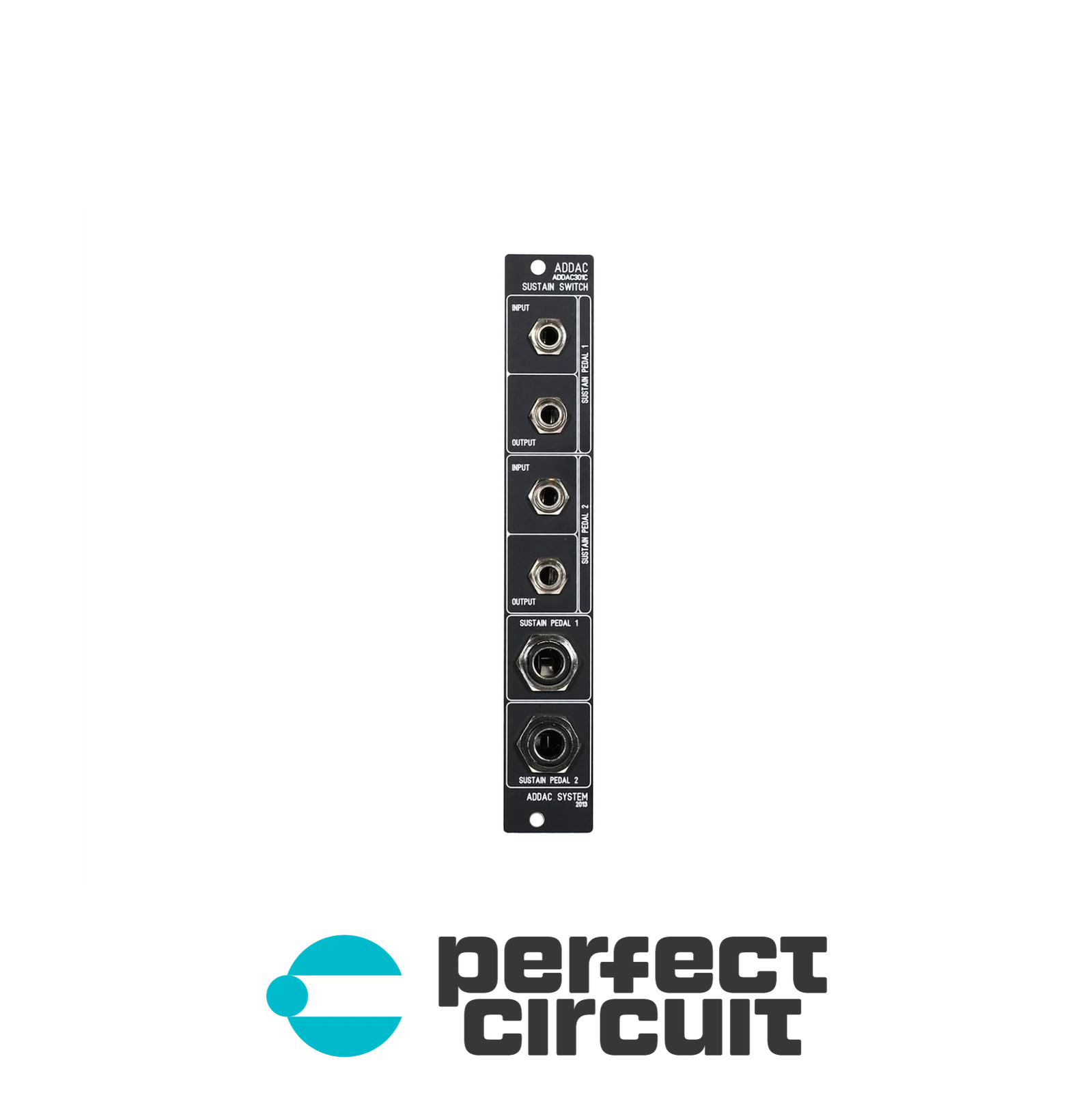
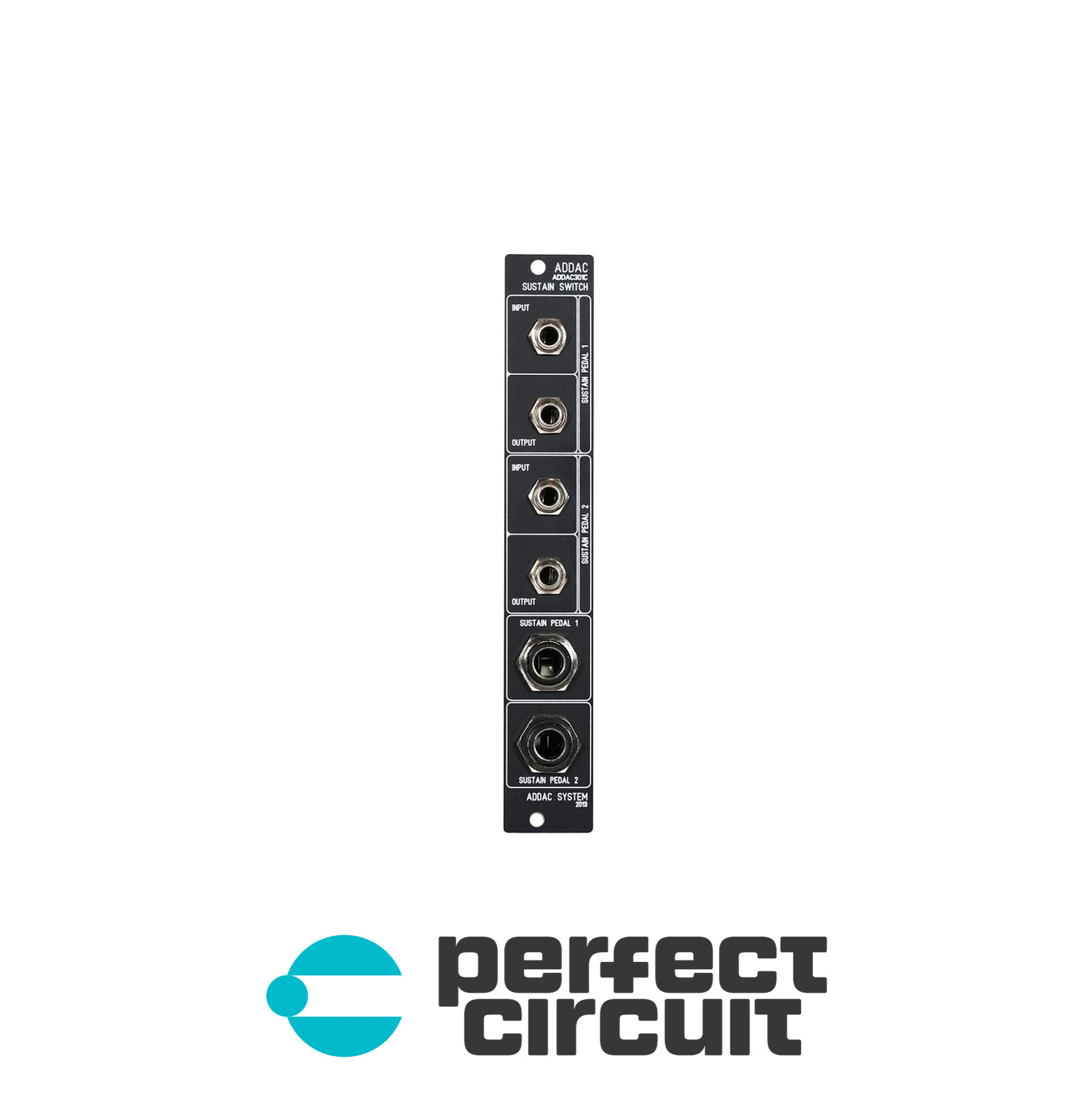
The module is 4 HP wide and only 3 cm deep, so it fits even a tight skiff or travel case. The build is typical ADDAC: clean and functional, with recessed jacks to avoid cable strain and a sturdy aluminum faceplate. There are no knobs or switches on the front. You get four 3.5mm jacks (two input, two output) and a tiny label marking the dual channels.
Specifications
| Manufacturer | ADDAC System |
| Production Years | 2014 |
| Original Price | 60.00 € |
| Width | 4 HP |
| Depth | 3 cm |
| Max Current | Passive Module (0 mA) |
| Bus Board Cable | Not Applicable (Passive) |
| Inputs | 2x 3.5mm (Signal In A, Signal In B) |
| Outputs | 2x 3.5mm (Signal Out A, Signal Out B) |
| Pedal Inputs | 2x 6.3mm TS (Sustain Pedal A, Sustain Pedal B) |
| Function | Dual Passive Sustain Pedal Switcher |
| Power Requirements | None |
| Weight | Approx. 100 g |
| Panel Color Options | Black (standard) |
| Mounting Hole Spacing | Standard Eurorack |
| Signal Path | Passive, Non-Amplified |
Key Features
Passive Switching, Zero Noise
The 301C can't add noise, because it has no powered circuitry. There's no hum, no crosstalk, no voltage sag. A delicate LFO or a quiet audio signal comes out exactly as it went in, just switchable by foot. That suits live performance, where reliability and silence matter. Active switching modules might introduce slight latency or need calibration. The 301C is set-and-forget: patch it, plug in a pedal, and leave it.
Dual Independent Channels
The two signal paths are completely isolated. You can mute a sequence while latching a drone, or switch between two filter CV sources mid-phrase. Each channel has its own 6.3mm sustain pedal input, so you can use two pedals for independent control, or daisy-chain a single pedal to toggle both channels at once (if your pedal supports dual switching). The jacks are paired - Input A to Output A, Input B to Output B - so routing is easy to follow even in low light. There's no normalization, no jumpers and no hidden modes.
Skiff-Friendly and Tour-Ready
At just 3 cm deep, the 301C clears even the shallowest Eurorack cases. It needs no power cable, so it doesn't clutter your bus board or draw current from an already taxed power supply. That makes it a favorite among modular travelers and performers who want reliability without bulk. It also travels easily in a gig bag, since there's no sensitive circuitry inside to damage.
Historical Context
The ADDAC 301C emerged in 2014 as part of a wave of expressive control modules aimed at bridging traditional instrument performance and modular synthesis. At the time, Eurorack was expanding beyond academic and experimental niches into live performance, and players wanted more intuitive, physical ways to interact with their systems. Many manufacturers focused on touch plates, ribbon controllers, or complex MIDI interfaces. ADDAC took a minimalist approach, offering tools that repurposed existing gear, like expression pedals and sustain switches, instead of requiring new learning curves.
The 301C was introduced alongside four other 300 Series modules, including the muscle-sensing ADDAC303 and the power-starving ADDAC300. In a market getting crowded with complex, feature-heavy modules, the 301C did one thing: it let you use your foot the way a guitarist uses a stompbox.
Collectibility & Value
The ADDAC 301C has never been rare, since ADDAC has produced it in steady supply since 2014, but it's never been common either. It tends to get bought, installed, and left in the case. Used units appear infrequently on the secondhand market, usually priced between $80 and $120 depending on condition and region. New old stock, if found, typically sells for around $130, against its original €60 price.
The module is passive and contains nothing beyond switches and jacks, so failure points are minimal. The most common reported issue is worn-out sustain pedal jacks, usually from repeated plugging and unplugging or from pedals with slightly oversized connectors. They can be replaced, but the low profile and recessed jacks mean soldering takes patience and a steady hand. The 3.5mm signal jacks are standard Eurorack size and sturdy, but like all small-format jacks, they can loosen over time with heavy cable use.
For buyers, the main advice is to test both channels with a pedal before purchasing. Some users report that older units may have slightly stiff switches that don’t fully engage unless the pedal is pressed firmly—this isn’t a defect, just a characteristic of the mechanical switch design. If you’re using it for critical live switching, test it with your actual pedal to ensure reliable actuation. Otherwise, the 301C is about as low-risk a modular purchase as you can make: no power concerns, no firmware, no calibration. It either works or it doesn’t—and when it works, it works forever.
eBay Listings
As an eBay Partner, we earn from qualifying purchases. This helps support our independent vintage technology research.