4ms QPLFO (2013–)
A tap-tempo LFO that turns rhythmic pulses into living, morphing modulation—four channels of syncable motion in just 12HP.
Overview
You’re not supposed to play an LFO like an instrument. But the 4ms QPLFO dares you to. The moment you tap its tempo button and watch the LED blink in response, you’re not just setting a rate—you’re jamming with it. This isn’t a traditional low-frequency oscillator with a knob for Hz; it’s a pingable beast, where timing is dictated by the space between triggers. Feed it a clock pulse, tap the button yourself, or let one channel reset another—it’s designed to be interactive, almost conversational. And with four independent channels packed into a mere 12HP, it’s like having a quartet of synchronized modulators ready to breathe life into your patches.
What makes the QPLFO stand out in a sea of LFOs is its core philosophy: modulation that moves with the music, not against it. Instead of fighting to sync a free-running oscillator to your sequencer, the QPLFO locks in naturally. Each channel listens for a “ping”—a rising edge on its input—and then sweeps through its waveform at a speed determined by the time between pings. That means perfect tempo alignment, whether you’re syncing to a DAW, a drum machine, or your own finger on the tap button. The slowest cycles crawl at a glacial 0.0002 Hz (about 71 minutes per cycle), while the fastest can flirt with 500Hz, making it useful even as a crude audio-rate oscillator in a pinch.
But the magic really happens in the skew control. Each channel’s waveform isn’t fixed—it morphs continuously from ramp-down to triangle to ramp-up, with a “plucky” pseudo-exponential fall at the minimum setting. The front-panel knob adjusts the shape manually, or you can modulate it via CV, letting one LFO warp the contour of another. That opens up evolving textures that static waveforms can’t touch. Pair it with a sample-and-hold, and you’ve got a generative engine that feels almost alive. It’s not just modulation—it’s movement with intent.
And despite its digital brain, the QPLFO doesn’t feel clinical. The response is smooth, the transitions organic. It’s the kind of module that makes you rethink how modulation should work—not as a background utility, but as a central player in your patch. Whether you’re nudging filter cutoffs in time, panning sounds around in quadraphonic space, or modulating other modulators for complex rhythmic patterns, the QPLFO turns timing into an expressive parameter. It’s especially potent in smaller systems where space is tight but modulation demand is high. You get four full LFOs, each with CV control over shape and reset, in less space than some dual oscillators. That density, combined with its tap-tempo immediacy, makes it a favorite among touring modular artists and desktop synth tinkerers alike.
Specifications
| Manufacturer | 4ms Company |
| Production Years | 2013– |
| Original Price | $295 (assembled) |
| Format | Eurorack |
| Width | 12HP |
| Depth | 40mm (1.57 inches) |
| Power Consumption +12V | 154mA |
| Power Consumption -12V | 73mA |
| Power +5V | Jumper-selectable (onboard generation or supply) |
| Number of Channels | 4 independent LFOs |
| Frequency Range | 0.0002 Hz to 500 Hz (tracking up to 1kHz) |
| Waveform Types | Adjustable skew: ramp-down, triangle, ramp-up, pseudo-exponential "pluck" |
| Output Range | Switchable per module: 0 to +10V or -5V to +5V |
| Tap Tempo | Yes, with LED feedback |
| Reset Input | Yes, per channel |
| Skew CV Input | Yes, per channel |
| Ping Input | Yes, per channel (accepts any waveshape via comparator) |
| Normalization | Ping inputs can normalize to 4ms QCD via ribbon cable |
| Manual Control | Tap tempo button, On/Mute button (latching), Skew knob |
| LED Indicators | Output level and ping timing per channel |
Key Features
Tap-Tempo That Feels Like Playing
Most LFOs are set-and-forget. You twist a knob, and it runs. The QPLFO flips that script. Its tap-tempo button isn’t just a convenience—it’s a performance interface. Press it repeatedly, and the LFO locks to your rhythm, with the LED flashing in time. It’s free-running, so it keeps going even after you stop tapping, making it ideal for live use. But here’s the twist: when you feed it an external clock, it becomes auto-stopping. The LFO only runs while pulses are coming in. That’s a subtle but powerful distinction. It means you can sync modulation to a sequence that might pause or vary, and the QPLFO won’t keep drifting. It breathes with your music, not against it.
Skew as a Dynamic Parameter
The skew control is where the QPLFO transcends typical LFO behavior. Instead of offering discrete waveforms, it gives you a continuous spectrum. At one end, you get a fast fall and slow rise (ramp-down), great for snappy filter sweeps. At the other, a slow fall and fast rise (ramp-up), ideal for swelling pads. In the middle, a clean triangle. But the real fun starts when you modulate skew with CV. One LFO can smoothly morph another’s shape over time, creating undulating, evolving contours that static waveforms can’t match. And because the full CV range is 10V, you can use one channel’s output to modulate another’s skew—patching LFOs into each other to generate complex, self-modulating rhythms. It’s modulation inception.
Reset for Rhythmic Precision
Each channel has a reset input, and that’s not just for syncing—it’s for creative timing. Feed a reset pulse, and the LFO jumps back to the start of its cycle immediately. That lets you create quadrature outputs (e.g., phase offsets of 90°, 180°, 270°) by resetting channels at different points in the clock cycle. There’s even a jumper that makes the On/Mute button send a reset pulse, so engaging a channel always starts it from the same point. That’s crucial for repeatable patches, especially in performance. And because the ping and reset inputs use comparators, they accept any waveshape—square, sine, random spikes—making the QPLFO forgiving in mixed-signal systems.
Historical Context
When the QPLFO was announced in 2013, Eurorack was growing fast, but many modules still treated modulation as an afterthought. LFOs were often simple, free-running oscillators with basic waveforms and no sync. The QPLFO arrived as part of a wave of intelligent, timing-aware utilities that treated modulation as a first-class citizen. It shared DNA with 4ms’s other sync-savvy modules, like the Quad Clock Distributor (QCD), and was clearly designed to work with them—normalization between the two via ribbon cable made setting up tempo-locked modulation a breeze.
At the time, few LFOs offered tap tempo, and even fewer made it central to their design. The QPLFO didn’t just add tap tempo as a feature—it built the entire module around it. That made it a favorite among musicians coming from DAW-based production, where tempo is king. It also appealed to experimentalists who wanted modulation that could be manually triggered or driven by unpredictable sources. The fact that it was released as a kit (with thorough documentation) also reflected 4ms’s roots in the DIY community. While other companies were selling prebuilt luxury modules, 4ms offered deep functionality at a reasonable price, especially for builders.
The QPLFO landed in a market where space was becoming a premium. Eurorack cases were getting smaller, and desktop systems were on the rise. A quad LFO in 12HP was almost unheard of—most dual LFOs took up 10HP or more. By packing four channels into such a compact footprint, 4ms gave users a way to multiply their modulation sources without multiplying their rack space. That density, combined with its musical immediacy, made it a standout in an era when many modules were becoming more complex but less intuitive.
Collectibility & Value
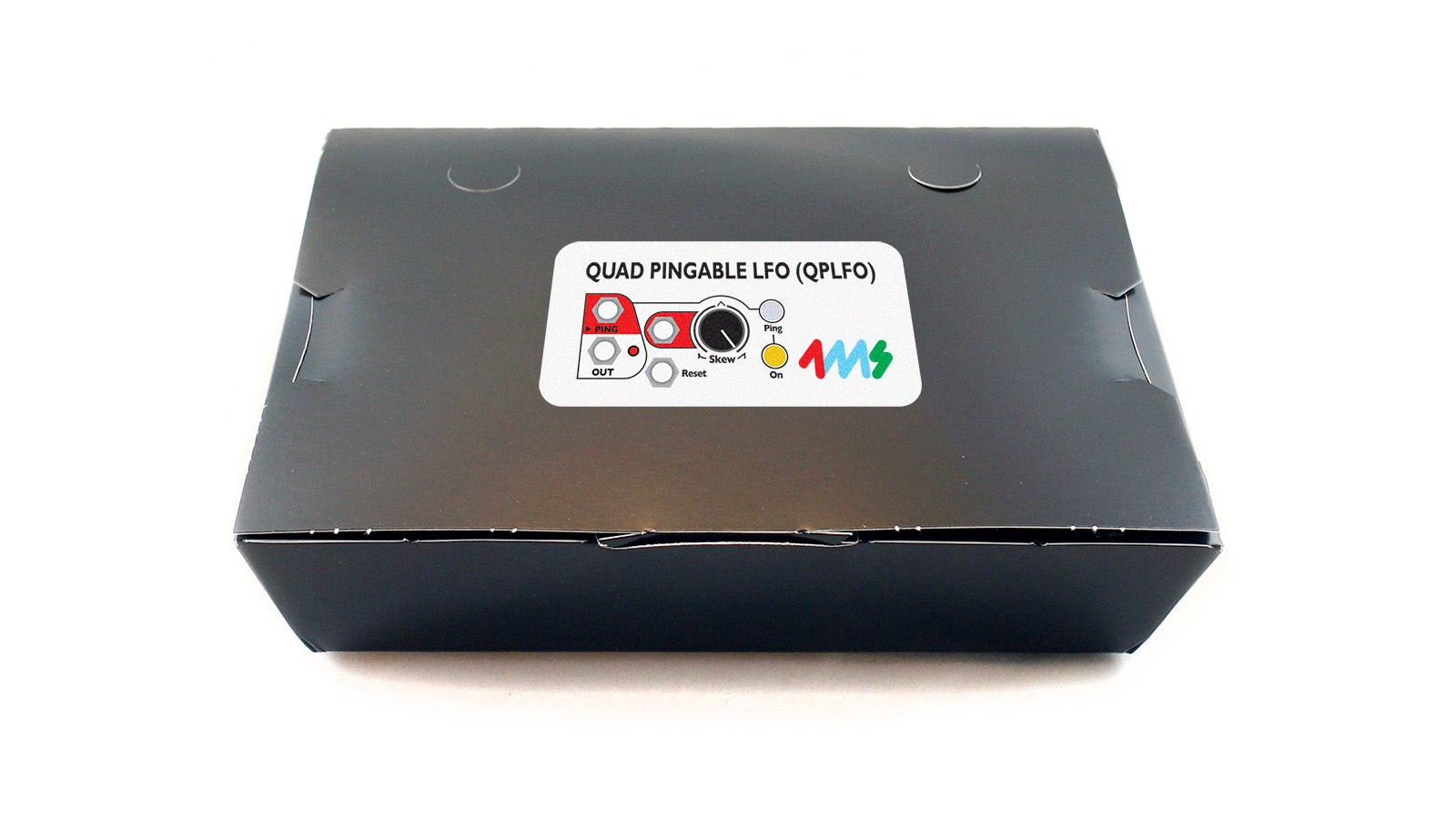
The QPLFO has settled into a stable position in the used market, trading between $225 and $275 depending on condition and whether it’s assembled or a kit. Assembled units in working order with clean faceplates go quickly, especially if they include the original packaging or build documentation. Kit versions sell for less—typically $175 to $225—but buyers should be cautious. While the QPLFO is a through-hole kit aimed at intermediate builders, mistakes in assembly can lead to erratic behavior or power issues. Look for photos of the solder joints and ask if the module was tested before sale.
One known point of failure is the +5V power jumper. The module can either generate +5V onboard from the +12V rail or draw it from the power supply, selected by a solder jumper. If this is set incorrectly, the module may not power up or could draw excessive current. Some users report instability when using onboard generation in crowded cases, so many prefer to use the supply’s +5V if available. It’s not a common failure, but it’s something to verify when buying used.
Another consideration is the tap-tempo button. It’s a mechanical switch, and while generally reliable, heavy use over years could lead to wear. Check that the LED blinks cleanly and that the LFO locks consistently when tapping. Reset and ping inputs should respond to a variety of trigger sources—test with both sharp gates and slower envelopes if possible.
The QPLFO doesn’t depreciate like some boutique modules. It’s too useful, too well-designed. If anything, its value has held steady because it solves a real problem: getting tempo-synced modulation without eating up half your rack. It’s not flashy, but it’s indispensable. For that reason, complete, working units are more sought after than rare or limited editions. If you see one with a scratched faceplate but clean electronics, it’s still a solid buy—cosmetic damage doesn’t affect functionality.
eBay Listings

![4MS BLACK FACEPLATES : NEW : [DETROIT MODULAR]](https://i.ebayimg.com/images/g/JrgAAeSwL05od8DU/s-l1600.jpg)
As an eBay Partner, we earn from qualifying purchases. This helps support our independent vintage technology research.