4ms Pod48 (2022–)
It’s not a synth — but it turns your Eurorack modules into something you can actually take places.
Overview
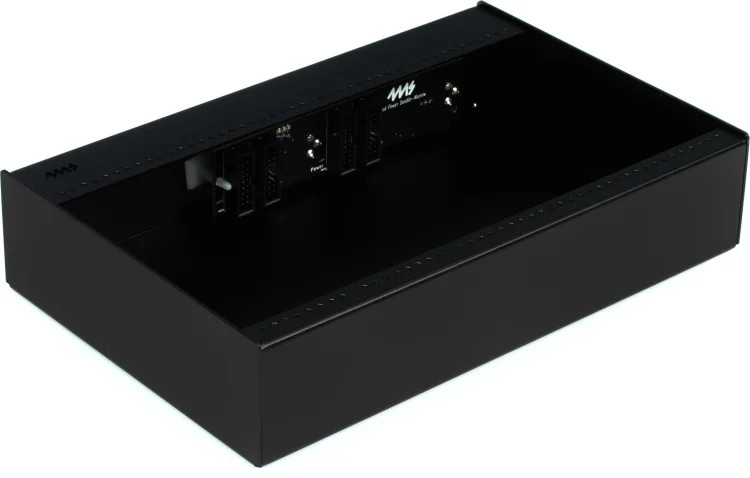
Let’s get one thing straight: the 4ms Pod48 isn’t a sound-making machine. It doesn’t oscillate, filter, or sequence. But if you’ve ever stared at your Eurorack case like it’s a piano bolted to the floor, this little black box is the closest thing to wheels. Introduced in June 2022, the Pod48 is a portable desktop case built for grabbing a few modules and hitting the road — whether that’s a friend’s studio, a coffee shop, or a gig where hauling a full rack feels like bringing a tank to a knife fight.
What it is, fundamentally, is a 48HP Eurorack home. Compact, self-contained, and surprisingly complete out of the box, it includes the 4ms Row Power 40 power supply, a power cable, a US wall wart, and even adhesive rubber feet. The whole thing weighs just 1.2 lbs (0.54 kg), which sounds light until you start stuffing modules in and realize you’re holding a dense little brick of potential. It’s designed to turn Eurorack modules into tabletop instruments — no rack, no rack screws, no power drama (well, mostly).
But here’s the catch: it’s shallow. With only 30mm of internal depth, you’re not fitting any of the chunky, back-wired modules that love to sprawl. And while the four 16-pin power headers are solid, some users have called them “underdimensioned” for a 48HP case — especially if you’re running power-hungry digital modules. Still, for a beginner setup or a curated travel rig, it’s hard to beat the idea: plug in the 45W power brick (sold separately), snap the lid shut, and go.
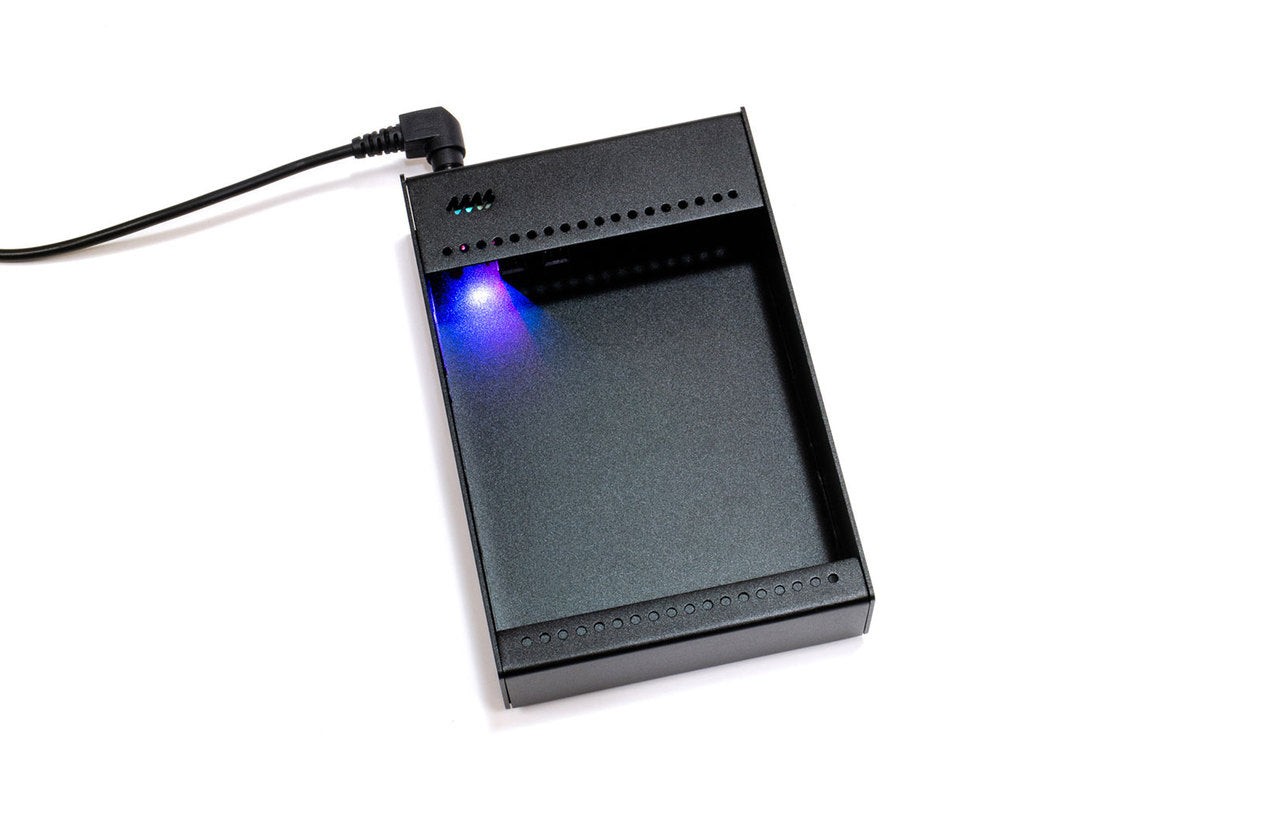
The hinged lid is one of those small, smart touches that makes you go, “Oh, I didn’t know I needed that.” It protects knobs and controls when closed, but flip it open and it props the unit up at a slight angle — a built-in stand. The bus board has status LEDs, the power sockets are screwed in (no wobbly barrel jacks here), and the M3 threaded inserts mean you don’t need nuts or washers to mount modules. It’s not luxurious, but it’s thoughtful.
And yes, it’s made of durable ABS plastic — not aluminium, despite some retailers saying otherwise. That keeps the weight down and the cost lower, but it also means you might spot minor cosmetic imperfections from the molding process. Nothing structural, just the kind of thing you notice if you’re staring too hard at a new purchase. But if you’re the type who wants a battle-scarred road warrior case, this isn’t pretending to be a flight case. It’s a functional, portable pod — and it scales. Daisy-chain it to another Pod using barrel cables, and suddenly you’ve got a modular system that grows with you.
Specifications
| Manufacturer | 4ms Company |
| Width | 48HP |
| Total Usable HP | 48HP |
| Height | 3U |
| Power | 2000mA +12V, 700mA -12V, 1000mA +5V |
| Power Supply | 4ms Row Power 40 (included) |
| Power connectors | Four 16-pin headers |
| Internal/Module Depth | 30mm |
| External Dimensions | 248.3mm (W) x 159.5mm (H) x 53mm (D) |
| Weight | 1.2 lbs (0.54 kg) |
| Screws | M3, 10x Included |
| Mounting | M3 threaded holes, 4 slots for modules |
| Construction Material | Durable ABS plastic |
| Formfactor | Desktop |
| Included Accessories | 4ms Pod48 case, 4ms Row Power 40, 4ms power cable, 4ms wall wart (US plug), adhesive rubber feet |
| Required AC Adapter (not included) | 4ms Power Brick 45W (15V-20VDC, 2.1mm center-positive) |
| Daisy-chaining | Yes, via two power jacks |
| Scalable | Yes |
Key Features
Integrated Power with Room to Grow
The Pod48 ships with the 4ms Row Power 40 already installed — a big win. That means no hunting for a compatible PSU or worrying about noise. It delivers 2000mA on +12V, 700mA on -12V, and a solid 1000mA on +5V, which is plenty for a small analog setup or even a couple of lightweight digital modules. The four 16-pin headers are wired and ready, and the bus board includes status LEDs so you can see at a glance if power is flowing. But here’s the real trick: those two power jacks on the back let you daisy-chain to another Pod. Stack them, link them, build a cluster — it’s one of the few portable cases that doesn’t force you into permanent isolation.
Portable by Design, Not Just Marketing
This isn’t just a case you *could* carry — it’s built to be carried. At under 1.3 pounds and just over 9.8 inches wide, it slips into a backpack like a sketchbook. The hinged lid doubles as a stand, giving you a slight tilt for better knob access. And because the power supply is internal and the sockets are screwed in, there’s no rattle, no loose cables, no “wait, did I forget the adapter?” panic. It’s the kind of thing that makes modular feel less like a furniture project and more like an instrument.
Mounting That Just Works
No nuts, no washers, no fumbling with tiny parts. The Pod48 uses M3 threaded inserts — essentially built-in threads in the frame — so you can screw modules in directly with the ten included M3x8mm stainless steel screws. They’re compatible with M3 Knurlies too, if you’re into those. The 4-slot mounting system keeps things aligned, and because the inserts are strips, you’re not locked into fixed positions. It’s not revolutionary, but it’s one less headache when you’re building a compact setup.
Plastic, Not Metal — And That’s Okay
Let’s address the elephant: it’s ABS plastic, not aluminium. Some retailers list it as metal, but the manufacturer specs say otherwise. And while that might feel like a downgrade, it’s a trade-off for weight and cost. The plastic is thick, durable, and well-molded — not flimsy. It’s just not immune to minor cosmetic flaws from the manufacturing process. If you’re the kind of person who buffs your gear like a car, you might notice a seam or a slight warp. But if you’re using it, not displaying it, it’s more than sufficient.
Collectibility & Value
The Pod48 isn’t a vintage item — it’s been available since June 2022 — but it’s already settled into a stable market price. Retailers have listed it around $155, £148, or ¥29,900, though exact MSRP isn’t confirmed. On the used market, a listing on Reverb showed a price of $150.87, later adjusted to $140, suggesting it holds value reasonably well for a relatively new item. The required 45W power brick is sold separately, so buyers should factor that in.
Common complaints aren’t about failure — there’s no data on technical failures or maintenance — but about design trade-offs. The 30mm depth limits module compatibility. The four power connectors can feel tight for a 48HP case, especially if you’re using modules that need both +5V and -5V. And the internal space, while efficient, can get cramped with larger modules or thick cables. Some users also note that the screw holes go directly into the front panel, which can make placement tricky if you’re trying to fit modules close together.
Still, for someone starting out or building a portable system, the Pod48 is a solid foundation. It’s not trying to be everything — just a simple, scalable, self-contained way to make modular gear actually mobile.
eBay Listings


As an eBay Partner, we earn from qualifying purchases. This helps support our independent vintage technology research.