4ms Pod40X (2022–)
It’s not flashy, but this little aluminum box turns Eurorack into something you can actually use on a desk—without blowing a wad or your power supply.
Overview
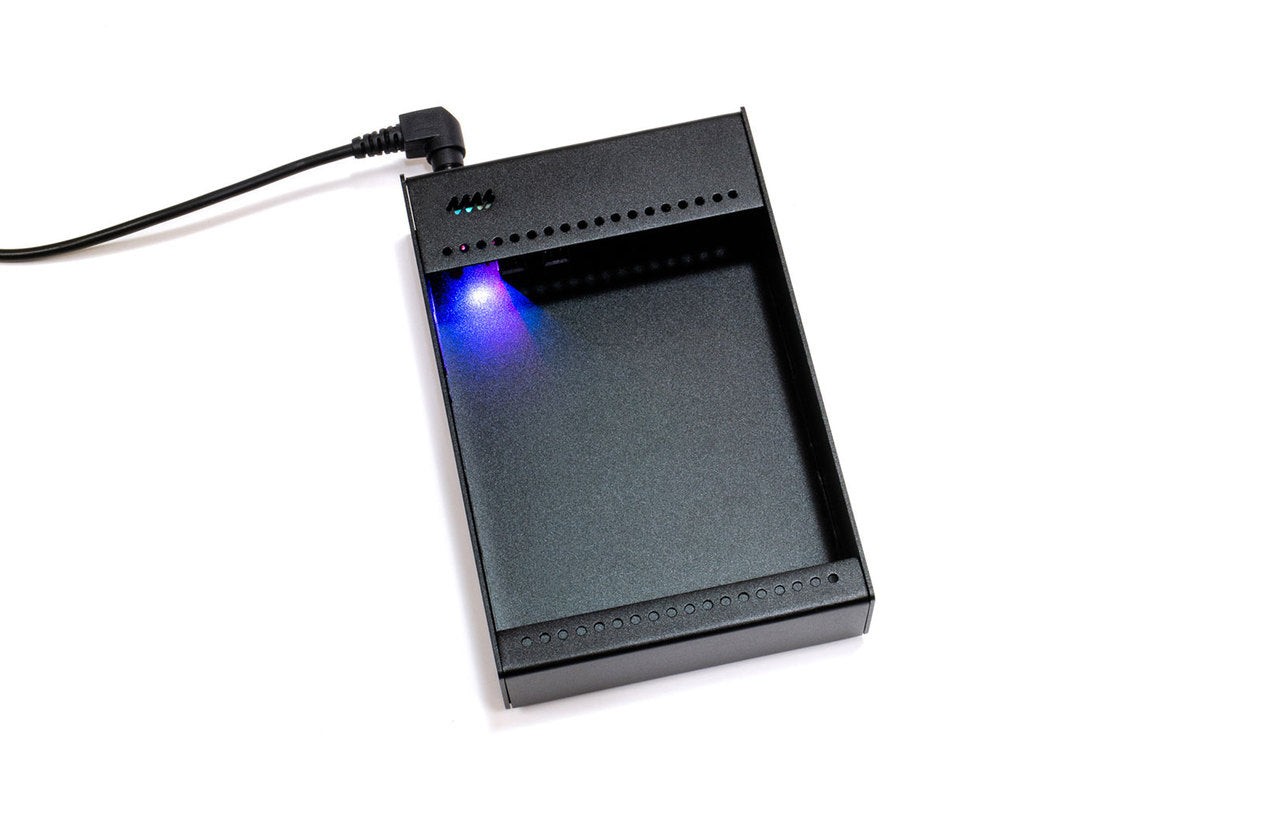
If you’ve ever stared at a half-built Eurorack system scattered across a workbench like a synth autopsy, the 4ms Pod40X feels like the first real step toward making it *playable*. It’s not a flagship case with wood trim and mood lighting—it’s a no-nonsense, 40HP slab of anodized aluminum that gives you just enough space to build something functional, portable, and powered. Introduced in June 2022, it slots into 4ms Company’s “X-series” of deeper mini-skiffs, designed to fit nearly any module you’d reasonably want to use. At 3U tall and barely over two inches deep, it’s compact enough to tuck beside a laptop or slide into a gig bag, but rugged enough to survive daily use.
This isn’t some boutique hand-finished enclosure; it’s a utilitarian tool for people who want to *do* something with their modules, not just stare at them. It’s marketed as a low-cost, portable solution—perfect for beginners dipping a toe into Eurorack or seasoned users needing an “aux-rack” for a specific task, like interfacing with non-Eurorack gear or housing a compact effects chain. The Pod40X comes powered, which is a big deal at this size and price: no external bus board, no DIY power headaches. Just screw in your modules, plug in the right power brick, and go. That said, the power brick isn’t included—so don’t expect to fire it up out of the box. You’ll need a 15V–20V DC supply, like the 4ms Power Brick 45W, which adds to the cost.
Owners report mixed feelings about value. Some praise its solid construction and daisy-chaining flexibility, calling it a “big value” for desktop setups (Sweetwater gave it 4/5). Others grumble about the missing power supply, arguing that $145 feels steep when you still have to buy another $60 brick. And while the aluminum build inspires confidence, the tight spacing between mounting hole rows can make screw alignment a finicky process—especially if you’re working with modules that have awkwardly placed holes. Still, for what it is—a compact, powered, expandable Eurorack case—it hits a sweet spot that few other products do.
Specifications
| Manufacturer | 4ms Company |
| Width | 40HP |
| Total Usable HP | 40HP |
| Height | 3 U |
| Maximum module depth | 50.8mm (2") |
| Exterior dimensions | 208mm (W) x 159.5mm (H) x 53mm (D) (8.19" x 6.28" x 2.08") |
| Weight | 0.31 kg (310 g / 11 oz) |
| Power supply output | +12V/1400mA, -12V/670mA, +5V/1000mA |
| Power connectors | Four 16-pin Eurorack power shrouded headers |
| Power input | Two barrel jacks for daisy-chaining, 15V-20VDC, 2.1mm positive tip |
| Power brick | Not included; requires separate 15V-20V DC power supply (e.g., 4ms Power Brick 45W) |
| Case material | Black anodized aluminum |
| Screw type/fixation | M3 threaded holes; compatible with M3 Knurlies |
| Included accessories | Ten (10) M3x8mm stainless steel screws; four (4) adhesive rubber feet |
Key Features
Built-in Power, No Guesswork
The Pod40X includes a fully integrated DC/DC power supply, which is rare at this size and price point. That means no external power distribution board, no soldering headers, no worrying about ground loops from mismatched supplies. It ships with four 16-pin Eurorack power headers already wired and protected, so you can populate the case with up to four modules and know they’ll get clean, regulated power. The output specs are solid: +12V at 1400mA, -12V at 670mA, and +5V at 1000mA—enough juice for a compact but capable setup. Just don’t max it out with power-hungry digital modules and you’ll be fine.
Daisy-Chaining for Expansion
One of the Pod40X’s smartest features is its daisy-chaining capability. With two barrel jacks on the back (input and output), you can link multiple Pods together using standard 2.1mm DC cables. Need more space? Plug a Pod34X or Pod48X into the back of this one and run them all from a single power brick. Even better, it’s compatible with the 4ms Row Power system, so if you’re building a larger rig, you can mix and match Pods with Row Power-equipped cases. This modularity makes the Pod series feel like a real ecosystem, not just a collection of standalone enclosures.
All-Metal, All Business
The case is made from 100% black anodized aluminum—no plastic, no flimsy steel. It’s light at just 11 ounces, but feels dense and durable. The finish resists scratches and fingerprints better than brushed steel, and the M3 threaded holes are precision-tapped for secure module mounting. It doesn’t come with a lid, so your modules are exposed, but that’s expected at this price and form factor. The included rubber feet keep it from sliding around, and the M3x8mm screws are high-quality stainless steel—no stripped threads here, assuming you’re careful.
LEDs and Internal Bus Board
Inside, a simple but effective bus board distributes power cleanly to all four headers. There’s no fancy filtering or current limiting per slot—just reliable, straightforward distribution. Power status is shown via red, white, and blue LEDs on the front, giving you a quick visual check that +12V, -12V, and +5V are all live. It’s not flashy, but it’s useful—especially when troubleshooting a module that isn’t powering up.
Collectibility & Value
The Pod40X carries an MSRP of $145.00 USD, positioning it as a budget-friendly entry point into powered Eurorack cases. However, that price doesn’t include the required 15V–20V DC power supply, which adds significant cost—especially if you go with the official 4ms Power Brick. Some users feel this undermines the value proposition, calling it “expensive for what you get” when the full setup cost crosses $200. Others argue the build quality and daisy-chaining flexibility justify the price, particularly for those building modular systems incrementally.
There’s no data on common failures or long-term reliability, but a Reddit user reported an issue with the 4ms Pressure Points module in a Pod: “ch 4 flickers on/off when I press other channels, and sometimes it randomly jumps back to ch 4 on its own.” This could point to a grounding or power fluctuation issue under specific loads, though it’s not confirmed whether this is widespread. Another user warned about module depth—despite the 2” clearance, some modules (especially those with rear-mounted components) may still not fit. Always measure before you commit.
eBay Listings



As an eBay Partner, we earn from qualifying purchases. This helps support our independent vintage technology research.