4ms Looping Delay ()
Crystal-clear, clock-synced delay with up to 87 seconds of looping space and surgical precision—modular’s answer to infinite echo without the tape hiss.
Overview
It starts with silence, then a flick of the Ping button and suddenly you’re in. The 4ms Looping Delay doesn’t fade in or warm up—it snaps to attention, perfectly quantized, every repeat locked to the grid like a metronome with a memory. This isn’t the smeared, warbling echo of tape or the gritty PT2399 chip; it’s digital clarity with intent, built for composers who want rhythmic precision without sacrificing creative depth. You can stretch a loop out to 87 seconds in mono mode, or run stereo at 43 seconds, which might not sound like much until you realize that’s enough room to build entire ambient movements or layer polyrhythmic textures that evolve over minutes. And because it’s clock-synced, every repeat lands exactly where it should, making it a favorite for live performers who need reliability without rigidity.
What sets the Looping Delay apart isn’t just its pristine audio quality—it’s how it blurs the line between delay and looper. Flip on Infinite Hold and the module stops recording, locking whatever’s in the buffer into a seamless loop. From there, you can reverse playback, scrub through the loop using the Feedback knob while holding Infinite, or modulate the timing with CV to create rhythmic shifts that feel organic rather than jarring. The manual calls this “windowing,” and it’s one of those features that seems obscure until you use it to isolate a single transient or stretch a vowel into a pad. It’s surgical, but in the hands of someone who knows how to patch, it becomes expressive—like having a scalpel that can also paint.
Despite its depth, the interface stays refreshingly simple. No menus, no OLED screens, no nested functions buried under button presses. Everything is front-panel accessible: Time, Feedback, Mix, and Delay Feed, each with CV inputs so you can modulate them from an LFO, envelope, or sequencer. The Time knob works in musical divisions—whole notes, eighth notes, dotted values—thanks to a toggle switch that lets you add 16 beats, set exact values, or divide by eight. It’s a system that rewards musical thinking over technical tweaking, though it does assume you’re comfortable with basic rhythm math. Patch in a fast LFO to the Time CV and the delay starts stuttering and pitch-bending in rhythmic bursts; slow it down and the shifts become glacial, like tectonic plates grinding under a drone. There’s no internal reverb or filtering—this is a module that expects to play well with others, especially given its Send/Return jacks that let you route the loop through a filter, phaser, or another delay for cascading effects.
Specifications
| Manufacturer | 4ms |
| Production Years | |
| Original Price | $275.00 |
| Format | Eurorack |
| Module Width | 10 HP |
| Depth | 25mm (0.98") |
| Power Consumption | +12V: 188mA max, -12V: 48mA max |
| Sampling Rate | 48kHz |
| Bit Depth | 24-bit sampling, 16-bit recording |
| Maximum Delay Time | 87 seconds (mono), 43 seconds (stereo) |
| Frequency Response | 0Hz to 24kHz |
| Audio Input | DC-coupled (jumper selectable), 16.8V p-p max before clipping |
| Audio Output | 0Hz to 24kHz, ±10.5V max, soft limiting |
| Clock Input | Accepts external clock or tap tempo via Ping button |
| Clock Output | Main Clock Out, Loop Clock A, Loop Clock B |
| CV Inputs | Time, Feedback, Mix, Delay Feed, Hold, Reverse |
| Controls | Time knob, Feedback knob, Mix knob, Delay Feed knob, Ping button, Infinite Hold button, Reverse button |
| Connectors | Input, Output, Send, Return, Clock In, Clock Out, Loop Clock A, Loop Clock B, and CV jacks for all parameters |
| Firmware Updates | Field-upgradable via audio file playback |
| Assembly Options | Available as DIY kit or pre-assembled unit |
Key Features
Time Control with Musical Intelligence
The Looping Delay doesn’t just accept clock signals—it speaks their language. The Time knob isn’t a continuous sweep; it’s divided into 17 steps representing musical divisions, from 1/8th notes up to 32-bar phrases. The three-position Time switch changes how those values are interpreted: center position for direct beat counts, up for adding 16 beats (great for long loops), and down for dividing by eight (ideal for fast, rhythmic subdivisions). This design forces a compositional mindset—instead of dialing in milliseconds, you’re thinking in bars and beats. But it’s not rigid. Hold the Infinite button and turn the Time knob, and you enter Unquantised Time Mode, where the delay time becomes fully variable, perfect for gliding between rhythmic values or diving into audio-rate delays for Karplus-Strong synthesis. Patch a square wave from a VCO into the Time CV input and suddenly the delay line becomes a resonant filter bank, tunable via 1V/octave when in audio-rate mode.
Infinite Hold and Loop Manipulation
The Infinite Hold button is the gateway to the module’s looper personality. When engaged, recording stops and feedback locks at exactly 100%, creating a frozen loop that plays indefinitely. But unlike a basic looper, this one lets you manipulate the loop in real time. While holding Infinite, turning the Feedback knob shifts the start and end points of the loop—a feature known as “windowing.” It’s a powerful way to explore hidden fragments of audio, isolate transients, or create rhythmic variations without re-recording. Reverse mode flips playback direction, but with a twist: newly recorded material continues forward, creating a layered effect where old and new move in opposite directions. Exit Reverse and those forward-recorded segments now play backward, a detail that can catch users off guard but opens up complex phasing effects when chained with other modules.
Send/Return for External Processing
One of the most underrated aspects of the Looping Delay is its Send/Return jacks. Unlike many delays that only allow wet/dry mixing, this module lets you route the entire delay path through external effects. Patch the Send to a filter, then return it—now every repeat gets filtered, not just the input signal. This turns the Looping Delay into a dynamic processing hub, capable of building evolving textures when paired with resonant filters, granular processors, or even another delay. Some users have installed alternate firmware (like the v5-Send-Return-Pre-Loop mod) to place the Send/Return before the memory buffer, allowing effects to shape the input before it’s recorded—ideal for creating processed loops where every generation carries the same character. It’s a level of flexibility that assumes you’re deep in the patch bay, not just looking for a simple echo.
Historical Context
The 4ms Looping Delay arrived during a pivotal moment in Eurorack’s evolution—the mid-2010s, when modular synthesis shifted from boutique curiosity to mainstream tool for electronic musicians. At the time, most digital delays in the format were either lo-fi emulations or basic buffer-based designs. The Looping Delay stood out by embracing its digital nature rather than disguising it. Inspired by late-’70s and early-’80s digital delays like the Lexicon PCM42, it rejected pitch-shifting and tape degradation in favor of pristine, sample-accurate repeats. This wasn’t about nostalgia—it was about utility. The module filled a gap for composers who wanted long, stable loops without the mechanical fragility of tape or the memory limits of early samplers. It also reflected 4ms’s design philosophy: functional, DIY-friendly, and deeply integrated with the modular ecosystem. Unlike the company’s earlier Dual Looping Delay (DLD), which packed two channels into 20HP, the Looping Delay offered a streamlined, single-channel version that was more accessible in both price and complexity. It became a favorite among performers who needed reliability in live sets, as well as sound designers exploring generative composition. While competitors like Mutable Instruments’ Clouds offered granular manipulation, the Looping Delay carved its niche with rhythmic precision and surgical control—less about texture, more about timing.
Collectibility & Value
The 4ms Looping Delay isn’t a rare bird, but it’s not generic either. As a staple in many Eurorack systems, it holds steady resale value—typically between $225 and $275 for used units in good condition, with pre-assembled versions commanding a slight premium over DIY kits. The kit version remains popular among builders, thanks to its through-hole design and minimal surface-mount components, making it a realistic project for beginners. However, owners should be aware of a few potential failure points. The most common issue involves firmware corruption, which can prevent the module from booting—users have reported dimly lit buttons or unresponsive controls after failed updates. In most cases, this can be resolved by re-flashing the firmware using an audio file, though it requires access to a computer and a working power supply. Some early adopters using older Doepfer PSU2 power supplies noted boot issues after firmware updates, suggesting sensitivity to power-on transients. While not widespread, it’s a consideration when buying used.
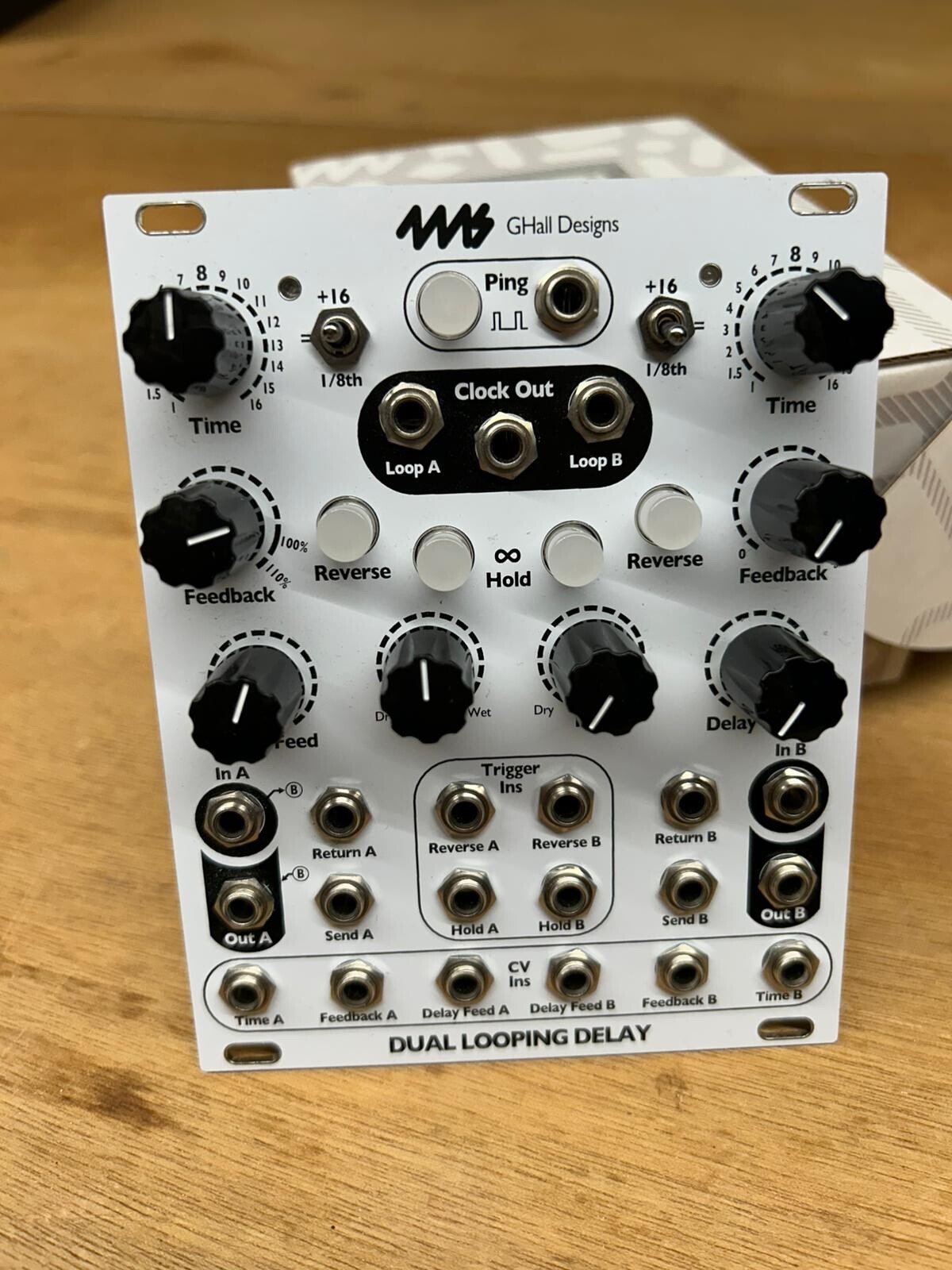
Another quirk: the module’s reliance on external attenuation. All CV inputs are unattenuated, meaning a 10V LFO will fully sweep a parameter unless you patch through an attenuator. This isn’t a flaw, but it does mean the Looping Delay assumes you have a well-equipped system. Buyers should check for physical damage to jacks and knobs, especially on used units, and verify that all buttons respond correctly. The Ping button, used frequently for tap tempo, can wear out over time. Since the module is still in production and supported by 4ms, parts and documentation are readily available, which helps keep repair costs low. For those restoring older units, the ability to upgrade firmware via audio file is a major advantage—new features like de-jitter modes and quantized change settings have been added post-launch, extending the module’s lifespan. Overall, it’s a solid investment: not a showpiece, but a workhorse that delivers consistent performance for those who value precision over pretense.
eBay Listings



As an eBay Partner, we earn from qualifying purchases. This helps support our independent vintage technology research.