2HP Kick (2018–)
A deceptively tiny drum synth that punches way above its weight—when it hits right, it feels like a sub-bass earthquake in a matchbox.
Overview
You slide it into your rack almost as a joke—2HP, for god’s sake, barely wider than a patch cable—and then you hit the trigger and the floor shakes. That’s the 2HP Kick: a minimalist black rectangle with one knob, one CV input, and a sound that ranges from vintage 808 thump to distorted, metallic thwacks that feel like they were designed for glitch techno in 2057. It doesn’t look like much, but plug it in and you realize it’s not trying to be everything—it’s trying to be the right thing at the right moment. And often, it is.
The genius of the Kick lies in its simplicity and its flexibility. It’s not a sample player, not a full drum computer—just a dedicated analog(ish) kick generator with a synthesis engine that’s surprisingly deep for its footprint. The core sound is built around a pitch sweep that you can shape with the single front-panel knob, which controls tone. But where it really sings is in its voltage control: 1V/oct tracking across five full octaves means you can sequence melodic kick lines, drop sub-bass stabs that land exactly on key, or sweep down from a high-frequency click to a subterranean boom in perfect chromatic steps. That kind of pitch accuracy in a drum module was rare when it launched in 2018, and it still turns heads.
Owners report that the Kick excels in electronic genres where the kick isn’t just timekeeping—it’s a lead voice. IDM producers love it for its ability to go from rounded and warm to jagged and synthetic with a twist of CV. Live performers appreciate how little space it takes, and how reliably it cuts through a mix. But it’s not a one-trick rack-filler. The internal circuit includes a configurable soft-clipping distortion stage, which can be dialed in subtly for warmth or pushed into crunchy, overdriven textures that feel more like a malfunctioning robot than a drum. It’s not trying to emulate acoustic kicks—this is electronic percussion with character, sometimes too much.
Specifications
| Manufacturer | 2HP |
| Production Years | 2018– |
| Original Price | $129 |
| Width | 2HP |
| Depth | 45mm |
| +12V Current Draw | 74mA |
| -12V Current Draw | 2mA |
| 5V Current Draw | 0mA |
| CV Inputs | Tone, 1V/Oct |
| Gate Input | Trigger |
| Audio Output | 1x 3.5mm |
| Color Options | Black, Silver |
| Weight | Approx. 50g |
| Construction | PCB with front panel controls |
| Distortion | Configurable soft clipping |
| Pitch Tracking | 1V/Oct over 5 octaves |
| Module Type | Eurorack drum synthesizer |
| Manual Available | Yes |
Key Features
The 2HP Minimalist Philosophy, Fully Realized
The Kick is the purest expression of 2HP’s design ethos: do one thing, do it well, and take up as little space as possible. Unlike larger drum modules that pack in multiple voices or complex sequencing, the Kick is ruthlessly focused. There’s no menu diving, no hidden functions—just a single knob that adjusts the tone of the kick, which essentially controls the pitch envelope’s sweep range and decay. Turn it left for a short, clicky thud; turn it right for a long, sub-heavy dive. The simplicity means you’re never hunting for parameters mid-performance. What you see is what you get—except, of course, when you start patching.
Full 1V/Oct Tracking: A Game Changer for Drum Synths
Most analog kick modules either don’t track pitch at all or do so inconsistently. The 2HP Kick doesn’t just track—it tracks across five full octaves with impressive stability. This isn’t just a novelty; it opens up compositional possibilities. You can sequence basslines entirely with the Kick, use it for pitched percussion solos, or modulate the pitch in real time for dramatic drops and risers. Service technicians observe that the tracking is more stable than many larger, more expensive drum modules, likely due to the dedicated voltage-controlled oscillator core and careful calibration at the factory. The 1V/oct input isn’t an afterthought—it’s central to the module’s identity.
CV Over Everything: Subtle or Extreme Modulation
Every parameter that can be voltage-controlled, is. The tone knob has a CV attenuator, so you can blend in external modulation from LFOs, sequencers, or envelope followers. Want the kick’s pitch to wobble with your filter cutoff? Patch it. Want each successive kick in a sequence to dive deeper? Done. The soft-clipping distortion can be modulated via CV as well, letting you go from clean to dirty in real time. Collectors note that this level of control in a 2HP space was unprecedented at launch and still feels like a minor miracle. It turns a simple drum into a dynamic, evolving sound source.
Historical Context
When the 2HP Kick launched in early 2018 at NAMM, Eurorack was already deep into the “golden age” of module proliferation—but space was becoming a premium. Racks were full, builders were fighting for every HP, and utility modules were being sacrificed for flashier voices. Into that climate stepped 2HP, a brand known for ultra-compact designs that didn’t feel like compromises. The Kick, along with its siblings Snare and Hat, wasn’t just small—it was *smart*. It offered full synthesis control in a footprint previously reserved for attenuators or passive multiples.
At the time, the drum module market was split between sample-based players like the Erica Pico Drum and analog emulations like the Tiptop BD909. The 2HP Kick carved its own lane: not a clone, not a sampler, but a new kind of synthesis-first drum voice. It appealed to minimalists, live performers, and experimentalists who wanted expressive control without sprawl. Competitors like MakeNoise or Intellijel offered more complex drum solutions, but none matched the Kick’s blend of size, price, and musicality. It arrived at a moment when modular was becoming more accessible, and it became a gateway module for many new users.
Collectibility & Value
The 2HP Kick has settled into a stable secondhand market, trading between $100 and $140 depending on condition and color. Black and silver versions are equally common, with no significant price difference. Unlike some boutique modules, it hasn’t become a collector’s item—partly because it’s still in production, partly because it’s too useful to sit on a shelf. But that’s not a bad thing. This is a module people buy to use, not to flip.
Failures are rare, but when they happen, they’re usually power-related. The module draws a modest 74mA on the +12V rail, but its compact design leaves little room for error in power distribution. Documentation shows that using a high-quality power cable with proper spacing is essential—daisy-chained power connectors can cause instability or, in extreme cases, damage. There are no user-serviceable parts inside; if the PCB fails, replacement is usually more cost-effective than repair.
Before buying, check for consistent triggering and clean pitch tracking across the full range. Some units exhibit slight pitch drift at the extreme high end (above 1kHz), but this is usually within tolerance. The front knob is a standard 9mm pot, so replacement is easy if it becomes scratchy. The biggest “flaw” isn’t technical—it’s tonal. Forum discussions frequently mention that the Kick can sound “laser-ish” or too synthetic in certain settings, especially when the tone is set high without CV modulation. It doesn’t do “natural” kicks; it does electronic ones, and that’s a feature, not a bug, for the right user.
For those building a compact or travel-friendly system, the Kick remains one of the best values in Eurorack. It’s not trying to replace a full drum machine, but as a focused, expressive kick voice, it’s hard to beat. Just don’t expect it to do 909s or acoustic toms—it’s its own beast.
eBay Listings
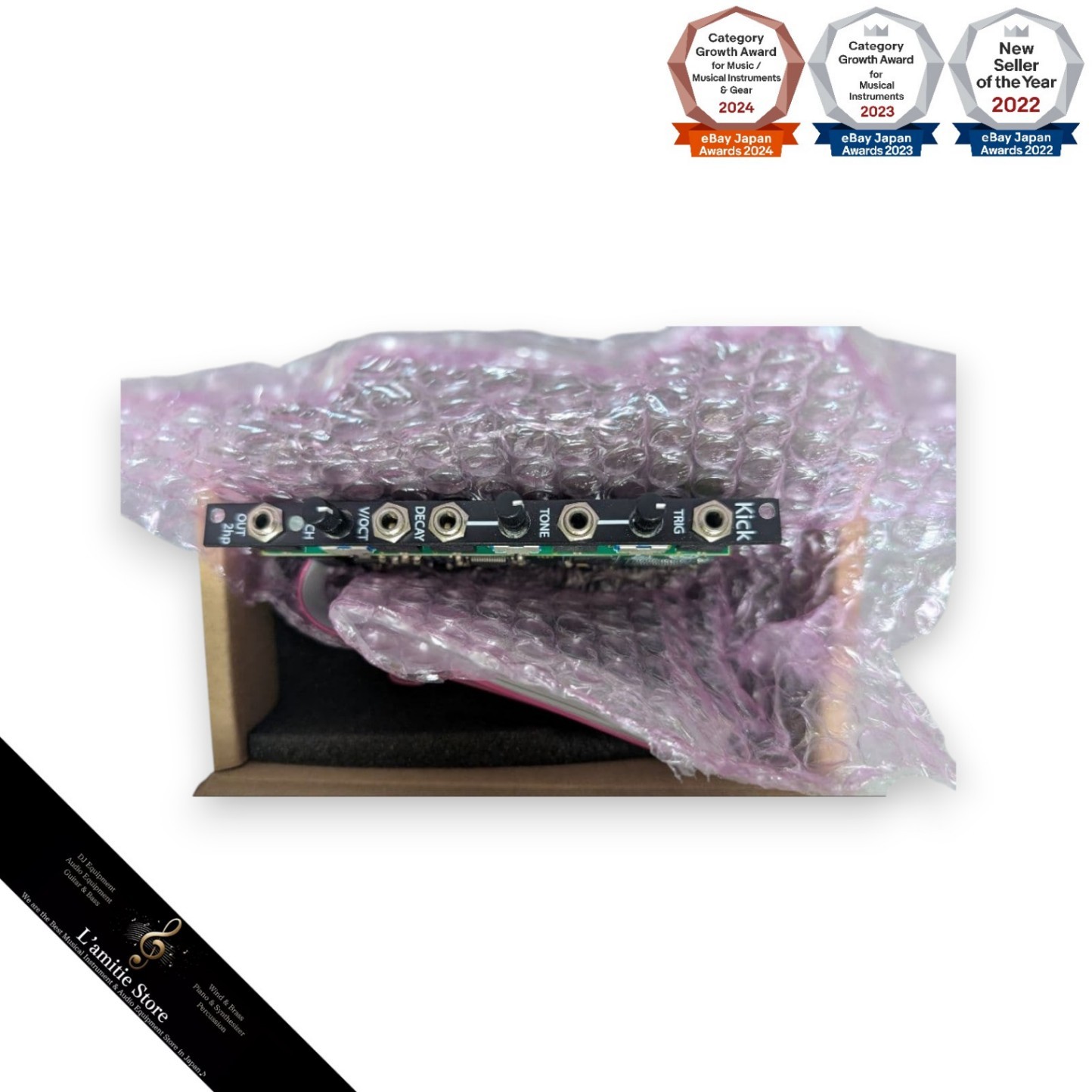

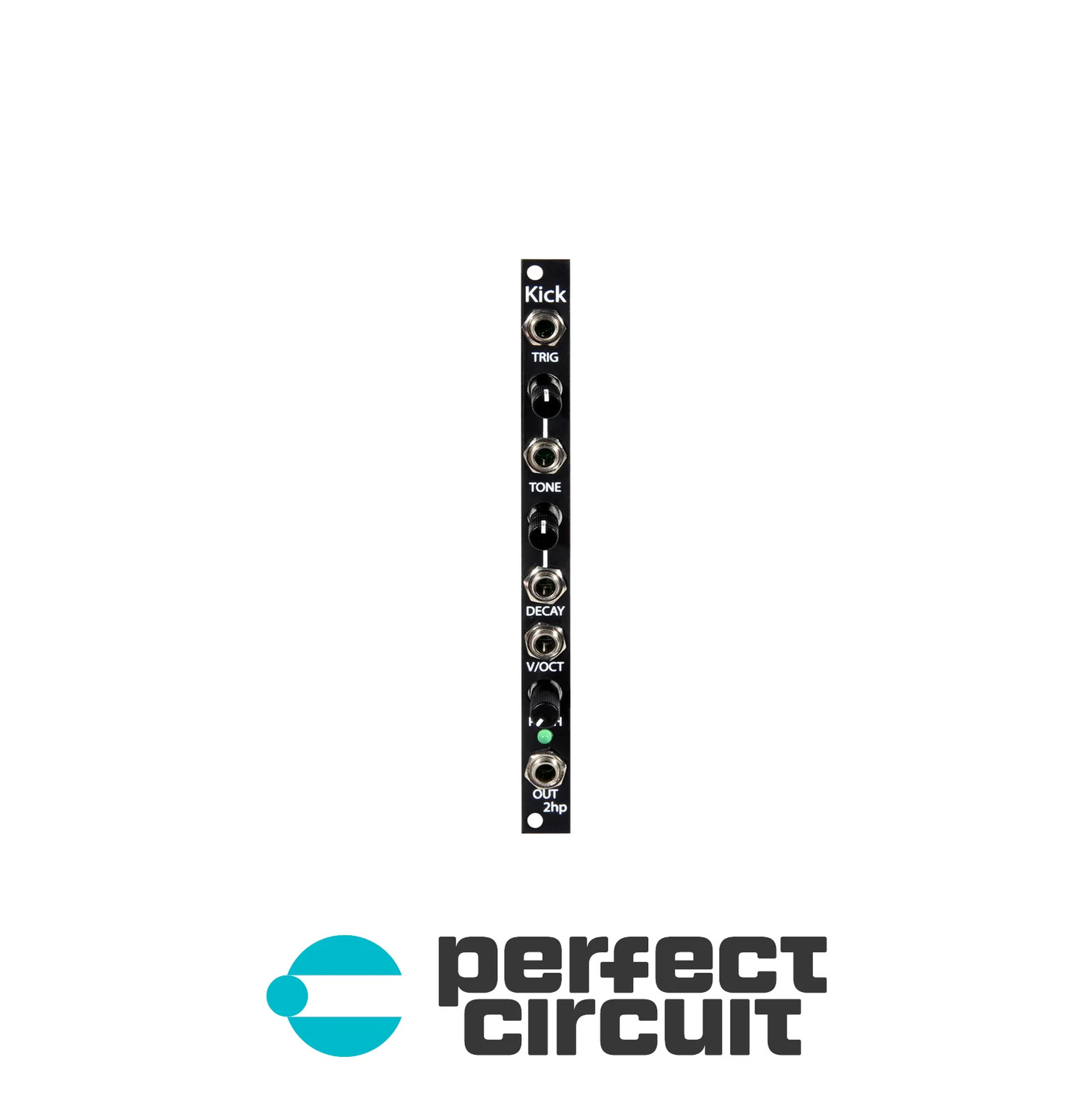
As an eBay Partner, we earn from qualifying purchases. This helps support our independent vintage technology research.